Ancient Civilizations' Response to Climate Change: Lessons for Today
Quick Summary
Ancient Civilizations' Response to Climate Change: Lessons for Today Droughts ravaging the American West, unprecedented heatwaves baking Europe, and rising sea levels threatening...
In This Article
Ancient Civilizations' Response to Climate Change: Lessons for Today
Droughts ravaging the American West, unprecedented heatwaves baking Europe, and rising sea levels threatening coastal communities are stark reminders: climate change is here, and it demands our attention. But while the urgency feels modern, humanity's struggle with a changing climate is an ancient story, written in the sands of forgotten cities and the ruins of once-great empires. By examining how ancient civilizations like the Maya, the Akkadians, and the Indus Valley people faced their own environmental crises, we uncover a treasure trove of lessons – not just historical curiosities, but practical strategies and cautionary tales for our own climate-challenged world.

When the Rains Failed: Collapse and Resilience in the Ancient World
The narrative of climate change often evokes images of future catastrophes, but history offers numerous examples of societies profoundly altered, and sometimes shattered, by shifts in temperature and precipitation. Consider the Akkadian Empire, often cited as the world's first empire, which flourished in Mesopotamia around 2334-2154 BCE. Its collapse, for centuries a mystery, is now largely attributed to a sudden, severe, and prolonged drought. Paleoclimate data, derived from core samples from the Gulf of Oman and archaeological evidence from Tell Leilan in Syria, indicate a sharp drop in rainfall lasting for perhaps 300 years, around 2200 BCE. This "4.2 kiloyear event" led to widespread crop failures, mass migrations from the fertile north to the already populated south, and ultimately, political instability and the fragmentation of the empire. This wasn't a slow decline; it was an abrupt, system-shocking event. The Akkadians’ highly centralized, agriculture-dependent system, while incredibly efficient during good times, proved brittle in the face of such a dramatic environmental shift.
In stark contrast, the Indus Valley Civilization, or Harappan civilization, which thrived from around 2500-1900 BCE in what is now Pakistan and northwest India, offers a different narrative. This vast urban civilization, known for its sophisticated city planning, advanced water management, and enigmatic script, also faced significant climate challenges, particularly a gradual but sustained weakening of the monsoon system. Research published in PNAS in 2012, based on sediment cores from the Arabian Sea, pinpointed a "mega-drought" that commenced around 2100 BCE and lasted for two centuries. Unlike the Akkadians, the Harappans didn't experience a sudden collapse. Instead, their cities, like Mohenjo-Daro and Harappa, saw a gradual depopulation, and people shifted towards smaller, more resilient rural settlements further east, where monsoon rains were still more reliable. Their decentralized structure, diverse agricultural practices, and impressive water harvesting systems, including sophisticated wells and reservoirs, likely contributed to their ability to adapt rather than instantly crumble. This highlights a crucial distinction: the rate and type of climate change, combined with a society's adaptive capacity, dictate outcomes.
Why Did Some Societies Adapt While Others Collapsed?
The varying responses of ancient civilizations to climate stress reveal profound lessons about societal resilience. Expert analysis often points to several key factors. Diversity in resource management was a critical buffer. The Maya, for instance, who experienced recurrent droughts between 800 and 1000 CE (the "Classic Maya Collapse"), heavily relied on maize cultivation. While they developed ingenious water management systems like reservoirs and canals, their agricultural monoculture made them highly vulnerable when sustained droughts depleted their water sources. In contrast, societies with a broader base of food production – incorporating drought-resistant crops, livestock, and hunting/gathering – often fared better.
Social structure and governance also played a pivotal role. The Akkadian Empire's highly centralized political structure, while effective in mobilizing resources during stable periods, struggled to respond flexibly to regional variations in drought impact. When the central authority weakened due to agricultural collapse, local leaders often prioritized their own populations, leading to fragmentation. Conversely, societies with more decentralized governance or strong community-level cooperation could sometimes adapt more effectively by pooling resources, sharing knowledge, and making localized decisions without waiting for imperial decrees. The "bottom-up" adaptability of early Iron Age communities in the Near East, who diversified their agricultural strategies and formed smaller, interconnected networks after the Bronze Age collapse (which also had climate links), provides a testament to this.
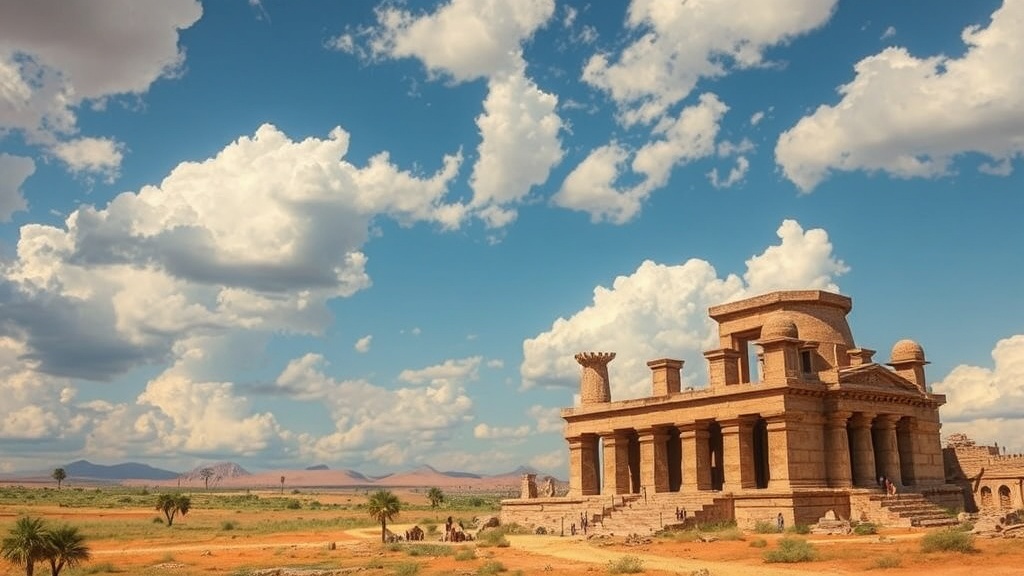
Furthermore, technological innovation and investment in infrastructure were crucial. The Nabataeans, builders of Petra in modern-day Jordan, lived in an arid environment but thrived by mastering water collection and conservation. Their intricate system of cisterns, dams, and conduits allowed them to support a thriving city and trade network in a region that should have been inhospitable. Their ingenuity in harvesting every drop of rainwater and channeling it for both domestic use and agriculture enabled their prosperity for centuries, even as surrounding regions struggled with aridity. This demonstrates that effective, targeted infrastructure development can dramatically enhance resilience, even in the face of significant environmental limitations.
What Ancient Climate Lessons Mean for Your Community Today
The echoes of ancient climate crises reverberate through our modern world, offering practical insights that affect every American community. The most immediate lesson is the critical importance of diverse water sources and conservation. Regions like the American Southwest, heavily reliant on shrinking reservoirs like Lake Mead and Lake Powell, face a situation eerily similar to the Maya or the Akkadians. Diversifying water portfolios – through groundwater replenishment, reclaimed water usage, desalination (where feasible and environmentally sound), and robust conservation programs – is no longer optional but essential. Cities like Los Angeles and Phoenix are already investing heavily in these strategies, but individual actions matter too: reducing household water consumption, supporting local water conservation initiatives, and understanding where your water comes from are tangible steps.
Another crucial takeaway is the danger of monoculture, not just in agriculture, but in economic reliance. Communities that depend almost entirely on a single industry, especially one vulnerable to climate shifts (like agriculture in drought-prone areas or coastal tourism threatened by sea-level rise), mirror the fragility of the maize-dependent Maya. Economic diversification, investing in green technologies, and fostering a variety of local businesses can build resilience. For instance, a farming community in California's Central Valley might explore cultivating more drought-resistant crops or investing in agritech solutions that optimize water usage, rather than solely relying on water-intensive almonds or alfalfa.
Finally, the ancient examples underscore the power of adaptable governance and community cooperation. When faced with resource scarcity, societies either united or fractured. Modern climate challenges demand collaboration across political divides, between states, and within communities. Supporting local initiatives that build climate resilience – from urban greening projects that mitigate heat islands to community-led disaster preparedness plans – strengthens the collective ability to adapt. For individuals, engaging with local government on climate planning, advocating for resilient infrastructure, and participating in neighborhood emergency response groups are direct ways to apply these ancient lessons.
Building a Resilient Future: What's Next in Climate Adaptation?
Free Weekly Newsletter
Enjoying this guide?
Get the best articles like this one delivered to your inbox every week. No spam.
The future of climate adaptation will increasingly blend ancient wisdom with cutting-edge technology. We can expect to see a greater emphasis on nature-based solutions, mirroring the ingenuity of ancient societies. Think "sponge cities" that absorb and filter rainwater naturally through permeable surfaces and green spaces, inspired by how forests mitigate floods. This goes beyond simple aesthetic appeal; it's about harnessing ecological processes to manage water, reduce heat, and enhance biodiversity, similar to how ancient terraces prevented erosion and managed water flow.
Furthermore, data-driven decision-making will become even more sophisticated. Paleoclimate research, which reconstructs past climates using ice cores, tree rings, and sediment layers, continues to improve our understanding of long-term climate variability. This historical perspective, combined with real-time satellite data, advanced climate modeling, and AI-powered predictive analytics, will allow communities to anticipate risks with unprecedented accuracy. Imagine algorithms that forecast drought severity months in advance, allowing farmers to adjust planting schedules or water managers to optimize reservoir releases, drawing parallels to how ancient peoples observed celestial bodies and seasonal patterns to predict weather, but with vastly superior data.
Finally, the focus will shift towards equitable adaptation. The lessons from ancient collapses often highlight how the most vulnerable segments of society suffered disproportionately. Future climate strategies must prioritize protecting marginalized communities, ensuring access to resources, and providing support for climate migration. This means investing in resilient housing in low-income neighborhoods, ensuring equitable access to cooling centers during heatwaves, and developing just transition plans for workers in industries impacted by climate change. The narrative of survival for some and collapse for others in the past teaches us that true resilience is not just about technology, but about social cohesion and justice.
Conclusion: Our Shared Climate Story
The story of humanity and climate change is a continuous one, stretching from the Fertile Crescent to the present day. The ruins of ancient civilizations are not merely archaeological sites; they are profound classrooms, offering invaluable lessons on adaptability, vulnerability, and the intricate dance between human societies and their environment. From the Akkadians' collapse due to a swift drought to the Indus Valley's gradual adaptation, and the Nabataeans' mastery of water in an arid land, we see both the perils of inaction and the triumphs of ingenuity.
Today, as our own climate narrative unfolds, we have the unique advantage of their hindsight. By embracing diversified resource management, fostering adaptive governance, investing in resilient infrastructure, and prioritizing equitable solutions, we can write a more hopeful chapter for our own civilization. The challenge is immense, but the lessons from our ancient ancestors remind us that adaptation is not only possible but essential for survival. It's time to heed their warnings and apply their wisdom to build a truly resilient future, for ourselves and for generations to come.
Free Investing Tools
Frequently Asked Questions
When the Rains Failed: Collapse and Resilience in the Ancient World
The narrative of climate change often evokes images of future catastrophes, but history offers numerous examples of societies profoundly altered, and sometimes shattered, by shifts in temperature and precipitation. Consider the Akkadian Empire, often cited as the world's first empire, which flourished in Mesopotamia around 2334-2154 BCE. Its collapse, for centuries a mystery, is now largely attributed to a sudden, severe, and prolonged drought. Paleoclimate data, derived from core samples from the Gulf of Oman and archaeological evidence from Tell Leilan in Syria, indicate a sharp drop in rainfall lasting for perhaps 300 years, around 2200 BCE. This "4.2 kiloyear event" led to widespread crop failures, mass migrations from the fertile north to the already populated south, and ultimately, political instability and the fragmentation of the empire. This wasn't a slow decline; it was an abrupt, system-shocking event. The Akkadians’ highly centralized, agriculture-dependent system, while incredibly efficient during good times, proved brittle in the face of such a dramatic environmental shift.
In stark contrast, the Indus Valley Civilization, or Harappan civilization, which thrived from around 2500-1900 BCE in what is now Pakistan and northwest India, offers a different narrative. This vast urban civilization, known for its sophisticated city planning, advanced water management, and enigmatic script, also faced significant climate challenges, particularly a gradual but sustained weakening of the monsoon system. Research published in PNAS in 2012, based on sediment cores from the Arabian Sea, pinpointed a "mega-drought" that commenced around 2100 BCE and lasted for two centuries. Unlike the Akkadians, the Harappans didn't experience a sudden collapse. Instead, their cities, like Mohenjo-Daro and Harappa, saw a gradual depopulation, and people shifted towards smaller, more resilient rural settlements further east, where monsoon rains were still more reliable. Their decentralized structure, diverse agricultural practices, and impressive water harvesting systems, including sophisticated wells and reservoirs, likely contributed to their ability to adapt rather than instantly crumble. This highlights a crucial distinction: the rate and type of climate change, combined with a society's adaptive capacity, dictate outcomes.
Why Did Some Societies Adapt While Others Collapsed?
The varying responses of ancient civilizations to climate stress reveal profound lessons about societal resilience. Expert analysis often points to several key factors. Diversity in resource management was a critical buffer. The Maya, for instance, who experienced recurrent droughts between 800 and 1000 CE (the "Classic Maya Collapse"), heavily relied on maize cultivation. While they developed ingenious water management systems like reservoirs and canals, their agricultural monoculture made them highly vulnerable when sustained droughts depleted their water sources. In contrast, societies with a broader base of food production – incorporating drought-resistant crops, livestock, and hunting/gathering – often fared better.
Social structure and governance also played a pivotal role. The Akkadian Empire's highly centralized political structure, while effective in mobilizing resources during stable periods, struggled to respond flexibly to regional variations in drought impact. When the central authority weakened due to agricultural collapse, local leaders often prioritized their own populations, leading to fragmentation. Conversely, societies with more decentralized governance or strong community-level cooperation could sometimes adapt more effectively by pooling resources, sharing knowledge, and making localized decisions without waiting for imperial decrees. The "bottom-up" adaptability of early Iron Age communities in the Near East, who diversified their agricultural strategies and formed smaller, interconnected networks after the Bronze Age collapse (which also had climate links), provides a testament to this.
Furthermore, technological innovation and investment in infrastructure were crucial. The Nabataeans, builders of Petra in modern-day Jordan, lived in an arid environment but thrived by mastering water collection and conservation. Their intricate system of cisterns, dams, and conduits allowed them to support a thriving city and trade network in a region that should have been inhospitable. Their ingenuity in harvesting every drop of rainwater and channeling it for both domestic use and agriculture enabled their prosperity for centuries, even as surrounding regions struggled with aridity. This demonstrates that effective, targeted infrastructure development can dramatically enhance resilience, even in the face of significant environmental limitations.
What Ancient Climate Lessons Mean for Your Community Today
The echoes of ancient climate crises reverberate through our modern world, offering practical insights that affect every American community. The most immediate lesson is the critical importance of diverse water sources and conservation. Regions like the American Southwest, heavily reliant on shrinking reservoirs like Lake Mead and Lake Powell, face a situation eerily similar to the Maya or the Akkadians. Diversifying water portfolios – through groundwater replenishment, reclaimed water usage, desalination (where feasible and environmentally sound), and robust conservation programs – is no longer optional but essential. Cities like Los Angeles and Phoenix are already investing heavily in these strategies, but individual actions matter too: reducing household water consumption, supporting local water conservation initiatives, and understanding where your water comes from are tangible steps.
Another crucial takeaway is the danger of monoculture, not just in agriculture, but in economic reliance. Communities that depend almost entirely on a single industry, especially one vulnerable to climate shifts (like agriculture in drought-prone areas or coastal tourism threatened by sea-level rise), mirror the fragility of the maize-dependent Maya. Economic diversification, investing in green technologies, and fostering a variety of local businesses can build resilience. For instance, a farming community in California's Central Valley might explore cultivating more drought-resistant crops or investing in agritech solutions that optimize water usage, rather than solely relying on water-intensive almonds or alfalfa.
Finally, the ancient examples underscore the power of adaptable governance and community cooperation. When faced with resource scarcity, societies either united or fractured. Modern climate challenges demand collaboration across political divides, between states, and within communities. Supporting local initiatives that build climate resilience – from urban greening projects that mitigate heat islands to community-led disaster preparedness plans – strengthens the collective ability to adapt. For individuals, engaging with local government on climate planning, advocating for resilient infrastructure, and participating in neighborhood emergency response groups are direct ways to apply these ancient lessons.
Building a Resilient Future: What's Next in Climate Adaptation?
The future of climate adaptation will increasingly blend ancient wisdom with cutting-edge technology. We can expect to see a greater emphasis on nature-based solutions, mirroring the ingenuity of ancient societies. Think "sponge cities" that absorb and filter rainwater naturally through permeable surfaces and green spaces, inspired by how forests mitigate floods. This goes beyond simple aesthetic appeal; it's about harnessing ecological processes to manage water, reduce heat, and enhance biodiversity, similar to how ancient terraces prevented erosion and managed water flow.
Furthermore, data-driven decision-making will become even more sophisticated. Paleoclimate research, which reconstructs past climates using ice cores, tree rings, and sediment layers, continues to improve our understanding of long-term climate variability. This historical perspective, combined with real-time satellite data, advanced climate modeling, and AI-powered predictive analytics, will allow communities to anticipate risks with unprecedented accuracy. Imagine algorithms that forecast drought severity months in advance, allowing farmers to adjust planting schedules or water managers to optimize reservoir releases, drawing parallels to how ancient peoples observed celestial bodies and seasonal patterns to predict weather, but with vastly superior data.
Finally, the focus will shift towards equitable adaptation. The lessons from ancient collapses often highlight how the most vulnerable segments of society suffered disproportionately. Future climate strategies must prioritize protecting marginalized communities, ensuring access to resources, and providing support for climate migration. This means investing in resilient housing in low-income neighborhoods, ensuring equitable access to cooling centers during heatwaves, and developing just transition plans for workers in industries impacted by climate change. The narrative of survival for some and collapse for others in the past teaches us that true resilience is not just about technology, but about social cohesion and justice.
Conclusion: Our Shared Climate Story
The story of humanity and climate change is a continuous one, stretching from the Fertile Crescent to the present day. The ruins of ancient civilizations are not merely archaeological sites; they are profound classrooms, offering invaluable lessons on adaptability, vulnerability, and the intricate dance between human societies and their environment. From the Akkadians' collapse due to a swift drought to the Indus Valley's gradual adaptation, and the Nabataeans' mastery of water in an arid land, we see both the perils of inaction and the triumphs of ingenuity.
Today, as our own climate narrative unfolds, we have the unique advantage of their hindsight. By embracing diversified resource management, fostering adaptive governance, investing in resilient infrastructure, and prioritizing equitable solutions, we can write a more hopeful chapter for our own civilization. The challenge is immense, but the lessons from our ancient ancestors remind us that adaptation is not only possible but essential for survival. It's time to heed their warnings and apply their wisdom to build a truly resilient future, for ourselves and for generations to come.
About Zeebrain Editorial
Zeebrain publishes independent analysis of markets, investing, personal finance, and business. We disclose affiliate relationships, never accept payment for coverage, and fact-check all claims against primary sources. Read our editorial policy →
How this article was produced: Zeebrain articles are created with AI assistance from primary sources (including cited videos and market data) and reviewed under our editorial standards before publication. Spot an error? Tell us and we will correct it.
More from History & Mysteries



Related Guides
Keep exploring this topic
Ancient Civilizations and Advanced Technology: Echoes of the Past in Today's AI Debates
History & Mysteries · ancient civilizations · advanced technology history
The Enigma of Lost Civilizations: Clues from Ancient Technologies
History & Mysteries · lost civilizations · ancient technology
Why Mao Won the Chinese Civil War: The Full Story
History & Mysteries
Why Only Germany Paid WWI Reparations: The Full Story
History & Mysteries
Explore More Categories
Keep browsing by topic and build depth around the subjects you care about most.