3 Days in Lima, Peru: The City Worth Slowing Down For
Quick Summary
Lima is far more than a stopover to Machu Picchu. Discover the best food, neighbourhoods, and hidden history in Peru's electric capital city.
In This Article
3 Days in Lima, Peru: The City Worth Slowing Down For
Most travellers to Peru do Lima wrong. They land at Jorge Chávez International Airport, sleep off the jet lag, and bolt inland toward Cusco before the city has even had a chance to introduce itself. I get it — Machu Picchu is calling, the Sacred Valley is waiting, and Lima feels like an obstacle between you and the postcard shot. But that instinct costs you something real. Lima is one of the most thrilling food cities on the planet right now, a place where 2,000 years of culinary evolution collide with Japanese immigration, Spanish colonialism, and a Pacific coastline that delivers its best ceviche daily. Three or four days here isn't a concession. It's a privilege.
We spent four days in Lima at the start of a three-week Peru trip, and by the end of the first afternoon, we'd already stopped thinking of it as a gateway. Here's how to do it properly.
Getting Your Bearings: Arriving in Lima Without the Chaos
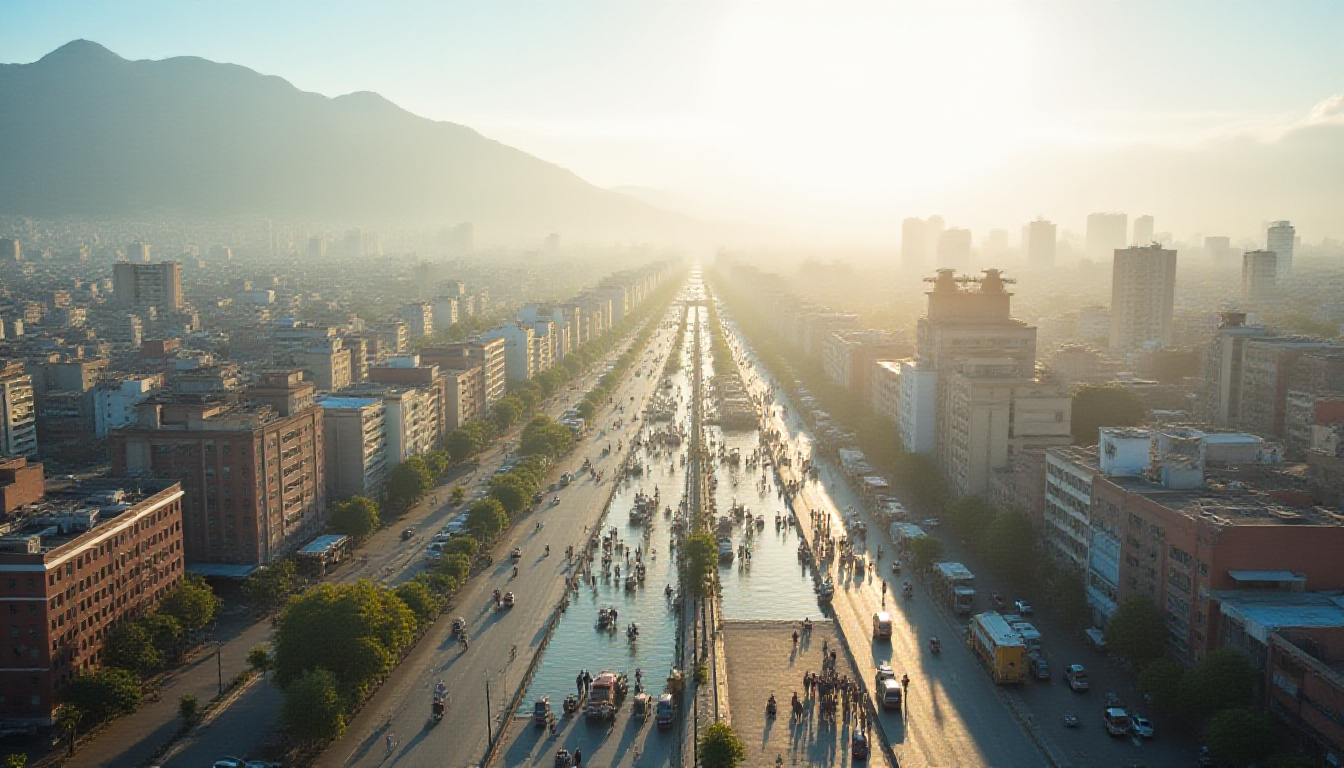
Lima sits on dramatic cliffs above the Pacific Ocean and is home to over 11 million people, which means the traffic is genuinely, legendarily terrible. From the international airport — located roughly an hour north of the city centre — most visitors head straight to Miraflores, the polished, walkable neighbourhood that makes the best base for first-time visitors. It's well-lit, safe, packed with restaurants, and close to the cliff-top Malecon path that runs above the ocean.
For getting from the airport to Miraflores, you have options at every price point. Taxis and private transfers are convenient but costly if you're watching your budget. The smarter move, and the one we took, is the Airport Express Lima bus — around $4 USD, comfortable seats, onboard Wi-Fi, and four drop-off stops throughout Miraflores. It runs every hour and is perfectly straightforward even on your first visit.
Once you're in the city, skip the taxis for longer journeys and use Lima's elevated metro or the Metropolitano rapid bus, which runs in dedicated lanes and gets you downtown in around 20 minutes for under four soles. You'll need a transit card, available at stations for cash. It gets crowded during peak hours, but it's clean, cheap, and dramatically faster than sitting in surface traffic.
Lima Food Culture: Why This City Changed How I Think About Eating
Let me be direct: Lima might be the most interesting food city in South America, and it isn't particularly close. The reasons are geographical, historical, and deeply cultural. Peru sits at the intersection of Andean agriculture, Pacific seafood, Amazonian ingredients, and centuries of immigration from Japan, China, Spain, and Africa. Each of those threads shows up on the plate in ways that feel coherent rather than chaotic.
Start with the basics. Ceviche is classically Peruvian, with roots stretching back 2,000 years to the Moche civilisation, and in Lima it reaches its highest form. The city is full of cevicherias — from neighbourhood holes-in-the-wall to destination restaurants — and the standard is consistently extraordinary. Fresh local seafood cured in lime juice with aji amarillo and red onion, served alongside cancha corn kernels for crunch. Almost every cevicheria will start you with leche de tigre, the leftover curing liquid served as a shot. It sounds unappealing. It tastes like the ocean distilled into something bright and alive. It's also, locals swear, a reliable hangover cure.
Then there's lomo saltado, which might be the most Peruvian dish most visitors have never heard of. It's a stir-fry — beef, onions, tomatoes, peppers — served with both rice and french fries, finished in a glossy brown sauce. Chinese immigrant influence (known locally as Chifa cuisine) fused with Andean staples decades ago, and the result became a national comfort food. Peruvians who live abroad describe this as the dish they eat the moment they're back home. That tells you everything.
For budget eating, don't overlook the soup spots. Las 7 Sopas has multiple locations, stays open 24 hours, and rotates seven soups across the week. The sopa criolla — beef broth with smoky peppers, tomatoes, and a splash of evaporated milk — is warming and deeply savoury. On Sundays, the sancochado draws long queues: a thick, meaty broth loaded with yuca, potato, and multiple cuts of beef. An extraordinary meal for a few soles.
Nikkei Cuisine: The Fusion Food Story Lima Doesn't Shout About Enough
Peru is home to the second largest Japanese diaspora outside of Japan, a fact that surprises almost every first-time visitor. Japanese immigrants began arriving in the late 19th century, and over generations, their culinary traditions merged with local Peruvian ingredients to create Nikkei cuisine — one of the world's great fusion food stories and the reason Lima's restaurant Maido has held the title of best restaurant in the world.
You don't need a reservation at Maido (though if budget allows, go) to experience Nikkei at its best. The cuisine has spread throughout Lima, and restaurants like Omasu — run by members of the Masufuji family, who have been shaping Japanese-Peruvian cooking for over 50 years — offer a more intimate and equally impressive experience. At Omasu, the menu centres on maki, sashimi, and seafood-forward dishes elevated by Peruvian ingredients. Tuna tiradito in aji amarillo sauce. Truffle salmon maki stuffed with breaded shrimp and avocado. Black cod marinated for 48 hours in a glaze that balances umami, salt, and just enough sweetness to keep you honest.
What makes Nikkei so compelling isn't novelty — it's logic. Japanese technique applied to Peruvian ingredients like aji amarillo, chicha, and local seafood creates flavours that feel inevitable rather than forced. This is what genuine culinary fusion looks like when it has 100 years to mature.
Lima's Historic Centre and Hidden Archaeology: Two Sides of the City's Deep Past
Miraflores is comfortable and beautiful, but Lima's historic centre is where the city's character comes into full focus. A UNESCO World Heritage Site, the centro histórico is filled with ornate 17th and 18th century colonial buildings — the legacy of 300 years of Spanish rule that began when Francisco Pizarro founded the city in 1535. The name Lima itself predates the Spanish; it derives from Rimac, a Quechua word later mispronounced by colonisers into its current form.
The elevated metro gets you downtown in around 20 minutes, which is far preferable to the traffic slog. Once there, a walking history tour is the most efficient way to absorb centuries of layered meaning — you'll cover Plaza de Armas, framed by the Presidential Palace and Lima's Basilica, and get a real sense of the city's colonial architecture before being led to local food stops that bring the history to life. One highlight: la causa, a cold dish of potato blended with aji amarillo, stuffed with chicken and mayonnaise. It's humble, it's Peruvian to the core, and it absolutely works.
The single must-do experience in the historic centre is the San Francisco Catacombs. Photography isn't allowed inside, so go without expectation of content and with full attention for the experience itself. Beneath the stunning Franciscan Monastery, more than 70,000 human remains rest in the city's former main cemetery, active throughout the 17th and 18th centuries. It is sombre, fascinating, and genuinely moving in a way that a description can't fully prepare you for.
For a completely different kind of historical encounter, Huaca Pucllana in the Miraflores district offers one of Lima's most quietly spectacular experiences. This ancient pyramid — constructed between 200 and 400 AD using small adobe bricks stacked in a distinctive book-shelf pattern — was built by a civilisation now known simply as the Lima peoples, predating both the Incas and the Spanish by centuries. For much of its history, it was buried under layers of dirt; excavations began only in the 1980s. Today, guided tours (in Spanish and English, lasting around 45 minutes to an hour) take you around the site as archaeologists continue working nearby. Seeing this 1,800-year-old structure surrounded by modern apartment blocks and rush-hour traffic is one of Lima's defining juxtapositions — ancient and relentless at once.
Barranco: The Neighbourhood That Makes You Want to Stay Longer
If Miraflores is Lima's polished face, Barranco is its soul. Just south along the cliff-top coast, this largely residential neighbourhood is beloved for its colourful colonial buildings (casonas), eclectic street art, and a beach-town energy that moves at a noticeably different pace. It's where many of Lima's most exciting new restaurants have opened, where bars run late and run well, and where wandering without a plan feels genuinely rewarding.
Start the morning at Demo, a bakery and café from the team behind Mérito (a perennial fixture on the World's 50 Best Restaurants list). The flan cruffin alone — flaky, lightly sweet, filled with flan cream — is worth the trip to Barranco. Stay for the arepa eggs benedict or the cachapa, a sweet corn pancake stuffed with queso that collapses into something indulgent and utterly satisfying.
For lunch, Isolina is the reliable classic: Peruvian comfort food executed with care. Order the rocoto relleno — a spiced Arequipa pepper stuffed with meat, cheese, and potato — or the aji de gallina, chicken stewed in a nut-based aji amarillo sauce that's one of Peru's most iconic dishes. For something lighter and more portable, Sanguchería El Chinito has been serving its legendary chicharron sandwich since 1960. Slow-roasted pork, sweet potato, red onion, and a bread roll with the kind of crust that shatters satisfyingly on the first bite. There are now over 10 locations across Lima, but queuing at the original feels right.
In the late afternoon, follow the Bajada de Baños — a mural-lined alley that winds down stairs toward the beach — to Playa Barranco for the final light of the day. Then walk north along the Malecon, Lima's six-kilometre cliff-top promenade, and find a spot at Parque del Amor as the sun drops into the Pacific. Paragliders drift above the cliffs. The mosaic walls (clearly inspired by Gaudí's Park Güell) catch the last orange light. It's an unexpectedly romantic end to an afternoon in a city that keeps offering more than you came looking for.
Practical Tips for Planning Your Lima Visit
A few things worth knowing before you go:
Free Weekly Newsletter
Enjoying this guide?
Get the best articles like this one delivered to your inbox every week. No spam.
When to visit: Lima's summer runs from November through April, bringing sunny days, beach weather, and the best conditions for outdoor exploration. From May to October, the city settles into a cool, grey coastal mist — not cold, but persistently overcast. Think San Francisco in June. Still absolutely worth visiting, but pack an extra layer and adjust expectations about beach days.
Where to stay: Miraflores is the right base for most first-time visitors. It's safe, walkable, and well-connected. Hotels like the Libre Hotel Best Western Signature Collection offer solid comfort at a reasonable price point, with perks like rooftop terraces and included breakfast that matter when you're planning long days of walking.
Budget: Lima rewards both high spenders and budget travellers. Soup at Las 7 Sopas costs a few dollars. A full Nikkei tasting experience at a world-class restaurant runs considerably more. The city operates across a wide price range without the stark quality drop you sometimes find in other South American capitals.
Safety: Stick to well-visited areas, particularly as a first-time visitor. Miraflores, Barranco, and the historic centre with a guide are all comfortable and well-trafficked. Use registered taxis or ride apps rather than flagging random cars.
Language: Spanish is essential for navigating menus and markets confidently, but English is widely spoken in Miraflores restaurants and hotels. A few key phrases in Spanish go a long way toward warmer interactions.
Lima asks for your patience and your appetite. Give it both, and it will give you back one of the most surprisingly complete travel experiences in South America. Don't treat it as a layover. Treat it as the destination it actually is.
Frequently Asked Questions
How many days should I spend in Lima, Peru? Three to four days is the sweet spot for a first visit. This gives you enough time to explore Miraflores, Barranco, and the historic centre without rushing, while also leaving room for the food experiences that define the city. If you arrive in Lima on your way to Machu Picchu, resist the urge to push straight inland — the city rewards those who slow down.
What is the best neighbourhood to stay in Lima? Miraflores is the most popular and practical choice for first-time visitors. It's safe, walkable, and well-connected to the rest of the city by metro and bus. Barranco is a charming alternative if you prefer a more bohemian, neighbourhood feel and don't mind a slightly longer commute to the historic centre.
What food must I try in Lima? Ceviche is non-negotiable — this is its home, and the standard here is exceptional. Beyond that, try lomo saltado (the stir-fry that defines Peruvian comfort food), leche de tigre (the ceviche curing liquid served as a bracing shot), aji de gallina, and at least one Nikkei meal to understand the Japanese-Peruvian fusion that has made Lima's restaurant scene globally famous.
Is Lima safe for tourists? Lima is safe for tourists when you stick to well-visited districts like Miraflores, Barranco, and the historic centre (ideally with a guided tour for the latter). As with any large city, standard urban awareness applies — avoid displaying expensive equipment unnecessarily, use registered transport, and ask your hotel for current local advice on areas to avoid.
What is the best time of year to visit Lima? November through April is Lima's summer season, offering warm, sunny days ideal for exploring the beaches, the Malecon, and outdoor neighbourhoods like Barranco. May through October brings a cool coastal mist and overcast skies that rarely clear. The city is fully worth visiting year-round, but if sunshine matters to your trip, aim for the summer months.
Frequently Asked Questions
Getting Your Bearings: Arriving in Lima Without the Chaos
Lima sits on dramatic cliffs above the Pacific Ocean and is home to over 11 million people, which means the traffic is genuinely, legendarily terrible. From the international airport — located roughly an hour north of the city centre — most visitors head straight to Miraflores, the polished, walkable neighbourhood that makes the best base for first-time visitors. It's well-lit, safe, packed with restaurants, and close to the cliff-top Malecon path that runs above the ocean.
For getting from the airport to Miraflores, you have options at every price point. Taxis and private transfers are convenient but costly if you're watching your budget. The smarter move, and the one we took, is the Airport Express Lima bus — around $4 USD, comfortable seats, onboard Wi-Fi, and four drop-off stops throughout Miraflores. It runs every hour and is perfectly straightforward even on your first visit.
Once you're in the city, skip the taxis for longer journeys and use Lima's elevated metro or the Metropolitano rapid bus, which runs in dedicated lanes and gets you downtown in around 20 minutes for under four soles. You'll need a transit card, available at stations for cash. It gets crowded during peak hours, but it's clean, cheap, and dramatically faster than sitting in surface traffic.
Lima Food Culture: Why This City Changed How I Think About Eating
Let me be direct: Lima might be the most interesting food city in South America, and it isn't particularly close. The reasons are geographical, historical, and deeply cultural. Peru sits at the intersection of Andean agriculture, Pacific seafood, Amazonian ingredients, and centuries of immigration from Japan, China, Spain, and Africa. Each of those threads shows up on the plate in ways that feel coherent rather than chaotic.
Start with the basics. Ceviche is classically Peruvian, with roots stretching back 2,000 years to the Moche civilisation, and in Lima it reaches its highest form. The city is full of cevicherias — from neighbourhood holes-in-the-wall to destination restaurants — and the standard is consistently extraordinary. Fresh local seafood cured in lime juice with aji amarillo and red onion, served alongside cancha corn kernels for crunch. Almost every cevicheria will start you with leche de tigre, the leftover curing liquid served as a shot. It sounds unappealing. It tastes like the ocean distilled into something bright and alive. It's also, locals swear, a reliable hangover cure.
Then there's lomo saltado, which might be the most Peruvian dish most visitors have never heard of. It's a stir-fry — beef, onions, tomatoes, peppers — served with both rice and french fries, finished in a glossy brown sauce. Chinese immigrant influence (known locally as Chifa cuisine) fused with Andean staples decades ago, and the result became a national comfort food. Peruvians who live abroad describe this as the dish they eat the moment they're back home. That tells you everything.
For budget eating, don't overlook the soup spots. Las 7 Sopas has multiple locations, stays open 24 hours, and rotates seven soups across the week. The sopa criolla — beef broth with smoky peppers, tomatoes, and a splash of evaporated milk — is warming and deeply savoury. On Sundays, the sancochado draws long queues: a thick, meaty broth loaded with yuca, potato, and multiple cuts of beef. An extraordinary meal for a few soles.
Nikkei Cuisine: The Fusion Food Story Lima Doesn't Shout About Enough
Peru is home to the second largest Japanese diaspora outside of Japan, a fact that surprises almost every first-time visitor. Japanese immigrants began arriving in the late 19th century, and over generations, their culinary traditions merged with local Peruvian ingredients to create Nikkei cuisine — one of the world's great fusion food stories and the reason Lima's restaurant Maido has held the title of best restaurant in the world.
You don't need a reservation at Maido (though if budget allows, go) to experience Nikkei at its best. The cuisine has spread throughout Lima, and restaurants like Omasu — run by members of the Masufuji family, who have been shaping Japanese-Peruvian cooking for over 50 years — offer a more intimate and equally impressive experience. At Omasu, the menu centres on maki, sashimi, and seafood-forward dishes elevated by Peruvian ingredients. Tuna tiradito in aji amarillo sauce. Truffle salmon maki stuffed with breaded shrimp and avocado. Black cod marinated for 48 hours in a glaze that balances umami, salt, and just enough sweetness to keep you honest.
What makes Nikkei so compelling isn't novelty — it's logic. Japanese technique applied to Peruvian ingredients like aji amarillo, chicha, and local seafood creates flavours that feel inevitable rather than forced. This is what genuine culinary fusion looks like when it has 100 years to mature.
Lima's Historic Centre and Hidden Archaeology: Two Sides of the City's Deep Past
Miraflores is comfortable and beautiful, but Lima's historic centre is where the city's character comes into full focus. A UNESCO World Heritage Site, the centro histórico is filled with ornate 17th and 18th century colonial buildings — the legacy of 300 years of Spanish rule that began when Francisco Pizarro founded the city in 1535. The name Lima itself predates the Spanish; it derives from Rimac, a Quechua word later mispronounced by colonisers into its current form.
The elevated metro gets you downtown in around 20 minutes, which is far preferable to the traffic slog. Once there, a walking history tour is the most efficient way to absorb centuries of layered meaning — you'll cover Plaza de Armas, framed by the Presidential Palace and Lima's Basilica, and get a real sense of the city's colonial architecture before being led to local food stops that bring the history to life. One highlight: la causa, a cold dish of potato blended with aji amarillo, stuffed with chicken and mayonnaise. It's humble, it's Peruvian to the core, and it absolutely works.
The single must-do experience in the historic centre is the San Francisco Catacombs. Photography isn't allowed inside, so go without expectation of content and with full attention for the experience itself. Beneath the stunning Franciscan Monastery, more than 70,000 human remains rest in the city's former main cemetery, active throughout the 17th and 18th centuries. It is sombre, fascinating, and genuinely moving in a way that a description can't fully prepare you for.
For a completely different kind of historical encounter, Huaca Pucllana in the Miraflores district offers one of Lima's most quietly spectacular experiences. This ancient pyramid — constructed between 200 and 400 AD using small adobe bricks stacked in a distinctive book-shelf pattern — was built by a civilisation now known simply as the Lima peoples, predating both the Incas and the Spanish by centuries. For much of its history, it was buried under layers of dirt; excavations began only in the 1980s. Today, guided tours (in Spanish and English, lasting around 45 minutes to an hour) take you around the site as archaeologists continue working nearby. Seeing this 1,800-year-old structure surrounded by modern apartment blocks and rush-hour traffic is one of Lima's defining juxtapositions — ancient and relentless at once.
Barranco: The Neighbourhood That Makes You Want to Stay Longer
If Miraflores is Lima's polished face, Barranco is its soul. Just south along the cliff-top coast, this largely residential neighbourhood is beloved for its colourful colonial buildings (casonas), eclectic street art, and a beach-town energy that moves at a noticeably different pace. It's where many of Lima's most exciting new restaurants have opened, where bars run late and run well, and where wandering without a plan feels genuinely rewarding.
Start the morning at Demo, a bakery and café from the team behind Mérito (a perennial fixture on the World's 50 Best Restaurants list). The flan cruffin alone — flaky, lightly sweet, filled with flan cream — is worth the trip to Barranco. Stay for the arepa eggs benedict or the cachapa, a sweet corn pancake stuffed with queso that collapses into something indulgent and utterly satisfying.
For lunch, Isolina is the reliable classic: Peruvian comfort food executed with care. Order the rocoto relleno — a spiced Arequipa pepper stuffed with meat, cheese, and potato — or the aji de gallina, chicken stewed in a nut-based aji amarillo sauce that's one of Peru's most iconic dishes. For something lighter and more portable, Sanguchería El Chinito has been serving its legendary chicharron sandwich since 1960. Slow-roasted pork, sweet potato, red onion, and a bread roll with the kind of crust that shatters satisfyingly on the first bite. There are now over 10 locations across Lima, but queuing at the original feels right.
In the late afternoon, follow the Bajada de Baños — a mural-lined alley that winds down stairs toward the beach — to Playa Barranco for the final light of the day. Then walk north along the Malecon, Lima's six-kilometre cliff-top promenade, and find a spot at Parque del Amor as the sun drops into the Pacific. Paragliders drift above the cliffs. The mosaic walls (clearly inspired by Gaudí's Park Güell) catch the last orange light. It's an unexpectedly romantic end to an afternoon in a city that keeps offering more than you came looking for.
Practical Tips for Planning Your Lima Visit
A few things worth knowing before you go:
When to visit: Lima's summer runs from November through April, bringing sunny days, beach weather, and the best conditions for outdoor exploration. From May to October, the city settles into a cool, grey coastal mist — not cold, but persistently overcast. Think San Francisco in June. Still absolutely worth visiting, but pack an extra layer and adjust expectations about beach days.
Where to stay: Miraflores is the right base for most first-time visitors. It's safe, walkable, and well-connected. Hotels like the Libre Hotel Best Western Signature Collection offer solid comfort at a reasonable price point, with perks like rooftop terraces and included breakfast that matter when you're planning long days of walking.
Budget: Lima rewards both high spenders and budget travellers. Soup at Las 7 Sopas costs a few dollars. A full Nikkei tasting experience at a world-class restaurant runs considerably more. The city operates across a wide price range without the stark quality drop you sometimes find in other South American capitals.
Safety: Stick to well-visited areas, particularly as a first-time visitor. Miraflores, Barranco, and the historic centre with a guide are all comfortable and well-trafficked. Use registered taxis or ride apps rather than flagging random cars.
Language: Spanish is essential for navigating menus and markets confidently, but English is widely spoken in Miraflores restaurants and hotels. A few key phrases in Spanish go a long way toward warmer interactions.
Lima asks for your patience and your appetite. Give it both, and it will give you back one of the most surprisingly complete travel experiences in South America. Don't treat it as a layover. Treat it as the destination it actually is.
Frequently Asked Questions
How many days should I spend in Lima, Peru? Three to four days is the sweet spot for a first visit. This gives you enough time to explore Miraflores, Barranco, and the historic centre without rushing, while also leaving room for the food experiences that define the city. If you arrive in Lima on your way to Machu Picchu, resist the urge to push straight inland — the city rewards those who slow down.
What is the best neighbourhood to stay in Lima? Miraflores is the most popular and practical choice for first-time visitors. It's safe, walkable, and well-connected to the rest of the city by metro and bus. Barranco is a charming alternative if you prefer a more bohemian, neighbourhood feel and don't mind a slightly longer commute to the historic centre.
What food must I try in Lima? Ceviche is non-negotiable — this is its home, and the standard here is exceptional. Beyond that, try lomo saltado (the stir-fry that defines Peruvian comfort food), leche de tigre (the ceviche curing liquid served as a bracing shot), aji de gallina, and at least one Nikkei meal to understand the Japanese-Peruvian fusion that has made Lima's restaurant scene globally famous.
Is Lima safe for tourists? Lima is safe for tourists when you stick to well-visited districts like Miraflores, Barranco, and the historic centre (ideally with a guided tour for the latter). As with any large city, standard urban awareness applies — avoid displaying expensive equipment unnecessarily, use registered transport, and ask your hotel for current local advice on areas to avoid.
What is the best time of year to visit Lima? November through April is Lima's summer season, offering warm, sunny days ideal for exploring the beaches, the Malecon, and outdoor neighbourhoods like Barranco. May through October brings a cool coastal mist and overcast skies that rarely clear. The city is fully worth visiting year-round, but if sunshine matters to your trip, aim for the summer months.
About Zeebrain Editorial
Zeebrain publishes independent analysis of markets, investing, personal finance, and business. We disclose affiliate relationships, never accept payment for coverage, and fact-check all claims against primary sources. Read our editorial policy →
How this article was produced: Zeebrain articles are created with AI assistance from primary sources (including cited videos and market data) and reviewed under our editorial standards before publication. Spot an error? Tell us and we will correct it.
More from Travel & Places




Related Guides
Keep exploring this topic
3 Days in Cusco: The Ultimate First-Timer's Travel Guide
Travel & Places · Cusco · Peru travel
3 Days in Nassau: What Most Visitors Miss in the Bahamas
Travel & Places
2 Days in Budapest in Winter: The Ultimate Travel Guide
Travel & Places
Foodie Travel: 9 Culinary Capitals Every Gourmet Should Visit
Travel & Places
Explore More Categories
Keep browsing by topic and build depth around the subjects you care about most.