Why Taiwan Wasn't Returned to Japan After World War II
Quick Summary
Why did Japan lose Taiwan after WW2, and why did China get it? The full story of promises, power plays, and Cold War calculations that shaped Taiwan's fate.
In This Article
The Island That Everyone Wanted — And Nobody Could Agree On
In the closing months of the Second World War, as Japan's empire collapsed in on itself like a dying star, the question of what to do with Taiwan — then known as Formosa — became one of the most contested, quietly explosive diplomatic puzzles of the entire postwar settlement. Japan had held the island since 1895, longer than it had held most of its other imperial acquisitions. Taiwan had been transformed under Japanese rule: railways built, industries established, a colonial order imposed with all the brutality and bureaucratic efficiency that implied. And then, almost overnight, it was gone.
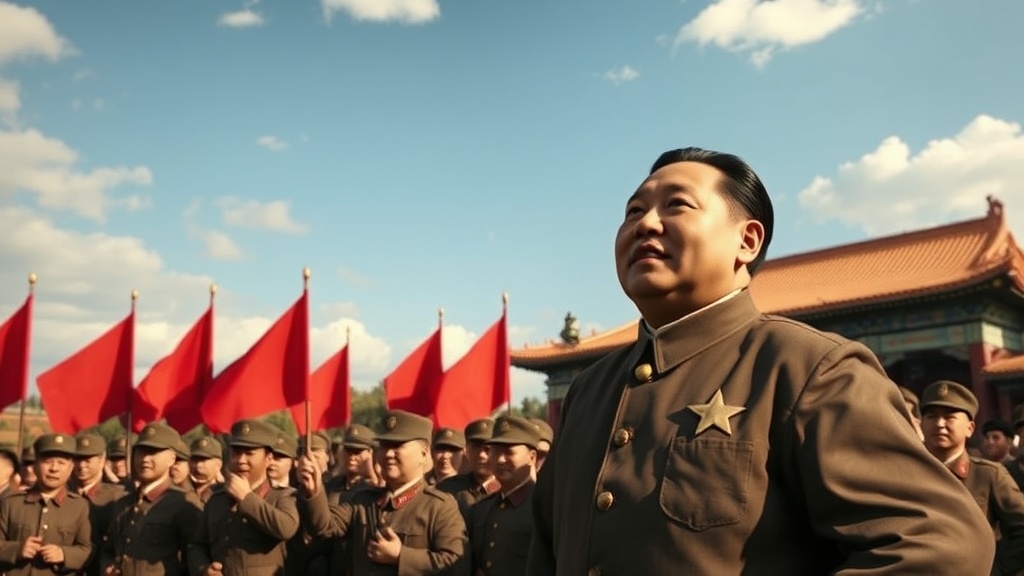
The short answer to why Japan lost Taiwan after World War II is simple: it lost the war. But the longer answer — the one that actually explains the shape of modern East Asia — involves broken promises, cynical diplomacy, a civil war, and a Cold War calculation that would echo for decades. The story of Taiwan's postwar fate is not just a historical footnote. It is the origin story of one of the most geopolitically sensitive flashpoints on Earth.
Japan's Empire and the Long Shadow of 1895
To understand why Taiwan's fate after 1945 was so complicated, you have to go back to the moment Japan first took it. The First Sino-Japanese War of 1894–1895 was a seismic shock to the regional order. China, the ancient Middle Kingdom that had long regarded Japan as a peripheral tributary state, was humiliated by a nation that had only begun its modernisation reforms a generation earlier. In the Treaty of Shimonoseki, Japan extracted Taiwan and the Pescadores Islands from a defeated Qing dynasty.
From that moment, Taiwan became something more than territory. It became a symbol — of Japanese capability, of Chinese humiliation, and of the shifting tectonic plates of Asian power. Over the following five decades, Japan poured capital and administration into the island. By 1945, Taiwan was among the most economically developed parts of Japan's empire, producing sugar, rice, and raw materials that fed the imperial machine.
For China, the loss of Taiwan was a wound that never fully healed. When the Republic of China emerged from the chaos of the early twentieth century, the recovery of Taiwan was always part of its national mythology — a righting of historical wrongs, a restoration of what had been stolen. That emotional weight would drive decisions that were not always strategically wise.
The Cairo Conference and the Art of the Vague Promise
In November 1943, with the war still fiercely unresolved, Franklin D. Roosevelt, Winston Churchill, and Chiang Kai-shek met in Cairo. The stated purpose was to coordinate the war effort against Japan. The unstated purpose, at least from America's perspective, was to keep China fighting.
China's role in the war is often underappreciated in Western retellings. Chiang Kai-shek's Nationalist forces had been absorbing the bulk of Japan's land army for years, tying down hundreds of thousands of Japanese troops that might otherwise have been deployed elsewhere. Washington desperately needed China to stay in the fight. And so Roosevelt made promises.
At Cairo, the Americans committed to returning Manchuria and Taiwan to the Republic of China after Japan's defeat. On the surface, this looked like a firm postwar guarantee. In practice, it was something considerably more elastic. Roosevelt was also privately floating the idea of giving China Okinawa — not because he genuinely intended to, but because keeping Chiang happy was the immediate priority. The language of the Cairo Declaration was deliberately ambiguous. There was no timetable, no mechanism, no binding treaty framework. It was a wartime promise, and wartime promises have a habit of shape-shifting when the shooting stops.
Britain, for its part, was told to go along with the arrangement despite having real reservations. London had substantial pre-war trade interests in Japanese-administered Taiwan, and it was deeply suspicious of China's long-term ambitions in Asia — particularly given China's vocal criticism of European colonialism. Churchill's government wanted Japan punished, but its preferred version of Japan's territorial losses was more limited: strip back the gains made since World War One, hand back Korea, but do not simply hand the entire empire's choicest pieces to a China that might prove unreliable. These objections were noted and then largely ignored.
The Annexation Nobody Was Quite Ready For
When Japan surrendered in August 1945, the practical business of dismantling its empire began almost immediately. Taiwan was designated as falling under Chinese administrative authority, and Nationalist forces arrived on the island in October of that year. What happened next surprised even the Americans: within weeks, the Republic of China had formally annexed Taiwan rather than placing it under any kind of provisional international supervision.
The speed of the annexation matters. The Allied powers — exhausted, demobilising, and already beginning to worry about the Soviet Union — had envisioned a transitional period. A trusteeship arrangement, perhaps, that would allow time for proper deliberation about Taiwan's ultimate political status. The Cairo Declaration had been a wartime gesture, not a legal instrument of transfer. But Chiang Kai-shek was not interested in waiting rooms or international committees. Taiwan was Chinese territory. He had been promised it. He took it.
The Allies grumbled. Britain was openly irritated. But neither Roosevelt nor Churchill was in a position to object any longer — Roosevelt had died in April 1945, and Churchill had been voted out of office in July. Their successors inherited the commitments without having made them, and that created genuine political space for second thoughts.
Those second thoughts were intensified by what began happening on Taiwan almost immediately after the Nationalist takeover. The Taiwanese population, which had genuinely hoped for reunification with China, rapidly discovered that the Republic of China's administration regarded the island primarily as a resource to be extracted and its people as a vaguely suspect colonial remnant. Corruption was rampant. Mainlander officials displaced local Taiwanese from positions of authority. The brutal suppression of the 1947 uprising — the 228 Incident — in which thousands of Taiwanese were killed, shattered any remaining goodwill. Some Taiwanese, in quiet and uncomfortable conversations that embarrassed everyone, admitted they had been treated better under the Japanese.
The Cold War Rewrites the Calculation
By 1946, the Chinese Civil War had reignited in earnest, and the question of Taiwan's future became dramatically more complicated. The Nationalist forces were losing. If Mao Zedong's Communist Party won on the mainland — which was beginning to look increasingly likely — what would become of Taiwan? A communist-controlled Taiwan would be a naval platform of enormous strategic value, potentially available to the Soviet Union, sitting astride vital sea lanes in the western Pacific.
The United States found itself in an awkward position. It had encouraged and legitimised China's annexation of Taiwan. It had made promises at Cairo. But those promises had been made to a Nationalist China that was now crumbling. The communist leadership, meanwhile, had its own complicated history with Taiwan. Mao had at various points publicly condemned the annexation of Taiwan as an act of imperialism, and had historically argued for Taiwanese self-determination rather than incorporation into China. This gave Washington a narrow but real diplomatic opening.
Three options were considered inside the Truman administration. The first was to support a plebiscite — let the Taiwanese people vote on their own future, choosing between remaining part of the Republic of China or declaring independence. Washington knew Chiang would refuse, but hoped to leverage Britain, France, and the United Nations into forcing the issue. The fatal flaw was that the Republic of China held a UN Security Council veto, and the Soviet Union, while suspicious of Mao controlling all of China, had no interest in a Taiwan independence outcome that would primarily benefit the United States and Japan.
The second option was military occupation of Taiwan by American forces. This was discussed seriously and rejected seriously. An occupation would stretch an already demobilising military, hand the Soviets a propaganda gift by making America look like an empire-builder going back on its word, and likely inflame nationalist sentiment across Asia at precisely the moment Washington was trying to build anti-communist coalitions.
The third option was to do nothing, make no formal decision, and hope that circumstances evolved in a manageable direction. This is the option the United States chose. It is, in its own way, a masterclass in strategic ambiguity — one whose consequences are still being navigated today.
The 1951 Treaty of San Francisco and the Deliberate Silence
When the Korean War erupted in June 1950, American strategic thinking about Taiwan crystallised quickly. The conflict provided the rationale to deploy the Seventh Fleet to the Taiwan Strait, physically preventing a communist invasion. The Republic of China government, which had fled to Taiwan in 1949 as the mainland fell to Mao, was suddenly a useful anti-communist ally rather than an embarrassing remnant.
The 1951 Treaty of San Francisco, which formally ended the Pacific War and established the legal framework for postwar Japan, handled Taiwan with careful, deliberate imprecision. Japan renounced all claims and rights to Taiwan and the Pescadores. But — and this is the crucial detail — the treaty did not specify to whom those rights were renounced. Not to the Republic of China. Not to the People's Republic of China. Not to the Taiwanese people. To no one in particular.
Free Weekly Newsletter
Enjoying this guide?
Get the best articles like this one delivered to your inbox every week. No spam.
This was not an oversight. It was a diplomatic construction designed to serve multiple interests simultaneously. For Japan, it allowed the country to shed the legal and moral burden of colonial ownership while avoiding the politically awkward step of explicitly legitimising either Chinese government's claim. For the United States, it preserved maximum flexibility in a region that was changing too rapidly for firm commitments to be safe. For Taiwan itself, the ambiguity created a peculiar form of limbo — not quite independent, not quite absorbed — that has defined its international status ever since.
The island that Japan built, China claimed, and America indefinitely deferred became, in the years that followed, one of the most successful economies in Asia, a functioning democracy, and the world's most consequential unresolved territorial question. All of that traces back to a wartime promise made in Cairo, a hasty annexation in 1945, and a peace treaty that deliberately said less than it could have.
What Taiwan's Postwar Story Actually Tells Us
The question of why Japan wasn't allowed to keep Taiwan after World War II turns out, on examination, to be the wrong question. Japan was never seriously going to keep Taiwan — it had lost the war catastrophically and had no standing to negotiate territorial retention. The real question is why Taiwan ended up where it did, governed the way it was, with the legal status it has. And the answer to that question is less about justice or historical rights than about the collision of exhausted Allied promises, Chinese nationalist urgency, Cold War anxiety, and the enduring human tendency to defer the hardest decisions to the future.
Taiwan's postwar trajectory is a reminder that the end of one conflict rarely resolves the tensions that made it necessary. Sometimes it just relocates them, compresses them, and hands them to the next generation with a note that says: we'll leave this one for you to sort out.
Frequently Asked Questions
Why did the United States promise Taiwan to China during World War II?
The primary motivation was strategic rather than principled. At the 1943 Cairo Conference, the US needed to keep Nationalist China actively fighting Japan, which was tying down the vast majority of Japan's land forces in Asia. Roosevelt was willing to promise Taiwan's return — along with hints about Okinawa — to ensure Chiang Kai-shek remained committed to the Allied cause. The promises were deliberately vague in their timing and mechanism, giving Washington room to manoeuvre after the war ended.
Did Japan ever formally give Taiwan to China after World War II?
No — and this is the legal crux of Taiwan's ambiguous international status. In the 1951 Treaty of San Francisco, Japan formally renounced all rights and claims to Taiwan, but the treaty did not specify which government or entity those rights were transferred to. This deliberate omission left Taiwan's sovereignty legally unresolved, a situation that persists to this day and underpins the complex diplomatic dance between Taiwan, China, and the international community.
How did ordinary Taiwanese people react to Chinese Nationalist rule after 1945?
Initially, many Taiwanese welcomed reunification with China as liberation from Japanese colonial rule. That enthusiasm faded quickly. The Nationalist administration was perceived as corrupt, extractive, and dismissive of the local population, treating native Taiwanese as second-class citizens. The 228 Incident of 1947 — a brutal crackdown on an island-wide uprising in which thousands were killed — became a defining trauma in Taiwanese collective memory and permanently complicated the island's relationship with mainland Chinese identity.
Why didn't the United States simply make Taiwan independent after World War II?
Washington considered supporting Taiwanese independence but faced insurmountable obstacles. The Republic of China held a United Nations Security Council veto, meaning any formal independence proposal could be blocked. The Soviet Union opposed independence because it would benefit American and Japanese strategic interests. And military occupation of Taiwan was rejected as too costly in both resources and diplomatic credibility. The US ultimately chose strategic ambiguity — neither endorsing nor opposing Taiwan's annexation — a policy whose legacy shapes US-China-Taiwan relations to this day.
Frequently Asked Questions
The Island That Everyone Wanted — And Nobody Could Agree On
In the closing months of the Second World War, as Japan's empire collapsed in on itself like a dying star, the question of what to do with Taiwan — then known as Formosa — became one of the most contested, quietly explosive diplomatic puzzles of the entire postwar settlement. Japan had held the island since 1895, longer than it had held most of its other imperial acquisitions. Taiwan had been transformed under Japanese rule: railways built, industries established, a colonial order imposed with all the brutality and bureaucratic efficiency that implied. And then, almost overnight, it was gone.
The short answer to why Japan lost Taiwan after World War II is simple: it lost the war. But the longer answer — the one that actually explains the shape of modern East Asia — involves broken promises, cynical diplomacy, a civil war, and a Cold War calculation that would echo for decades. The story of Taiwan's postwar fate is not just a historical footnote. It is the origin story of one of the most geopolitically sensitive flashpoints on Earth.
Japan's Empire and the Long Shadow of 1895
To understand why Taiwan's fate after 1945 was so complicated, you have to go back to the moment Japan first took it. The First Sino-Japanese War of 1894–1895 was a seismic shock to the regional order. China, the ancient Middle Kingdom that had long regarded Japan as a peripheral tributary state, was humiliated by a nation that had only begun its modernisation reforms a generation earlier. In the Treaty of Shimonoseki, Japan extracted Taiwan and the Pescadores Islands from a defeated Qing dynasty.
From that moment, Taiwan became something more than territory. It became a symbol — of Japanese capability, of Chinese humiliation, and of the shifting tectonic plates of Asian power. Over the following five decades, Japan poured capital and administration into the island. By 1945, Taiwan was among the most economically developed parts of Japan's empire, producing sugar, rice, and raw materials that fed the imperial machine.
For China, the loss of Taiwan was a wound that never fully healed. When the Republic of China emerged from the chaos of the early twentieth century, the recovery of Taiwan was always part of its national mythology — a righting of historical wrongs, a restoration of what had been stolen. That emotional weight would drive decisions that were not always strategically wise.
The Cairo Conference and the Art of the Vague Promise
In November 1943, with the war still fiercely unresolved, Franklin D. Roosevelt, Winston Churchill, and Chiang Kai-shek met in Cairo. The stated purpose was to coordinate the war effort against Japan. The unstated purpose, at least from America's perspective, was to keep China fighting.
China's role in the war is often underappreciated in Western retellings. Chiang Kai-shek's Nationalist forces had been absorbing the bulk of Japan's land army for years, tying down hundreds of thousands of Japanese troops that might otherwise have been deployed elsewhere. Washington desperately needed China to stay in the fight. And so Roosevelt made promises.
At Cairo, the Americans committed to returning Manchuria and Taiwan to the Republic of China after Japan's defeat. On the surface, this looked like a firm postwar guarantee. In practice, it was something considerably more elastic. Roosevelt was also privately floating the idea of giving China Okinawa — not because he genuinely intended to, but because keeping Chiang happy was the immediate priority. The language of the Cairo Declaration was deliberately ambiguous. There was no timetable, no mechanism, no binding treaty framework. It was a wartime promise, and wartime promises have a habit of shape-shifting when the shooting stops.
Britain, for its part, was told to go along with the arrangement despite having real reservations. London had substantial pre-war trade interests in Japanese-administered Taiwan, and it was deeply suspicious of China's long-term ambitions in Asia — particularly given China's vocal criticism of European colonialism. Churchill's government wanted Japan punished, but its preferred version of Japan's territorial losses was more limited: strip back the gains made since World War One, hand back Korea, but do not simply hand the entire empire's choicest pieces to a China that might prove unreliable. These objections were noted and then largely ignored.
The Annexation Nobody Was Quite Ready For
When Japan surrendered in August 1945, the practical business of dismantling its empire began almost immediately. Taiwan was designated as falling under Chinese administrative authority, and Nationalist forces arrived on the island in October of that year. What happened next surprised even the Americans: within weeks, the Republic of China had formally annexed Taiwan rather than placing it under any kind of provisional international supervision.
The speed of the annexation matters. The Allied powers — exhausted, demobilising, and already beginning to worry about the Soviet Union — had envisioned a transitional period. A trusteeship arrangement, perhaps, that would allow time for proper deliberation about Taiwan's ultimate political status. The Cairo Declaration had been a wartime gesture, not a legal instrument of transfer. But Chiang Kai-shek was not interested in waiting rooms or international committees. Taiwan was Chinese territory. He had been promised it. He took it.
The Allies grumbled. Britain was openly irritated. But neither Roosevelt nor Churchill was in a position to object any longer — Roosevelt had died in April 1945, and Churchill had been voted out of office in July. Their successors inherited the commitments without having made them, and that created genuine political space for second thoughts.
Those second thoughts were intensified by what began happening on Taiwan almost immediately after the Nationalist takeover. The Taiwanese population, which had genuinely hoped for reunification with China, rapidly discovered that the Republic of China's administration regarded the island primarily as a resource to be extracted and its people as a vaguely suspect colonial remnant. Corruption was rampant. Mainlander officials displaced local Taiwanese from positions of authority. The brutal suppression of the 1947 uprising — the 228 Incident — in which thousands of Taiwanese were killed, shattered any remaining goodwill. Some Taiwanese, in quiet and uncomfortable conversations that embarrassed everyone, admitted they had been treated better under the Japanese.
The Cold War Rewrites the Calculation
By 1946, the Chinese Civil War had reignited in earnest, and the question of Taiwan's future became dramatically more complicated. The Nationalist forces were losing. If Mao Zedong's Communist Party won on the mainland — which was beginning to look increasingly likely — what would become of Taiwan? A communist-controlled Taiwan would be a naval platform of enormous strategic value, potentially available to the Soviet Union, sitting astride vital sea lanes in the western Pacific.
The United States found itself in an awkward position. It had encouraged and legitimised China's annexation of Taiwan. It had made promises at Cairo. But those promises had been made to a Nationalist China that was now crumbling. The communist leadership, meanwhile, had its own complicated history with Taiwan. Mao had at various points publicly condemned the annexation of Taiwan as an act of imperialism, and had historically argued for Taiwanese self-determination rather than incorporation into China. This gave Washington a narrow but real diplomatic opening.
Three options were considered inside the Truman administration. The first was to support a plebiscite — let the Taiwanese people vote on their own future, choosing between remaining part of the Republic of China or declaring independence. Washington knew Chiang would refuse, but hoped to leverage Britain, France, and the United Nations into forcing the issue. The fatal flaw was that the Republic of China held a UN Security Council veto, and the Soviet Union, while suspicious of Mao controlling all of China, had no interest in a Taiwan independence outcome that would primarily benefit the United States and Japan.
The second option was military occupation of Taiwan by American forces. This was discussed seriously and rejected seriously. An occupation would stretch an already demobilising military, hand the Soviets a propaganda gift by making America look like an empire-builder going back on its word, and likely inflame nationalist sentiment across Asia at precisely the moment Washington was trying to build anti-communist coalitions.
The third option was to do nothing, make no formal decision, and hope that circumstances evolved in a manageable direction. This is the option the United States chose. It is, in its own way, a masterclass in strategic ambiguity — one whose consequences are still being navigated today.
The 1951 Treaty of San Francisco and the Deliberate Silence
When the Korean War erupted in June 1950, American strategic thinking about Taiwan crystallised quickly. The conflict provided the rationale to deploy the Seventh Fleet to the Taiwan Strait, physically preventing a communist invasion. The Republic of China government, which had fled to Taiwan in 1949 as the mainland fell to Mao, was suddenly a useful anti-communist ally rather than an embarrassing remnant.
The 1951 Treaty of San Francisco, which formally ended the Pacific War and established the legal framework for postwar Japan, handled Taiwan with careful, deliberate imprecision. Japan renounced all claims and rights to Taiwan and the Pescadores. But — and this is the crucial detail — the treaty did not specify to whom those rights were renounced. Not to the Republic of China. Not to the People's Republic of China. Not to the Taiwanese people. To no one in particular.
This was not an oversight. It was a diplomatic construction designed to serve multiple interests simultaneously. For Japan, it allowed the country to shed the legal and moral burden of colonial ownership while avoiding the politically awkward step of explicitly legitimising either Chinese government's claim. For the United States, it preserved maximum flexibility in a region that was changing too rapidly for firm commitments to be safe. For Taiwan itself, the ambiguity created a peculiar form of limbo — not quite independent, not quite absorbed — that has defined its international status ever since.
The island that Japan built, China claimed, and America indefinitely deferred became, in the years that followed, one of the most successful economies in Asia, a functioning democracy, and the world's most consequential unresolved territorial question. All of that traces back to a wartime promise made in Cairo, a hasty annexation in 1945, and a peace treaty that deliberately said less than it could have.
What Taiwan's Postwar Story Actually Tells Us
The question of why Japan wasn't allowed to keep Taiwan after World War II turns out, on examination, to be the wrong question. Japan was never seriously going to keep Taiwan — it had lost the war catastrophically and had no standing to negotiate territorial retention. The real question is why Taiwan ended up where it did, governed the way it was, with the legal status it has. And the answer to that question is less about justice or historical rights than about the collision of exhausted Allied promises, Chinese nationalist urgency, Cold War anxiety, and the enduring human tendency to defer the hardest decisions to the future.
Taiwan's postwar trajectory is a reminder that the end of one conflict rarely resolves the tensions that made it necessary. Sometimes it just relocates them, compresses them, and hands them to the next generation with a note that says: we'll leave this one for you to sort out.
Frequently Asked Questions
Why did the United States promise Taiwan to China during World War II?
The primary motivation was strategic rather than principled. At the 1943 Cairo Conference, the US needed to keep Nationalist China actively fighting Japan, which was tying down the vast majority of Japan's land forces in Asia. Roosevelt was willing to promise Taiwan's return — along with hints about Okinawa — to ensure Chiang Kai-shek remained committed to the Allied cause. The promises were deliberately vague in their timing and mechanism, giving Washington room to manoeuvre after the war ended.
Did Japan ever formally give Taiwan to China after World War II?
No — and this is the legal crux of Taiwan's ambiguous international status. In the 1951 Treaty of San Francisco, Japan formally renounced all rights and claims to Taiwan, but the treaty did not specify which government or entity those rights were transferred to. This deliberate omission left Taiwan's sovereignty legally unresolved, a situation that persists to this day and underpins the complex diplomatic dance between Taiwan, China, and the international community.
How did ordinary Taiwanese people react to Chinese Nationalist rule after 1945?
Initially, many Taiwanese welcomed reunification with China as liberation from Japanese colonial rule. That enthusiasm faded quickly. The Nationalist administration was perceived as corrupt, extractive, and dismissive of the local population, treating native Taiwanese as second-class citizens. The 228 Incident of 1947 — a brutal crackdown on an island-wide uprising in which thousands were killed — became a defining trauma in Taiwanese collective memory and permanently complicated the island's relationship with mainland Chinese identity.
Why didn't the United States simply make Taiwan independent after World War II?
Washington considered supporting Taiwanese independence but faced insurmountable obstacles. The Republic of China held a United Nations Security Council veto, meaning any formal independence proposal could be blocked. The Soviet Union opposed independence because it would benefit American and Japanese strategic interests. And military occupation of Taiwan was rejected as too costly in both resources and diplomatic credibility. The US ultimately chose strategic ambiguity — neither endorsing nor opposing Taiwan's annexation — a policy whose legacy shapes US-China-Taiwan relations to this day.
About Zeebrain Editorial
Zeebrain publishes independent analysis of markets, investing, personal finance, and business. We disclose affiliate relationships, never accept payment for coverage, and fact-check all claims against primary sources. Read our editorial policy →
How this article was produced: Zeebrain articles are created with AI assistance from primary sources (including cited videos and market data) and reviewed under our editorial standards before publication. Spot an error? Tell us and we will correct it.
More from History & Mysteries
Related Guides
Keep exploring this topic
Why Japan's 1945 Army Coup Against the Emperor Failed
History & Mysteries · World War II · Japanese History
Foo Fighters: The WWII Mystery Behind the Name
Curiosities · Foo Fighters · UFO history
Why Mao Won the Chinese Civil War: The Full Story
History & Mysteries
Why Only Germany Paid WWI Reparations: The Full Story
History & Mysteries
Explore More Categories
Keep browsing by topic and build depth around the subjects you care about most.