Why Mao Won the Chinese Civil War: The Full Story
Quick Summary
How did Mao's communists defeat a better-funded, US-backed nationalist army? The full story of why Mao won the Chinese Civil War — and why it was never inevitable.
In This Article
Why Mao Won the Chinese Civil War: The Full Story
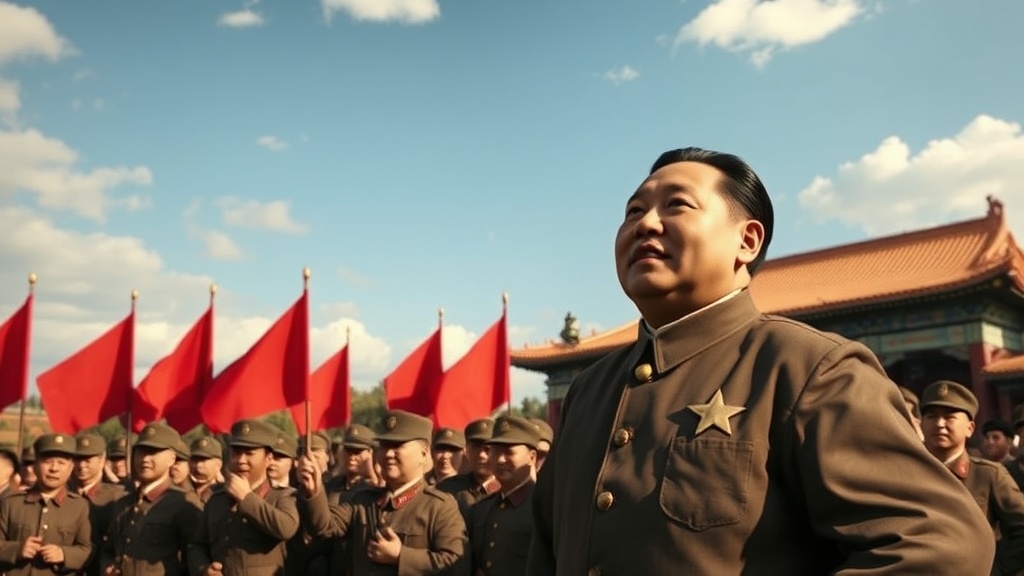
On the first of October, 1949, Mao Zedong stood in Tiananmen Square and proclaimed the birth of the People's Republic of China. It was a moment of almost theatrical finality — the end of decades of war, famine, humiliation, and chaos. But for anyone paying close attention to the balance of power just four years earlier, the scene should have been impossible. In 1945, Chiang Kai-shek's Nationalist government controlled the vast majority of China's territory, its industrial heartland, its major cities. It had the backing of the United States, a larger army, and the international legitimacy of a founding member of the United Nations Security Council. Mao's communists, by contrast, held a handful of rural strongholds and had spent the last decade being chased, bombed, and nearly annihilated.
So how, exactly, did Mao win the Chinese Civil War? The answer is not a simple one. It is a story woven from military strategy, political failure, peasant grievance, foreign interference, and a series of catastrophically poor decisions by the side that should have won.
A Country That Had Never Really Been at Peace
To understand the Chinese Civil War, you have to understand that China had not known genuine political stability for decades before 1945. The fall of the Qing dynasty in 1911 had not produced a unified republic — it had produced a vacuum. Yuan Shikai, the strongman who manoeuvred the last emperor into abdication, briefly and disastrously attempted to crown himself emperor in 1915, triggering yet another round of conflict. What followed was the Warlord Era, a period in which regional military commanders carved the country into competing fiefdoms, each claiming legitimacy, none achieving it.
The Nationalist Party — the Kuomintang, or KMT — emerged from this chaos with a mission to reunify China under a republican constitution. In the early 1920s, they formed a tactical alliance with the Chinese Communist Party (CCP), both agreeing that defeating the warlords came first. It was a partnership built entirely on mutual convenience and sustained by mutual suspicion. It ended in 1927 with Chiang Kai-shek's brutal purge of his communist allies — a massacre that drove the CCP into the countryside and planted seeds of hatred that would take another two decades to fully harvest.
How the Communists Survived When They Should Have Been Finished
By the early 1930s, the Nationalists had good reason to believe the communist threat was finished. They had systematically surrounded and crushed one communist stronghold after another. The most significant of these campaigns targeted Mao's base in the Jiangxi mountains. By 1934, the encirclement was complete. The CCP faced annihilation.
What followed was the Long March — one of the most remarkable military retreats in modern history. Over the course of roughly a year, communist forces trekked thousands of miles across some of China's most hostile terrain, pursued by Nationalist troops the entire way. They arrived in Yan'an having lost approximately 90 percent of the soldiers who started. By any conventional measure, it was a catastrophe. And yet it became mythology. The Long March transformed the CCP's survival into a founding legend, and it cemented Mao Zedong's leadership over the party. More practically, it brought communist forces into contact with rural populations across China — populations that would become their most important resource in the years ahead.
Mao's strategic insight, sharpened by necessity, was to focus on the peasantry rather than the urban working class that orthodox Marxist doctrine prioritised. China in the 1930s was overwhelmingly rural. Landless peasants and tenant farmers who paid crippling rents to absentee landlords represented not just a vast pool of potential recruits but a population with genuine, burning grievances that communist land reform policies directly addressed. When Mao talked about redistributing land, he was not speaking in abstractions. He was speaking to people who had watched their families starve while landlords prospered.
The War That Changed Everything: Japan and the United Front
The Japanese invasion transformed the civil war into something far more complex. Japan had been tightening its grip on China since seizing Manchuria in 1931, installing the last Qing emperor Puyi as a puppet ruler in what they called Manchukuo. By 1937, full-scale war had begun. The speed and ferocity of the Japanese advance was devastating. Chiang's Nationalist government was pushed deep into the interior, eventually retreating to Chongqing, where it remained for most of the war.
The two sides formed a Second United Front against Japan, but it was fragile from the start and barely functional in practice. The critical difference lay in how each side fought — and how each side treated the civilian populations caught in the middle. Chiang's forces engaged in set-piece battles that they were ill-equipped to win, suffering enormous casualties and steadily surrendering territory. When things went badly, the Nationalist response was often reprisal. Civilians suspected of collaborating with the enemy — or simply caught in the wrong place — faced brutal punishment. The military was riddled with corruption; commanders skimmed soldiers' pay, inflated unit numbers to pocket the difference, and hoarded resources rather than deploying them where they were needed.
The communists, fighting from rural strongholds and relying on guerrilla tactics, had a very different relationship with the populations around them. CCP soldiers were under strict orders not to steal from civilians. Prisoners who did not wish to join the communist forces were released rather than executed. Land reform was implemented in territories under communist control. Whether these policies were entirely consistent in practice is debatable, but they established a powerful contrast in popular perception — one that the Nationalists seemed entirely unable or unwilling to challenge.
The Postwar Collapse of Nationalist Legitimacy
When Japan surrendered in August 1945, the scale of the Nationalist government's problems became fully visible. Chiang's forces were so poorly positioned that they literally could not reach the major cities in time to accept the Japanese surrender without American logistical assistance. US aircraft and ships had to transport Nationalist troops across the country. In some areas, the process took so long that surrendered Japanese forces were kept under arms and ordered to garrison cities — to prevent the communists from filling the vacuum. The sight of Japan's former occupiers holding Chinese cities on behalf of the Nationalist government was a propaganda disaster that no amount of official explanation could overcome.
The economic situation was equally dire. Runaway inflation had been eroding living standards throughout the war years, and the postwar period brought no relief. The Nationalist government printed money to cover its debts, triggering hyperinflation that wiped out the savings of the urban middle class — precisely the constituency that should have been its most reliable base of support. Soldiers went unpaid and deserted in large numbers, many of them crossing over to the communist side with their weapons. Officers enriched themselves from public funds while their troops starved. The government restored pre-war landlords to their properties in areas liberated from Japanese occupation, immediately alienating the rural populations who had benefited from communist land redistribution.
What the Nationalist government needed in this moment was competent, clean administration and a credible path to reconstruction. What it offered instead was a resumption of the corruption and brutality that had defined it before the war.
Soviet Manoeuvring and the Manchurian Pivot
The Soviet Union's role in the final act of the Chinese Civil War is often underestimated in Western accounts. When Soviet forces withdrew from Manchuria in 1946 — which they had occupied and systematically stripped of industrial equipment at the war's end — they did not simply hand the territory to Chiang's government as the international agreements required. They invited communist forces in ahead of the Nationalist army, helped them build fortified strongholds throughout the region, and transferred enormous quantities of captured Japanese weapons and equipment to the CCP.
The Soviets then allowed Nationalist forces into the cities, technically honouring their treaty obligations while ensuring the surrounding countryside was firmly in communist hands. It was a masterclass in cynical statecraft. Manchuria became the staging ground from which the communists launched the campaigns that would eventually decide the civil war.
What makes the Soviet role still more interesting is what came at the end. As Mao's forces swept south and the Nationalist government collapsed, Stalin sent word asking Mao to halt his advance. The reasoning was characteristically self-interested: a divided China, Stalin argued, would remain dependent on Soviet support for its security. A unified China under Mao might eventually develop its own foreign policy — which, as history would confirm, is precisely what happened. Mao ignored him. When you are weeks away from total victory, strategic advice from a man who spent the war equipping your enemies has limited appeal.
Why Mao Really Won: Legitimacy, Competence, and the Will of the Countryside
The Chinese Civil War is sometimes framed as a story of communist cunning versus nationalist incompetence, or of Soviet support versus American hesitancy. Both framings contain truth. But the deepest explanation lies elsewhere. Mao won because he offered something that Chiang could not: a credible vision of a different China, delivered through organisations that, whatever their ultimate intentions, actually functioned.
The Nationalist government had governed China for two decades and had produced almost nothing that ordinary Chinese people valued. It had failed to resist Japan, failed to control its own army, failed to manage the economy, failed to curtail the landlords, and failed to offer the rural majority any stake in the political order it claimed to represent. By 1948, even the United States — which had poured hundreds of millions of dollars into the Nationalist cause — had effectively concluded that supporting Chiang was a waste of resources. When Chiang interfered in American domestic politics by backing Truman's opponents in the 1948 presidential election, whatever sympathy remained in Washington evaporated rapidly.
Mao, for his part, had built a party and an army that, despite their own considerable brutality and ideological rigidity, maintained discipline, cultivated popular support, and pursued coherent strategic objectives. He had spent two decades learning how to fight and win in China's specific conditions. By the time the final campaigns began, the outcome was less a military decision than a political one: vast numbers of Chinese people, and crucially vast numbers of Nationalist soldiers, had already decided which side they were on.
Conclusion: A Victory Earned Over Decades
Mao's victory in the Chinese Civil War was not an accident, nor was it simply the product of American abandonment or Soviet support. It was the culmination of a decades-long process in which the Nationalist government steadily destroyed its own legitimacy while the communists, through a combination of genuine policy appeal and extraordinary political discipline, built theirs. The story is a reminder that in civil conflicts, military power and foreign backing matter — but they rarely matter as much as the question of which side the population has decided to trust, or at least tolerate.
Free Weekly Newsletter
Enjoying this guide?
Get the best articles like this one delivered to your inbox every week. No spam.
The People's Republic of China that Mao proclaimed in 1949 would go on to pursue policies of extraordinary violence and suffering — the Great Leap Forward, the Cultural Revolution — that the peasants who had welcomed the communists could never have anticipated. But in 1949, standing in Tiananmen Square, Mao could credibly claim something that no Chinese leader had been able to claim since the last days of the Qing: he spoke for a unified country. How long that unity would hold, and at what cost, was a question for another generation.
Frequently Asked Questions
Why did the United States stop supporting the Nationalists in the Chinese Civil War?
American support for Chiang Kai-shek's Nationalist government eroded for several reasons. US military advisers were deeply frustrated by the corruption and incompetence of Nationalist commanders, who consistently refused to use American-supplied resources effectively. Many senior Nationalist generals treated their troops and equipment as the basis of their personal power and were reluctant to risk them in battle. When Chiang also refused to implement democratic reforms and, extraordinarily, openly backed Harry Truman's opponent in the 1948 US presidential election, what remained of Washington's patience collapsed. The Truman administration concluded that continued support was simply throwing money at a losing cause.
What role did the Soviet Union play in the Chinese Civil War?
Soviet involvement was substantial but strategically self-serving. During the Second World War, Stalin had maintained relations with both the Nationalists and the communists, prioritising a strong China as a counterweight to Japan rather than a communist one. After Japan's defeat, Soviet forces occupied Manchuria and, on withdrawal, handed enormous quantities of captured Japanese weapons to the CCP while ostensibly returning territory to the Nationalist government. This gave Mao's forces a critical military advantage in the postwar period. Towards the end of the civil war, Stalin actually urged Mao to halt his advance, fearing that a fully unified communist China would eventually act independently of Moscow — which proved to be an accurate concern.
How did the Long March contribute to Mao's eventual victory?
The Long March of 1934–35 was militarily catastrophic — the CCP lost roughly 90 percent of the forces that began it. But it served two crucial long-term purposes. First, it physically moved communist forces out of encirclement and into new territory, allowing them to reconstitute and rebuild. Second, and perhaps more importantly, it became the founding myth of the communist movement. The survivors of the Long March acquired immense prestige within the party, and the narrative of having endured such suffering for the cause proved enormously powerful for recruitment and morale. It also consolidated Mao's leadership in a way that internal party politics alone might never have achieved.
What made the Chinese peasantry support the communists over the Nationalists?
The short answer is land and conduct. China in the first half of the twentieth century was a predominantly rural society in which the majority of farmers were either landless or tenant farmers paying high rents to landlords. Communist land reform policies — redistributing land to those who worked it — addressed the most urgent material grievance of the largest group of people in the country. Beyond policy, the day-to-day behaviour of communist troops, who were under strict orders not to steal from or abuse civilians, contrasted sharply with Nationalist forces, who had a widespread reputation for looting, extortion, and brutal reprisals. In the calculus of a peasant farmer trying to survive a civil war, these differences were not abstract — they were immediate and personal.
Could Chiang Kai-shek have won the Chinese Civil War?
Historians continue to debate this, but the weight of evidence suggests that a Nationalist victory would have required a fundamental transformation of the KMT government — its military culture, its economic management, and its relationship with the rural population — that showed no signs of occurring. Chiang had been in power since 1928 and the patterns of corruption and political repression were deeply entrenched. American pressure for reform was consistently resisted. Even with superior resources and foreign backing, a government that cannot pay its soldiers, control its officers, or offer its population a reason to support it faces structural problems that military strategy alone cannot solve.
Frequently Asked Questions
A Country That Had Never Really Been at Peace
To understand the Chinese Civil War, you have to understand that China had not known genuine political stability for decades before 1945. The fall of the Qing dynasty in 1911 had not produced a unified republic — it had produced a vacuum. Yuan Shikai, the strongman who manoeuvred the last emperor into abdication, briefly and disastrously attempted to crown himself emperor in 1915, triggering yet another round of conflict. What followed was the Warlord Era, a period in which regional military commanders carved the country into competing fiefdoms, each claiming legitimacy, none achieving it.
The Nationalist Party — the Kuomintang, or KMT — emerged from this chaos with a mission to reunify China under a republican constitution. In the early 1920s, they formed a tactical alliance with the Chinese Communist Party (CCP), both agreeing that defeating the warlords came first. It was a partnership built entirely on mutual convenience and sustained by mutual suspicion. It ended in 1927 with Chiang Kai-shek's brutal purge of his communist allies — a massacre that drove the CCP into the countryside and planted seeds of hatred that would take another two decades to fully harvest.
How the Communists Survived When They Should Have Been Finished
By the early 1930s, the Nationalists had good reason to believe the communist threat was finished. They had systematically surrounded and crushed one communist stronghold after another. The most significant of these campaigns targeted Mao's base in the Jiangxi mountains. By 1934, the encirclement was complete. The CCP faced annihilation.
What followed was the Long March — one of the most remarkable military retreats in modern history. Over the course of roughly a year, communist forces trekked thousands of miles across some of China's most hostile terrain, pursued by Nationalist troops the entire way. They arrived in Yan'an having lost approximately 90 percent of the soldiers who started. By any conventional measure, it was a catastrophe. And yet it became mythology. The Long March transformed the CCP's survival into a founding legend, and it cemented Mao Zedong's leadership over the party. More practically, it brought communist forces into contact with rural populations across China — populations that would become their most important resource in the years ahead.
Mao's strategic insight, sharpened by necessity, was to focus on the peasantry rather than the urban working class that orthodox Marxist doctrine prioritised. China in the 1930s was overwhelmingly rural. Landless peasants and tenant farmers who paid crippling rents to absentee landlords represented not just a vast pool of potential recruits but a population with genuine, burning grievances that communist land reform policies directly addressed. When Mao talked about redistributing land, he was not speaking in abstractions. He was speaking to people who had watched their families starve while landlords prospered.
The War That Changed Everything: Japan and the United Front
The Japanese invasion transformed the civil war into something far more complex. Japan had been tightening its grip on China since seizing Manchuria in 1931, installing the last Qing emperor Puyi as a puppet ruler in what they called Manchukuo. By 1937, full-scale war had begun. The speed and ferocity of the Japanese advance was devastating. Chiang's Nationalist government was pushed deep into the interior, eventually retreating to Chongqing, where it remained for most of the war.
The two sides formed a Second United Front against Japan, but it was fragile from the start and barely functional in practice. The critical difference lay in how each side fought — and how each side treated the civilian populations caught in the middle. Chiang's forces engaged in set-piece battles that they were ill-equipped to win, suffering enormous casualties and steadily surrendering territory. When things went badly, the Nationalist response was often reprisal. Civilians suspected of collaborating with the enemy — or simply caught in the wrong place — faced brutal punishment. The military was riddled with corruption; commanders skimmed soldiers' pay, inflated unit numbers to pocket the difference, and hoarded resources rather than deploying them where they were needed.
The communists, fighting from rural strongholds and relying on guerrilla tactics, had a very different relationship with the populations around them. CCP soldiers were under strict orders not to steal from civilians. Prisoners who did not wish to join the communist forces were released rather than executed. Land reform was implemented in territories under communist control. Whether these policies were entirely consistent in practice is debatable, but they established a powerful contrast in popular perception — one that the Nationalists seemed entirely unable or unwilling to challenge.
The Postwar Collapse of Nationalist Legitimacy
When Japan surrendered in August 1945, the scale of the Nationalist government's problems became fully visible. Chiang's forces were so poorly positioned that they literally could not reach the major cities in time to accept the Japanese surrender without American logistical assistance. US aircraft and ships had to transport Nationalist troops across the country. In some areas, the process took so long that surrendered Japanese forces were kept under arms and ordered to garrison cities — to prevent the communists from filling the vacuum. The sight of Japan's former occupiers holding Chinese cities on behalf of the Nationalist government was a propaganda disaster that no amount of official explanation could overcome.
The economic situation was equally dire. Runaway inflation had been eroding living standards throughout the war years, and the postwar period brought no relief. The Nationalist government printed money to cover its debts, triggering hyperinflation that wiped out the savings of the urban middle class — precisely the constituency that should have been its most reliable base of support. Soldiers went unpaid and deserted in large numbers, many of them crossing over to the communist side with their weapons. Officers enriched themselves from public funds while their troops starved. The government restored pre-war landlords to their properties in areas liberated from Japanese occupation, immediately alienating the rural populations who had benefited from communist land redistribution.
What the Nationalist government needed in this moment was competent, clean administration and a credible path to reconstruction. What it offered instead was a resumption of the corruption and brutality that had defined it before the war.
Soviet Manoeuvring and the Manchurian Pivot
The Soviet Union's role in the final act of the Chinese Civil War is often underestimated in Western accounts. When Soviet forces withdrew from Manchuria in 1946 — which they had occupied and systematically stripped of industrial equipment at the war's end — they did not simply hand the territory to Chiang's government as the international agreements required. They invited communist forces in ahead of the Nationalist army, helped them build fortified strongholds throughout the region, and transferred enormous quantities of captured Japanese weapons and equipment to the CCP.
The Soviets then allowed Nationalist forces into the cities, technically honouring their treaty obligations while ensuring the surrounding countryside was firmly in communist hands. It was a masterclass in cynical statecraft. Manchuria became the staging ground from which the communists launched the campaigns that would eventually decide the civil war.
What makes the Soviet role still more interesting is what came at the end. As Mao's forces swept south and the Nationalist government collapsed, Stalin sent word asking Mao to halt his advance. The reasoning was characteristically self-interested: a divided China, Stalin argued, would remain dependent on Soviet support for its security. A unified China under Mao might eventually develop its own foreign policy — which, as history would confirm, is precisely what happened. Mao ignored him. When you are weeks away from total victory, strategic advice from a man who spent the war equipping your enemies has limited appeal.
Why Mao Really Won: Legitimacy, Competence, and the Will of the Countryside
The Chinese Civil War is sometimes framed as a story of communist cunning versus nationalist incompetence, or of Soviet support versus American hesitancy. Both framings contain truth. But the deepest explanation lies elsewhere. Mao won because he offered something that Chiang could not: a credible vision of a different China, delivered through organisations that, whatever their ultimate intentions, actually functioned.
The Nationalist government had governed China for two decades and had produced almost nothing that ordinary Chinese people valued. It had failed to resist Japan, failed to control its own army, failed to manage the economy, failed to curtail the landlords, and failed to offer the rural majority any stake in the political order it claimed to represent. By 1948, even the United States — which had poured hundreds of millions of dollars into the Nationalist cause — had effectively concluded that supporting Chiang was a waste of resources. When Chiang interfered in American domestic politics by backing Truman's opponents in the 1948 presidential election, whatever sympathy remained in Washington evaporated rapidly.
Mao, for his part, had built a party and an army that, despite their own considerable brutality and ideological rigidity, maintained discipline, cultivated popular support, and pursued coherent strategic objectives. He had spent two decades learning how to fight and win in China's specific conditions. By the time the final campaigns began, the outcome was less a military decision than a political one: vast numbers of Chinese people, and crucially vast numbers of Nationalist soldiers, had already decided which side they were on.
Conclusion: A Victory Earned Over Decades
Mao's victory in the Chinese Civil War was not an accident, nor was it simply the product of American abandonment or Soviet support. It was the culmination of a decades-long process in which the Nationalist government steadily destroyed its own legitimacy while the communists, through a combination of genuine policy appeal and extraordinary political discipline, built theirs. The story is a reminder that in civil conflicts, military power and foreign backing matter — but they rarely matter as much as the question of which side the population has decided to trust, or at least tolerate.
The People's Republic of China that Mao proclaimed in 1949 would go on to pursue policies of extraordinary violence and suffering — the Great Leap Forward, the Cultural Revolution — that the peasants who had welcomed the communists could never have anticipated. But in 1949, standing in Tiananmen Square, Mao could credibly claim something that no Chinese leader had been able to claim since the last days of the Qing: he spoke for a unified country. How long that unity would hold, and at what cost, was a question for another generation.
Frequently Asked Questions
Why did the United States stop supporting the Nationalists in the Chinese Civil War?
American support for Chiang Kai-shek's Nationalist government eroded for several reasons. US military advisers were deeply frustrated by the corruption and incompetence of Nationalist commanders, who consistently refused to use American-supplied resources effectively. Many senior Nationalist generals treated their troops and equipment as the basis of their personal power and were reluctant to risk them in battle. When Chiang also refused to implement democratic reforms and, extraordinarily, openly backed Harry Truman's opponent in the 1948 US presidential election, what remained of Washington's patience collapsed. The Truman administration concluded that continued support was simply throwing money at a losing cause.
What role did the Soviet Union play in the Chinese Civil War?
Soviet involvement was substantial but strategically self-serving. During the Second World War, Stalin had maintained relations with both the Nationalists and the communists, prioritising a strong China as a counterweight to Japan rather than a communist one. After Japan's defeat, Soviet forces occupied Manchuria and, on withdrawal, handed enormous quantities of captured Japanese weapons to the CCP while ostensibly returning territory to the Nationalist government. This gave Mao's forces a critical military advantage in the postwar period. Towards the end of the civil war, Stalin actually urged Mao to halt his advance, fearing that a fully unified communist China would eventually act independently of Moscow — which proved to be an accurate concern.
How did the Long March contribute to Mao's eventual victory?
The Long March of 1934–35 was militarily catastrophic — the CCP lost roughly 90 percent of the forces that began it. But it served two crucial long-term purposes. First, it physically moved communist forces out of encirclement and into new territory, allowing them to reconstitute and rebuild. Second, and perhaps more importantly, it became the founding myth of the communist movement. The survivors of the Long March acquired immense prestige within the party, and the narrative of having endured such suffering for the cause proved enormously powerful for recruitment and morale. It also consolidated Mao's leadership in a way that internal party politics alone might never have achieved.
What made the Chinese peasantry support the communists over the Nationalists?
The short answer is land and conduct. China in the first half of the twentieth century was a predominantly rural society in which the majority of farmers were either landless or tenant farmers paying high rents to landlords. Communist land reform policies — redistributing land to those who worked it — addressed the most urgent material grievance of the largest group of people in the country. Beyond policy, the day-to-day behaviour of communist troops, who were under strict orders not to steal from or abuse civilians, contrasted sharply with Nationalist forces, who had a widespread reputation for looting, extortion, and brutal reprisals. In the calculus of a peasant farmer trying to survive a civil war, these differences were not abstract — they were immediate and personal.
Could Chiang Kai-shek have won the Chinese Civil War?
Historians continue to debate this, but the weight of evidence suggests that a Nationalist victory would have required a fundamental transformation of the KMT government — its military culture, its economic management, and its relationship with the rural population — that showed no signs of occurring. Chiang had been in power since 1928 and the patterns of corruption and political repression were deeply entrenched. American pressure for reform was consistently resisted. Even with superior resources and foreign backing, a government that cannot pay its soldiers, control its officers, or offer its population a reason to support it faces structural problems that military strategy alone cannot solve.
About Zeebrain Editorial
Zeebrain publishes independent analysis of markets, investing, personal finance, and business. We disclose affiliate relationships, never accept payment for coverage, and fact-check all claims against primary sources. Read our editorial policy →
How this article was produced: Zeebrain articles are created with AI assistance from primary sources (including cited videos and market data) and reviewed under our editorial standards before publication. Spot an error? Tell us and we will correct it.
More from History & Mysteries

Related Guides
Keep exploring this topic
Why Only Germany Paid WWI Reparations: The Full Story
History & Mysteries
Why Taiwan Wasn't Returned to Japan After World War II
History & Mysteries
The Unseen Architects: Decoding the Historical Roots of AI Ethics
History & Mysteries
Why Japan's 1945 Army Coup Against the Emperor Failed
History & Mysteries
Explore More Categories
Keep browsing by topic and build depth around the subjects you care about most.