Why Almost Every Zipper in the World Says YKK
Quick Summary
From a failed hook-and-eye gadget to 10 billion units a year — the surprisingly deep engineering and history behind the zipper and the YKK monopoly.
In This Article
The Object You Touch Every Day Without Ever Thinking About
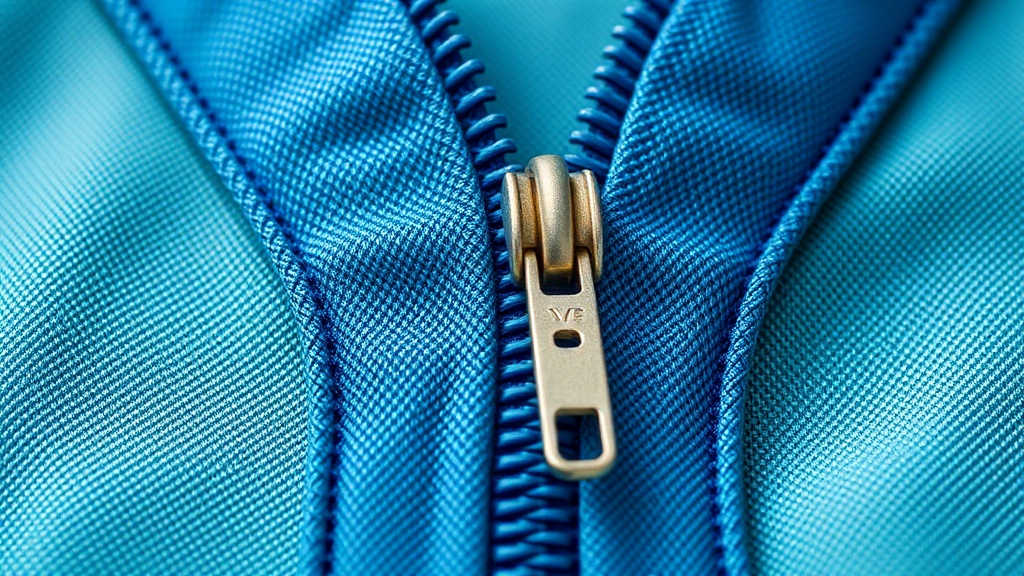
You will use a zipper somewhere between five and fifteen times today. On your jacket, your jeans, your bag, maybe your boots. You will never think about it. That is, in fact, the entire point — the zipper is so well-engineered that its success is measured by invisibility. But if you pause and actually look at the pull tab on your jeans right now, you will almost certainly see three letters stamped into the metal: YKK. And if you check your bag, your coat, your luggage — there it is again. Same three letters. Same company. On products from hundreds of different brands, made in dozens of different countries. That is not an accident. The story of how those three letters came to dominate the zipper world is a story about grief, mechanical genius, corporate resilience, and one of the most quietly successful manufacturing philosophies of the twentieth century.

The Zipper Was Invented by a Bad Engineer with a Good Sales Pitch
The zipper did not spring fully formed into the world. It evolved — painfully, slowly, and through more than a few embarrassing failures — over the better part of half a century.
American inventor Whitcomb Judson is usually credited as the father of the zipper, though calling him that is a bit like calling the Wright Brothers' first passenger the father of commercial aviation. Technically true, but the credit feels misplaced. In 1893, Judson exhibited a "clasp locker" at the Chicago World's Fair — essentially a row of interlocking hooks and eyes that could be operated with a single slide. He pitched it as a revolution in footwear, imagining a future where no one would ever need to fumble with shoelaces again.
The device was a disaster. It jammed constantly. It was made from rust-prone steel, meaning it had to be physically unpicked from the garment before washing. Worse, if a single hook fell out of alignment, the whole fastener could burst open — a particularly alarming failure mode for, say, a woman's skirt in Victorian-era public. Judson's company, the Universal Fastener Company, limped along with very few repeat customers.
What saved the company — and eventually gave the world the modern zipper — was not a better engineer. It was a romance.
Grief, Genius, and the Patent That Changed Everything
In 1906, a 25-year-old Swedish electrical engineer named Gideon Sundback joined the Universal Fastener Company. His motivation was not the fastener industry. It was the manager's daughter, Elvira, whom he married. For several years Sundback made incremental improvements to Judson's original design, but nothing transformative. Then Elvira died shortly after childbirth, and Sundback, by all accounts utterly devastated, threw himself into his work.
What emerged from that dark period was the 1914 patent that is, in all meaningful ways, the zipper you use today. Sundback's design replaced the unreliable hooks and eyes with precisely shaped interlocking teeth — wider at the tip than at the base, each featuring a small raised bump called a nib that slots into a matching indent called a scoop on the adjacent tooth. The slider that joined them was a Y-shaped cavity that tilted each tooth at exactly the right angle to slip into its neighbour without snagging. It was elegant, strong, and mechanically sound.
But elegance on paper meant nothing without the ability to manufacture it. Each tooth needed to be machined to extremely tight tolerances — tolerances that no existing equipment could reliably meet. So Sundback did something remarkable: he designed the manufacturing machines himself. His automated system took Y-shaped wire, sliced it into individual teeth, stamped the nib and scoop into each one, and clamped them onto a fabric tape at precise intervals. Early versions of the machine could produce 150 metres of zipper per day. The precision of the spacing was itself a key feature — teeth positioned so closely together that even if the slider were forced, the nibs on either side had nowhere to go, keeping the fastener locked under stress.
The fabric tape was equally important and often overlooked. By attaching the teeth to an inelastic woven tape rather than directly to the garment, Sundback ensured the zipper could be stitched onto almost any fabric — stretchy or not — without the tooth spacing ever changing. The tape does not stretch; the teeth stay put.
How the Word "Zipper" Was Born — and Why It Stuck
Even with a working product, adoption was slow. The Universal Fastener Company rebranded (briefly, and unfortunately, as the Hookless Hooker) and found its first real commercial traction in niche products: tobacco pouches, money belts, and rubber boots. That last application proved decisive.
The B.F. Goodrich Company started using the fastener on its rubber galoshes in the early 1920s. The company's president was looking for a name that captured how the thing actually felt to use. The smooth, fast action of the fastener — that satisfying gliding motion — sounded, to his ear, like "zip." He called them zipper boots. The boots sold well. The name outlasted the product, detached itself from footwear entirely, and became the generic term for the fastener itself. By the 1930s, the Universal Fastener Company — now called Talon — had become enormously profitable and effectively owned the market.
Consumer enthusiasm was not universal, however. Older and more conservative buyers were suspicious, particularly of the zipper's application to trouser flies. Urban legends circulated about catastrophic malfunctions at dinner tables and formal occasions. There was genuine cultural resistance to replacing a technology — the button — that had never once caused a scandal. Yet the zipper won anyway, because novelty and convenience, combined with aggressive marketing, tend to win. Being modern was aspirational, and the zipper had become a symbol of modernity.
The Engineering Inside Your Zipper That You've Never Noticed
The basic interlocking tooth mechanism is only part of what makes a modern zipper work. There are two other design features that most people have never consciously registered.
The first is the locking mechanism. Zippers that have been well-used tend to wear down in the slider, making them prone to spontaneous unzipping — which is, to put it mildly, inconvenient. Sundback's solution was a small metal pin housed beneath the pull tab. When the pull tab rests in its neutral position, one end of the pin protrudes through a hole in the slider's base, wedging itself between the teeth and preventing movement. Pull the tab forward and the geometry of the tab lifts the pin clear, freeing the slider to move. This is why tugging on the body of a zipper's slider rarely opens it — you need to actually engage the pull tab. A surprisingly high proportion of everyday zippers — over half, by some informal counts — have this mechanism built in, even though almost no one knows it is there.
The second overlooked feature is the coil zipper. The toothed zipper most people visualise is actually not the most common zipper in the world. That distinction belongs to the coil zipper, which has no individual teeth at all. Instead, a continuous spiral of slightly flattened plastic is stitched onto the tape, moulded so that one side of each loop bulges outward. Two such coils, interleaved, mesh together the way gear teeth do — but as a single unbroken piece of material. This eliminates the single biggest failure mode of toothed zippers: the loss of one tooth, which in a toothed design can trigger a cascading failure as neighbours lose their anchor. With a coil zipper, there are no individual teeth to fall off. Coil zippers are also more flexible, making them ideal for luggage and bags that need to wrap around curved surfaces. They appeared in the 1940s and now account for the majority of zipper production globally.
At the other extreme, specialised zippers for deep-sea diving suits and submarine escape gear use rigid nickel teeth pressed against a rubber-backed tape to create an airtight, watertight seal capable of withstanding extreme pressure differentials. The same fundamental principle — two interlocking rows of shaped elements guided by a slider — scales from a child's pencil case to life-critical survival equipment.
How YKK Quietly Took Over the World
Talon's dominance of the zipper market lasted until 1934, when Sundback's foundational patent expired and the field opened to competition. That same year, a Japanese businessman named Tadao Yoshida founded a small fastener company in Tokyo: the Yoshida Manufacturing Corporation, later known by its initials, YKK.
The company's beginnings were modest — a single workshop where zippers were made by hand. Allied bombing destroyed it entirely in 1945. Yoshida rebuilt. After the war, he purchased zipper-making machinery from the United States, then did something unusual: rather than simply using those machines, YKK's engineers studied them, improved their speed and precision, and eventually redesigned them from the ground up. YKK then extended this philosophy to everything in its supply chain. The company began producing not just zippers but the machines that made the zippers, the brass and aluminium alloys used in the teeth, the polyester for the tape, and even the cardboard boxes the finished products shipped in. Every point of quality control was brought in-house.
This vertical integration was paired with a relentless focus on consistency. A YKK zipper made in Japan would behave identically to one made in the company's factories in the United States, the United Kingdom, or Bangladesh. Clothing manufacturers — who operate on tight tolerances and cannot afford production stoppages caused by faulty components — came to trust YKK precisely because of that predictability. Reliability, in manufacturing, is not glamorous. But it is extraordinarily valuable.
By 1980, YKK had overtaken Talon as the world's largest zipper producer. By the early 2000s, Talon's US market share had collapsed to around 7 percent while YKK's had climbed to roughly 45 percent. Today, YKK produces over 10 billion zipper units annually — a length of product that, laid end to end, would circle the Earth approximately 80 times. The three letters on your pull tab represent roughly half of all zippers made on the planet.
Free Weekly Newsletter
Enjoying this guide?
Get the best articles like this one delivered to your inbox every week. No spam.
What a Zipper Can Teach You About Lasting Design
The zipper's journey from Judson's unreliable hook-and-eye contraption to a near-universal fastener is not just an engineering story. It is a case study in what separates a clever idea from a durable one.
Sundback's breakthrough was not just mechanical insight — it was the recognition that a design is only as good as the system that produces it. His machine was as important as his patent. Similarly, YKK's dominance is not the result of a secret zipper design that no one else has access to. The patents expired long ago. What competitors cannot easily replicate is YKK's integrated manufacturing culture, its institutional tolerance for thin margins in exchange for consistent quality, and the trust it has built with brands over decades.
The zipper also illustrates how invisible infrastructure shapes daily life. You interact with the output of one Japanese manufacturing company dozens of times a day without ever registering it. The things that work perfectly tend to disappear from consciousness — and that invisibility is, counterintuitively, the highest mark of their success.
Next time you zip up your jacket, take a second to look at the pull tab. Those three letters represent 170 years of engineering iteration, one inventor's grief, a rubber boot company's marketing instinct, and a manufacturing philosophy rigorous enough to make a commodity product into a global near-monopoly. Not bad for something you never think about.
Frequently Asked Questions
What does YKK stand for?
YKK stands for Yoshida Kogyo Kabushikikaisha, which translates roughly as Yoshida Manufacturing Corporation. The company was founded in Tokyo in 1934 by Tadao Yoshida and has grown into the world's largest zipper manufacturer, producing over 10 billion zipper units per year.
Who actually invented the zipper?
The modern zipper was patented in 1914 by Swedish-American engineer Gideon Sundback, who was working for the Universal Fastener Company in the United States. While Whitcomb Judson is often cited as the original inventor for his 1893 hook-and-eye "clasp locker," Judson's design was unreliable and commercially unsuccessful. Sundback's redesign — featuring interlocking teeth, a Y-shaped slider cavity, and automated manufacturing machinery — is the direct ancestor of every zipper made today.
Why do zippers sometimes unzip on their own, and how is that prevented?
Zippers can self-unzip when the slider wears down over time, allowing the teeth or coils to disengage under tension. Many modern zippers include a locking pin mechanism beneath the pull tab: when the tab is at rest, a small pin wedges itself between the teeth, immobilising the slider. Only pulling the tab forward disengages the pin and allows the slider to move. This is why yanking on the slider body itself rarely opens a zipper — you need to engage the pull tab to release the lock.
What is a coil zipper, and why is it more common than the toothed kind?
A coil zipper uses a single continuous spiral of moulded plastic rather than individual metal or plastic teeth. The spiral is shaped so that two opposing coils interlock when guided by a slider. Because there are no separate teeth to fall off, coil zippers eliminate the cascading failure that can occur in toothed designs when one tooth is lost. They are also more flexible, which makes them well-suited to luggage and curved applications. Introduced in the 1940s, coil zippers now account for the majority of global zipper production.
Why do so many different clothing brands use YKK zippers rather than making their own?
YKK's dominance comes down to reliability and cost efficiency. The company controls every stage of its supply chain — from raw materials and manufacturing machinery to finished product — which allows it to maintain extraordinary consistency across billions of units. For clothing manufacturers, a zipper is a small component, but a faulty one can ruin an entire garment and damage a brand's reputation. Sourcing from YKK reduces that risk at a price point that makes it difficult for competitors to match both quality and scale simultaneously.
Frequently Asked Questions
The Object You Touch Every Day Without Ever Thinking About
You will use a zipper somewhere between five and fifteen times today. On your jacket, your jeans, your bag, maybe your boots. You will never think about it. That is, in fact, the entire point — the zipper is so well-engineered that its success is measured by invisibility. But if you pause and actually look at the pull tab on your jeans right now, you will almost certainly see three letters stamped into the metal: YKK. And if you check your bag, your coat, your luggage — there it is again. Same three letters. Same company. On products from hundreds of different brands, made in dozens of different countries. That is not an accident. The story of how those three letters came to dominate the zipper world is a story about grief, mechanical genius, corporate resilience, and one of the most quietly successful manufacturing philosophies of the twentieth century.
The Zipper Was Invented by a Bad Engineer with a Good Sales Pitch
The zipper did not spring fully formed into the world. It evolved — painfully, slowly, and through more than a few embarrassing failures — over the better part of half a century.
American inventor Whitcomb Judson is usually credited as the father of the zipper, though calling him that is a bit like calling the Wright Brothers' first passenger the father of commercial aviation. Technically true, but the credit feels misplaced. In 1893, Judson exhibited a "clasp locker" at the Chicago World's Fair — essentially a row of interlocking hooks and eyes that could be operated with a single slide. He pitched it as a revolution in footwear, imagining a future where no one would ever need to fumble with shoelaces again.
The device was a disaster. It jammed constantly. It was made from rust-prone steel, meaning it had to be physically unpicked from the garment before washing. Worse, if a single hook fell out of alignment, the whole fastener could burst open — a particularly alarming failure mode for, say, a woman's skirt in Victorian-era public. Judson's company, the Universal Fastener Company, limped along with very few repeat customers.
What saved the company — and eventually gave the world the modern zipper — was not a better engineer. It was a romance.
Grief, Genius, and the Patent That Changed Everything
In 1906, a 25-year-old Swedish electrical engineer named Gideon Sundback joined the Universal Fastener Company. His motivation was not the fastener industry. It was the manager's daughter, Elvira, whom he married. For several years Sundback made incremental improvements to Judson's original design, but nothing transformative. Then Elvira died shortly after childbirth, and Sundback, by all accounts utterly devastated, threw himself into his work.
What emerged from that dark period was the 1914 patent that is, in all meaningful ways, the zipper you use today. Sundback's design replaced the unreliable hooks and eyes with precisely shaped interlocking teeth — wider at the tip than at the base, each featuring a small raised bump called a nib that slots into a matching indent called a scoop on the adjacent tooth. The slider that joined them was a Y-shaped cavity that tilted each tooth at exactly the right angle to slip into its neighbour without snagging. It was elegant, strong, and mechanically sound.
But elegance on paper meant nothing without the ability to manufacture it. Each tooth needed to be machined to extremely tight tolerances — tolerances that no existing equipment could reliably meet. So Sundback did something remarkable: he designed the manufacturing machines himself. His automated system took Y-shaped wire, sliced it into individual teeth, stamped the nib and scoop into each one, and clamped them onto a fabric tape at precise intervals. Early versions of the machine could produce 150 metres of zipper per day. The precision of the spacing was itself a key feature — teeth positioned so closely together that even if the slider were forced, the nibs on either side had nowhere to go, keeping the fastener locked under stress.
The fabric tape was equally important and often overlooked. By attaching the teeth to an inelastic woven tape rather than directly to the garment, Sundback ensured the zipper could be stitched onto almost any fabric — stretchy or not — without the tooth spacing ever changing. The tape does not stretch; the teeth stay put.
How the Word "Zipper" Was Born — and Why It Stuck
Even with a working product, adoption was slow. The Universal Fastener Company rebranded (briefly, and unfortunately, as the Hookless Hooker) and found its first real commercial traction in niche products: tobacco pouches, money belts, and rubber boots. That last application proved decisive.
The B.F. Goodrich Company started using the fastener on its rubber galoshes in the early 1920s. The company's president was looking for a name that captured how the thing actually felt to use. The smooth, fast action of the fastener — that satisfying gliding motion — sounded, to his ear, like "zip." He called them zipper boots. The boots sold well. The name outlasted the product, detached itself from footwear entirely, and became the generic term for the fastener itself. By the 1930s, the Universal Fastener Company — now called Talon — had become enormously profitable and effectively owned the market.
Consumer enthusiasm was not universal, however. Older and more conservative buyers were suspicious, particularly of the zipper's application to trouser flies. Urban legends circulated about catastrophic malfunctions at dinner tables and formal occasions. There was genuine cultural resistance to replacing a technology — the button — that had never once caused a scandal. Yet the zipper won anyway, because novelty and convenience, combined with aggressive marketing, tend to win. Being modern was aspirational, and the zipper had become a symbol of modernity.
The Engineering Inside Your Zipper That You've Never Noticed
The basic interlocking tooth mechanism is only part of what makes a modern zipper work. There are two other design features that most people have never consciously registered.
The first is the locking mechanism. Zippers that have been well-used tend to wear down in the slider, making them prone to spontaneous unzipping — which is, to put it mildly, inconvenient. Sundback's solution was a small metal pin housed beneath the pull tab. When the pull tab rests in its neutral position, one end of the pin protrudes through a hole in the slider's base, wedging itself between the teeth and preventing movement. Pull the tab forward and the geometry of the tab lifts the pin clear, freeing the slider to move. This is why tugging on the body of a zipper's slider rarely opens it — you need to actually engage the pull tab. A surprisingly high proportion of everyday zippers — over half, by some informal counts — have this mechanism built in, even though almost no one knows it is there.
The second overlooked feature is the coil zipper. The toothed zipper most people visualise is actually not the most common zipper in the world. That distinction belongs to the coil zipper, which has no individual teeth at all. Instead, a continuous spiral of slightly flattened plastic is stitched onto the tape, moulded so that one side of each loop bulges outward. Two such coils, interleaved, mesh together the way gear teeth do — but as a single unbroken piece of material. This eliminates the single biggest failure mode of toothed zippers: the loss of one tooth, which in a toothed design can trigger a cascading failure as neighbours lose their anchor. With a coil zipper, there are no individual teeth to fall off. Coil zippers are also more flexible, making them ideal for luggage and bags that need to wrap around curved surfaces. They appeared in the 1940s and now account for the majority of zipper production globally.
At the other extreme, specialised zippers for deep-sea diving suits and submarine escape gear use rigid nickel teeth pressed against a rubber-backed tape to create an airtight, watertight seal capable of withstanding extreme pressure differentials. The same fundamental principle — two interlocking rows of shaped elements guided by a slider — scales from a child's pencil case to life-critical survival equipment.
How YKK Quietly Took Over the World
Talon's dominance of the zipper market lasted until 1934, when Sundback's foundational patent expired and the field opened to competition. That same year, a Japanese businessman named Tadao Yoshida founded a small fastener company in Tokyo: the Yoshida Manufacturing Corporation, later known by its initials, YKK.
The company's beginnings were modest — a single workshop where zippers were made by hand. Allied bombing destroyed it entirely in 1945. Yoshida rebuilt. After the war, he purchased zipper-making machinery from the United States, then did something unusual: rather than simply using those machines, YKK's engineers studied them, improved their speed and precision, and eventually redesigned them from the ground up. YKK then extended this philosophy to everything in its supply chain. The company began producing not just zippers but the machines that made the zippers, the brass and aluminium alloys used in the teeth, the polyester for the tape, and even the cardboard boxes the finished products shipped in. Every point of quality control was brought in-house.
This vertical integration was paired with a relentless focus on consistency. A YKK zipper made in Japan would behave identically to one made in the company's factories in the United States, the United Kingdom, or Bangladesh. Clothing manufacturers — who operate on tight tolerances and cannot afford production stoppages caused by faulty components — came to trust YKK precisely because of that predictability. Reliability, in manufacturing, is not glamorous. But it is extraordinarily valuable.
By 1980, YKK had overtaken Talon as the world's largest zipper producer. By the early 2000s, Talon's US market share had collapsed to around 7 percent while YKK's had climbed to roughly 45 percent. Today, YKK produces over 10 billion zipper units annually — a length of product that, laid end to end, would circle the Earth approximately 80 times. The three letters on your pull tab represent roughly half of all zippers made on the planet.
What a Zipper Can Teach You About Lasting Design
The zipper's journey from Judson's unreliable hook-and-eye contraption to a near-universal fastener is not just an engineering story. It is a case study in what separates a clever idea from a durable one.
Sundback's breakthrough was not just mechanical insight — it was the recognition that a design is only as good as the system that produces it. His machine was as important as his patent. Similarly, YKK's dominance is not the result of a secret zipper design that no one else has access to. The patents expired long ago. What competitors cannot easily replicate is YKK's integrated manufacturing culture, its institutional tolerance for thin margins in exchange for consistent quality, and the trust it has built with brands over decades.
The zipper also illustrates how invisible infrastructure shapes daily life. You interact with the output of one Japanese manufacturing company dozens of times a day without ever registering it. The things that work perfectly tend to disappear from consciousness — and that invisibility is, counterintuitively, the highest mark of their success.
Next time you zip up your jacket, take a second to look at the pull tab. Those three letters represent 170 years of engineering iteration, one inventor's grief, a rubber boot company's marketing instinct, and a manufacturing philosophy rigorous enough to make a commodity product into a global near-monopoly. Not bad for something you never think about.
Frequently Asked Questions
What does YKK stand for?
YKK stands for Yoshida Kogyo Kabushikikaisha, which translates roughly as Yoshida Manufacturing Corporation. The company was founded in Tokyo in 1934 by Tadao Yoshida and has grown into the world's largest zipper manufacturer, producing over 10 billion zipper units per year.
Who actually invented the zipper?
The modern zipper was patented in 1914 by Swedish-American engineer Gideon Sundback, who was working for the Universal Fastener Company in the United States. While Whitcomb Judson is often cited as the original inventor for his 1893 hook-and-eye "clasp locker," Judson's design was unreliable and commercially unsuccessful. Sundback's redesign — featuring interlocking teeth, a Y-shaped slider cavity, and automated manufacturing machinery — is the direct ancestor of every zipper made today.
Why do zippers sometimes unzip on their own, and how is that prevented?
Zippers can self-unzip when the slider wears down over time, allowing the teeth or coils to disengage under tension. Many modern zippers include a locking pin mechanism beneath the pull tab: when the tab is at rest, a small pin wedges itself between the teeth, immobilising the slider. Only pulling the tab forward disengages the pin and allows the slider to move. This is why yanking on the slider body itself rarely opens a zipper — you need to engage the pull tab to release the lock.
What is a coil zipper, and why is it more common than the toothed kind?
A coil zipper uses a single continuous spiral of moulded plastic rather than individual metal or plastic teeth. The spiral is shaped so that two opposing coils interlock when guided by a slider. Because there are no separate teeth to fall off, coil zippers eliminate the cascading failure that can occur in toothed designs when one tooth is lost. They are also more flexible, which makes them well-suited to luggage and curved applications. Introduced in the 1940s, coil zippers now account for the majority of global zipper production.
Why do so many different clothing brands use YKK zippers rather than making their own?
YKK's dominance comes down to reliability and cost efficiency. The company controls every stage of its supply chain — from raw materials and manufacturing machinery to finished product — which allows it to maintain extraordinary consistency across billions of units. For clothing manufacturers, a zipper is a small component, but a faulty one can ruin an entire garment and damage a brand's reputation. Sourcing from YKK reduces that risk at a price point that makes it difficult for competitors to match both quality and scale simultaneously.
About Zeebrain Editorial
Zeebrain publishes independent analysis of markets, investing, personal finance, and business. We disclose affiliate relationships, never accept payment for coverage, and fact-check all claims against primary sources. Read our editorial policy →
How this article was produced: Zeebrain articles are created with AI assistance from primary sources (including cited videos and market data) and reviewed under our editorial standards before publication. Spot an error? Tell us and we will correct it.
More from Science & Tech


Related Guides
Keep exploring this topic
Explore More Categories
Keep browsing by topic and build depth around the subjects you care about most.