Why Did France Get So Much of Africa? The Full Story
Quick Summary
France claimed a vast empire across Africa despite decades of weakness and isolation. Here's the full story of how — and why the other powers let it happen.
In This Article
Why Did France Get So Much of Africa? The Full Story
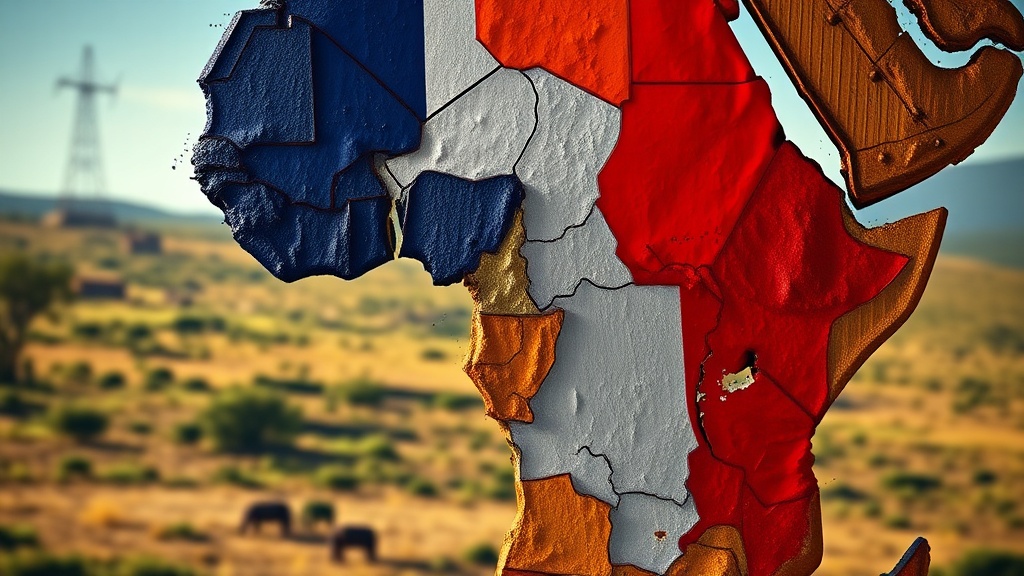
Look at a map of Africa in 1914 and something immediately strikes you. A vast, almost unbroken sweep of territory — from the Mediterranean coast all the way down through the Sahara and into the rainforests of Central and West Africa — painted in the same imperial blue. That colour belongs to France. Not Britain, not Germany, not the Ottoman Empire. France. The same France that had spent much of the previous century being defeated, isolated, and diplomatically managed by its neighbours like a volatile relative at a family dinner.
How does a nation come back from Waterloo, from the humiliation of the Franco-Prussian War, from the ruins of Napoleon III's catastrophic foreign policy — and end up controlling nearly four million square miles of African territory? The answer is not a simple one. It involves wounded national pride, diplomatic genius, colonial opportunism, and a series of accidents that no one quite planned for. But above all, it reveals something uncomfortable about how empires are actually built: not through grand design, but through incremental audacity, at the expense of people who were never invited to the negotiations.
A Nation Diminished: France Before the Scramble
To understand France's hunger for Africa, you have to understand just how badly damaged French prestige was by the early 1870s. The Franco-Prussian War of 1870–71 had been a catastrophe of almost cinematic proportions. Napoleon III, nephew of the great emperor, had been captured at the Battle of Sedan — the sitting French head of state, a prisoner of war. Paris itself was besieged. The newly proclaimed German Empire was declared not in Berlin, but in the Hall of Mirrors at Versailles, a deliberate humiliation designed to sting. France surrendered Alsace and most of Lorraine, paid a staggering indemnity of five billion francs, and watched a Prussian army parade through its capital.
The psychological wound was deep. France, which had once set the terms of European civilisation — in philosophy, art, military power, revolutionary politics — was now ranked fourth among the European great powers. Fourth. For a nation whose identity was inseparable from grandeur, this was intolerable. The new republican government that replaced Napoleon III understood one thing above all else: France needed to mean something again on the world stage. The question was how.
The answer, arrived at by a generation of ambitious politicians and military men, was empire. Specifically, African empire — the one major theatre of the world that had not yet been comprehensively carved up.
The Art of the Acceptable Pretext
France had not invented the strategy of dressing conquest in the language of humanitarian duty, but it had refined it into something close to an art form. When French forces began their conquest of Algiers in 1830, the official justification had nothing to do with imperial expansion. It was about suppressing piracy and ending the slave trade emanating from the North African coast. Both things were genuinely accomplished. But as a side effect — purely coincidental, you understand — France now had a bridgehead in Africa from which it could expand for the next hundred years.
This pattern would repeat itself throughout the nineteenth century with a regularity that should have made the other European powers more suspicious than it apparently did. Military interventions were framed as civilising missions, religious duties, or commercial necessities. The suppression of slavery was a particularly powerful rhetorical device, partly because it was genuinely popular with certain segments of European public opinion, and partly because it was very hard to argue against publicly without sounding monstrous.
The Berlin Conference of 1884–85, called by Otto von Bismarck ostensibly to regulate the Scramble for Africa and prevent armed conflict between European claimants, actually accelerated the process. Its core principle — that a European power had to demonstrate effective occupation to claim territory — sounded like a check on reckless land-grabbing. In practice, it overwhelmingly favoured nations with large armies and the financial capacity to project military power inland. That meant Britain, Germany, and France. Portugal and Spain, once the dominant colonial powers, were effectively priced out.
For France, already positioned in Algeria and with footholds along the West African coast, the conference was less a constraint than a starting pistol.
Why the Other Powers Stood Aside
Here is the part of the story that rarely gets told clearly enough: France's African empire was not seized in the face of fierce European opposition. It was, in large part, tolerated — even quietly encouraged — by the other major powers, each for their own reasons.
Britain, the dominant imperial force of the era, had two primary concerns in Africa: the Suez Canal and southern Africa. As long as France kept clear of Egypt and the Cape, London was broadly content to watch Paris absorb enormous tracts of the Sahara and the West African interior. Indeed, from a British strategic perspective, a France busy building a vast but economically marginal desert empire was a France not threatening British interests elsewhere. The unspoken calculus was cold but simple: better France than Germany.
Germany, meanwhile, was constrained by geography and by the sudden departure of Bismarck, fired by the impulsive Kaiser Wilhelm II in 1890. Bismarck had been the spider at the centre of European diplomacy, holding alliances together through careful manipulation and restraint. Without him, Germany's foreign policy became erratic and increasingly threatening — which paradoxically made it easier for France to find partners. The fear of an aggressive, unpredictable Germany pushed Britain closer to France and gave French diplomats the leverage they had lacked for two decades.
Portugal and Spain, once lords of the Atlantic world, were shadows of their former selves. They could stake claims on paper but lacked the military and financial muscle to hold ground against a determined French advance.
The result was a power vacuum of continental proportions, and France moved into it with remarkable speed.
The Men Who Built the Empire France Didn't Officially Want
One of the more fascinating dimensions of French imperial expansion in Africa is how often it happened against the stated wishes of the French government. Jules Grévy, president throughout much of the 1880s, was openly opposed to colonial adventurism. He thought it wasteful, dangerous, and a distraction from what he considered France's real priority: domestic stability and the long-term project of reclaiming Alsace-Lorraine from Germany.
But in the Third Republic's constitutional structure, real executive power resided not with the president but with the prime ministers and their cabinet ministers. Men like Jules Ferry — twice prime minister, architect of much of France's African and Indochinese expansion — were fervent imperialists who operated with considerable autonomy. The French military, particularly its officer class, was equally enthusiastic. Africa offered something that peacetime Europe could not: active commands, promotions, and the intoxicating experience of actually fighting wars rather than merely preparing for them.
Ferry himself paid a political price for his enthusiasm. Popular opinion in France was far from uniformly supportive of colonial conquest. The left worried that French workers and conscripts were being killed in remote jungles so that businessmen could extract rubber and minerals. Nationalists on the right feared that every franc and every soldier sent to West Africa was a franc and a soldier unavailable for the eventual reckoning with Germany over Alsace-Lorraine. Ferry was forced from office in 1885 following military setbacks in Vietnam and China, driven out by a coalition of opponents who had almost nothing else in common.
Africa, however, was a somewhat easier sell than Asia. The distances felt more comprehensible, the wars were often shorter, and the narrative of liberation from slavery and despotism was more convincing to a French public raised on Enlightenment ideals — however selective and self-serving that narrative actually was.
The Map as a Political Instrument
There is a detail in France's colonial strategy that deserves more attention than it usually receives: the obsession with how the empire looked on a map. French strategists and politicians were acutely aware that a large, visually imposing empire functioned as a form of geopolitical theatre. Size signalled power, regardless of whether the territory in question was economically valuable.
Much of what France claimed in the Sahara and the western Sudan was, by any rational measure, of limited immediate value. Vast stretches of desert and semi-arid savannah were not going to generate the kind of revenue that the rubber plantations of the Congo or the cotton fields of Egypt could. But they looked extraordinary on a map. The sheer sweep of French blue across the African continent told a story — of a nation that had recovered from humiliation, that still had the will and the capacity to project power across continents.
This was empire as national therapy, and it worked, at least in the short term. The psychological function of the empire — the way it allowed France to narrate its own recovery and resurgence — was arguably as important as its economic or strategic value.
The Long Shadow: Africa's French Empire After 1914
Free Weekly Newsletter
Enjoying this guide?
Get the best articles like this one delivered to your inbox every week. No spam.
When the First World War finally arrived — the war that much of French strategic thinking had been pointed toward since 1871 — France's African empire proved its military utility in ways that had always been part of the imperial calculus. Hundreds of thousands of African soldiers, the tirailleurs sénégalais and troops from across French West and Equatorial Africa, served in the European theatre. They fought at Verdun, on the Somme, at the Marne. Their contribution was immense and has been consistently underacknowledged in mainstream historical memory.
After Germany's defeat in 1918, Berlin's African colonies were stripped away and redistributed. France absorbed Togoland and much of Kamerun (Cameroon), adding to already colossal holdings. The empire that had been built to restore French prestige now genuinely did make France one of the world's two or three greatest imperial powers.
It would last, in formal terms, until the 1950s and 1960s, when independence movements across the continent — some peaceful, some involving years of brutal warfare, as in Algeria — dismantled the structure piece by piece. The borders that French colonial administrators had drawn, often without regard for existing ethnic, linguistic, or political realities, remained after independence. Many of the conflicts that have shaped African history since decolonisation trace a direct line back to those conference rooms and those cartographic decisions made by men who had never set foot on the ground they were dividing.
Conclusion: Empire by Increments
France's acquisition of so much of Africa was not the product of a single visionary plan or an irresistible military machine. It was the cumulative result of a wounded nation's drive to reassert itself, a series of diplomatic alignments that happened to favour French expansion, the complicit indifference of rival powers with their own agendas, and the relentless energy of colonial officials and military officers operating far from Paris's oversight.
The story of French Africa is ultimately a story about how empires are actually made — not in grand declarations, but in incremental decisions, convenient justifications, and the exploitation of moments when no one is looking. The people who bore the costs of those decisions most heavily were the Africans who were conquered, conscripted, taxed, and governed without consent. That is the part of the story that the maps, for all their imposing blue, never showed.
Frequently Asked Questions
Why did France want such a large empire in Africa specifically?
France's primary motivation was the restoration of national prestige following its humiliating defeat in the Franco-Prussian War of 1870–71. Africa represented the last major unclaimed territory where France could rapidly accumulate a large, visually impressive empire without directly threatening British or German core interests. Economic motives — resources, captive markets, cheap labour — played a role, but the symbolic and psychological dimensions of a vast African empire were at least equally important to French political leaders of the era.
Why didn't Britain or Germany stop France from taking so much of Africa?
Britain was primarily concerned with protecting the Suez Canal and its interests in southern Africa. As long as France respected those two priorities, London was broadly content — and even privately pleased — to see France absorb large areas of the Sahara and West Africa, reasoning that territory held by France could not be claimed by the increasingly aggressive Germany. Germany, meanwhile, lacked the geographical reach and, after Bismarck's dismissal in 1890, the diplomatic sophistication to effectively contest French expansion across the continent.
Was the Berlin Conference of 1884–85 really responsible for dividing Africa between European powers?
This is a common misconception. The Berlin Conference did not literally sit down and draw new borders across a blank map of Africa. Its main function was to establish rules for how European powers could formalise territorial claims — crucially, by requiring evidence of effective occupation rather than mere discovery or declaration. This framework actually favoured major powers like France and Britain, which had the military capacity to project force into the African interior, while effectively sidelining weaker states. The actual borders were drawn through subsequent treaties, military campaigns, and bilateral negotiations over the following three decades.
How did France's African colonies contribute to the First World War?
France conscripted enormous numbers of soldiers from its African territories to serve in the First World War. The tirailleurs sénégalais — a term loosely applied to African soldiers from across French West and Equatorial Africa, not just Senegal — numbered in the hundreds of thousands and fought in some of the war's most brutal engagements on the Western Front, including Verdun and the Somme. Their contribution was militarily significant and was always part of the strategic rationale for building a large African empire: that its population represented a reserve of military manpower that could be mobilised in a European conflict.
Did ordinary French people support the colonial expansion in Africa?
Public opinion in France was genuinely divided. Support for African expansion was stronger than for campaigns in Asia, partly because the narrative of ending slavery and deposing despots was more palatable to French liberal sensibilities, and partly because the African wars tended to be shorter and less costly in French lives. However, significant opposition existed across the political spectrum. The left criticised imperial wars as costly adventures that benefited only business interests, while nationalist conservatives argued that every resource spent in Africa was a resource diverted from the overriding goal of reclaiming Alsace-Lorraine from Germany. Politicians who pursued aggressive colonial policies, like Prime Minister Jules Ferry, could and did lose office over public backlash against military failures abroad.
Frequently Asked Questions
A Nation Diminished: France Before the Scramble
To understand France's hunger for Africa, you have to understand just how badly damaged French prestige was by the early 1870s. The Franco-Prussian War of 1870–71 had been a catastrophe of almost cinematic proportions. Napoleon III, nephew of the great emperor, had been captured at the Battle of Sedan — the sitting French head of state, a prisoner of war. Paris itself was besieged. The newly proclaimed German Empire was declared not in Berlin, but in the Hall of Mirrors at Versailles, a deliberate humiliation designed to sting. France surrendered Alsace and most of Lorraine, paid a staggering indemnity of five billion francs, and watched a Prussian army parade through its capital.
The psychological wound was deep. France, which had once set the terms of European civilisation — in philosophy, art, military power, revolutionary politics — was now ranked fourth among the European great powers. Fourth. For a nation whose identity was inseparable from grandeur, this was intolerable. The new republican government that replaced Napoleon III understood one thing above all else: France needed to mean something again on the world stage. The question was how.
The answer, arrived at by a generation of ambitious politicians and military men, was empire. Specifically, African empire — the one major theatre of the world that had not yet been comprehensively carved up.
The Art of the Acceptable Pretext
France had not invented the strategy of dressing conquest in the language of humanitarian duty, but it had refined it into something close to an art form. When French forces began their conquest of Algiers in 1830, the official justification had nothing to do with imperial expansion. It was about suppressing piracy and ending the slave trade emanating from the North African coast. Both things were genuinely accomplished. But as a side effect — purely coincidental, you understand — France now had a bridgehead in Africa from which it could expand for the next hundred years.
This pattern would repeat itself throughout the nineteenth century with a regularity that should have made the other European powers more suspicious than it apparently did. Military interventions were framed as civilising missions, religious duties, or commercial necessities. The suppression of slavery was a particularly powerful rhetorical device, partly because it was genuinely popular with certain segments of European public opinion, and partly because it was very hard to argue against publicly without sounding monstrous.
The Berlin Conference of 1884–85, called by Otto von Bismarck ostensibly to regulate the Scramble for Africa and prevent armed conflict between European claimants, actually accelerated the process. Its core principle — that a European power had to demonstrate effective occupation to claim territory — sounded like a check on reckless land-grabbing. In practice, it overwhelmingly favoured nations with large armies and the financial capacity to project military power inland. That meant Britain, Germany, and France. Portugal and Spain, once the dominant colonial powers, were effectively priced out.
For France, already positioned in Algeria and with footholds along the West African coast, the conference was less a constraint than a starting pistol.
Why the Other Powers Stood Aside
Here is the part of the story that rarely gets told clearly enough: France's African empire was not seized in the face of fierce European opposition. It was, in large part, tolerated — even quietly encouraged — by the other major powers, each for their own reasons.
Britain, the dominant imperial force of the era, had two primary concerns in Africa: the Suez Canal and southern Africa. As long as France kept clear of Egypt and the Cape, London was broadly content to watch Paris absorb enormous tracts of the Sahara and the West African interior. Indeed, from a British strategic perspective, a France busy building a vast but economically marginal desert empire was a France not threatening British interests elsewhere. The unspoken calculus was cold but simple: better France than Germany.
Germany, meanwhile, was constrained by geography and by the sudden departure of Bismarck, fired by the impulsive Kaiser Wilhelm II in 1890. Bismarck had been the spider at the centre of European diplomacy, holding alliances together through careful manipulation and restraint. Without him, Germany's foreign policy became erratic and increasingly threatening — which paradoxically made it easier for France to find partners. The fear of an aggressive, unpredictable Germany pushed Britain closer to France and gave French diplomats the leverage they had lacked for two decades.
Portugal and Spain, once lords of the Atlantic world, were shadows of their former selves. They could stake claims on paper but lacked the military and financial muscle to hold ground against a determined French advance.
The result was a power vacuum of continental proportions, and France moved into it with remarkable speed.
The Men Who Built the Empire France Didn't Officially Want
One of the more fascinating dimensions of French imperial expansion in Africa is how often it happened against the stated wishes of the French government. Jules Grévy, president throughout much of the 1880s, was openly opposed to colonial adventurism. He thought it wasteful, dangerous, and a distraction from what he considered France's real priority: domestic stability and the long-term project of reclaiming Alsace-Lorraine from Germany.
But in the Third Republic's constitutional structure, real executive power resided not with the president but with the prime ministers and their cabinet ministers. Men like Jules Ferry — twice prime minister, architect of much of France's African and Indochinese expansion — were fervent imperialists who operated with considerable autonomy. The French military, particularly its officer class, was equally enthusiastic. Africa offered something that peacetime Europe could not: active commands, promotions, and the intoxicating experience of actually fighting wars rather than merely preparing for them.
Ferry himself paid a political price for his enthusiasm. Popular opinion in France was far from uniformly supportive of colonial conquest. The left worried that French workers and conscripts were being killed in remote jungles so that businessmen could extract rubber and minerals. Nationalists on the right feared that every franc and every soldier sent to West Africa was a franc and a soldier unavailable for the eventual reckoning with Germany over Alsace-Lorraine. Ferry was forced from office in 1885 following military setbacks in Vietnam and China, driven out by a coalition of opponents who had almost nothing else in common.
Africa, however, was a somewhat easier sell than Asia. The distances felt more comprehensible, the wars were often shorter, and the narrative of liberation from slavery and despotism was more convincing to a French public raised on Enlightenment ideals — however selective and self-serving that narrative actually was.
The Map as a Political Instrument
There is a detail in France's colonial strategy that deserves more attention than it usually receives: the obsession with how the empire looked on a map. French strategists and politicians were acutely aware that a large, visually imposing empire functioned as a form of geopolitical theatre. Size signalled power, regardless of whether the territory in question was economically valuable.
Much of what France claimed in the Sahara and the western Sudan was, by any rational measure, of limited immediate value. Vast stretches of desert and semi-arid savannah were not going to generate the kind of revenue that the rubber plantations of the Congo or the cotton fields of Egypt could. But they looked extraordinary on a map. The sheer sweep of French blue across the African continent told a story — of a nation that had recovered from humiliation, that still had the will and the capacity to project power across continents.
This was empire as national therapy, and it worked, at least in the short term. The psychological function of the empire — the way it allowed France to narrate its own recovery and resurgence — was arguably as important as its economic or strategic value.
The Long Shadow: Africa's French Empire After 1914
When the First World War finally arrived — the war that much of French strategic thinking had been pointed toward since 1871 — France's African empire proved its military utility in ways that had always been part of the imperial calculus. Hundreds of thousands of African soldiers, the tirailleurs sénégalais and troops from across French West and Equatorial Africa, served in the European theatre. They fought at Verdun, on the Somme, at the Marne. Their contribution was immense and has been consistently underacknowledged in mainstream historical memory.
After Germany's defeat in 1918, Berlin's African colonies were stripped away and redistributed. France absorbed Togoland and much of Kamerun (Cameroon), adding to already colossal holdings. The empire that had been built to restore French prestige now genuinely did make France one of the world's two or three greatest imperial powers.
It would last, in formal terms, until the 1950s and 1960s, when independence movements across the continent — some peaceful, some involving years of brutal warfare, as in Algeria — dismantled the structure piece by piece. The borders that French colonial administrators had drawn, often without regard for existing ethnic, linguistic, or political realities, remained after independence. Many of the conflicts that have shaped African history since decolonisation trace a direct line back to those conference rooms and those cartographic decisions made by men who had never set foot on the ground they were dividing.
Conclusion: Empire by Increments
France's acquisition of so much of Africa was not the product of a single visionary plan or an irresistible military machine. It was the cumulative result of a wounded nation's drive to reassert itself, a series of diplomatic alignments that happened to favour French expansion, the complicit indifference of rival powers with their own agendas, and the relentless energy of colonial officials and military officers operating far from Paris's oversight.
The story of French Africa is ultimately a story about how empires are actually made — not in grand declarations, but in incremental decisions, convenient justifications, and the exploitation of moments when no one is looking. The people who bore the costs of those decisions most heavily were the Africans who were conquered, conscripted, taxed, and governed without consent. That is the part of the story that the maps, for all their imposing blue, never showed.
Frequently Asked Questions
Why did France want such a large empire in Africa specifically?
France's primary motivation was the restoration of national prestige following its humiliating defeat in the Franco-Prussian War of 1870–71. Africa represented the last major unclaimed territory where France could rapidly accumulate a large, visually impressive empire without directly threatening British or German core interests. Economic motives — resources, captive markets, cheap labour — played a role, but the symbolic and psychological dimensions of a vast African empire were at least equally important to French political leaders of the era.
Why didn't Britain or Germany stop France from taking so much of Africa?
Britain was primarily concerned with protecting the Suez Canal and its interests in southern Africa. As long as France respected those two priorities, London was broadly content — and even privately pleased — to see France absorb large areas of the Sahara and West Africa, reasoning that territory held by France could not be claimed by the increasingly aggressive Germany. Germany, meanwhile, lacked the geographical reach and, after Bismarck's dismissal in 1890, the diplomatic sophistication to effectively contest French expansion across the continent.
Was the Berlin Conference of 1884–85 really responsible for dividing Africa between European powers?
This is a common misconception. The Berlin Conference did not literally sit down and draw new borders across a blank map of Africa. Its main function was to establish rules for how European powers could formalise territorial claims — crucially, by requiring evidence of effective occupation rather than mere discovery or declaration. This framework actually favoured major powers like France and Britain, which had the military capacity to project force into the African interior, while effectively sidelining weaker states. The actual borders were drawn through subsequent treaties, military campaigns, and bilateral negotiations over the following three decades.
How did France's African colonies contribute to the First World War?
France conscripted enormous numbers of soldiers from its African territories to serve in the First World War. The tirailleurs sénégalais — a term loosely applied to African soldiers from across French West and Equatorial Africa, not just Senegal — numbered in the hundreds of thousands and fought in some of the war's most brutal engagements on the Western Front, including Verdun and the Somme. Their contribution was militarily significant and was always part of the strategic rationale for building a large African empire: that its population represented a reserve of military manpower that could be mobilised in a European conflict.
Did ordinary French people support the colonial expansion in Africa?
Public opinion in France was genuinely divided. Support for African expansion was stronger than for campaigns in Asia, partly because the narrative of ending slavery and deposing despots was more palatable to French liberal sensibilities, and partly because the African wars tended to be shorter and less costly in French lives. However, significant opposition existed across the political spectrum. The left criticised imperial wars as costly adventures that benefited only business interests, while nationalist conservatives argued that every resource spent in Africa was a resource diverted from the overriding goal of reclaiming Alsace-Lorraine from Germany. Politicians who pursued aggressive colonial policies, like Prime Minister Jules Ferry, could and did lose office over public backlash against military failures abroad.
About Zeebrain Editorial
Zeebrain publishes independent analysis of markets, investing, personal finance, and business. We disclose affiliate relationships, never accept payment for coverage, and fact-check all claims against primary sources. Read our editorial policy →
How this article was produced: Zeebrain articles are created with AI assistance from primary sources (including cited videos and market data) and reviewed under our editorial standards before publication. Spot an error? Tell us and we will correct it.
More from History & Mysteries

Related Guides
Keep exploring this topic
Napoleon's Downfall: The Mistakes That Ended an Empire
History & Mysteries · Napoleonic Wars · Napoleon Bonaparte
Why Mao Won the Chinese Civil War: The Full Story
History & Mysteries
Why Only Germany Paid WWI Reparations: The Full Story
History & Mysteries
Why Taiwan Wasn't Returned to Japan After World War II
History & Mysteries
Explore More Categories
Keep browsing by topic and build depth around the subjects you care about most.