Why Castro Never Retook Guantanamo Bay from America
Quick Summary
Fidel Castro wanted Guantanamo Bay back. So why didn't he take it? The answer reveals a cold war power game that shaped Cuba's fate for decades.
In This Article
The Piece of Cuba That Never Belonged to Cuba
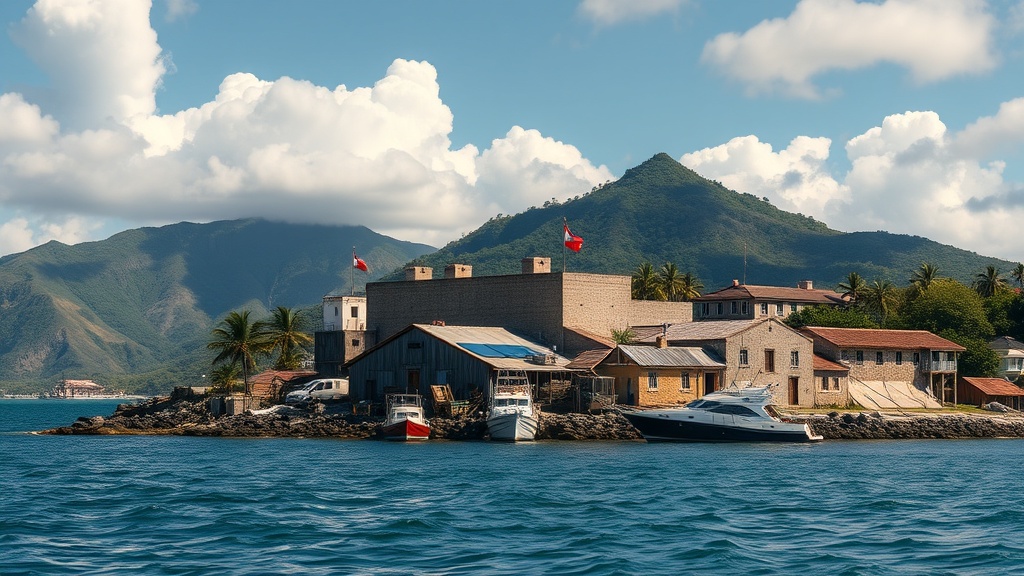
There is a particular kind of humiliation that comes not from defeat but from powerlessness — the knowledge that something is yours by every moral and historical measure, and yet you cannot touch it. For over half a century, Fidel Castro woke up each morning ruling an island that was not, technically, entirely his. Tucked into the southeastern corner of Cuba, on the shores of a deep natural harbour, sat a United States naval base that flew a different flag, answered to a different government, and showed absolutely no intention of leaving.
Guantanamo Bay — infamous in the 21st century for its detention facility, but long before that a strategic jewel in America's Caribbean crown — has been under US control since 1903. Castro came to power in 1959. He died in 2016. In the nearly six decades between his revolution and his death, he never got it back. The question of why is not simply a footnote in Cold War history. It is a story about the geometry of power, the limits of revolutionary ambition, and the quiet, crushing weight of geopolitical reality.
How America Got Guantanamo Bay in the First Place
To understand why Castro couldn't reclaim Guantanamo Bay, you first need to understand how the United States acquired it — and the answer is less heroic than American mythology tends to suggest.
By the late 19th century, Cuba was fighting for independence from Spain, a colonial master that had ruled the island since 1492. The rebellion was brutal and protracted. Then, in 1898, an American warship called the USS Maine exploded in Havana harbour under circumstances that remain disputed to this day. The United States, already eyeing Spanish imperial holdings with considerable appetite, declared war.
The Spanish-American War lasted roughly four months. Spain lost. Cuba was, in theory, free. But freedom, as the Cubans would quickly discover, came with conditions.
Congress had passed the Teller Amendment, which prohibited the United States from annexing Cuba outright. It was a gesture of self-restraint — though notably it said nothing about annexing parts of Cuba. And during the war, American military strategists had identified Guantanamo Bay as extraordinarily valuable: a deep-water harbour with commanding access to the wider Caribbean, ideal for projecting naval power and monitoring any European ambitions in the region.
So when Cuban independence was formalised, Washington ensured its interests were protected through the Platt Amendment of 1901 — a remarkable piece of legislation that essentially made Cuban sovereignty conditional. It granted the US the right to intervene in Cuban affairs whenever American interests were threatened, and it formalised the lease of Guantanamo Bay in perpetuity. The Cubans, occupied by US forces and with no meaningful leverage, agreed to the terms in 1901. Two years later, the naval base was established. The annual lease fee was set at $2,000 in gold — later converted to $4,085 — a sum so deliberately modest it read less like rent and more like a reminder of who held the power.
The Revolution That Changed Everything — Except Guantanamo
Fidel Castro's revolution was, by any measure, a dramatic rupture. When Batista fled Cuba on New Year's Eve 1958, he left behind a country that had been, for decades, largely an extension of American economic and political interests. American companies owned vast swaths of Cuban land. The US military maintained its base at Guantanamo. Washington had propped up Batista's regime through arms and diplomatic legitimacy, tolerating his increasing authoritarianism because he was reliably pliable.
Castro dismantled all of this with revolutionary speed. Businesses were nationalised. American property was seized without compensation. The old political architecture was demolished and rebuilt around Castro's own authority. And from the very first days of his government, he made clear that the Guantanamo lease was, in his view, null and void — a contract signed by a dead government under duress, and therefore carrying no moral or legal weight.
There is a telling episode from those early years that captures the absurdity of the situation. The new Cuban government, in the chaos of consolidating power, accidentally cashed one of the American lease cheques for Guantanamo Bay. Castro claimed it was an oversight. The US government, with impressive opportunism, immediately argued that by accepting payment, Cuba had implicitly legitimised the lease. It was legally dubious reasoning, but it illustrated the dynamic perfectly: Washington would use every available tool — financial, legal, diplomatic, military — to hold what it had. After that, the Cuban government never cashed another cheque. They piled up, uncashed, as a symbolic protest. The base remained.
Why a Military Solution Was Never Really an Option
Castro was a guerrilla strategist of genuine talent. He had, after all, toppled a US-backed government with a ragtag rebel force operating from mountain hideouts. So why not simply march on Guantanamo?
The honest answer is that Castro understood the difference between fighting a corrupt and weakened dictatorship and provoking the most powerful military force on earth. The US garrison at Guantanamo was small — a few thousand personnel — and a rapid Cuban military operation might theoretically have overwhelmed it. But what came next would not have been negotiation. It would have been war.
American soldiers killed on American-controlled territory would have triggered a response of overwhelming and possibly existential force. Castro had no illusions about this. In the early years of his rule, his government was genuinely terrified of a US invasion — not a paranoid fantasy, as it turned out, but a well-founded fear. Eisenhower had begun planning exactly such an operation before he left office, training Cuban exiles in Guatemala for a covert assault on the island.
It is worth pausing on a common misconception here. Many assume America's right to intervene in Cuba was still on the books during the Cold War, enshrined in the Platt Amendment. In fact, Franklin D. Roosevelt had relinquished that formal right in the 1930s as part of his Good Neighbor Policy toward Latin America. But relinquishing the legal right and relinquishing the capability and willingness to intervene are entirely different things. The United States remained a hegemonic power in the Caribbean. International law was a consideration; American strategic interest was a conviction.
The Cuban Missile Crisis: Castro's Best — and Lost — Opportunity
If there was ever a moment when Castro might have leveraged a return of Guantanamo Bay, it was October 1962. The Cuban Missile Crisis brought the world to the edge of nuclear war, and for thirteen days, the United States was in a position of extraordinary vulnerability. The Soviet Union had stationed nuclear missiles on Cuban soil. American cities were within range. Suddenly, every diplomatic card on the table had new weight.
Castro recognised the opportunity and moved quickly. As the three powers — the US, USSR, and Cuba — manoeuvred through back-channel negotiations, Castro presented his demands. He wanted the US to end its economic embargo. He wanted Washington to stop attempting to assassinate him and destabilise his government. He wanted Cuba's sovereign waters and airspace respected. And he wanted Guantanamo Bay returned.
These were not unreasonable demands, viewed from Havana. But Kennedy executed a move of cold diplomatic elegance. He reframed the crisis as a bilateral superpower affair — a matter between Washington and Moscow — and argued that Castro should not be permitted to derail negotiations of global importance over Cuban grievances. Khrushchev, who found Castro's volatility genuinely difficult to manage and who was primarily focused on securing American assurances against a future Cuban invasion, agreed. Cuba was, in effect, sidelined from the resolution of a crisis that had been triggered on its own soil.
The missiles were removed. The crisis ended. Cuba received a quiet American pledge not to invade — though this was never formally ratified — and a Soviet promise to keep troops on the island as a tripwire deterrent. Guantanamo Bay stayed American. Castro had played what should have been a strong hand and walked away with almost nothing. It would prove to be the high-water mark of his leverage.
Decades of Diplomatic Nagging and the Limits of Moral Argument
After the Missile Crisis, the Guantanamo question settled into a strange kind of permanent stalemate. Cuba continued to assert that the base was illegally occupied territory. The United States continued to disagree. The annual lease cheques continued to arrive in Havana. They continued to go uncashed.
What Castro lacked, fundamentally, was anything the United States actually wanted. Diplomatic negotiation is transactional at its core: you give something, you get something. Cuba had been economically isolated by the American embargo and was heavily dependent on Soviet support. It had no trade relationships, no financial incentives, no strategic concessions to offer Washington in exchange for Guantanamo. And the base, by this point, had taken on a significance beyond its immediate military utility. Surrendering it would have meant acknowledging Cuban leverage — something no American administration was prepared to do during the Cold War, and precious few have considered since.
Castro tried the moral argument. He appealed to international forums. He wrote letters. He gave speeches. He pointed, accurately, to the coercive circumstances under which the original lease had been signed. None of it moved the needle. The United States, as the hemispheric superpower, simply did not need to respond. The disparity in power between the two nations was so vast that Cuba's only recourse was rhetoric — and while Castro was gifted with rhetoric, words alone cannot shift a naval base.
What Guantanamo Bay Tells Us About Power and Sovereignty
Free Weekly Newsletter
Enjoying this guide?
Get the best articles like this one delivered to your inbox every week. No spam.
The story of Castro and Guantanamo Bay is, at its heart, a lesson in how sovereignty actually works in a world organised around power rather than principle. Cuba had a legitimate moral claim. It had historical grievance. It had the support of international opinion, particularly among non-aligned nations. What it did not have was the capacity to enforce its claim against a nation that was not inclined to yield it.
This is not a uniquely Cuban story. It echoes across the 20th century: smaller nations discovering that the legal architecture of international relations — treaties, sovereignty, territorial integrity — bends reliably in the direction of the powerful. The Platt Amendment was signed under occupation. The lease was paid at a rate designed to be symbolic rather than substantial. And when Castro's government sought to contest it, the tools available to him — diplomacy, protest, moral suasion — were precisely the tools that great powers have always found easiest to ignore.
Guantanamo Bay remains a US naval installation today. Cuba still considers the occupation illegitimate. The cheques, one assumes, still go uncashed. Some arguments last longer than the people who make them.
Frequently Asked Questions
Why does the United States still control Guantanamo Bay?
The United States has maintained control of Guantanamo Bay under the terms of a lease agreement signed in 1903, following the Spanish-American War. The lease grants the US indefinite control of the territory in exchange for an annual payment. Cuba considers the arrangement illegitimate and has refused to cash the lease cheques since the Castro era, but has lacked the military or diplomatic power to compel the US to withdraw. Without a willing American administration prepared to negotiate an exit, the legal and practical status quo has remained unchanged for over a century.
Did Cuba ever come close to retaking Guantanamo Bay by force?
Not in any serious operational sense. Castro recognised from the outset that a military attack on the base — even a successful one — would provoke a devastating American military response. During the Cuban Missile Crisis of 1962, the US actually reinforced the Guantanamo garrison and evacuated civilians in anticipation of potential conflict, while the Soviet Union reportedly had nuclear missiles targeted at the base as a deterrent. The strategic reality made direct military action suicidal. Castro's government consistently refused to even consider it.
What were Castro's conditions during the Cuban Missile Crisis?
During the tense negotiations of October 1962, Castro put forward five demands as part of any resolution: an end to the US economic embargo on Cuba; a cessation of US-backed attempts to overthrow his government; respect for Cuban sovereign waters; respect for Cuban airspace; and the return of Guantanamo Bay. President Kennedy effectively neutralised all five demands by convincing Soviet Premier Khrushchev that the crisis should be resolved as a bilateral superpower matter, excluding Cuba from the core of the negotiations. Castro received none of his stated demands.
Could Cuba ever legally reclaim Guantanamo Bay?
Cuba's legal position — that the 1903 lease was signed under duress by a government acting under American occupation, and is therefore invalid — has never been successfully tested in any binding international legal forum. The United States does not recognise Cuban jurisdiction over the territory. Short of a formal diplomatic agreement between the two governments, which would require the US to voluntarily relinquish a strategically valuable asset, there is no clear legal mechanism by which Cuba could compel the return of the base. The Obama administration's partial normalisation of relations with Cuba in 2014-2016 did not produce any significant movement on the Guantanamo question.
Frequently Asked Questions
The Piece of Cuba That Never Belonged to Cuba
There is a particular kind of humiliation that comes not from defeat but from powerlessness — the knowledge that something is yours by every moral and historical measure, and yet you cannot touch it. For over half a century, Fidel Castro woke up each morning ruling an island that was not, technically, entirely his. Tucked into the southeastern corner of Cuba, on the shores of a deep natural harbour, sat a United States naval base that flew a different flag, answered to a different government, and showed absolutely no intention of leaving.
Guantanamo Bay — infamous in the 21st century for its detention facility, but long before that a strategic jewel in America's Caribbean crown — has been under US control since 1903. Castro came to power in 1959. He died in 2016. In the nearly six decades between his revolution and his death, he never got it back. The question of why is not simply a footnote in Cold War history. It is a story about the geometry of power, the limits of revolutionary ambition, and the quiet, crushing weight of geopolitical reality.
How America Got Guantanamo Bay in the First Place
To understand why Castro couldn't reclaim Guantanamo Bay, you first need to understand how the United States acquired it — and the answer is less heroic than American mythology tends to suggest.
By the late 19th century, Cuba was fighting for independence from Spain, a colonial master that had ruled the island since 1492. The rebellion was brutal and protracted. Then, in 1898, an American warship called the USS Maine exploded in Havana harbour under circumstances that remain disputed to this day. The United States, already eyeing Spanish imperial holdings with considerable appetite, declared war.
The Spanish-American War lasted roughly four months. Spain lost. Cuba was, in theory, free. But freedom, as the Cubans would quickly discover, came with conditions.
Congress had passed the Teller Amendment, which prohibited the United States from annexing Cuba outright. It was a gesture of self-restraint — though notably it said nothing about annexing parts of Cuba. And during the war, American military strategists had identified Guantanamo Bay as extraordinarily valuable: a deep-water harbour with commanding access to the wider Caribbean, ideal for projecting naval power and monitoring any European ambitions in the region.
So when Cuban independence was formalised, Washington ensured its interests were protected through the Platt Amendment of 1901 — a remarkable piece of legislation that essentially made Cuban sovereignty conditional. It granted the US the right to intervene in Cuban affairs whenever American interests were threatened, and it formalised the lease of Guantanamo Bay in perpetuity. The Cubans, occupied by US forces and with no meaningful leverage, agreed to the terms in 1901. Two years later, the naval base was established. The annual lease fee was set at $2,000 in gold — later converted to $4,085 — a sum so deliberately modest it read less like rent and more like a reminder of who held the power.
The Revolution That Changed Everything — Except Guantanamo
Fidel Castro's revolution was, by any measure, a dramatic rupture. When Batista fled Cuba on New Year's Eve 1958, he left behind a country that had been, for decades, largely an extension of American economic and political interests. American companies owned vast swaths of Cuban land. The US military maintained its base at Guantanamo. Washington had propped up Batista's regime through arms and diplomatic legitimacy, tolerating his increasing authoritarianism because he was reliably pliable.
Castro dismantled all of this with revolutionary speed. Businesses were nationalised. American property was seized without compensation. The old political architecture was demolished and rebuilt around Castro's own authority. And from the very first days of his government, he made clear that the Guantanamo lease was, in his view, null and void — a contract signed by a dead government under duress, and therefore carrying no moral or legal weight.
There is a telling episode from those early years that captures the absurdity of the situation. The new Cuban government, in the chaos of consolidating power, accidentally cashed one of the American lease cheques for Guantanamo Bay. Castro claimed it was an oversight. The US government, with impressive opportunism, immediately argued that by accepting payment, Cuba had implicitly legitimised the lease. It was legally dubious reasoning, but it illustrated the dynamic perfectly: Washington would use every available tool — financial, legal, diplomatic, military — to hold what it had. After that, the Cuban government never cashed another cheque. They piled up, uncashed, as a symbolic protest. The base remained.
Why a Military Solution Was Never Really an Option
Castro was a guerrilla strategist of genuine talent. He had, after all, toppled a US-backed government with a ragtag rebel force operating from mountain hideouts. So why not simply march on Guantanamo?
The honest answer is that Castro understood the difference between fighting a corrupt and weakened dictatorship and provoking the most powerful military force on earth. The US garrison at Guantanamo was small — a few thousand personnel — and a rapid Cuban military operation might theoretically have overwhelmed it. But what came next would not have been negotiation. It would have been war.
American soldiers killed on American-controlled territory would have triggered a response of overwhelming and possibly existential force. Castro had no illusions about this. In the early years of his rule, his government was genuinely terrified of a US invasion — not a paranoid fantasy, as it turned out, but a well-founded fear. Eisenhower had begun planning exactly such an operation before he left office, training Cuban exiles in Guatemala for a covert assault on the island.
It is worth pausing on a common misconception here. Many assume America's right to intervene in Cuba was still on the books during the Cold War, enshrined in the Platt Amendment. In fact, Franklin D. Roosevelt had relinquished that formal right in the 1930s as part of his Good Neighbor Policy toward Latin America. But relinquishing the legal right and relinquishing the capability and willingness to intervene are entirely different things. The United States remained a hegemonic power in the Caribbean. International law was a consideration; American strategic interest was a conviction.
The Cuban Missile Crisis: Castro's Best — and Lost — Opportunity
If there was ever a moment when Castro might have leveraged a return of Guantanamo Bay, it was October 1962. The Cuban Missile Crisis brought the world to the edge of nuclear war, and for thirteen days, the United States was in a position of extraordinary vulnerability. The Soviet Union had stationed nuclear missiles on Cuban soil. American cities were within range. Suddenly, every diplomatic card on the table had new weight.
Castro recognised the opportunity and moved quickly. As the three powers — the US, USSR, and Cuba — manoeuvred through back-channel negotiations, Castro presented his demands. He wanted the US to end its economic embargo. He wanted Washington to stop attempting to assassinate him and destabilise his government. He wanted Cuba's sovereign waters and airspace respected. And he wanted Guantanamo Bay returned.
These were not unreasonable demands, viewed from Havana. But Kennedy executed a move of cold diplomatic elegance. He reframed the crisis as a bilateral superpower affair — a matter between Washington and Moscow — and argued that Castro should not be permitted to derail negotiations of global importance over Cuban grievances. Khrushchev, who found Castro's volatility genuinely difficult to manage and who was primarily focused on securing American assurances against a future Cuban invasion, agreed. Cuba was, in effect, sidelined from the resolution of a crisis that had been triggered on its own soil.
The missiles were removed. The crisis ended. Cuba received a quiet American pledge not to invade — though this was never formally ratified — and a Soviet promise to keep troops on the island as a tripwire deterrent. Guantanamo Bay stayed American. Castro had played what should have been a strong hand and walked away with almost nothing. It would prove to be the high-water mark of his leverage.
Decades of Diplomatic Nagging and the Limits of Moral Argument
After the Missile Crisis, the Guantanamo question settled into a strange kind of permanent stalemate. Cuba continued to assert that the base was illegally occupied territory. The United States continued to disagree. The annual lease cheques continued to arrive in Havana. They continued to go uncashed.
What Castro lacked, fundamentally, was anything the United States actually wanted. Diplomatic negotiation is transactional at its core: you give something, you get something. Cuba had been economically isolated by the American embargo and was heavily dependent on Soviet support. It had no trade relationships, no financial incentives, no strategic concessions to offer Washington in exchange for Guantanamo. And the base, by this point, had taken on a significance beyond its immediate military utility. Surrendering it would have meant acknowledging Cuban leverage — something no American administration was prepared to do during the Cold War, and precious few have considered since.
Castro tried the moral argument. He appealed to international forums. He wrote letters. He gave speeches. He pointed, accurately, to the coercive circumstances under which the original lease had been signed. None of it moved the needle. The United States, as the hemispheric superpower, simply did not need to respond. The disparity in power between the two nations was so vast that Cuba's only recourse was rhetoric — and while Castro was gifted with rhetoric, words alone cannot shift a naval base.
What Guantanamo Bay Tells Us About Power and Sovereignty
The story of Castro and Guantanamo Bay is, at its heart, a lesson in how sovereignty actually works in a world organised around power rather than principle. Cuba had a legitimate moral claim. It had historical grievance. It had the support of international opinion, particularly among non-aligned nations. What it did not have was the capacity to enforce its claim against a nation that was not inclined to yield it.
This is not a uniquely Cuban story. It echoes across the 20th century: smaller nations discovering that the legal architecture of international relations — treaties, sovereignty, territorial integrity — bends reliably in the direction of the powerful. The Platt Amendment was signed under occupation. The lease was paid at a rate designed to be symbolic rather than substantial. And when Castro's government sought to contest it, the tools available to him — diplomacy, protest, moral suasion — were precisely the tools that great powers have always found easiest to ignore.
Guantanamo Bay remains a US naval installation today. Cuba still considers the occupation illegitimate. The cheques, one assumes, still go uncashed. Some arguments last longer than the people who make them.
Frequently Asked Questions
Why does the United States still control Guantanamo Bay?
The United States has maintained control of Guantanamo Bay under the terms of a lease agreement signed in 1903, following the Spanish-American War. The lease grants the US indefinite control of the territory in exchange for an annual payment. Cuba considers the arrangement illegitimate and has refused to cash the lease cheques since the Castro era, but has lacked the military or diplomatic power to compel the US to withdraw. Without a willing American administration prepared to negotiate an exit, the legal and practical status quo has remained unchanged for over a century.
Did Cuba ever come close to retaking Guantanamo Bay by force?
Not in any serious operational sense. Castro recognised from the outset that a military attack on the base — even a successful one — would provoke a devastating American military response. During the Cuban Missile Crisis of 1962, the US actually reinforced the Guantanamo garrison and evacuated civilians in anticipation of potential conflict, while the Soviet Union reportedly had nuclear missiles targeted at the base as a deterrent. The strategic reality made direct military action suicidal. Castro's government consistently refused to even consider it.
What were Castro's conditions during the Cuban Missile Crisis?
During the tense negotiations of October 1962, Castro put forward five demands as part of any resolution: an end to the US economic embargo on Cuba; a cessation of US-backed attempts to overthrow his government; respect for Cuban sovereign waters; respect for Cuban airspace; and the return of Guantanamo Bay. President Kennedy effectively neutralised all five demands by convincing Soviet Premier Khrushchev that the crisis should be resolved as a bilateral superpower matter, excluding Cuba from the core of the negotiations. Castro received none of his stated demands.
Could Cuba ever legally reclaim Guantanamo Bay?
Cuba's legal position — that the 1903 lease was signed under duress by a government acting under American occupation, and is therefore invalid — has never been successfully tested in any binding international legal forum. The United States does not recognise Cuban jurisdiction over the territory. Short of a formal diplomatic agreement between the two governments, which would require the US to voluntarily relinquish a strategically valuable asset, there is no clear legal mechanism by which Cuba could compel the return of the base. The Obama administration's partial normalisation of relations with Cuba in 2014-2016 did not produce any significant movement on the Guantanamo question.
About Zeebrain Editorial
Zeebrain publishes independent analysis of markets, investing, personal finance, and business. We disclose affiliate relationships, never accept payment for coverage, and fact-check all claims against primary sources. Read our editorial policy →
How this article was produced: Zeebrain articles are created with AI assistance from primary sources (including cited videos and market data) and reviewed under our editorial standards before publication. Spot an error? Tell us and we will correct it.
More from History & Mysteries

Related Guides
Keep exploring this topic
Explore More Categories
Keep browsing by topic and build depth around the subjects you care about most.