Why the Boers Never United Against the British Empire
Quick Summary
The Boers fought two wars against Britain but never truly united. Here's the fascinating, tragic history of why Boer unity was always just out of reach.
In This Article
A People Divided Against Themselves
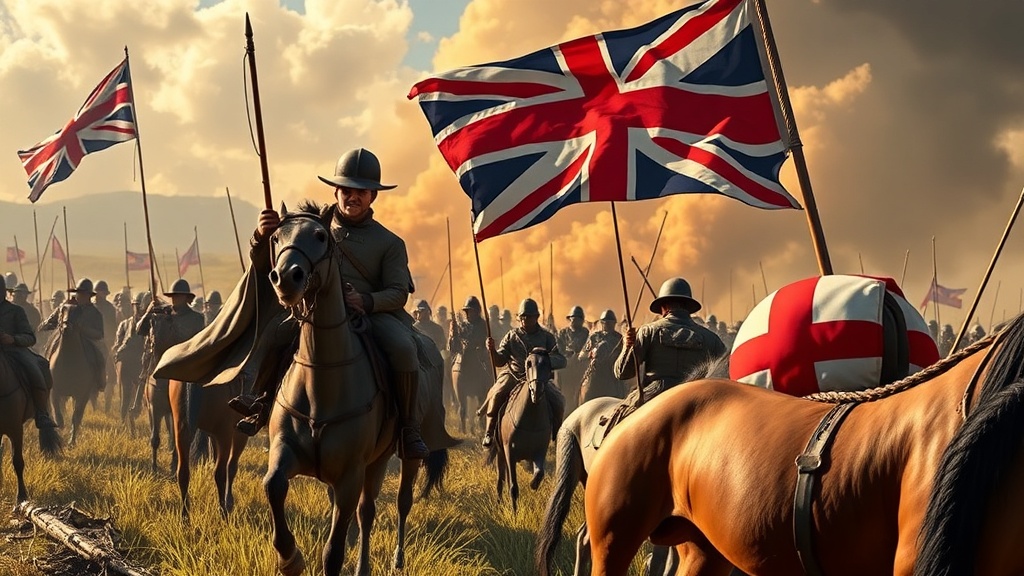
There is a particular kind of tragedy in watching a people fight ferociously for their freedom while simultaneously refusing to stand together. The Boers — those fiercely independent descendants of Dutch settlers who carved homesteads from the southern African interior — present one of history's most compelling examples of this paradox. They produced legendary guerrilla fighters who humiliated the most powerful empire on earth. They endured concentration camps, scorched farms, and forced exile. And yet, at almost every critical moment, when unity might have altered the course of history, they chose otherwise.
The question of why the Boers never united against the British is not simply a military puzzle. It is a story rooted in identity, mistrust, colonial manipulation, and the deep human instinct to protect what is immediately yours over what might benefit a larger cause. To understand it properly, you have to go back to the very beginning — to a small provisioning station on the tip of Africa, and to a Dutch trading company that accidentally created a nation.
From Company Men to Free Farmers: The Making of Boer Identity
The Dutch East India Company — the VOC — arrived at the Cape of Good Hope in the mid-17th century not to build a colony, but to supply its ships with fresh produce on the long route to Asia. What it built instead, almost by accident, was a society. Settlers were brought out, land was granted, and gradually a population of free burghers — free citizens — took root alongside the company's own operations.
But the VOC also brought indentured servants, and here the first seed of future conflict was planted. These servants, promised freedom after their debts were worked off, discovered that the company had inserted a clause into their futures: even after their contracts expired, they and their descendants could be recalled to service whenever the VOC demanded it. It was, in practice, a form of hereditary obligation that bore uncomfortable similarities to the slavery the company was simultaneously expanding across its territories.
Many refused to accept these terms and simply left — trekking eastward and northward, away from company authority, into the vast interior. This instinct, to move rather than submit, would become the defining characteristic of Boer culture. It also meant that from the very beginning, Boer identity was forged not around a central authority, but around individual freedom from authority. Unity was never the natural condition of these people. Dispersion was.
When the British arrived — first tentatively in 1795 after the Dutch Republic fell to revolutionary France, then permanently after 1806 — they inherited not a unified colony but a patchwork of communities deeply suspicious of any central government. The British promptly deepened that suspicion by mandating English as the official language, importing their own settlers, and, most explosively, abolishing slavery in the 1830s. This was not merely an economic inconvenience for many Boers; it struck at a social order they had built their entire way of life around. And so they did what their forebears had done: they left. This became known as the Great Trek — a mass migration inland that gave birth, eventually, to the two Boer republics that would later contest British power.
Two Republics, One Problem: The Structural Barriers to Boer Unity
By the 1850s, the Boers had established two meaningful independent states: the South African Republic (also known as the Transvaal, or ZAR) and the Orange Free State. Britain, calculating that projecting full military power across the entire interior was more expensive than it was worth, formally recognised both — the ZAR in 1852 and the Orange Free State in 1854. There had also been the short-lived Natalia Republic on the coast, but the British swiftly ended that experiment; a Boer state with sea access and the independent foreign policy it enabled was something London simply would not tolerate.
Here lies the first and most structurally significant reason why Boer unification never happened: Britain made it explicitly clear that recognition of the two states was conditional on them remaining two states. If they merged, that recognition became void. Britain would then be free to decide afresh whether to permit Boer independence at all — and the Boers knew exactly what that freedom meant in practice.
This was a masterclass in imperial statecraft. By offering recognition as a carrot, Britain effectively weaponised the Boers' own desire for legitimacy against their desire for unity. Two weak states, separately recognised, were far easier to manage than one consolidated Boer nation that might build alliances, develop ports, and project genuine regional power.
Martinus Pretorius, president of the South African Republic and son of the Great Trek leader Andries Pretorius, understood this trap and tried to break it anyway. He pressed vigorously for unification throughout the late 1850s, and when diplomacy failed, he made the fateful decision to simply invade the Orange Free State — apparently operating on the theory that Boers there would welcome their cousins with open arms once they arrived with guns. They did not. In fact, citizens of the ZAR threatened civil war if he continued. Pretorius retreated, but the episode revealed something important: the two republics had already developed distinct political cultures, economic interests, and local loyalties that made them genuinely different entities, not merely administrative subdivisions of a single Boer nation waiting to be reunited.
The sequel to this farce was almost farcical itself. Despite having just invaded the Orange Free State, Pretorius was elected its president in 1860 — presumably because the Boers respected audacity if nothing else. He used the position to push for unification yet again. Alarm bells rang in both capitals. After six months, he was forced to resign from one of his offices and chose to remain in the Orange Free State. The unification project was dead, at least for a generation.
Diamonds, Gold, and the Point of No Return
History has a tendency to resolve political stalemates through the discovery of extraordinary wealth, and southern Africa was no exception. In 1867, diamonds were found in territory claimed by both republics. The resulting rush brought prospectors from across the world and created an immediate governance crisis. The two Boer governments, unable to manage the chaos alone, established a joint administration — an early, tentative gesture toward cooperative governance. But it collapsed almost immediately, and in 1871, both governments agreed to British arbitration to resolve the dispute.
This was the moment that should have taught the Boers everything they needed to know about appealing to British imperial authority as a neutral party. The British oversaw joint administration for a couple of years before simply declaring the entire diamond-rich region a British colony. It was a theft executed with administrative paperwork rather than gunfire, and it was devastatingly effective.
Gold would repeat the lesson on a grander scale. When vast gold deposits were discovered near Pretoria in the late 1880s, the dynamic shifted irrevocably. Suddenly the Transvaal — perpetually cash-strapped, often diplomatically isolated — was sitting on one of the greatest mineral fortunes in the world. British settlers flooded in, demanded political rights, were refused, and complained loudly to Cape Colony authorities. Cecil Rhodes, the prime minister of Cape Colony and a man whose ambitions made most imperial projects look modest, devised the Jameson Raid of 1895: a plan to send a militia force racing toward Johannesburg in the expectation that British settlers there would rise up, seize the gold fields, and hand them to Cape Colony. No one rose up. The raiders were captured. The plan was a humiliating failure.
But it did something important: it finally pushed the two Boer republics toward each other. The South African Republic, shaken by how close disaster had come, began buying modern weapons from Germany and forged a formal alliance with the Orange Free State. When British forces began massing on the borders in 1899, the Boers launched a preemptive strike — and for a brief, dazzling moment, they won.
The Second Boer War: Too Late for Unity to Matter
The early Boer victories in the Second Boer War were remarkable by any measure. British forces were pushed back, major towns were besieged, and the empire that had absorbed half the known world found itself humiliated on the veldt by farmers on horseback. But Britain's response was overwhelming. Troop numbers in Cape Colony increased more than tenfold. Scorched earth tactics destroyed Boer farms systematically. And then came the concentration camps.
The camps are a dark chapter that demands direct naming. British forces rounded up Boer civilians — predominantly women and children — and placed them in holding camps ostensibly designed to deprive guerrilla fighters of logistical support. In practice, overcrowding, poor sanitation, and inadequate food supplies turned them into death traps. Thousands died from disease. Some internees were deliberately separated from family and friends, or even shipped overseas, to make post-war reconciliation as difficult as possible. The camps were not an accident of war. They were a policy.
Through all of this, the Orange Free State fought alongside the Transvaal. But the unity was reactive, forged under existential pressure, not the product of long-term strategic cooperation. It had come too late and in circumstances where no amount of guerrilla brilliance could compensate for Britain's logistical depth. By 1902, the South African Republic's leadership acknowledged that continued resistance was impossible. The Orange Free State's leaders wanted to fight on, but they could not fight alone. They surrendered collectively.
The peace treaty was dignified on paper — no Boer would be prosecuted for bearing arms, Dutch would be preserved as an official language, and the two colonies would be merged into the Union of South Africa by 1910. But the independent Boer republics were finished. The stubbornness, the regional pride, the very individualism that had made Boer culture so vital had also made lasting unity impossible until it was far too late to save what unity was meant to protect.
What Boer Disunity Actually Reveals
It is tempting to read Boer disunity as a simple strategic failure — as though the leaders of the Orange Free State and the Transvaal simply lacked the imagination to see that cooperation would serve them better than competition. But this reading is too shallow. The structural barriers to unity were real, not imagined. British recognition policy deliberately incentivised separation. The two republics had genuinely divergent economic relationships with Britain: the Orange Free State depended on British trade and investment to a degree the Transvaal did not, which is precisely why it stood aside during the First Boer War and why it remained suspicious of its northern cousin's adventurism for so long.
Boer identity itself was also fundamentally anti-centralising. These were people who had defined themselves, generation after generation, by moving away from authority rather than building it. The Great Trek was not a nation-building exercise; it was a dispersal. The instinct to protect local autonomy over collective strength was not a flaw in the Boer character — it was the character itself. Britain, with its vastly greater institutional experience of managing competing interests within an imperial framework, understood this better than the Boers did, and exploited it consistently.
The deeper lesson is one that echoes across imperial history: a determined imperial power rarely needs to crush its opponents outright when it can simply ensure they never fully cooperate. Divide and rule is the oldest strategy in the imperial handbook, but it only works when the divisions are real. In the Boer case, they were.
Conclusion: The Price of Independence Without Unity
The Boers produced some of history's most courageous resistance fighters. They embarrassed Britain twice — once badly enough to force a negotiated British withdrawal — and they did it with fewer men, fewer resources, and far less institutional support than their opponents. But courage and tactical brilliance cannot substitute indefinitely for the kind of consolidated political and economic power that only unity can build.
Free Weekly Newsletter
Enjoying this guide?
Get the best articles like this one delivered to your inbox every week. No spam.
The story of why the Boers never truly united is ultimately a story about how identity can become a trap. The same fierce independence that kept individual Boers going through the worst the British Empire could throw at them was the quality that made it almost constitutionally impossible for Boer leaders to subordinate local interests to a larger cause. When unity finally came, in the desperate alliance of 1899, it was enough to make the Second Boer War one of history's most costly imperial campaigns. But it was not enough to win.
Southern Africa would eventually find a kind of unity under the Union of South Africa in 1910 — but it would be British unity, on British terms, and the Boer republics that had fought so hard for independence would exist only in memory, in language, and in the stubbornly preserved identity of a people who had always known exactly who they were, even when that knowledge cost them everything.
Frequently Asked Questions
Why did the British recognise the two Boer republics separately rather than allowing unification?
Britain's recognition of the Orange Free State and the South African Republic as two distinct, separate states was a calculated piece of imperial statecraft. By making recognition conditional on separation, Britain effectively used the Boers' own desire for international legitimacy as a tool to keep them divided. A unified Boer state would have commanded greater military resources, stronger regional influence, and potentially more credible relationships with rival European powers like Germany. Two smaller, economically fragile republics were infinitely easier to manage, contain, and ultimately absorb.
What was the Great Trek and why does it matter for understanding Boer disunity?
The Great Trek of the 1830s was the mass migration of Boer families away from British-controlled Cape Colony into the interior of southern Africa. It was triggered primarily by the abolition of slavery and British cultural impositions such as the mandating of English as the official language. Crucially, it was not a coordinated national movement with a unified leadership — it was a dispersal of thousands of individual families and communities, each seeking autonomy on their own terms. This origin story meant that Boer political culture was always built around local self-governance and personal freedom from central authority, making the later project of forging a unified nation deeply difficult.
Could Boer unity have actually defeated the British Empire?
Probably not in the long run, but it could have made the cost of conquest prohibitive enough to preserve meaningful autonomy. The First Boer War (1880–1881) demonstrated that a guerrilla campaign in familiar terrain could force Britain to negotiate rather than sustain unacceptable casualties. A unified Boer state, with consolidated finances, shared infrastructure, and a coordinated military command, would have been significantly harder to defeat than two separately exhausted republics. However, after the discovery of gold made the Transvaal strategically invaluable to British imperial finances, the calculus changed. At that point, Britain was willing to commit virtually unlimited resources, as the scale of the Second Boer War demonstrated.
What happened to the Boer people and their identity after 1910?
The Union of South Africa in 1910 formally ended independent Boer statehood, but it did not extinguish Boer — or Afrikaner — identity. Dutch-derived Afrikaans was preserved as an official language, and Afrikaner political consciousness continued to develop throughout the 20th century. This culminated in the National Party's election victory in 1948 and the subsequent implementation of apartheid, which can in part be understood as a delayed assertion of Afrikaner political dominance within a framework inherited from British colonialism. The identity that the Boers fought so hard to preserve outlasted the British Empire itself, though the system it eventually built would carry its own profound moral catastrophe.
Frequently Asked Questions
A People Divided Against Themselves
There is a particular kind of tragedy in watching a people fight ferociously for their freedom while simultaneously refusing to stand together. The Boers — those fiercely independent descendants of Dutch settlers who carved homesteads from the southern African interior — present one of history's most compelling examples of this paradox. They produced legendary guerrilla fighters who humiliated the most powerful empire on earth. They endured concentration camps, scorched farms, and forced exile. And yet, at almost every critical moment, when unity might have altered the course of history, they chose otherwise.
The question of why the Boers never united against the British is not simply a military puzzle. It is a story rooted in identity, mistrust, colonial manipulation, and the deep human instinct to protect what is immediately yours over what might benefit a larger cause. To understand it properly, you have to go back to the very beginning — to a small provisioning station on the tip of Africa, and to a Dutch trading company that accidentally created a nation.
From Company Men to Free Farmers: The Making of Boer Identity
The Dutch East India Company — the VOC — arrived at the Cape of Good Hope in the mid-17th century not to build a colony, but to supply its ships with fresh produce on the long route to Asia. What it built instead, almost by accident, was a society. Settlers were brought out, land was granted, and gradually a population of free burghers — free citizens — took root alongside the company's own operations.
But the VOC also brought indentured servants, and here the first seed of future conflict was planted. These servants, promised freedom after their debts were worked off, discovered that the company had inserted a clause into their futures: even after their contracts expired, they and their descendants could be recalled to service whenever the VOC demanded it. It was, in practice, a form of hereditary obligation that bore uncomfortable similarities to the slavery the company was simultaneously expanding across its territories.
Many refused to accept these terms and simply left — trekking eastward and northward, away from company authority, into the vast interior. This instinct, to move rather than submit, would become the defining characteristic of Boer culture. It also meant that from the very beginning, Boer identity was forged not around a central authority, but around individual freedom from authority. Unity was never the natural condition of these people. Dispersion was.
When the British arrived — first tentatively in 1795 after the Dutch Republic fell to revolutionary France, then permanently after 1806 — they inherited not a unified colony but a patchwork of communities deeply suspicious of any central government. The British promptly deepened that suspicion by mandating English as the official language, importing their own settlers, and, most explosively, abolishing slavery in the 1830s. This was not merely an economic inconvenience for many Boers; it struck at a social order they had built their entire way of life around. And so they did what their forebears had done: they left. This became known as the Great Trek — a mass migration inland that gave birth, eventually, to the two Boer republics that would later contest British power.
Two Republics, One Problem: The Structural Barriers to Boer Unity
By the 1850s, the Boers had established two meaningful independent states: the South African Republic (also known as the Transvaal, or ZAR) and the Orange Free State. Britain, calculating that projecting full military power across the entire interior was more expensive than it was worth, formally recognised both — the ZAR in 1852 and the Orange Free State in 1854. There had also been the short-lived Natalia Republic on the coast, but the British swiftly ended that experiment; a Boer state with sea access and the independent foreign policy it enabled was something London simply would not tolerate.
Here lies the first and most structurally significant reason why Boer unification never happened: Britain made it explicitly clear that recognition of the two states was conditional on them remaining two states. If they merged, that recognition became void. Britain would then be free to decide afresh whether to permit Boer independence at all — and the Boers knew exactly what that freedom meant in practice.
This was a masterclass in imperial statecraft. By offering recognition as a carrot, Britain effectively weaponised the Boers' own desire for legitimacy against their desire for unity. Two weak states, separately recognised, were far easier to manage than one consolidated Boer nation that might build alliances, develop ports, and project genuine regional power.
Martinus Pretorius, president of the South African Republic and son of the Great Trek leader Andries Pretorius, understood this trap and tried to break it anyway. He pressed vigorously for unification throughout the late 1850s, and when diplomacy failed, he made the fateful decision to simply invade the Orange Free State — apparently operating on the theory that Boers there would welcome their cousins with open arms once they arrived with guns. They did not. In fact, citizens of the ZAR threatened civil war if he continued. Pretorius retreated, but the episode revealed something important: the two republics had already developed distinct political cultures, economic interests, and local loyalties that made them genuinely different entities, not merely administrative subdivisions of a single Boer nation waiting to be reunited.
The sequel to this farce was almost farcical itself. Despite having just invaded the Orange Free State, Pretorius was elected its president in 1860 — presumably because the Boers respected audacity if nothing else. He used the position to push for unification yet again. Alarm bells rang in both capitals. After six months, he was forced to resign from one of his offices and chose to remain in the Orange Free State. The unification project was dead, at least for a generation.
Diamonds, Gold, and the Point of No Return
History has a tendency to resolve political stalemates through the discovery of extraordinary wealth, and southern Africa was no exception. In 1867, diamonds were found in territory claimed by both republics. The resulting rush brought prospectors from across the world and created an immediate governance crisis. The two Boer governments, unable to manage the chaos alone, established a joint administration — an early, tentative gesture toward cooperative governance. But it collapsed almost immediately, and in 1871, both governments agreed to British arbitration to resolve the dispute.
This was the moment that should have taught the Boers everything they needed to know about appealing to British imperial authority as a neutral party. The British oversaw joint administration for a couple of years before simply declaring the entire diamond-rich region a British colony. It was a theft executed with administrative paperwork rather than gunfire, and it was devastatingly effective.
Gold would repeat the lesson on a grander scale. When vast gold deposits were discovered near Pretoria in the late 1880s, the dynamic shifted irrevocably. Suddenly the Transvaal — perpetually cash-strapped, often diplomatically isolated — was sitting on one of the greatest mineral fortunes in the world. British settlers flooded in, demanded political rights, were refused, and complained loudly to Cape Colony authorities. Cecil Rhodes, the prime minister of Cape Colony and a man whose ambitions made most imperial projects look modest, devised the Jameson Raid of 1895: a plan to send a militia force racing toward Johannesburg in the expectation that British settlers there would rise up, seize the gold fields, and hand them to Cape Colony. No one rose up. The raiders were captured. The plan was a humiliating failure.
But it did something important: it finally pushed the two Boer republics toward each other. The South African Republic, shaken by how close disaster had come, began buying modern weapons from Germany and forged a formal alliance with the Orange Free State. When British forces began massing on the borders in 1899, the Boers launched a preemptive strike — and for a brief, dazzling moment, they won.
The Second Boer War: Too Late for Unity to Matter
The early Boer victories in the Second Boer War were remarkable by any measure. British forces were pushed back, major towns were besieged, and the empire that had absorbed half the known world found itself humiliated on the veldt by farmers on horseback. But Britain's response was overwhelming. Troop numbers in Cape Colony increased more than tenfold. Scorched earth tactics destroyed Boer farms systematically. And then came the concentration camps.
The camps are a dark chapter that demands direct naming. British forces rounded up Boer civilians — predominantly women and children — and placed them in holding camps ostensibly designed to deprive guerrilla fighters of logistical support. In practice, overcrowding, poor sanitation, and inadequate food supplies turned them into death traps. Thousands died from disease. Some internees were deliberately separated from family and friends, or even shipped overseas, to make post-war reconciliation as difficult as possible. The camps were not an accident of war. They were a policy.
Through all of this, the Orange Free State fought alongside the Transvaal. But the unity was reactive, forged under existential pressure, not the product of long-term strategic cooperation. It had come too late and in circumstances where no amount of guerrilla brilliance could compensate for Britain's logistical depth. By 1902, the South African Republic's leadership acknowledged that continued resistance was impossible. The Orange Free State's leaders wanted to fight on, but they could not fight alone. They surrendered collectively.
The peace treaty was dignified on paper — no Boer would be prosecuted for bearing arms, Dutch would be preserved as an official language, and the two colonies would be merged into the Union of South Africa by 1910. But the independent Boer republics were finished. The stubbornness, the regional pride, the very individualism that had made Boer culture so vital had also made lasting unity impossible until it was far too late to save what unity was meant to protect.
What Boer Disunity Actually Reveals
It is tempting to read Boer disunity as a simple strategic failure — as though the leaders of the Orange Free State and the Transvaal simply lacked the imagination to see that cooperation would serve them better than competition. But this reading is too shallow. The structural barriers to unity were real, not imagined. British recognition policy deliberately incentivised separation. The two republics had genuinely divergent economic relationships with Britain: the Orange Free State depended on British trade and investment to a degree the Transvaal did not, which is precisely why it stood aside during the First Boer War and why it remained suspicious of its northern cousin's adventurism for so long.
Boer identity itself was also fundamentally anti-centralising. These were people who had defined themselves, generation after generation, by moving away from authority rather than building it. The Great Trek was not a nation-building exercise; it was a dispersal. The instinct to protect local autonomy over collective strength was not a flaw in the Boer character — it was the character itself. Britain, with its vastly greater institutional experience of managing competing interests within an imperial framework, understood this better than the Boers did, and exploited it consistently.
The deeper lesson is one that echoes across imperial history: a determined imperial power rarely needs to crush its opponents outright when it can simply ensure they never fully cooperate. Divide and rule is the oldest strategy in the imperial handbook, but it only works when the divisions are real. In the Boer case, they were.
Conclusion: The Price of Independence Without Unity
The Boers produced some of history's most courageous resistance fighters. They embarrassed Britain twice — once badly enough to force a negotiated British withdrawal — and they did it with fewer men, fewer resources, and far less institutional support than their opponents. But courage and tactical brilliance cannot substitute indefinitely for the kind of consolidated political and economic power that only unity can build.
The story of why the Boers never truly united is ultimately a story about how identity can become a trap. The same fierce independence that kept individual Boers going through the worst the British Empire could throw at them was the quality that made it almost constitutionally impossible for Boer leaders to subordinate local interests to a larger cause. When unity finally came, in the desperate alliance of 1899, it was enough to make the Second Boer War one of history's most costly imperial campaigns. But it was not enough to win.
Southern Africa would eventually find a kind of unity under the Union of South Africa in 1910 — but it would be British unity, on British terms, and the Boer republics that had fought so hard for independence would exist only in memory, in language, and in the stubbornly preserved identity of a people who had always known exactly who they were, even when that knowledge cost them everything.
Frequently Asked Questions
Why did the British recognise the two Boer republics separately rather than allowing unification?
Britain's recognition of the Orange Free State and the South African Republic as two distinct, separate states was a calculated piece of imperial statecraft. By making recognition conditional on separation, Britain effectively used the Boers' own desire for international legitimacy as a tool to keep them divided. A unified Boer state would have commanded greater military resources, stronger regional influence, and potentially more credible relationships with rival European powers like Germany. Two smaller, economically fragile republics were infinitely easier to manage, contain, and ultimately absorb.
What was the Great Trek and why does it matter for understanding Boer disunity?
The Great Trek of the 1830s was the mass migration of Boer families away from British-controlled Cape Colony into the interior of southern Africa. It was triggered primarily by the abolition of slavery and British cultural impositions such as the mandating of English as the official language. Crucially, it was not a coordinated national movement with a unified leadership — it was a dispersal of thousands of individual families and communities, each seeking autonomy on their own terms. This origin story meant that Boer political culture was always built around local self-governance and personal freedom from central authority, making the later project of forging a unified nation deeply difficult.
Could Boer unity have actually defeated the British Empire?
Probably not in the long run, but it could have made the cost of conquest prohibitive enough to preserve meaningful autonomy. The First Boer War (1880–1881) demonstrated that a guerrilla campaign in familiar terrain could force Britain to negotiate rather than sustain unacceptable casualties. A unified Boer state, with consolidated finances, shared infrastructure, and a coordinated military command, would have been significantly harder to defeat than two separately exhausted republics. However, after the discovery of gold made the Transvaal strategically invaluable to British imperial finances, the calculus changed. At that point, Britain was willing to commit virtually unlimited resources, as the scale of the Second Boer War demonstrated.
What happened to the Boer people and their identity after 1910?
The Union of South Africa in 1910 formally ended independent Boer statehood, but it did not extinguish Boer — or Afrikaner — identity. Dutch-derived Afrikaans was preserved as an official language, and Afrikaner political consciousness continued to develop throughout the 20th century. This culminated in the National Party's election victory in 1948 and the subsequent implementation of apartheid, which can in part be understood as a delayed assertion of Afrikaner political dominance within a framework inherited from British colonialism. The identity that the Boers fought so hard to preserve outlasted the British Empire itself, though the system it eventually built would carry its own profound moral catastrophe.
About Zeebrain Editorial
Zeebrain publishes independent analysis of markets, investing, personal finance, and business. We disclose affiliate relationships, never accept payment for coverage, and fact-check all claims against primary sources. Read our editorial policy →
How this article was produced: Zeebrain articles are created with AI assistance from primary sources (including cited videos and market data) and reviewed under our editorial standards before publication. Spot an error? Tell us and we will correct it.
More from History & Mysteries

Related Guides
Keep exploring this topic
Explore More Categories
Keep browsing by topic and build depth around the subjects you care about most.