5 Bizarre ISS Discoveries That Changed How We See Science
Quick Summary
From moss surviving deep space to fire that burns cold, these five ISS discoveries reveal how strange reality gets when you leave Earth behind.
In This Article
What Happens When You Do Science 400 Kilometres Above Everything?
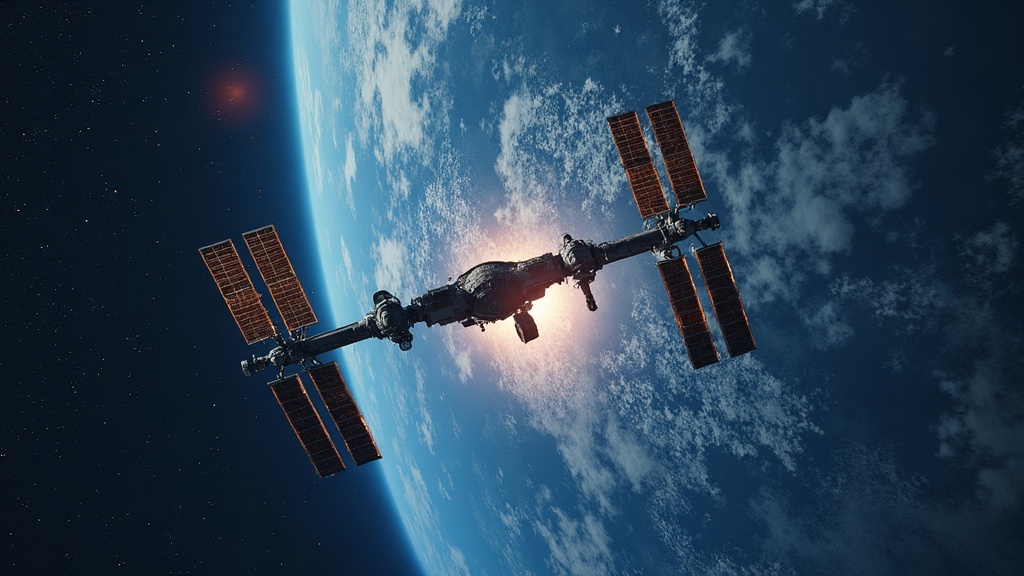
The International Space Station has been orbiting Earth since 1998, and for the better part of three decades, it has served as humanity's most ambitious laboratory. It is scheduled for decommissioning around 2030, after which its remains will be guided into the ocean at Point Nemo — the most remote stretch of water on Earth, also known as the spacecraft graveyard. Before we get there, though, it is worth taking stock of what the ISS has actually taught us. Not the headline achievements like growing lettuce or printing human tissue in microgravity, but the genuinely strange, paradigm-nudging discoveries that emerged from experiments nobody on the ground could have fully predicted. The five findings below are among the most surprising. Each one raises more questions than it answers, and each one matters well beyond the walls of the station.

Moss Survived Open Space — and Still Reproduced
In a study published in 2025, researchers attached samples of the moss species Physcomitrium patens to the outside of the ISS using a dedicated external platform called KIBO. The samples were exposed to the full brutality of open space — hard vacuum, temperature swings from roughly -120°C to +120°C, and ultraviolet radiation so energetic that Earth's atmosphere filters it out entirely before it reaches the surface. The experiment ran for nine months.
The results were striking. Of the three life stages tested — protonemata, brood cells, and sporophytes — only the sporophytes held up under the most punishing conditions. But they held up remarkably well: 99% survived vacuum exposure, 81% survived freezing temperatures, 36% survived extreme heat, and 27% survived UV-C radiation, the kind that would cause severe cellular damage in virtually any organism without specialised protection. When the surviving sporophytes were returned to Earth, 80% of the spores inside them germinated successfully.
This matters for several reasons. Mosses are physiologically simple, their genome is fully sequenced, and they are already known to tolerate significant environmental stress on Earth. That makes them ideal baseline organisms for understanding how plant life in general might fare on long-duration space missions or on the surfaces of other planets. If we cannot sustain complex crops in a lunar habitat, moss could help generate oxygen while more sophisticated systems are established. It is not glamorous, but it is practical.
There is also a terrestrial application. Understanding how plants resist radiation and temperature extremes in space can directly inform research into climate resilience on Earth, where crops are under increasing pressure from shifting weather patterns, drought, and heat stress. Space moss, improbably, may have something to say about food security.
Adult Stem Cells Became More Like Newborns in Microgravity
Stem cells sit at the heart of regenerative medicine's biggest promises. They can self-replicate and differentiate into specialised cell types — which means, in theory, they could be used to grow replacement tissues or even entire organs. The practical challenge is that adult stem cells are significantly less flexible than those found in newborns or embryos. Their capacity for differentiation narrows as we age.
A 2021 study introduced an unexpected variable. Researchers brought adult cardiovascular progenitor cells, or CPCs, to the ISS and allowed them to incubate in microgravity for approximately one month. When the cells were analysed, they had shifted to resemble a more immature state — closer, in terms of their biological capabilities, to the CPCs you would find in a newborn. New chemical signalling pathways had opened. The cells were replicating more efficiently and showing greater ability to differentiate into different cardiovascular tissue types.
Scientists do not yet know exactly why this happened. Several genes were observed switching on or off during the process, but the underlying mechanism has not been pinned down. Crucially, nobody knows how to replicate the effect on Earth without recreating the microgravity conditions. That is the central challenge for translating this into medical treatments.
But the implication is significant. If microgravity can effectively rejuvenate adult stem cells, and if scientists can identify the specific molecular triggers responsible, it may become possible to stimulate similar changes in a clinical setting. That could open new avenues for growing replacement cardiac tissue from a patient's own cells, bypassing the chronic shortage of donor organs. It is early-stage research, but the direction is clear and the potential is considerable.
The ISS Is Home to the Coldest Spot in the Known Universe
The Cold Atom Lab, installed aboard the ISS, routinely achieves temperatures below one billionth of a Kelvin — colder than the average temperature of deep space, and colder than anything scientists can easily sustain on Earth. It does this to study a fifth state of matter called Bose-Einstein condensates, or BECs.
A BEC forms when atoms of certain gases are cooled to near absolute zero. At that point, quantum effects that normally operate at subatomic scales begin to manifest visibly. Individual atoms lose their distinct identities and merge into a single collective quantum state, behaving as though they are one large atom rather than thousands of separate ones. This allows physicists to observe phenomena like wave-particle duality — the property by which matter behaves simultaneously as a particle and as a wave — at a scale that can actually be measured and photographed.
The reason the ISS is uniquely suited to this work is twofold. First, the microgravity environment allows atoms to remain in free fall far longer than they can in a ground-based laboratory, where gravitational effects constrain observation windows to around one second. In space, that window extends dramatically. Second, the absence of gravity allows for more precise control over the cooling process itself.
BECs are not purely academic curiosities. They are directly relevant to the physics of superconductors — materials that conduct electricity with zero resistance — and to the atomic clocks that underpin GPS navigation and global telecommunications. Understanding quantum behaviour at this level is foundational work for technologies that most people already rely on daily.
Spiders Use Light as a Backup for Gravity
It took three attempts across nearly four decades, but scientists eventually established a clean, controlled spider experiment on the ISS — and the result revealed something genuinely unexpected about arachnid cognition.
The first attempt, at NASA's Skylab station in 1973, failed because no food was provided for the spiders, making it impossible to distinguish between webs distorted by microgravity and webs distorted by starvation. A 2008 attempt on the ISS was undermined when a backup spider escaped its enclosure and joined the primary subject, and the fruit fly food supply reproduced so rapidly that it physically obscured the observation window. By 2011, the protocol had been refined sufficiently to produce usable data.
Two golden silk orb weavers — nicknamed Esmeralda and Gladys by the crew — spent two months aboard the ISS, producing 56 webs in total while two control spiders remained on Earth. Researchers chose the species specifically because it naturally produces asymmetric webs, making orientation changes easier to detect. The finding: in the absence of gravitational cues, the spiders oriented both themselves and their webs using light. They treated the light source as "up" and positioned themselves accordingly, just as they would normally position themselves with respect to gravity.
This suggests spiders have evolved a redundant orientation system — one that activates when the primary gravity-sensing mechanism is unavailable. From an evolutionary perspective, this makes sense. Biological systems that rely on a single point of failure are vulnerable. Having a light-based backup for gravity provides resilience, and it may function in tandem with gravitational sensing under normal conditions for additional precision.
The sample size of two spiders is, admittedly, not statistically robust. Broader follow-up studies would be needed to confirm this as a species-wide trait rather than individual behaviour. But the hypothesis is compelling, and the experimental methodology has finally reached a standard where further work is feasible.
Fire Burns Differently in Space — and That Has Real Consequences
In 2012, the FLEX experiment asked astronauts to ignite small droplets of heptane fuel aboard the ISS and observe how they burned and extinguished. The goal was ostensibly straightforward: improve our understanding of combustion and fire suppression in space. What happened was considerably more interesting.
After the visible flame went out, instruments detected continued combustion — an invisible fire that persisted and eventually extinguished itself. This was a cool flame, a known but poorly understood phenomenon in which combustion occurs at around 600°C rather than the 2,000°C typical of a conventional hydrocarbon flame. Cool flames had been observed before a main flame in controlled laboratory conditions, but nobody had ever seen one sustain itself after a visible flame had gone out. Microgravity had removed the convection currents that normally disrupt and extinguish cool-flame chemistry on Earth, allowing the process to continue uninterrupted.
Free Weekly Newsletter
Enjoying this guide?
Get the best articles like this one delivered to your inbox every week. No spam.
The practical implications run in two directions. First, fire safety: if fuel can continue burning invisibly after a flame appears to be out, that is a critical hazard in the confined environment of a space station. Understanding the conditions under which cool flames persist is essential for designing effective suppression systems. Second, engine efficiency: cool-flame combustion chemistry, if it can be harnessed, could enable engines that extract more energy from the same volume of fuel while producing fewer harmful emissions. A 2021 follow-up successfully sustained a gas-fuelled cool flame in space for the first time, opening the door to more systematic research.
This is a case where basic curiosity-driven research in an unusual environment has produced insights with direct applications in engineering and safety — precisely the kind of outcome that justifies the extraordinary cost of operating a crewed space station.
The ISS Is Almost Gone. What It Found Will Outlast It.
The ISS will not survive the 2030s. Its hardware is ageing, its operational costs are immense, and NASA has already begun planning the transition to commercially operated low-Earth-orbit platforms. Point Nemo awaits.
But the science it has generated — moss that survives open space, stem cells that grow younger in microgravity, quantum matter cooled below any temperature found elsewhere in the universe, spiders that navigate by light, and fire that burns without being seen — will continue to generate research for decades. Each of these findings has opened a line of inquiry that ground-based laboratories are now equipped to pursue. Some will lead to medical breakthroughs. Some will inform engineering. Some will simply change our understanding of how the universe works.
That is not a bad legacy for a metal structure the size of a football pitch, circling at 28,000 kilometres per hour, 400 kilometres above a planet that still has no idea what it is doing.
Frequently Asked Questions
When will the ISS be decommissioned?
The ISS is currently scheduled for decommissioning around 2030. NASA plans to guide it into a controlled reentry over the South Pacific Ocean, specifically the remote area known as Point Nemo, which is commonly used as a spacecraft graveyard due to its distance from populated land.
What is a Bose-Einstein condensate and why does the ISS help study it?
A Bose-Einstein condensate is a state of matter that forms when certain atoms are cooled to within a fraction of a degree above absolute zero. At that temperature, quantum effects become visible at a macroscopic scale and individual atoms behave collectively as a single quantum entity. The ISS is ideal for studying BECs because microgravity allows atoms to remain in controlled free fall far longer than is possible in Earth-based laboratories, extending observation windows from about one second to several seconds or more.
Could moss actually be used in space colonisation?
Potentially, yes — though not as a primary food source. Mosses like Physcomitrium patens are being studied for their resilience to radiation, vacuum, and temperature extremes. In the context of early-stage space habitats, hardy mosses could contribute to oxygen production and serve as baseline organisms for more complex plant ecosystems. They also help researchers understand which biological mechanisms confer resistance to environmental stress, which informs the development of more complex crops for space agriculture.
What is a cool flame and why is it significant?
A cool flame is a low-temperature combustion process that occurs at around 600°C, compared to the roughly 2,000°C of a standard hydrocarbon flame. It is typically invisible to the naked eye. On Earth, convection currents tend to disrupt the chemical conditions that sustain cool flames. In the microgravity environment of the ISS, those disruptions are absent, allowing cool flames to persist longer and be studied in detail. The research is relevant both to fire safety in spacecraft and to the development of more efficient, lower-emission combustion engines on Earth.
Why does microgravity cause adult stem cells to behave like younger cells?
Scientists do not yet have a definitive answer. What has been observed is that adult cardiovascular progenitor cells exposed to microgravity for around one month show changes in gene expression that make them more closely resemble neonatal stem cells, with enhanced capacity for self-replication and differentiation. Several genetic pathways appear to switch on or off during the process, but the precise biological mechanism has not been identified. Replicating the effect on Earth, without microgravity, remains an open research challenge.
Free Investing Tools
Frequently Asked Questions
What Happens When You Do Science 400 Kilometres Above Everything?
The International Space Station has been orbiting Earth since 1998, and for the better part of three decades, it has served as humanity's most ambitious laboratory. It is scheduled for decommissioning around 2030, after which its remains will be guided into the ocean at Point Nemo — the most remote stretch of water on Earth, also known as the spacecraft graveyard. Before we get there, though, it is worth taking stock of what the ISS has actually taught us. Not the headline achievements like growing lettuce or printing human tissue in microgravity, but the genuinely strange, paradigm-nudging discoveries that emerged from experiments nobody on the ground could have fully predicted. The five findings below are among the most surprising. Each one raises more questions than it answers, and each one matters well beyond the walls of the station.
Moss Survived Open Space — and Still Reproduced
In a study published in 2025, researchers attached samples of the moss species Physcomitrium patens to the outside of the ISS using a dedicated external platform called KIBO. The samples were exposed to the full brutality of open space — hard vacuum, temperature swings from roughly -120°C to +120°C, and ultraviolet radiation so energetic that Earth's atmosphere filters it out entirely before it reaches the surface. The experiment ran for nine months.
The results were striking. Of the three life stages tested — protonemata, brood cells, and sporophytes — only the sporophytes held up under the most punishing conditions. But they held up remarkably well: 99% survived vacuum exposure, 81% survived freezing temperatures, 36% survived extreme heat, and 27% survived UV-C radiation, the kind that would cause severe cellular damage in virtually any organism without specialised protection. When the surviving sporophytes were returned to Earth, 80% of the spores inside them germinated successfully.
This matters for several reasons. Mosses are physiologically simple, their genome is fully sequenced, and they are already known to tolerate significant environmental stress on Earth. That makes them ideal baseline organisms for understanding how plant life in general might fare on long-duration space missions or on the surfaces of other planets. If we cannot sustain complex crops in a lunar habitat, moss could help generate oxygen while more sophisticated systems are established. It is not glamorous, but it is practical.
There is also a terrestrial application. Understanding how plants resist radiation and temperature extremes in space can directly inform research into climate resilience on Earth, where crops are under increasing pressure from shifting weather patterns, drought, and heat stress. Space moss, improbably, may have something to say about food security.
Adult Stem Cells Became More Like Newborns in Microgravity
Stem cells sit at the heart of regenerative medicine's biggest promises. They can self-replicate and differentiate into specialised cell types — which means, in theory, they could be used to grow replacement tissues or even entire organs. The practical challenge is that adult stem cells are significantly less flexible than those found in newborns or embryos. Their capacity for differentiation narrows as we age.
A 2021 study introduced an unexpected variable. Researchers brought adult cardiovascular progenitor cells, or CPCs, to the ISS and allowed them to incubate in microgravity for approximately one month. When the cells were analysed, they had shifted to resemble a more immature state — closer, in terms of their biological capabilities, to the CPCs you would find in a newborn. New chemical signalling pathways had opened. The cells were replicating more efficiently and showing greater ability to differentiate into different cardiovascular tissue types.
Scientists do not yet know exactly why this happened. Several genes were observed switching on or off during the process, but the underlying mechanism has not been pinned down. Crucially, nobody knows how to replicate the effect on Earth without recreating the microgravity conditions. That is the central challenge for translating this into medical treatments.
But the implication is significant. If microgravity can effectively rejuvenate adult stem cells, and if scientists can identify the specific molecular triggers responsible, it may become possible to stimulate similar changes in a clinical setting. That could open new avenues for growing replacement cardiac tissue from a patient's own cells, bypassing the chronic shortage of donor organs. It is early-stage research, but the direction is clear and the potential is considerable.
The ISS Is Home to the Coldest Spot in the Known Universe
The Cold Atom Lab, installed aboard the ISS, routinely achieves temperatures below one billionth of a Kelvin — colder than the average temperature of deep space, and colder than anything scientists can easily sustain on Earth. It does this to study a fifth state of matter called Bose-Einstein condensates, or BECs.
A BEC forms when atoms of certain gases are cooled to near absolute zero. At that point, quantum effects that normally operate at subatomic scales begin to manifest visibly. Individual atoms lose their distinct identities and merge into a single collective quantum state, behaving as though they are one large atom rather than thousands of separate ones. This allows physicists to observe phenomena like wave-particle duality — the property by which matter behaves simultaneously as a particle and as a wave — at a scale that can actually be measured and photographed.
The reason the ISS is uniquely suited to this work is twofold. First, the microgravity environment allows atoms to remain in free fall far longer than they can in a ground-based laboratory, where gravitational effects constrain observation windows to around one second. In space, that window extends dramatically. Second, the absence of gravity allows for more precise control over the cooling process itself.
BECs are not purely academic curiosities. They are directly relevant to the physics of superconductors — materials that conduct electricity with zero resistance — and to the atomic clocks that underpin GPS navigation and global telecommunications. Understanding quantum behaviour at this level is foundational work for technologies that most people already rely on daily.
Spiders Use Light as a Backup for Gravity
It took three attempts across nearly four decades, but scientists eventually established a clean, controlled spider experiment on the ISS — and the result revealed something genuinely unexpected about arachnid cognition.
The first attempt, at NASA's Skylab station in 1973, failed because no food was provided for the spiders, making it impossible to distinguish between webs distorted by microgravity and webs distorted by starvation. A 2008 attempt on the ISS was undermined when a backup spider escaped its enclosure and joined the primary subject, and the fruit fly food supply reproduced so rapidly that it physically obscured the observation window. By 2011, the protocol had been refined sufficiently to produce usable data.
Two golden silk orb weavers — nicknamed Esmeralda and Gladys by the crew — spent two months aboard the ISS, producing 56 webs in total while two control spiders remained on Earth. Researchers chose the species specifically because it naturally produces asymmetric webs, making orientation changes easier to detect. The finding: in the absence of gravitational cues, the spiders oriented both themselves and their webs using light. They treated the light source as "up" and positioned themselves accordingly, just as they would normally position themselves with respect to gravity.
This suggests spiders have evolved a redundant orientation system — one that activates when the primary gravity-sensing mechanism is unavailable. From an evolutionary perspective, this makes sense. Biological systems that rely on a single point of failure are vulnerable. Having a light-based backup for gravity provides resilience, and it may function in tandem with gravitational sensing under normal conditions for additional precision.
The sample size of two spiders is, admittedly, not statistically robust. Broader follow-up studies would be needed to confirm this as a species-wide trait rather than individual behaviour. But the hypothesis is compelling, and the experimental methodology has finally reached a standard where further work is feasible.
Fire Burns Differently in Space — and That Has Real Consequences
In 2012, the FLEX experiment asked astronauts to ignite small droplets of heptane fuel aboard the ISS and observe how they burned and extinguished. The goal was ostensibly straightforward: improve our understanding of combustion and fire suppression in space. What happened was considerably more interesting.
After the visible flame went out, instruments detected continued combustion — an invisible fire that persisted and eventually extinguished itself. This was a cool flame, a known but poorly understood phenomenon in which combustion occurs at around 600°C rather than the 2,000°C typical of a conventional hydrocarbon flame. Cool flames had been observed before a main flame in controlled laboratory conditions, but nobody had ever seen one sustain itself after a visible flame had gone out. Microgravity had removed the convection currents that normally disrupt and extinguish cool-flame chemistry on Earth, allowing the process to continue uninterrupted.
The practical implications run in two directions. First, fire safety: if fuel can continue burning invisibly after a flame appears to be out, that is a critical hazard in the confined environment of a space station. Understanding the conditions under which cool flames persist is essential for designing effective suppression systems. Second, engine efficiency: cool-flame combustion chemistry, if it can be harnessed, could enable engines that extract more energy from the same volume of fuel while producing fewer harmful emissions. A 2021 follow-up successfully sustained a gas-fuelled cool flame in space for the first time, opening the door to more systematic research.
This is a case where basic curiosity-driven research in an unusual environment has produced insights with direct applications in engineering and safety — precisely the kind of outcome that justifies the extraordinary cost of operating a crewed space station.
The ISS Is Almost Gone. What It Found Will Outlast It.
The ISS will not survive the 2030s. Its hardware is ageing, its operational costs are immense, and NASA has already begun planning the transition to commercially operated low-Earth-orbit platforms. Point Nemo awaits.
But the science it has generated — moss that survives open space, stem cells that grow younger in microgravity, quantum matter cooled below any temperature found elsewhere in the universe, spiders that navigate by light, and fire that burns without being seen — will continue to generate research for decades. Each of these findings has opened a line of inquiry that ground-based laboratories are now equipped to pursue. Some will lead to medical breakthroughs. Some will inform engineering. Some will simply change our understanding of how the universe works.
That is not a bad legacy for a metal structure the size of a football pitch, circling at 28,000 kilometres per hour, 400 kilometres above a planet that still has no idea what it is doing.
Frequently Asked Questions
When will the ISS be decommissioned?
The ISS is currently scheduled for decommissioning around 2030. NASA plans to guide it into a controlled reentry over the South Pacific Ocean, specifically the remote area known as Point Nemo, which is commonly used as a spacecraft graveyard due to its distance from populated land.
What is a Bose-Einstein condensate and why does the ISS help study it?
A Bose-Einstein condensate is a state of matter that forms when certain atoms are cooled to within a fraction of a degree above absolute zero. At that temperature, quantum effects become visible at a macroscopic scale and individual atoms behave collectively as a single quantum entity. The ISS is ideal for studying BECs because microgravity allows atoms to remain in controlled free fall far longer than is possible in Earth-based laboratories, extending observation windows from about one second to several seconds or more.
Could moss actually be used in space colonisation?
Potentially, yes — though not as a primary food source. Mosses like Physcomitrium patens are being studied for their resilience to radiation, vacuum, and temperature extremes. In the context of early-stage space habitats, hardy mosses could contribute to oxygen production and serve as baseline organisms for more complex plant ecosystems. They also help researchers understand which biological mechanisms confer resistance to environmental stress, which informs the development of more complex crops for space agriculture.
What is a cool flame and why is it significant?
A cool flame is a low-temperature combustion process that occurs at around 600°C, compared to the roughly 2,000°C of a standard hydrocarbon flame. It is typically invisible to the naked eye. On Earth, convection currents tend to disrupt the chemical conditions that sustain cool flames. In the microgravity environment of the ISS, those disruptions are absent, allowing cool flames to persist longer and be studied in detail. The research is relevant both to fire safety in spacecraft and to the development of more efficient, lower-emission combustion engines on Earth.
Why does microgravity cause adult stem cells to behave like younger cells?
Scientists do not yet have a definitive answer. What has been observed is that adult cardiovascular progenitor cells exposed to microgravity for around one month show changes in gene expression that make them more closely resemble neonatal stem cells, with enhanced capacity for self-replication and differentiation. Several genetic pathways appear to switch on or off during the process, but the precise biological mechanism has not been identified. Replicating the effect on Earth, without microgravity, remains an open research challenge.
About Zeebrain Editorial
Zeebrain publishes independent analysis of markets, investing, personal finance, and business. We disclose affiliate relationships, never accept payment for coverage, and fact-check all claims against primary sources. Read our editorial policy →
How this article was produced: Zeebrain articles are created with AI assistance from primary sources (including cited videos and market data) and reviewed under our editorial standards before publication. Spot an error? Tell us and we will correct it.
More from Curiosities




Related Guides
Keep exploring this topic
Explore More Categories
Keep browsing by topic and build depth around the subjects you care about most.