Was King John Really a Bad King? The Truth Behind the Myth
Quick Summary
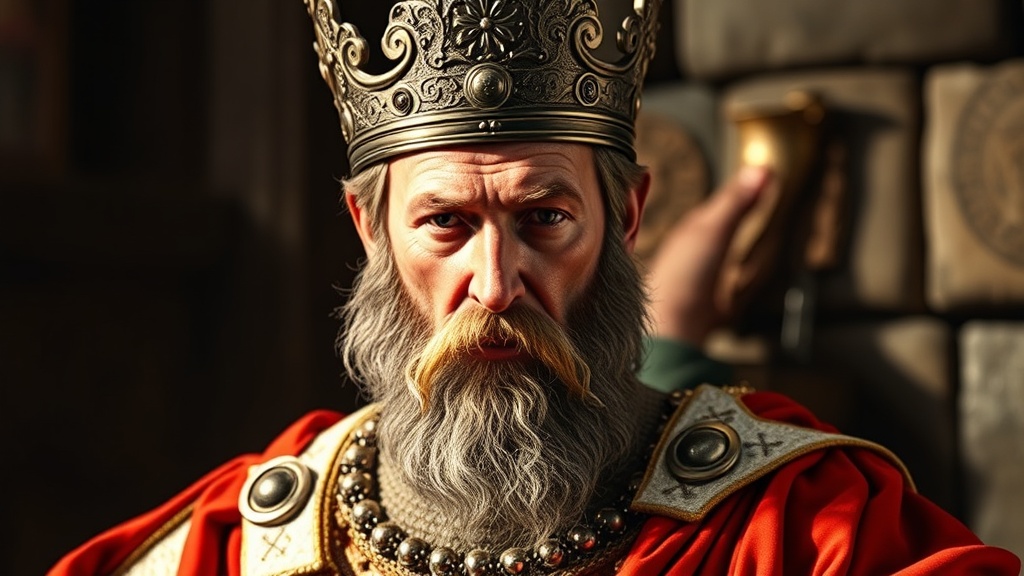
King John's reign is a byword for failure and tyranny — but was he truly history's worst king, or a man crushed by circumstance? The answer is more complicated than you think.
In This Article
The King Nobody Wanted to Remember
There is a peculiar kind of infamy reserved for King John of England — the sort that outlasts empires, rewrites legends, and turns a man into a pantomime villain for eight centuries running. He is the snivelling schemer of Robin Hood retellings, the monarch so catastrophically bad that, according to popular legend, no English king ever dared use the name again. That last part, as it happens, is a myth. But the question beneath it is not: was King John genuinely one of history's worst rulers, or has history been unfair to a king dealt a punishing hand?
The answer, frustratingly, is both — and neither entirely. John inherited a kingdom already bleeding from the financial wounds his brother Richard had inflicted. He faced a hostile French crown, a restless baronage, and a pope with a very short temper. But he also lied, schemed, alienated his most powerful allies, lost a war through sheer arrogance, picked a fight with Rome, and managed to invite a French prince to rule England in his place. Some disasters are inherited. Others are built, brick by careful brick, by the man in the throne.
To understand where John went wrong — and where history has perhaps judged him too harshly — we need to start before he was ever king.
The Long Shadow of Richard the Lionheart
Richard I is one of English history's great romantic figures: the crusader king, the warrior poet, the man whose very nickname — the Lionheart — conjures images of righteous martial glory. What the romance tends to omit is that Richard spent the vast majority of his reign outside England, and that his crusading adventures, however glorious in reputation, left the kingdom financially hollowed out.
The Third Crusade was expensive. Richard's subsequent capture by Duke Leopold of Austria and his imprisonment under Holy Roman Emperor Henry VI was catastrophically so. The ransom demanded — roughly 150,000 marks, equivalent to two or three times England's annual royal revenue — was extracted from a population already strained by the cost of war. England paid it. Richard came home. And then, almost as an afterthought, he died in 1199 from a crossbow bolt wound sustained during a minor siege in France.
John inherited not a kingdom in rude health, but a treasury scraped nearly bare and a realm that had been administered, in his brother's absence, by regents and ministers rather than by a present, engaged monarch. This context matters enormously. The financial obsession that would define and ultimately doom John's reign did not emerge from nowhere — it emerged from a kingdom that was already broke.
What John did with that inheritance, however, is where his own character begins to bear the weight of history's judgment.
The Loss of Normandy and What It Really Meant
The political crisis that defined the early years of John's reign centred on France, and specifically on the question of succession in the Angevin territories on the continent. When Richard died without legitimate heirs, the English crown passed smoothly to John. But the rules governing the French territories were different, and by those rules, the claim belonged to John's nephew Arthur of Brittany.
John, unsurprisingly, disagreed with this interpretation — and set about making his displeasure felt through a combination of military force and strategic marriage. He annulled his existing marriage (conveniently citing a consanguinity clause, since he and his wife were cousins and had neglected to obtain papal approval) and married Isabella of Angoulême, a girl of around twelve who was already betrothed to Hugh IX of Lusignan.
This last decision proved politically catastrophic. Hugh appealed to King Philip II of France, who summoned John to appear at the French court. John, holding titles in France that technically made him a vassal of the French crown, refused. Philip declared war.
What followed was a slow-motion military collapse. John was not without strategic instinct — he could plan campaigns and understood logistics — but he had a fatal weakness in the field: he treated his barons with contempt. Medieval warfare was a coalition enterprise. A king who belittled his lords during campaigns, who kept his own counsel while dismissing theirs, who was absent when he should have led, was a king who would eventually find himself leading nobody at all.
By 1204, Normandy was gone. So were Anjou, Maine, and Touraine — the heartland of the Angevin empire that Henry II had built. These were not peripheral territories. They were the ancestral core of the dynasty's power and wealth. Their loss reverberated through English politics for a generation.
Also notable: Arthur of Brittany, the rival claimant who had been captured in battle, disappeared from history around this time under deeply suspicious circumstances. John was widely believed to have ordered his murder. He was never tried for it, but the court of medieval public opinion rarely required a formal verdict.
A King at War With Everyone — Including God
With France largely lost, John turned his formidable energies inward — toward England, and toward the relentless extraction of money from it. Unlike Richard, who had treated England primarily as a revenue source to fund his adventures abroad, John was genuinely engaged in the daily governance of his kingdom. He attended his own court with unusual frequency, personally reviewed legal cases, and showed real administrative ability.
But his methods were poisonous. Knowing that his barons were essential to his power — and suspecting, with the paranoia of a man who had himself plotted against a king, that they were always one grievance away from treachery — he chose not to win their loyalty but to break their independence. Arbitrary fines, demands for payment to inherit lands or remarry, the seizure of estates from lords who refused to comply: these were not exceptional measures but systematic policy. Even loyal barons lived in a state of perpetual financial anxiety, never certain that their obedience would protect them.
Then came the pope.
In 1208, a dispute over the appointment of the Archbishop of Canterbury escalated into a full-scale confrontation between John and Pope Innocent III — one of the most formidable pontiffs in medieval history. John refused to accept Innocent's candidate, Stephen Langton. Innocent placed England under interdict, suspending most public religious services. When John continued to resist, Innocent excommunicated him personally in 1209.
For a medieval population whose daily life was structured around the rhythms of the Church — baptism, marriage, burial, the Eucharist — this was not an abstract theological dispute. It was a catastrophe. Churches fell silent. The dying could not receive last rites. The interdict lasted six years. When John finally submitted in 1213, he did so by agreeing to hold England as a papal fief — effectively making himself a vassal of Rome. It was a humiliation carefully dressed as a diplomatic settlement, and it satisfied nobody.
Magna Carta: Not Quite the Document History Made It
By 1215, John had managed the extraordinary feat of alienating simultaneously his barons, the Church, and a significant portion of the English population. When his attempt to reassemble an alliance with the Holy Roman Emperor and reclaim his French territories collapsed at the Battle of Bouvines in 1214 — a defeat in which John himself played little direct part, having failed to convince his northern barons to join the campaign at all — the baronage finally ran out of patience.
Open rebellion broke out. John's military position deteriorated rapidly. And so, on a meadow at Runnymede beside the Thames in June 1215, he set his seal to one of the most consequential documents in English constitutional history: Magna Carta.
History has transformed Magna Carta into the founding charter of individual liberty, the ancestor of habeas corpus, the bedrock of the rule of law. There is truth in this — but it is a truth that belongs mostly to later centuries. In 1215, the document was something rather more immediate and rather less noble: a baronial power grab. Its sixty-three clauses were largely concerned with protecting the rights and properties of the feudal nobility from exactly the kind of arbitrary royal interference that John had made his signature move. Most of England's population — unfree serfs, villeins, the rural poor — received almost nothing from it.
John signed it in the knowledge that he had no choice. He also, with impressive speed, secured papal annulment of the document (Innocent III obliged within weeks, calling it shameful and demeaning) and restarted the war. This time, freed from the constraints of negotiation, he actually performed rather better militarily. But the barons had an answer for that: they invited Prince Louis of France to come and take the English throne instead.
Louis accepted. By the time John died of dysentery in October 1216, England was hosting a French prince in the south, a Scottish army in the north, and a baronial revolt throughout the middle. It was, by any measure, a remarkable achievement in self-destruction.
The Verdict History Keeps Delivering
The moment John died, the rebellion largely dissolved — which tells us something important. His nine-year-old son was crowned Henry III, and almost immediately, the political temperature dropped. Louis was persuaded to go home. A revised, somewhat moderated version of Magna Carta was reissued in Henry's name. The Scottish withdrew. The barons, who had been willing to invite foreign invasion rather than continue living under John, decided that a boy king under a capable regent was an entirely acceptable arrangement.
Free Weekly Newsletter
Enjoying this guide?
Get the best articles like this one delivered to your inbox every week. No spam.
The rebellion was not, in other words, about abstract constitutional principles. It was about John specifically — his cruelty, his paranoia, his systematic humiliation of the very men he needed most. Remove John, and the reasons for the crisis largely evaporated.
This is the historical verdict that keeps reasserting itself, no matter how sympathetically you approach the evidence: John inherited genuine problems, but he made nearly all of them worse. He had administrative talent but deployed it in service of extraction rather than governance. He had strategic awareness but could not sustain the personal relationships that medieval kingship required. He was, in the most precise sense, a bad king — not because fate was cruel to him, but because he consistently chose the action most likely to make enemies of friends and rebels of subjects.
The name John, incidentally, remained in use among English royalty for generations. History simply remembered the man, not the name, and found both wanting.
Frequently Asked Questions
Was King John really as bad as his reputation suggests?
Largely, yes — though with important caveats. John had real administrative ability and was more engaged in day-to-day governance than his brother Richard. But his paranoia, cruelty toward his barons, disastrous handling of his French territories, conflict with the papacy, and inability to maintain loyal alliances made his reign one of the most troubled in English history. The fact that the baronial rebellion largely collapsed the moment he died suggests the problems were personal, not merely structural.
Did King John really lose Normandy, and why did it matter?
Yes. By 1204, John had lost Normandy, Anjou, Maine, and Touraine to Philip II of France — the ancestral heartland of the Angevin dynasty. The loss mattered enormously because these territories represented both significant revenue and the dynastic prestige that underpinned royal authority. It also stranded English nobles who held lands on both sides of the Channel, forcing a painful choice of loyalty that reshaped English aristocratic identity for generations.
What was Magna Carta actually about when it was signed in 1215?
In its original 1215 form, Magna Carta was primarily a baronial document aimed at limiting the arbitrary power of the king over his nobility. It protected the rights of free men to due process and constrained the crown's ability to levy certain taxes and seize property without consent. However, the majority of England's population — serfs and unfree labourers — gained little from it directly. Its transformation into a symbol of universal liberty came largely through later reinterpretation by lawyers and parliamentarians in the seventeenth century.
Why is there no King John II of England?
The popular claim that no monarch ever used the name John again after John I is a myth — there were several princes named John in the centuries that followed. The reason England never had a John II is simply statistical: the princes who bore that name did not survive to inherit the throne, or inherited it under a different regnal name. Medieval child mortality among royalty was significant, and the name reaching the throne again was a matter of chance rather than deliberate avoidance.
Frequently Asked Questions
The King Nobody Wanted to Remember
There is a peculiar kind of infamy reserved for King John of England — the sort that outlasts empires, rewrites legends, and turns a man into a pantomime villain for eight centuries running. He is the snivelling schemer of Robin Hood retellings, the monarch so catastrophically bad that, according to popular legend, no English king ever dared use the name again. That last part, as it happens, is a myth. But the question beneath it is not: was King John genuinely one of history's worst rulers, or has history been unfair to a king dealt a punishing hand?
The answer, frustratingly, is both — and neither entirely. John inherited a kingdom already bleeding from the financial wounds his brother Richard had inflicted. He faced a hostile French crown, a restless baronage, and a pope with a very short temper. But he also lied, schemed, alienated his most powerful allies, lost a war through sheer arrogance, picked a fight with Rome, and managed to invite a French prince to rule England in his place. Some disasters are inherited. Others are built, brick by careful brick, by the man in the throne.
To understand where John went wrong — and where history has perhaps judged him too harshly — we need to start before he was ever king.
The Long Shadow of Richard the Lionheart
Richard I is one of English history's great romantic figures: the crusader king, the warrior poet, the man whose very nickname — the Lionheart — conjures images of righteous martial glory. What the romance tends to omit is that Richard spent the vast majority of his reign outside England, and that his crusading adventures, however glorious in reputation, left the kingdom financially hollowed out.
The Third Crusade was expensive. Richard's subsequent capture by Duke Leopold of Austria and his imprisonment under Holy Roman Emperor Henry VI was catastrophically so. The ransom demanded — roughly 150,000 marks, equivalent to two or three times England's annual royal revenue — was extracted from a population already strained by the cost of war. England paid it. Richard came home. And then, almost as an afterthought, he died in 1199 from a crossbow bolt wound sustained during a minor siege in France.
John inherited not a kingdom in rude health, but a treasury scraped nearly bare and a realm that had been administered, in his brother's absence, by regents and ministers rather than by a present, engaged monarch. This context matters enormously. The financial obsession that would define and ultimately doom John's reign did not emerge from nowhere — it emerged from a kingdom that was already broke.
What John did with that inheritance, however, is where his own character begins to bear the weight of history's judgment.
The Loss of Normandy and What It Really Meant
The political crisis that defined the early years of John's reign centred on France, and specifically on the question of succession in the Angevin territories on the continent. When Richard died without legitimate heirs, the English crown passed smoothly to John. But the rules governing the French territories were different, and by those rules, the claim belonged to John's nephew Arthur of Brittany.
John, unsurprisingly, disagreed with this interpretation — and set about making his displeasure felt through a combination of military force and strategic marriage. He annulled his existing marriage (conveniently citing a consanguinity clause, since he and his wife were cousins and had neglected to obtain papal approval) and married Isabella of Angoulême, a girl of around twelve who was already betrothed to Hugh IX of Lusignan.
This last decision proved politically catastrophic. Hugh appealed to King Philip II of France, who summoned John to appear at the French court. John, holding titles in France that technically made him a vassal of the French crown, refused. Philip declared war.
What followed was a slow-motion military collapse. John was not without strategic instinct — he could plan campaigns and understood logistics — but he had a fatal weakness in the field: he treated his barons with contempt. Medieval warfare was a coalition enterprise. A king who belittled his lords during campaigns, who kept his own counsel while dismissing theirs, who was absent when he should have led, was a king who would eventually find himself leading nobody at all.
By 1204, Normandy was gone. So were Anjou, Maine, and Touraine — the heartland of the Angevin empire that Henry II had built. These were not peripheral territories. They were the ancestral core of the dynasty's power and wealth. Their loss reverberated through English politics for a generation.
Also notable: Arthur of Brittany, the rival claimant who had been captured in battle, disappeared from history around this time under deeply suspicious circumstances. John was widely believed to have ordered his murder. He was never tried for it, but the court of medieval public opinion rarely required a formal verdict.
A King at War With Everyone — Including God
With France largely lost, John turned his formidable energies inward — toward England, and toward the relentless extraction of money from it. Unlike Richard, who had treated England primarily as a revenue source to fund his adventures abroad, John was genuinely engaged in the daily governance of his kingdom. He attended his own court with unusual frequency, personally reviewed legal cases, and showed real administrative ability.
But his methods were poisonous. Knowing that his barons were essential to his power — and suspecting, with the paranoia of a man who had himself plotted against a king, that they were always one grievance away from treachery — he chose not to win their loyalty but to break their independence. Arbitrary fines, demands for payment to inherit lands or remarry, the seizure of estates from lords who refused to comply: these were not exceptional measures but systematic policy. Even loyal barons lived in a state of perpetual financial anxiety, never certain that their obedience would protect them.
Then came the pope.
In 1208, a dispute over the appointment of the Archbishop of Canterbury escalated into a full-scale confrontation between John and Pope Innocent III — one of the most formidable pontiffs in medieval history. John refused to accept Innocent's candidate, Stephen Langton. Innocent placed England under interdict, suspending most public religious services. When John continued to resist, Innocent excommunicated him personally in 1209.
For a medieval population whose daily life was structured around the rhythms of the Church — baptism, marriage, burial, the Eucharist — this was not an abstract theological dispute. It was a catastrophe. Churches fell silent. The dying could not receive last rites. The interdict lasted six years. When John finally submitted in 1213, he did so by agreeing to hold England as a papal fief — effectively making himself a vassal of Rome. It was a humiliation carefully dressed as a diplomatic settlement, and it satisfied nobody.
Magna Carta: Not Quite the Document History Made It
By 1215, John had managed the extraordinary feat of alienating simultaneously his barons, the Church, and a significant portion of the English population. When his attempt to reassemble an alliance with the Holy Roman Emperor and reclaim his French territories collapsed at the Battle of Bouvines in 1214 — a defeat in which John himself played little direct part, having failed to convince his northern barons to join the campaign at all — the baronage finally ran out of patience.
Open rebellion broke out. John's military position deteriorated rapidly. And so, on a meadow at Runnymede beside the Thames in June 1215, he set his seal to one of the most consequential documents in English constitutional history: Magna Carta.
History has transformed Magna Carta into the founding charter of individual liberty, the ancestor of habeas corpus, the bedrock of the rule of law. There is truth in this — but it is a truth that belongs mostly to later centuries. In 1215, the document was something rather more immediate and rather less noble: a baronial power grab. Its sixty-three clauses were largely concerned with protecting the rights and properties of the feudal nobility from exactly the kind of arbitrary royal interference that John had made his signature move. Most of England's population — unfree serfs, villeins, the rural poor — received almost nothing from it.
John signed it in the knowledge that he had no choice. He also, with impressive speed, secured papal annulment of the document (Innocent III obliged within weeks, calling it shameful and demeaning) and restarted the war. This time, freed from the constraints of negotiation, he actually performed rather better militarily. But the barons had an answer for that: they invited Prince Louis of France to come and take the English throne instead.
Louis accepted. By the time John died of dysentery in October 1216, England was hosting a French prince in the south, a Scottish army in the north, and a baronial revolt throughout the middle. It was, by any measure, a remarkable achievement in self-destruction.
The Verdict History Keeps Delivering
The moment John died, the rebellion largely dissolved — which tells us something important. His nine-year-old son was crowned Henry III, and almost immediately, the political temperature dropped. Louis was persuaded to go home. A revised, somewhat moderated version of Magna Carta was reissued in Henry's name. The Scottish withdrew. The barons, who had been willing to invite foreign invasion rather than continue living under John, decided that a boy king under a capable regent was an entirely acceptable arrangement.
The rebellion was not, in other words, about abstract constitutional principles. It was about John specifically — his cruelty, his paranoia, his systematic humiliation of the very men he needed most. Remove John, and the reasons for the crisis largely evaporated.
This is the historical verdict that keeps reasserting itself, no matter how sympathetically you approach the evidence: John inherited genuine problems, but he made nearly all of them worse. He had administrative talent but deployed it in service of extraction rather than governance. He had strategic awareness but could not sustain the personal relationships that medieval kingship required. He was, in the most precise sense, a bad king — not because fate was cruel to him, but because he consistently chose the action most likely to make enemies of friends and rebels of subjects.
The name John, incidentally, remained in use among English royalty for generations. History simply remembered the man, not the name, and found both wanting.
Frequently Asked Questions
Was King John really as bad as his reputation suggests?
Largely, yes — though with important caveats. John had real administrative ability and was more engaged in day-to-day governance than his brother Richard. But his paranoia, cruelty toward his barons, disastrous handling of his French territories, conflict with the papacy, and inability to maintain loyal alliances made his reign one of the most troubled in English history. The fact that the baronial rebellion largely collapsed the moment he died suggests the problems were personal, not merely structural.
Did King John really lose Normandy, and why did it matter?
Yes. By 1204, John had lost Normandy, Anjou, Maine, and Touraine to Philip II of France — the ancestral heartland of the Angevin dynasty. The loss mattered enormously because these territories represented both significant revenue and the dynastic prestige that underpinned royal authority. It also stranded English nobles who held lands on both sides of the Channel, forcing a painful choice of loyalty that reshaped English aristocratic identity for generations.
What was Magna Carta actually about when it was signed in 1215?
In its original 1215 form, Magna Carta was primarily a baronial document aimed at limiting the arbitrary power of the king over his nobility. It protected the rights of free men to due process and constrained the crown's ability to levy certain taxes and seize property without consent. However, the majority of England's population — serfs and unfree labourers — gained little from it directly. Its transformation into a symbol of universal liberty came largely through later reinterpretation by lawyers and parliamentarians in the seventeenth century.
Why is there no King John II of England?
The popular claim that no monarch ever used the name John again after John I is a myth — there were several princes named John in the centuries that followed. The reason England never had a John II is simply statistical: the princes who bore that name did not survive to inherit the throne, or inherited it under a different regnal name. Medieval child mortality among royalty was significant, and the name reaching the throne again was a matter of chance rather than deliberate avoidance.
About Zeebrain Editorial
Zeebrain publishes independent analysis of markets, investing, personal finance, and business. We disclose affiliate relationships, never accept payment for coverage, and fact-check all claims against primary sources. Read our editorial policy →
How this article was produced: Zeebrain articles are created with AI assistance from primary sources (including cited videos and market data) and reviewed under our editorial standards before publication. Spot an error? Tell us and we will correct it.
More from History & Mysteries



Related Guides
Keep exploring this topic
Henry VIII: The King Who Broke the World for Love
History & Mysteries · Henry VIII · Tudor History
Why Mao Won the Chinese Civil War: The Full Story
History & Mysteries
Why Only Germany Paid WWI Reparations: The Full Story
History & Mysteries
Why Taiwan Wasn't Returned to Japan After World War II
History & Mysteries
Explore More Categories
Keep browsing by topic and build depth around the subjects you care about most.