

Unraveling the Mysteries of Forgotten 'March Madness' – Ancient Ball Games and Their Lost Legacies
Unraveling the Mysteries of Forgotten 'March Madness' – Ancient Ball Games and Their Lost Legacies
Introduction

As spring descends and brackets are busted, the annual frenzy of "March Madness" grips the United States. Millions tune in, fill out prediction sheets, and passionately debate the merits of their chosen teams, culminating in the crowning of a national champion. But what if I told you this modern spectacle of athletic prowess and communal engagement isn't a new phenomenon? What if, across millennia and continents, ancient civilizations also harbored their own versions of "March Madness" – intense, ritualistic, sometimes brutal ball games that captivated populations, shaped societies, and left behind enigmatic legacies? From the Mesoamerican ballcourts echoing with the thud of rubber to the Roman harpastum played with a visceral intensity, these forgotten athletic contests offer a fascinating lens through which to understand human nature, culture, and the enduring power of sport. Unraveling their mysteries not only enriches our historical understanding but also reveals profound connections to our present-day obsessions.
The Echoes of Rubber and Ritual: Mesoamerica's Ōllamaliztli
Perhaps the most iconic and thoroughly researched ancient ball game is the Mesoamerican ballgame, known by various names including ōllamaliztli (Nahuatl) or pitz (Maya). Far from a mere pastime, this game was deeply interwoven with cosmology, warfare, and ritual sacrifice across cultures like the Olmec, Maya, Zapotec, Toltec, and Aztec for over 3,000 years, with evidence dating back as early as 1400 BCE. Imagine a sport played without hands or feet, where players used hips, elbows, and knees to propel a solid rubber ball – weighing anywhere from 4 to 9 pounds, remarkably – through stone rings mounted high on the walls of a massive, I-shaped court. These courts, often found at the heart of ceremonial centers, varied greatly in size, from intimate practice grounds to colossal arenas like the Great Ballcourt at Chichen Itza, which measures 166 by 68 meters, dwarfing many modern football fields.
The specific rules remain elusive, largely due to the destruction of indigenous codices by Spanish conquistadors. However, surviving iconography, friezes, and limited ethnographic accounts suggest a game of immense skill, strategy, and often, deadly stakes. Scholars like Dr. John Fox have theorized that the ball's movement symbolized the sun's journey, the cyclical nature of life and death, or even astronomical events. Some versions were played for sport, others for political dispute resolution, and some culminated in human sacrifice – though whether the victors or the vanquished were offered to the gods is still debated among archaeologists, with evidence supporting both interpretations in different contexts and time periods. For instance, the famous "Decapitation Panel" at Chichen Itza depicts a victorious ballplayer holding the severed head of an opponent, from whose neck emerge seven serpents, symbolizing fertility or rebirth. This vivid imagery underscores the game's profound sacred dimension.
The sheer proliferation of ballcourts is staggering. Over 1,500 have been identified across Mesoamerica, from southern Arizona to El Salvador, testifying to the game's ubiquity and cultural importance. The craftsmanship of the rubber balls themselves is a testament to ancient technological sophistication; Olmec artisans were processing natural latex from rubber trees ( Castilla elastica) into durable, bouncy balls long before Charles Goodyear's vulcanization process. The discovery of these ancient rubber balls, sometimes preserved in boggy conditions, provides tangible links to this lost legacy, inviting us to imagine the sounds and spectacle of these ancient "March Madness" events.
From Roman Arenas to Medieval Fields: Europe's Unruly Ball Games
While Mesoamerica's ballgame stands out for its ritualistic depth, ancient Europe also boasted a diverse array of ball games, though often less formally structured and with different cultural underpinnings. The Roman Empire, known for its gladiatorial contests and chariot races, also engaged in various ball games. One of the most prominent was harpastum, a name derived from the Greek harpaston (ἁρπαστόν), meaning "carried away." This was a rough-and-tumble, often brutal, team sport played with a small, hard ball, likely stuffed with hair or feathers. The objective was to get the ball to the opponent's side of the field, with tackling, faking, and throwing permitted.
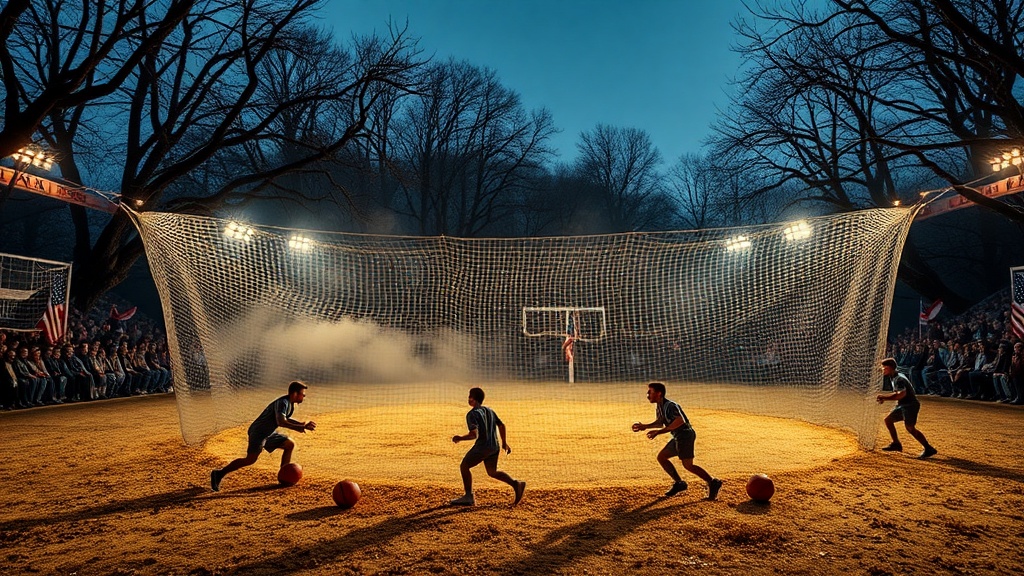
Roman medical writer Galen, writing in the 2nd century CE, described harpastum as "vigorous and useful exercise," suitable for developing strength and agility. He noted that players "struggle for the ball, pushing and shoving and twisting their necks." While lacking the ritualistic severity of ōllamaliztli, harpastum showcased the Roman appetite for physicality and competition. It's considered by many sports historians, including David Goldblatt in "The Ball is Round: A Global History of Football," as a distant ancestor to modern rugby and American football, emphasizing possession and territorial gain. Emperor Augustus was known to have enjoyed watching and participating in ball games, further cementing their place in Roman society, even if they never achieved the same public spectacle as the arena games.
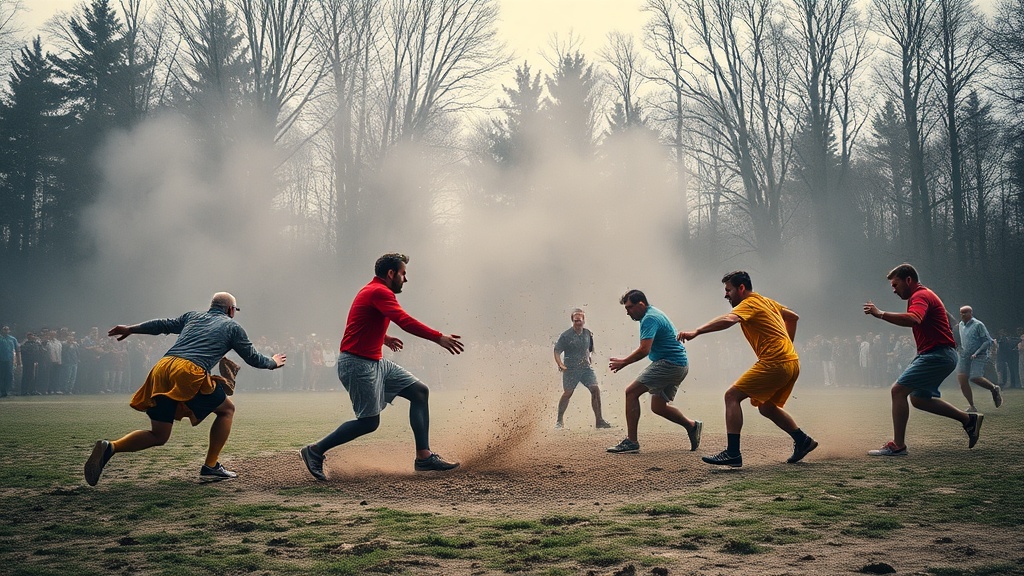
Moving into the medieval period, Europe saw the rise of numerous folk football games, collectively known as "mob football." These were largely unregulated, often violent contests played between villages or parishes, sometimes involving hundreds or even thousands of participants. Games like Soule in France, Calcio Storico Fiorentino in Italy, and various forms of Shrovetide football in England featured scant rules, unlimited players, and goals often miles apart. The ball, frequently an inflated animal bladder, would be kicked, thrown, and carried in a chaotic free-for-all. Imagine a modern rugby scrum, but encompassing an entire town square, with players using any means necessary to advance the ball towards a designated landmark – be it a church door or a specific tree.
These games, far from being mere recreation, served crucial social functions. They were outlets for communal rivalry, expressions of local identity, and often, cathartic release for tensions built up over the year. Historical records, such as medieval town charters and even royal decrees attempting to ban these disruptive (and sometimes deadly) games, provide fascinating glimpses into their scale and impact. For example, King Edward III of England issued a proclamation in 1363 forbidding football because it distracted men from practicing archery, vital for national defense. This highlights the perceived power and allure of these "madness"-inducing games, even against the backdrop of war.
Practical Impact: The Enduring Human Urge to Play
What do these forgotten "March Madness" spectacles tell us about ourselves? Firstly, they underscore the universal and enduring human urge to play, compete, and engage in communal athletic spectacle. The need to create narratives of triumph and defeat, to identify with a team or a cause, and to experience collective excitement transcends cultures and millennia. The psychological thrill of anticipation, the emotional rollercoaster of victory and loss, and the sense of shared experience are threads that connect an Aztec spectator watching a sacrifice to a fan glued to their TV during the NCAA Final Four.
Secondly, these ancient games reveal how deeply intertwined sport has always been with broader societal structures – religion, politics, social cohesion, and even warfare. Modern sports, while often framed as separate from politics, are nonetheless deeply embedded in national identity, economic systems, and social movements. Understanding the historical synergy between sport and society allows us to analyze contemporary phenomena with greater depth. For instance, the ritualistic aspects of ōllamaliztli provide a stark contrast to the secular nature of modern sports but hint at the quasi-religious fervor some fans still exhibit.
For readers, recognizing these historical parallels can enrich their appreciation of modern sports. It transforms a basketball game from a simple contest into a continuation of a profound human tradition. It invites us to consider the underlying reasons for our own fascination with bracketology and championship glory. Are we tapping into an ancient, instinctual desire for communal struggle and celebratory release? Perhaps. Furthermore, the very existence of these diverse ancient games encourages a more inclusive view of "sport" itself, moving beyond Western-centric definitions and appreciating the varied ways humans have historically embodied physical prowess and strategic thinking.
Future Outlook: Reclaiming Lost Legacies and Digital Recreations
The future of understanding these ancient ball games lies in continued archaeological discovery, advanced analytical techniques, and innovative cultural preservation. New archaeological sites in Mesoamerica continue to yield previously unknown ballcourts, offering more data points to reconstruct the game's evolution and regional variations. Similarly, historical linguistic analysis can shed more light on the terminology and rules of Roman and medieval games.
Beyond academic research, there's a growing movement towards cultural reclamation and experiential learning. Indigenous communities in Mexico and Central America are actively reviving ulama (a modern descendant of ōllamaliztli), playing on traditional courts and using authentic rubber balls. These revival efforts, like those documented by organizations such as the Ballgame Project, not only preserve a cultural heritage but also offer invaluable insights into the practical mechanics and nuances of the game that cannot be gleaned from artifacts alone. Imagine a public demonstration of ulama in a U.S. city, offering a tangible connection to this ancient "March Madness."
Technologically, the advent of virtual reality (VR) and augmented reality (AR) offers exciting possibilities. Imagine strapping on a VR headset and experiencing a hyper-realistic simulation of a game on the Great Ballcourt at Chichen Itza, complete with the sounds of ancient crowds and the vibrant colors of ceremonial attire. Or an AR app that allows you to overlay a digital reconstruction of a Roman harpastum game onto a modern park. These immersive technologies could make these lost legacies accessible and engaging for a wider audience, fostering a deeper appreciation for ancient sports history. Educational institutions and museums are already exploring such avenues, transforming static exhibits into dynamic, interactive experiences.
Conclusion
The "March Madness" we know today, with its Cinderella stories and nail-biting finishes, is but the latest iteration in a human tradition thousands of years old. From the rubber balls of Mesoamerica, echoing with ritualistic significance, to the unruly scrum of medieval European fields, humanity has consistently found ways to channel competition, express identity, and celebrate collective endeavor through ball games. Unraveling the mysteries of these forgotten athletic contests not only provides fascinating historical insights but also reinforces a fundamental truth: the urge to play, to compete, and to experience the thrill of victory and the agony of defeat is woven deep into the fabric of human experience. So, as you fill out your bracket this year, take a moment to reflect on the ancient echoes of "March Madness" – a testament to our enduring fascination with the ball, the court, and the timeless drama of sport. What ancient ball game would you most want to witness, and what can its legacy teach us about our own sporting passions? The past holds more than just history; it holds reflections of ourselves.
Frequently Asked Questions
Introduction
As spring descends and brackets are busted, the annual frenzy of "March Madness" grips the United States. Millions tune in, fill out prediction sheets, and passionately debate the merits of their chosen teams, culminating in the crowning of a national champion. But what if I told you this modern spectacle of athletic prowess and communal engagement isn't a new phenomenon? What if, across millennia and continents, ancient civilizations also harbored their own versions of "March Madness" – intense, ritualistic, sometimes brutal ball games that captivated populations, shaped societies, and left behind enigmatic legacies? From the Mesoamerican ballcourts echoing with the thud of rubber to the Roman harpastum played with a visceral intensity, these forgotten athletic contests offer a fascinating lens through which to understand human nature, culture, and the enduring power of sport. Unraveling their mysteries not only enriches our historical understanding but also reveals profound connections to our present-day obsessions.
The Echoes of Rubber and Ritual: Mesoamerica's Ōllamaliztli
Perhaps the most iconic and thoroughly researched ancient ball game is the Mesoamerican ballgame, known by various names including ōllamaliztli (Nahuatl) or pitz (Maya). Far from a mere pastime, this game was deeply interwoven with cosmology, warfare, and ritual sacrifice across cultures like the Olmec, Maya, Zapotec, Toltec, and Aztec for over 3,000 years, with evidence dating back as early as 1400 BCE. Imagine a sport played without hands or feet, where players used hips, elbows, and knees to propel a solid rubber ball – weighing anywhere from 4 to 9 pounds, remarkably – through stone rings mounted high on the walls of a massive, I-shaped court. These courts, often found at the heart of ceremonial centers, varied greatly in size, from intimate practice grounds to colossal arenas like the Great Ballcourt at Chichen Itza, which measures 166 by 68 meters, dwarfing many modern football fields.
The specific rules remain elusive, largely due to the destruction of indigenous codices by Spanish conquistadors. However, surviving iconography, friezes, and limited ethnographic accounts suggest a game of immense skill, strategy, and often, deadly stakes. Scholars like Dr. John Fox have theorized that the ball's movement symbolized the sun's journey, the cyclical nature of life and death, or even astronomical events. Some versions were played for sport, others for political dispute resolution, and some culminated in human sacrifice – though whether the victors or the vanquished were offered to the gods is still debated among archaeologists, with evidence supporting both interpretations in different contexts and time periods. For instance, the famous "Decapitation Panel" at Chichen Itza depicts a victorious ballplayer holding the severed head of an opponent, from whose neck emerge seven serpents, symbolizing fertility or rebirth. This vivid imagery underscores the game's profound sacred dimension.
The sheer proliferation of ballcourts is staggering. Over 1,500 have been identified across Mesoamerica, from southern Arizona to El Salvador, testifying to the game's ubiquity and cultural importance. The craftsmanship of the rubber balls themselves is a testament to ancient technological sophistication; Olmec artisans were processing natural latex from rubber trees ( Castilla elastica) into durable, bouncy balls long before Charles Goodyear's vulcanization process. The discovery of these ancient rubber balls, sometimes preserved in boggy conditions, provides tangible links to this lost legacy, inviting us to imagine the sounds and spectacle of these ancient "March Madness" events.
From Roman Arenas to Medieval Fields: Europe's Unruly Ball Games
While Mesoamerica's ballgame stands out for its ritualistic depth, ancient Europe also boasted a diverse array of ball games, though often less formally structured and with different cultural underpinnings. The Roman Empire, known for its gladiatorial contests and chariot races, also engaged in various ball games. One of the most prominent was harpastum, a name derived from the Greek harpaston (ἁρπαστόν), meaning "carried away." This was a rough-and-tumble, often brutal, team sport played with a small, hard ball, likely stuffed with hair or feathers. The objective was to get the ball to the opponent's side of the field, with tackling, faking, and throwing permitted.
Roman medical writer Galen, writing in the 2nd century CE, described harpastum as "vigorous and useful exercise," suitable for developing strength and agility. He noted that players "struggle for the ball, pushing and shoving and twisting their necks." While lacking the ritualistic severity of ōllamaliztli, harpastum showcased the Roman appetite for physicality and competition. It's considered by many sports historians, including David Goldblatt in "The Ball is Round: A Global History of Football," as a distant ancestor to modern rugby and American football, emphasizing possession and territorial gain. Emperor Augustus was known to have enjoyed watching and participating in ball games, further cementing their place in Roman society, even if they never achieved the same public spectacle as the arena games.
Moving into the medieval period, Europe saw the rise of numerous folk football games, collectively known as "mob football." These were largely unregulated, often violent contests played between villages or parishes, sometimes involving hundreds or even thousands of participants. Games like Soule in France, Calcio Storico Fiorentino in Italy, and various forms of Shrovetide football in England featured scant rules, unlimited players, and goals often miles apart. The ball, frequently an inflated animal bladder, would be kicked, thrown, and carried in a chaotic free-for-all. Imagine a modern rugby scrum, but encompassing an entire town square, with players using any means necessary to advance the ball towards a designated landmark – be it a church door or a specific tree.
These games, far from being mere recreation, served crucial social functions. They were outlets for communal rivalry, expressions of local identity, and often, cathartic release for tensions built up over the year. Historical records, such as medieval town charters and even royal decrees attempting to ban these disruptive (and sometimes deadly) games, provide fascinating glimpses into their scale and impact. For example, King Edward III of England issued a proclamation in 1363 forbidding football because it distracted men from practicing archery, vital for national defense. This highlights the perceived power and allure of these "madness"-inducing games, even against the backdrop of war.
Practical Impact: The Enduring Human Urge to Play
What do these forgotten "March Madness" spectacles tell us about ourselves? Firstly, they underscore the universal and enduring human urge to play, compete, and engage in communal athletic spectacle. The need to create narratives of triumph and defeat, to identify with a team or a cause, and to experience collective excitement transcends cultures and millennia. The psychological thrill of anticipation, the emotional rollercoaster of victory and loss, and the sense of shared experience are threads that connect an Aztec spectator watching a sacrifice to a fan glued to their TV during the NCAA Final Four.
Secondly, these ancient games reveal how deeply intertwined sport has always been with broader societal structures – religion, politics, social cohesion, and even warfare. Modern sports, while often framed as separate from politics, are nonetheless deeply embedded in national identity, economic systems, and social movements. Understanding the historical synergy between sport and society allows us to analyze contemporary phenomena with greater depth. For instance, the ritualistic aspects of ōllamaliztli provide a stark contrast to the secular nature of modern sports but hint at the quasi-religious fervor some fans still exhibit.
For readers, recognizing these historical parallels can enrich their appreciation of modern sports. It transforms a basketball game from a simple contest into a continuation of a profound human tradition. It invites us to consider the underlying reasons for our own fascination with bracketology and championship glory. Are we tapping into an ancient, instinctual desire for communal struggle and celebratory release? Perhaps. Furthermore, the very existence of these diverse ancient games encourages a more inclusive view of "sport" itself, moving beyond Western-centric definitions and appreciating the varied ways humans have historically embodied physical prowess and strategic thinking.
Future Outlook: Reclaiming Lost Legacies and Digital Recreations
The future of understanding these ancient ball games lies in continued archaeological discovery, advanced analytical techniques, and innovative cultural preservation. New archaeological sites in Mesoamerica continue to yield previously unknown ballcourts, offering more data points to reconstruct the game's evolution and regional variations. Similarly, historical linguistic analysis can shed more light on the terminology and rules of Roman and medieval games.
Beyond academic research, there's a growing movement towards cultural reclamation and experiential learning. Indigenous communities in Mexico and Central America are actively reviving ulama (a modern descendant of ōllamaliztli), playing on traditional courts and using authentic rubber balls. These revival efforts, like those documented by organizations such as the Ballgame Project, not only preserve a cultural heritage but also offer invaluable insights into the practical mechanics and nuances of the game that cannot be gleaned from artifacts alone. Imagine a public demonstration of ulama in a U.S. city, offering a tangible connection to this ancient "March Madness."
Technologically, the advent of virtual reality (VR) and augmented reality (AR) offers exciting possibilities. Imagine strapping on a VR headset and experiencing a hyper-realistic simulation of a game on the Great Ballcourt at Chichen Itza, complete with the sounds of ancient crowds and the vibrant colors of ceremonial attire. Or an AR app that allows you to overlay a digital reconstruction of a Roman harpastum game onto a modern park. These immersive technologies could make these lost legacies accessible and engaging for a wider audience, fostering a deeper appreciation for ancient sports history. Educational institutions and museums are already exploring such avenues, transforming static exhibits into dynamic, interactive experiences.
Conclusion
The "March Madness" we know today, with its Cinderella stories and nail-biting finishes, is but the latest iteration in a human tradition thousands of years old. From the rubber balls of Mesoamerica, echoing with ritualistic significance, to the unruly scrum of medieval European fields, humanity has consistently found ways to channel competition, express identity, and celebrate collective endeavor through ball games. Unraveling the mysteries of these forgotten athletic contests not only provides fascinating historical insights but also reinforces a fundamental truth: the urge to play, to compete, and to experience the thrill of victory and the agony of defeat is woven deep into the fabric of human experience. So, as you fill out your bracket this year, take a moment to reflect on the ancient echoes of "March Madness" – a testament to our enduring fascination with the ball, the court, and the timeless drama of sport. What ancient ball game would you most want to witness, and what can its legacy teach us about our own sporting passions? The past holds more than just history; it holds reflections of ourselves.
More from History & Mysteries



Explore More Categories
Looking for more? Check out our other topics: