Un Chien Andalou: The Film Designed to Attack You
Quick Summary
Discover why Un Chien Andalou still shocks audiences nearly 100 years on — and what Buñuel and Dalí's radical experiment reveals about cinema, surrealism, and art.
In This Article
The Eye That Changed Cinema Forever
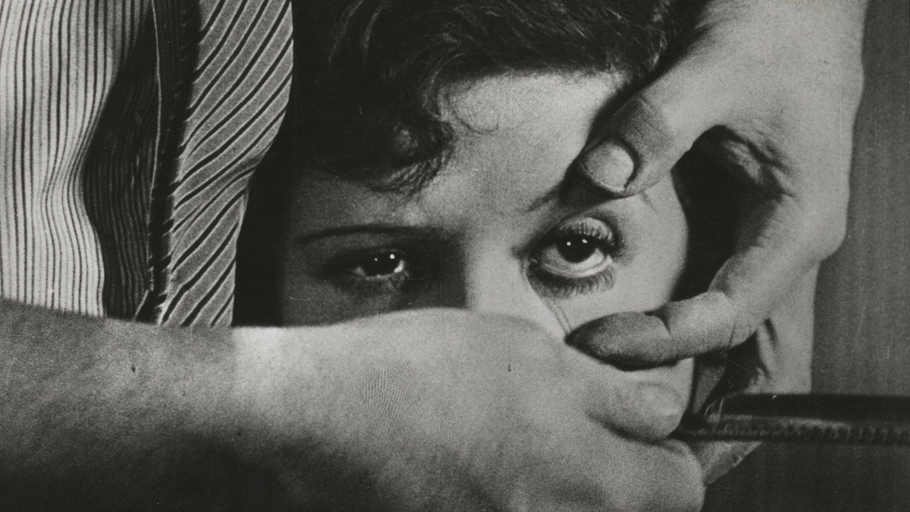
There is a single image in film history that has never lost its power to disturb. A woman's eye, held open by a man's fingers, sliced cleanly by a straight razor. No warning, no narrative context, no release. Just the act, held on screen long enough to make you feel it. That image, the opening shot of Un Chien Andalou (1929), was directed by Luis Buñuel, who is also the man holding the razor. It was, by design, an act of aggression — not toward a character in a story, but toward you, the person watching.

Nearly a century later, that image still stops people cold. That kind of staying power is not an accident. It is the product of a very particular artistic philosophy, a very specific moment in European cultural history, and the collaboration of two extraordinary minds: Buñuel and Salvador Dalí. Understanding why Un Chien Andalou still matters means understanding what it was trying to do — and why that project remains unfinished.
What Surrealism Was Actually Fighting Against
Surrealism is often reduced to a visual style: melting clocks, dreamscapes, strange juxtapositions. That reduction is precisely what the surrealists would have hated. The movement, formally launched by André Breton's Manifesto of Surrealism in 1924, was not primarily an aesthetic project. It was a political and philosophical one.
The surrealists emerged in the wreckage of World War I, a catastrophe that had killed millions and shattered the idea that European rationalism and progress were forces for good. If reason, order, and bourgeois morality had produced the trenches of Verdun and the Somme, then those values were not neutral — they were dangerous. The surrealists wanted to expose the violence encoded in so-called civilised thinking by bypassing it entirely, reaching instead for something raw and unfiltered from the unconscious.
Breton's concept of psychic automatism — creating without the interference of rational thought or moral judgment — was the core methodology. Automatic writing, automatic drawing, and eventually, automatic filmmaking. The idea was not to produce nonsense, but to produce truth in a form that could not be co-opted by the system it was attacking. Buñuel and Dalí, both products of the vibrant intellectual culture at Madrid's Residencia de Estudiantes, arrived in Paris already primed for exactly this kind of radical project.
How Two Dreams Became One Film
The origin story of Un Chien Andalou is itself almost too perfectly surrealist to be believed. Buñuel and Dalí retreated to Dalí's home in Cadaqués for seven days in 1929 with a simple rule: every image they considered for the film had to come from a dream or an involuntary mental association. Any image that could be rationally explained, or that carried conventional symbolic weight, was rejected on the spot.
Buñuel contributed the dream of the sliced eye. Dalí brought the image of a hand crawling with ants. From there, the film grew organically — not as a story, but as a succession of visual provocations. A man drags two grand pianos loaded with decomposing donkeys across a room. A woman's armpit hair materialises over a man's suddenly absent mouth. Intertitles announce time jumps — "Eight Years Later," "Sixteen Years Before" — that correspond to nothing in the action, deliberately sabotaging any attempt to impose narrative order.
This was not laziness or shock for its own sake. It was a methodological commitment. By ensuring that no image could be traced to a conscious, rational decision, Buñuel and Dalí were attempting to do in film what their surrealist peers were doing in paint and prose: create a direct line to the unconscious, unmediated by the conventions that usually filter and domesticate creative expression.
The Radical Idea That the Audience Is the Target
Most cinema, then and now, is built on a transactional relationship with its audience. The filmmaker provides story, character, tension, and resolution. The audience provides attention and money. Even challenging, difficult films tend to honour some version of this contract — the difficulty is the point, but the audience is still being invited in.
Un Chien Andalou explicitly rejects this contract. Buñuel stated plainly that the film had no intention of attracting or pleasing the spectator. On the contrary, it was designed to attack the viewer — specifically, to attack them as members of a society that surrealism considered its enemy. This is a remarkable position, one that very few filmmakers before or since have taken so seriously.
The implications are worth sitting with. If you feel unsettled, disturbed, or even offended by the film, that is not a bug — it is the mechanism working exactly as intended. The film is not trying to communicate with you. It is trying to break something in you, specifically the habitual, rational, comfort-seeking mode of perception that mainstream culture reinforces and depends upon. Whether or not you think that project is justified, it is a coherent and genuinely radical one.
Buñuel understood that cinema was particularly well-suited to this kind of attack. Film creates an impression of reality that painting and writing cannot quite match. When you see an eye being cut, some part of your nervous system responds as if it is real, regardless of what your rational mind knows. Buñuel exploited that gap between intellect and instinct deliberately and ruthlessly.
The Premiere, The Stones, and The Problem With Success
On the night of the film's Paris premiere in 1928, the audience included Pablo Picasso, Jean Cocteau, André Breton, and an assortment of intellectuals and aristocrats. Buñuel, genuinely expecting a riot, stood behind the screen with stones in his pockets, prepared to hurl them at the crowd if things turned ugly.
They did not turn ugly. They turned enthusiastic. The audience applauded. The surrealists immediately welcomed Buñuel and Dalí into the movement. The film went on to play for eight months in Paris. By any conventional measure, it was a hit — and that was precisely the problem.
Buñuel was disappointed. A film designed to scandalise had instead been absorbed, celebrated, and turned into a cultural event. The bourgeoisie it set out to attack had simply decided it was marvellous. This dynamic — the avant-garde provoking, the mainstream absorbing and neutralising — is one of the most persistent paradoxes in modern cultural history. The Sex Pistols sign to a major label. Punk becomes a fashion. Surrealism becomes a design aesthetic.
Buñuel got a second chance with his follow-up, L'Age d'Or (1930), which did provoke a genuine riot and was banned for fifty years. But even that ban eventually ended. Even that film is now in the canon.
Why Un Chien Andalou Still Matters in 2025
The failure of surrealism to overthrow bourgeois rationalism is real and worth acknowledging. But measuring the movement only by that impossible standard misses what it actually achieved. Un Chien Andalou changed what cinema understood itself to be capable of. Before Buñuel and Dalí, the dominant model for film narrative was essentially the nineteenth-century novel: character, causality, moral resolution. Un Chien Andalou demonstrated that film could operate on entirely different terms — associative rather than sequential, visceral rather than intellectual, confrontational rather than consoling.
You can trace its influence across nearly a century of filmmaking. David Lynch's disjointed dreamscapes in Eraserhead and Mulholland Drive owe an enormous debt to Buñuel's methods. Music videos from the early MTV era drew directly on surrealist visual logic. Contemporary horror cinema — particularly the recent wave of so-called elevated horror — frequently deploys the kind of irrational, image-driven dread that Buñuel pioneered. Even the algorithmic feed, with its jarring, context-free succession of images, is a kind of accidental surrealism that Breton might have found grimly familiar.
The deeper legacy, though, is philosophical. Un Chien Andalou is a permanent reminder that art does not owe its audience comfort, coherence, or resolution. That the most important thing a work can do is sometimes to refuse to behave. That the unconscious is a legitimate and vital source of truth. These are not easy ideas, and mainstream culture does not naturally incline toward them. That is exactly why they keep needing to be made again.
How to Actually Watch Un Chien Andalou
The film is sixteen minutes long and freely available online. If you have not seen it, you should — with a few things in mind.
First, resist the urge to interpret. The temptation to decode every image, to find the hidden symbolic key that unlocks the film's meaning, is almost irresistible, and almost entirely misses the point. Buñuel and Dalí specifically excluded images that felt too symbolic or too meaningful. The images that made the cut are the ones that felt strange and unexplained even to their creators.
Second, pay attention to your own reactions. Where do you feel discomfort? Where do you feel boredom or impatience? Where does your mind reach for narrative logic and fail to find it? Those reactions are the film working. They are not obstacles to understanding — they are the content.
Third, consider what the film is asking of cinema. Every mainstream film you watch is built on assumptions so deeply embedded they are almost invisible: that images should follow causally from one another, that characters should have comprehensible motivations, that stories should move toward some form of resolution. Un Chien Andalou strips all of that away. What is left is both disturbing and, in its strange way, liberating.
Free Weekly Newsletter
Enjoying this guide?
Get the best articles like this one delivered to your inbox every week. No spam.
Buñuel once said that the purpose of cinema was not to show life as it is, but as it might be, or as it is dreamed. Un Chien Andalou is the most uncompromising version of that idea ever committed to film. It is uncomfortable, occasionally repellent, and absolutely essential.
Frequently Asked Questions
What does Un Chien Andalou actually mean in English?
Un Chien Andalou translates from French as An Andalusian Dog. The title has no direct relationship to the content of the film — which is itself very much in keeping with the surrealist ethos of refusing logical connections. Buñuel later suggested that the title was intended as an insult toward a group of contemporary Spanish poets he disliked, though accounts of its exact meaning vary.
Why did Buñuel carry stones to the film's premiere?
Buñuel was genuinely convinced that Un Chien Andalou would provoke a violent reaction from its audience. Surrealism at the time was deliberately antagonistic toward polite society, and he expected riots or at the very least outrage. He stood behind the screen with stones in his pockets, prepared to defend himself or retaliate. Instead, the audience — which included Picasso, Cocteau, and André Breton — responded with sustained applause. The lack of scandal was, paradoxically, a source of disappointment for Buñuel.
Is the eye-slicing scene in Un Chien Andalou real?
No. The eye being sliced belongs to a dead calf, not a human being. The scene was constructed through careful editing and prop work to create the illusion of a real eye being cut. The effectiveness of the image, even knowing this, speaks to how powerfully cinema can trigger visceral physical responses regardless of what the rational mind understands to be true — which was precisely Buñuel's point.
How did Un Chien Andalou influence later cinema?
The film's influence is vast and often uncredited. David Lynch is the most frequently cited heir to Buñuel's methods, particularly in films like Eraserhead, Blue Velvet, and Mulholland Drive, all of which deploy associative, dream-logic imagery rather than conventional narrative causality. Beyond Lynch, the film helped establish that cinema could function as a purely visual, non-narrative art form — an idea that shaped experimental film throughout the twentieth century and continues to influence music video, installation art, and contemporary horror.
What is psychic automatism, and why did it matter to surrealism?
Psychic automatism was the foundational creative practice of surrealism, defined by André Breton as the dictation of thought in the absence of rational control, free from aesthetic or moral concern. In practice, it meant writing, drawing, or filming without premeditation — letting the unconscious drive the work. The surrealists believed that rational, conscious thought was contaminated by bourgeois ideology, and that bypassing it was both a creative and a political act. Un Chien Andalou applied this principle to filmmaking: every image in the film was selected precisely because it could not be rationally justified.
Frequently Asked Questions
The Eye That Changed Cinema Forever
There is a single image in film history that has never lost its power to disturb. A woman's eye, held open by a man's fingers, sliced cleanly by a straight razor. No warning, no narrative context, no release. Just the act, held on screen long enough to make you feel it. That image, the opening shot of Un Chien Andalou (1929), was directed by Luis Buñuel, who is also the man holding the razor. It was, by design, an act of aggression — not toward a character in a story, but toward you, the person watching.
Nearly a century later, that image still stops people cold. That kind of staying power is not an accident. It is the product of a very particular artistic philosophy, a very specific moment in European cultural history, and the collaboration of two extraordinary minds: Buñuel and Salvador Dalí. Understanding why Un Chien Andalou still matters means understanding what it was trying to do — and why that project remains unfinished.
What Surrealism Was Actually Fighting Against
Surrealism is often reduced to a visual style: melting clocks, dreamscapes, strange juxtapositions. That reduction is precisely what the surrealists would have hated. The movement, formally launched by André Breton's Manifesto of Surrealism in 1924, was not primarily an aesthetic project. It was a political and philosophical one.
The surrealists emerged in the wreckage of World War I, a catastrophe that had killed millions and shattered the idea that European rationalism and progress were forces for good. If reason, order, and bourgeois morality had produced the trenches of Verdun and the Somme, then those values were not neutral — they were dangerous. The surrealists wanted to expose the violence encoded in so-called civilised thinking by bypassing it entirely, reaching instead for something raw and unfiltered from the unconscious.
Breton's concept of psychic automatism — creating without the interference of rational thought or moral judgment — was the core methodology. Automatic writing, automatic drawing, and eventually, automatic filmmaking. The idea was not to produce nonsense, but to produce truth in a form that could not be co-opted by the system it was attacking. Buñuel and Dalí, both products of the vibrant intellectual culture at Madrid's Residencia de Estudiantes, arrived in Paris already primed for exactly this kind of radical project.
How Two Dreams Became One Film
The origin story of Un Chien Andalou is itself almost too perfectly surrealist to be believed. Buñuel and Dalí retreated to Dalí's home in Cadaqués for seven days in 1929 with a simple rule: every image they considered for the film had to come from a dream or an involuntary mental association. Any image that could be rationally explained, or that carried conventional symbolic weight, was rejected on the spot.
Buñuel contributed the dream of the sliced eye. Dalí brought the image of a hand crawling with ants. From there, the film grew organically — not as a story, but as a succession of visual provocations. A man drags two grand pianos loaded with decomposing donkeys across a room. A woman's armpit hair materialises over a man's suddenly absent mouth. Intertitles announce time jumps — "Eight Years Later," "Sixteen Years Before" — that correspond to nothing in the action, deliberately sabotaging any attempt to impose narrative order.
This was not laziness or shock for its own sake. It was a methodological commitment. By ensuring that no image could be traced to a conscious, rational decision, Buñuel and Dalí were attempting to do in film what their surrealist peers were doing in paint and prose: create a direct line to the unconscious, unmediated by the conventions that usually filter and domesticate creative expression.
The Radical Idea That the Audience Is the Target
Most cinema, then and now, is built on a transactional relationship with its audience. The filmmaker provides story, character, tension, and resolution. The audience provides attention and money. Even challenging, difficult films tend to honour some version of this contract — the difficulty is the point, but the audience is still being invited in.
Un Chien Andalou explicitly rejects this contract. Buñuel stated plainly that the film had no intention of attracting or pleasing the spectator. On the contrary, it was designed to attack the viewer — specifically, to attack them as members of a society that surrealism considered its enemy. This is a remarkable position, one that very few filmmakers before or since have taken so seriously.
The implications are worth sitting with. If you feel unsettled, disturbed, or even offended by the film, that is not a bug — it is the mechanism working exactly as intended. The film is not trying to communicate with you. It is trying to break something in you, specifically the habitual, rational, comfort-seeking mode of perception that mainstream culture reinforces and depends upon. Whether or not you think that project is justified, it is a coherent and genuinely radical one.
Buñuel understood that cinema was particularly well-suited to this kind of attack. Film creates an impression of reality that painting and writing cannot quite match. When you see an eye being cut, some part of your nervous system responds as if it is real, regardless of what your rational mind knows. Buñuel exploited that gap between intellect and instinct deliberately and ruthlessly.
The Premiere, The Stones, and The Problem With Success
On the night of the film's Paris premiere in 1928, the audience included Pablo Picasso, Jean Cocteau, André Breton, and an assortment of intellectuals and aristocrats. Buñuel, genuinely expecting a riot, stood behind the screen with stones in his pockets, prepared to hurl them at the crowd if things turned ugly.
They did not turn ugly. They turned enthusiastic. The audience applauded. The surrealists immediately welcomed Buñuel and Dalí into the movement. The film went on to play for eight months in Paris. By any conventional measure, it was a hit — and that was precisely the problem.
Buñuel was disappointed. A film designed to scandalise had instead been absorbed, celebrated, and turned into a cultural event. The bourgeoisie it set out to attack had simply decided it was marvellous. This dynamic — the avant-garde provoking, the mainstream absorbing and neutralising — is one of the most persistent paradoxes in modern cultural history. The Sex Pistols sign to a major label. Punk becomes a fashion. Surrealism becomes a design aesthetic.
Buñuel got a second chance with his follow-up, L'Age d'Or (1930), which did provoke a genuine riot and was banned for fifty years. But even that ban eventually ended. Even that film is now in the canon.
Why Un Chien Andalou Still Matters in 2025
The failure of surrealism to overthrow bourgeois rationalism is real and worth acknowledging. But measuring the movement only by that impossible standard misses what it actually achieved. Un Chien Andalou changed what cinema understood itself to be capable of. Before Buñuel and Dalí, the dominant model for film narrative was essentially the nineteenth-century novel: character, causality, moral resolution. Un Chien Andalou demonstrated that film could operate on entirely different terms — associative rather than sequential, visceral rather than intellectual, confrontational rather than consoling.
You can trace its influence across nearly a century of filmmaking. David Lynch's disjointed dreamscapes in Eraserhead and Mulholland Drive owe an enormous debt to Buñuel's methods. Music videos from the early MTV era drew directly on surrealist visual logic. Contemporary horror cinema — particularly the recent wave of so-called elevated horror — frequently deploys the kind of irrational, image-driven dread that Buñuel pioneered. Even the algorithmic feed, with its jarring, context-free succession of images, is a kind of accidental surrealism that Breton might have found grimly familiar.
The deeper legacy, though, is philosophical. Un Chien Andalou is a permanent reminder that art does not owe its audience comfort, coherence, or resolution. That the most important thing a work can do is sometimes to refuse to behave. That the unconscious is a legitimate and vital source of truth. These are not easy ideas, and mainstream culture does not naturally incline toward them. That is exactly why they keep needing to be made again.
How to Actually Watch Un Chien Andalou
The film is sixteen minutes long and freely available online. If you have not seen it, you should — with a few things in mind.
First, resist the urge to interpret. The temptation to decode every image, to find the hidden symbolic key that unlocks the film's meaning, is almost irresistible, and almost entirely misses the point. Buñuel and Dalí specifically excluded images that felt too symbolic or too meaningful. The images that made the cut are the ones that felt strange and unexplained even to their creators.
Second, pay attention to your own reactions. Where do you feel discomfort? Where do you feel boredom or impatience? Where does your mind reach for narrative logic and fail to find it? Those reactions are the film working. They are not obstacles to understanding — they are the content.
Third, consider what the film is asking of cinema. Every mainstream film you watch is built on assumptions so deeply embedded they are almost invisible: that images should follow causally from one another, that characters should have comprehensible motivations, that stories should move toward some form of resolution. Un Chien Andalou strips all of that away. What is left is both disturbing and, in its strange way, liberating.
Buñuel once said that the purpose of cinema was not to show life as it is, but as it might be, or as it is dreamed. Un Chien Andalou is the most uncompromising version of that idea ever committed to film. It is uncomfortable, occasionally repellent, and absolutely essential.
Frequently Asked Questions
What does Un Chien Andalou actually mean in English?
Un Chien Andalou translates from French as An Andalusian Dog. The title has no direct relationship to the content of the film — which is itself very much in keeping with the surrealist ethos of refusing logical connections. Buñuel later suggested that the title was intended as an insult toward a group of contemporary Spanish poets he disliked, though accounts of its exact meaning vary.
Why did Buñuel carry stones to the film's premiere?
Buñuel was genuinely convinced that Un Chien Andalou would provoke a violent reaction from its audience. Surrealism at the time was deliberately antagonistic toward polite society, and he expected riots or at the very least outrage. He stood behind the screen with stones in his pockets, prepared to defend himself or retaliate. Instead, the audience — which included Picasso, Cocteau, and André Breton — responded with sustained applause. The lack of scandal was, paradoxically, a source of disappointment for Buñuel.
Is the eye-slicing scene in Un Chien Andalou real?
No. The eye being sliced belongs to a dead calf, not a human being. The scene was constructed through careful editing and prop work to create the illusion of a real eye being cut. The effectiveness of the image, even knowing this, speaks to how powerfully cinema can trigger visceral physical responses regardless of what the rational mind understands to be true — which was precisely Buñuel's point.
How did Un Chien Andalou influence later cinema?
The film's influence is vast and often uncredited. David Lynch is the most frequently cited heir to Buñuel's methods, particularly in films like Eraserhead, Blue Velvet, and Mulholland Drive, all of which deploy associative, dream-logic imagery rather than conventional narrative causality. Beyond Lynch, the film helped establish that cinema could function as a purely visual, non-narrative art form — an idea that shaped experimental film throughout the twentieth century and continues to influence music video, installation art, and contemporary horror.
What is psychic automatism, and why did it matter to surrealism?
Psychic automatism was the foundational creative practice of surrealism, defined by André Breton as the dictation of thought in the absence of rational control, free from aesthetic or moral concern. In practice, it meant writing, drawing, or filming without premeditation — letting the unconscious drive the work. The surrealists believed that rational, conscious thought was contaminated by bourgeois ideology, and that bypassing it was both a creative and a political act. Un Chien Andalou applied this principle to filmmaking: every image in the film was selected precisely because it could not be rationally justified.
About Zeebrain Editorial
Zeebrain publishes independent analysis of markets, investing, personal finance, and business. We disclose affiliate relationships, never accept payment for coverage, and fact-check all claims against primary sources. Read our editorial policy →
How this article was produced: Zeebrain articles are created with AI assistance from primary sources (including cited videos and market data) and reviewed under our editorial standards before publication. Spot an error? Tell us and we will correct it.
More from Entertainment


Related Guides
Keep exploring this topic
The Rise of the Machines… and Entertainers: AI-Generated Content Reshapes the Entertainment Landscap...
Entertainment
The Math Behind Why Movie Franchises Keep Failing
Entertainment
Trapped on an Island: What It Really Takes to Build a Boat
Entertainment
The Artist Who Painted Insects Like Jewels and Changed Science
Entertainment
Explore More Categories
Keep browsing by topic and build depth around the subjects you care about most.