The Psychology of Prediction: Why We're Obsessed with Super Bowl LXI and March Madness

Quick Summary
As the calendar pages turn and winter's chill gives way to spring's promise, a familiar fervor sweeps across the United States. It's not just about warmer weather; it's the escalating tension and exci
In This Article
The Psychology of Prediction: Why We're Obsessed with Super Bowl LXI and March Madness
Introduction

As the calendar pages turn and winter's chill gives way to spring's promise, a familiar fervor sweeps across the United States. It's not just about warmer weather; it's the escalating tension and excitement surrounding two of the nation's biggest sporting spectacles: Super Bowl LXI and March Madness. For weeks, sometimes months, before the first kickoff or the initial tip-off, conversations are dominated by prognostication. Who will win? What upsets are brewing? Will this year finally be our year? This isn't just casual chatter; it's a deeply ingrained psychological phenomenon, a collective obsession with predicting the unpredictable. In an increasingly complex and uncertain world, the seemingly frivolous act of picking winners in sports offers a unique blend of entertainment, community, and a powerful, almost primal, sense of control. As we stand on the cusp of Super Bowl LXI and the impending chaos of March Madness, understanding the psychological underpinnings of this predictive urge reveals profound insights into human nature, cognitive biases, and our fundamental need for narrative and meaning.
The Illusion of Control and the Quest for Narrative
At its core, the obsession with predicting Super Bowl LXI and March Madness stems from a potent psychological cocktail, primarily involving the "illusion of control" and our innate desire to construct compelling narratives. The illusion of control, a concept widely studied in psychology, describes our tendency to overestimate our degree of influence over external events, particularly when those events are largely determined by chance. When we fill out a March Madness bracket, we are, consciously or subconsciously, asserting a form of control over a sprawling tournament with 67 games. Each selection, from the seemingly obvious powerhouse picks to the audacious Cinderella stories, is an act of agency. We research team statistics, analyze player matchups, listen to expert opinions, and then, crucially, make our choices. This process, even if statistically improbable to yield a perfect bracket, provides a temporary balm against the randomness of life.
The Super Bowl, while a single game, amplifies this illusion through its sheer cultural weight. The weeks leading up to Super Bowl LXI will be a maelstrom of punditry, statistical models, and fan speculation. Every article analyzing quarterback efficiency, every segment debating defensive schemes, feeds into the public's perceived ability to foresee the outcome. This isn't irrational; it's deeply human. Researchers like Dr. Ellen Langer at Harvard, a pioneer in the study of the illusion of control, have demonstrated how even trivial acts like choosing a lottery ticket number can increase a person's sense of control and optimism about winning. In sports, the stakes feel higher, the data more complex, making the "illusion" feel even more robust.
Beyond control, humans are fundamentally storytellers. We crave narratives, especially those with clear beginnings, middles, and ends, and protagonists and antagonists. Super Bowl LXI, regardless of the teams involved, will be framed as a grand narrative: the seasoned veteran versus the young phenom, the underdog against the dynasty, the quest for redemption. March Madness offers a dizzying array of mini-narratives within a larger epic: the shocking upset, the improbable comeback, the rise of a new star. Our predictions aren't just about picking winners; they're about choosing which narrative we believe will unfold. We become invested in these stories, rooting for our chosen teams and players not just to win, but to fulfill the narrative arc we've mentally constructed. This narrative construction is a powerful cognitive tool for making sense of complex events, and sports provide an almost perfect canvas for this intrinsic human need. The sheer volume of content—from pre-game shows to post-game analyses—all contributes to building these compelling stories, making our predictions feel like an active participation in their creation.
The Dopamine Hit: Anticipation, Risk, and Reward
The psychological magnetism of Super Bowl LXI and March Madness extends beyond control and narrative; it taps directly into our brain's reward system, specifically through the neurotransmitter dopamine. The anticipation leading up to these events, the act of making predictions, and the potential for a "win" (whether monetary or purely bragging rights) triggers a powerful neurochemical response.
Consider the March Madness bracket. Each selection carries a degree of risk and potential reward. Choosing a favored team feels safe but yields fewer points; picking a dark horse promises a greater payout but comes with higher odds of failure. This delicate balance of risk and reward is a potent stimulant. Neuroscientific research has shown that dopamine is released not just when we experience pleasure or reward, but significantly during the anticipation of reward. The days and hours leading up to a crucial game, with your bracket entries hanging in the balance, are rife with dopamine surges. This "wanting" system keeps us engaged, constantly checking scores, analyzing potential matchups, and imagining the satisfaction of a correct prediction. The longer the anticipation, the greater the dopamine release, intensifying our engagement.
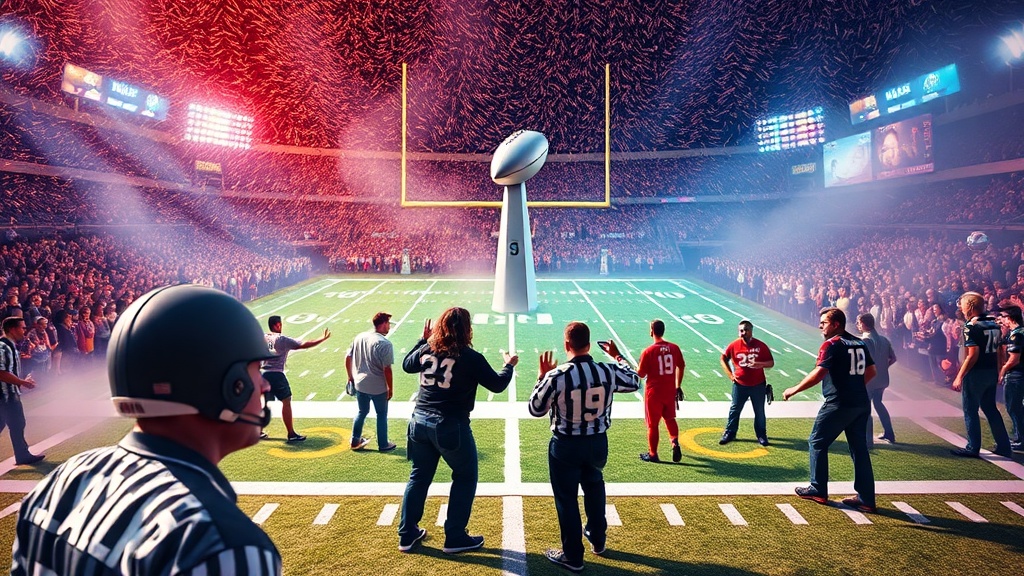
The communal aspect further amplifies this dopamine rush. Bracket pools, fantasy leagues, and friendly wagers around Super Bowl LXI create a social dimension to prediction. The bragging rights that come with a successful prediction, or the shared commiseration of a busted bracket, strengthen social bonds and provide a different kind of reward. Winning a prediction in a group setting activates social recognition circuits in the brain, adding another layer of positive reinforcement. This social validation, even for something as trivial as sports predictions, is a powerful motivator.
Moreover, the phenomenon of "near misses" in March Madness, where a team you picked almost pulls off an upset, or a game comes down to the wire, can be just as potent as outright wins in keeping us engaged. Psychologists and behavioral economists note that near misses can activate the brain's reward system similarly to actual wins, fostering a sense of "almost there" and encouraging continued participation. This explains why we often come back year after year, even after repeated bracket failures; the tantalizing possibility of getting it right keeps us hooked. The Super Bowl, as a single, high-stakes event, compresses this cycle of anticipation, risk, and potential reward into an intense several hours, making the stakes feel incredibly high and the emotional payoff of a correct prediction profoundly satisfying.
Cognitive Biases and the Echo Chamber Effect
While we might believe our predictions for Super Bowl LXI and March Madness are based purely on objective analysis, they are often heavily influenced by a range of cognitive biases. Understanding these biases is crucial to dissecting our predictive obsession.
One of the most prominent is confirmation bias. Once we've picked a team, say, the Kansas City Chiefs for Super Bowl LXI or a particular dark horse in March Madness, we actively seek out and interpret information that confirms our initial choice, while dismissing or downplaying contradictory evidence. We'll find every stat supporting Patrick Mahomes's clutch performance or every article highlighting our Cinderella team's defensive prowess, reinforcing our belief and making us even more confident in our prediction. This bias creates an echo chamber within our own minds, making our predictions feel more robust than they objectively are.
Another significant bias is the availability heuristic. We tend to overestimate the likelihood of events that are easily recalled or vivid in our memory. A recent spectacular upset in March Madness, or a memorable Super Bowl comeback, can disproportionately influence our predictions for the current year, making us more inclined to pick similar scenarios, even if the underlying conditions are different. Similarly, the halo effect can lead us to generalize a positive impression of a team or player (e.g., their charisma, their past successes) to other, unrelated attributes, like their chances of winning a tough game.
The rise of social media exacerbates these biases, creating digital echo chambers. When we share our Super Bowl LXI picks or March Madness brackets, we tend to connect with others who share similar opinions, further solidifying our beliefs through social validation. Algorithms on platforms like X (formerly Twitter) and Facebook are designed to show us content that aligns with our interests and past interactions, inadvertently reinforcing our biases by limiting exposure to dissenting views. This creates a collective predictive bubble, where everyone seems to be saying the same thing, making outliers feel less credible. This social reinforcement makes our predictions feel not just personally valid, but collectively confirmed, adding to our emotional investment.
The Future of Prediction: AI, Data, and the Human Element
Free Weekly Newsletter
Enjoying this guide?
Get the best articles like this one delivered to your inbox every week. No spam.

As we look towards Super Bowl LXI and future March Madness tournaments, the landscape of prediction is evolving rapidly, driven by advancements in artificial intelligence and big data analytics. Sophisticated AI models can now process vast amounts of statistical data, player performance metrics, historical matchups, and even real-time game conditions with a speed and accuracy that far surpasses human capabilities. Companies like ESPN and FiveThirtyEight already leverage advanced analytics to generate probabilities and predictions, often outperforming traditional human experts. We are seeing more predictive models incorporating factors like player fatigue, travel schedules, and even social media sentiment, leading to ever more nuanced outputs.
However, the proliferation of data-driven predictions raises an interesting psychological question: Does increased accuracy diminish the thrill of the human element? If an AI model consistently predicts winners with 80-90% accuracy, does it reduce the dopamine hit of personal prediction, or the narrative satisfaction of an unexpected outcome? Early indications suggest a dichotomy. For some, the pursuit of optimal, data-driven accuracy becomes a new game in itself, leveraging AI as a tool to improve their own predictive success in pools and wagers. For others, the very "unpredictability" that AI seeks to conquer is precisely what makes sports engaging. The potential for human error, the unexpected heroic play, the sheer randomness of a bouncing ball – these are the elements that create compelling narratives that AI cannot fully replicate or predict with 100% certainty.
The future of prediction, therefore, likely involves a symbiotic relationship between human intuition and artificial intelligence. AI can provide a baseline of probability, highlighting trends and identifying potential upsets that humans might miss. But the human element—our ability to weave narratives, our emotional investment, and our capacity for imaginative leaps beyond pure statistics—will likely remain integral to our obsession. Super Bowl LXI and March Madness will continue to be a battleground not just for athletes, but for predictive models and human psychology, each striving to make sense of the beautiful, chaotic dance of competition. Perhaps the ultimate "win" isn't about predicting every outcome correctly, but about engaging with the process, sharing the experience, and appreciating the stories that unfold, regardless of who or what picked them.
Conclusion
Our collective obsession with predicting Super Bowl LXI and March Madness is far more than a simple pastime; it's a profound window into human psychology. It reflects our innate desires for control in an uncertain world, our fundamental need to construct compelling narratives, and our brain's insatiable craving for the dopamine rush of anticipation, risk, and reward. From the illusion of control that fuels our bracket selections to the cognitive biases that confirm our chosen narratives, every aspect of this predictive frenzy is deeply rooted in our cognitive and emotional architecture.
As AI and data analytics continue to sharpen our predictive tools, the core human experience of engagement, social connection, and the thrill of the unknown will persist. We will continue to debate, speculate, and invest emotionally in these sporting spectacles because they offer a unique blend of personal challenge and communal celebration. So, as you prepare your predictions for Super Bowl LXI and meticulously craft your March Madness bracket, remember that you're not just picking winners; you're participating in a timeless human ritual, tapping into the very essence of what makes us curious, hopeful, and endlessly fascinated by the future. Embrace the process, enjoy the ride, and may your predictions bring you the satisfying blend of victory and narrative fulfillment you seek.
Frequently Asked Questions
Introduction
As the calendar pages turn and winter's chill gives way to spring's promise, a familiar fervor sweeps across the United States. It's not just about warmer weather; it's the escalating tension and excitement surrounding two of the nation's biggest sporting spectacles: Super Bowl LXI and March Madness. For weeks, sometimes months, before the first kickoff or the initial tip-off, conversations are dominated by prognostication. Who will win? What upsets are brewing? Will this year finally be our year? This isn't just casual chatter; it's a deeply ingrained psychological phenomenon, a collective obsession with predicting the unpredictable. In an increasingly complex and uncertain world, the seemingly frivolous act of picking winners in sports offers a unique blend of entertainment, community, and a powerful, almost primal, sense of control. As we stand on the cusp of Super Bowl LXI and the impending chaos of March Madness, understanding the psychological underpinnings of this predictive urge reveals profound insights into human nature, cognitive biases, and our fundamental need for narrative and meaning.
The Illusion of Control and the Quest for Narrative
At its core, the obsession with predicting Super Bowl LXI and March Madness stems from a potent psychological cocktail, primarily involving the "illusion of control" and our innate desire to construct compelling narratives. The illusion of control, a concept widely studied in psychology, describes our tendency to overestimate our degree of influence over external events, particularly when those events are largely determined by chance. When we fill out a March Madness bracket, we are, consciously or subconsciously, asserting a form of control over a sprawling tournament with 67 games. Each selection, from the seemingly obvious powerhouse picks to the audacious Cinderella stories, is an act of agency. We research team statistics, analyze player matchups, listen to expert opinions, and then, crucially, make our choices. This process, even if statistically improbable to yield a perfect bracket, provides a temporary balm against the randomness of life.
The Super Bowl, while a single game, amplifies this illusion through its sheer cultural weight. The weeks leading up to Super Bowl LXI will be a maelstrom of punditry, statistical models, and fan speculation. Every article analyzing quarterback efficiency, every segment debating defensive schemes, feeds into the public's perceived ability to foresee the outcome. This isn't irrational; it's deeply human. Researchers like Dr. Ellen Langer at Harvard, a pioneer in the study of the illusion of control, have demonstrated how even trivial acts like choosing a lottery ticket number can increase a person's sense of control and optimism about winning. In sports, the stakes feel higher, the data more complex, making the "illusion" feel even more robust.
Beyond control, humans are fundamentally storytellers. We crave narratives, especially those with clear beginnings, middles, and ends, and protagonists and antagonists. Super Bowl LXI, regardless of the teams involved, will be framed as a grand narrative: the seasoned veteran versus the young phenom, the underdog against the dynasty, the quest for redemption. March Madness offers a dizzying array of mini-narratives within a larger epic: the shocking upset, the improbable comeback, the rise of a new star. Our predictions aren't just about picking winners; they're about choosing which narrative we believe will unfold. We become invested in these stories, rooting for our chosen teams and players not just to win, but to fulfill the narrative arc we've mentally constructed. This narrative construction is a powerful cognitive tool for making sense of complex events, and sports provide an almost perfect canvas for this intrinsic human need. The sheer volume of content—from pre-game shows to post-game analyses—all contributes to building these compelling stories, making our predictions feel like an active participation in their creation.
The Dopamine Hit: Anticipation, Risk, and Reward
The psychological magnetism of Super Bowl LXI and March Madness extends beyond control and narrative; it taps directly into our brain's reward system, specifically through the neurotransmitter dopamine. The anticipation leading up to these events, the act of making predictions, and the potential for a "win" (whether monetary or purely bragging rights) triggers a powerful neurochemical response.
Consider the March Madness bracket. Each selection carries a degree of risk and potential reward. Choosing a favored team feels safe but yields fewer points; picking a dark horse promises a greater payout but comes with higher odds of failure. This delicate balance of risk and reward is a potent stimulant. Neuroscientific research has shown that dopamine is released not just when we experience pleasure or reward, but significantly during the anticipation of reward. The days and hours leading up to a crucial game, with your bracket entries hanging in the balance, are rife with dopamine surges. This "wanting" system keeps us engaged, constantly checking scores, analyzing potential matchups, and imagining the satisfaction of a correct prediction. The longer the anticipation, the greater the dopamine release, intensifying our engagement.
The communal aspect further amplifies this dopamine rush. Bracket pools, fantasy leagues, and friendly wagers around Super Bowl LXI create a social dimension to prediction. The bragging rights that come with a successful prediction, or the shared commiseration of a busted bracket, strengthen social bonds and provide a different kind of reward. Winning a prediction in a group setting activates social recognition circuits in the brain, adding another layer of positive reinforcement. This social validation, even for something as trivial as sports predictions, is a powerful motivator.
Moreover, the phenomenon of "near misses" in March Madness, where a team you picked almost pulls off an upset, or a game comes down to the wire, can be just as potent as outright wins in keeping us engaged. Psychologists and behavioral economists note that near misses can activate the brain's reward system similarly to actual wins, fostering a sense of "almost there" and encouraging continued participation. This explains why we often come back year after year, even after repeated bracket failures; the tantalizing possibility of getting it right keeps us hooked. The Super Bowl, as a single, high-stakes event, compresses this cycle of anticipation, risk, and potential reward into an intense several hours, making the stakes feel incredibly high and the emotional payoff of a correct prediction profoundly satisfying.
Cognitive Biases and the Echo Chamber Effect
While we might believe our predictions for Super Bowl LXI and March Madness are based purely on objective analysis, they are often heavily influenced by a range of cognitive biases. Understanding these biases is crucial to dissecting our predictive obsession.
One of the most prominent is confirmation bias. Once we've picked a team, say, the Kansas City Chiefs for Super Bowl LXI or a particular dark horse in March Madness, we actively seek out and interpret information that confirms our initial choice, while dismissing or downplaying contradictory evidence. We'll find every stat supporting Patrick Mahomes's clutch performance or every article highlighting our Cinderella team's defensive prowess, reinforcing our belief and making us even more confident in our prediction. This bias creates an echo chamber within our own minds, making our predictions feel more robust than they objectively are.
Another significant bias is the availability heuristic. We tend to overestimate the likelihood of events that are easily recalled or vivid in our memory. A recent spectacular upset in March Madness, or a memorable Super Bowl comeback, can disproportionately influence our predictions for the current year, making us more inclined to pick similar scenarios, even if the underlying conditions are different. Similarly, the halo effect can lead us to generalize a positive impression of a team or player (e.g., their charisma, their past successes) to other, unrelated attributes, like their chances of winning a tough game.
The rise of social media exacerbates these biases, creating digital echo chambers. When we share our Super Bowl LXI picks or March Madness brackets, we tend to connect with others who share similar opinions, further solidifying our beliefs through social validation. Algorithms on platforms like X (formerly Twitter) and Facebook are designed to show us content that aligns with our interests and past interactions, inadvertently reinforcing our biases by limiting exposure to dissenting views. This creates a collective predictive bubble, where everyone seems to be saying the same thing, making outliers feel less credible. This social reinforcement makes our predictions feel not just personally valid, but collectively confirmed, adding to our emotional investment.
The Future of Prediction: AI, Data, and the Human Element
As we look towards Super Bowl LXI and future March Madness tournaments, the landscape of prediction is evolving rapidly, driven by advancements in artificial intelligence and big data analytics. Sophisticated AI models can now process vast amounts of statistical data, player performance metrics, historical matchups, and even real-time game conditions with a speed and accuracy that far surpasses human capabilities. Companies like ESPN and FiveThirtyEight already leverage advanced analytics to generate probabilities and predictions, often outperforming traditional human experts. We are seeing more predictive models incorporating factors like player fatigue, travel schedules, and even social media sentiment, leading to ever more nuanced outputs.
However, the proliferation of data-driven predictions raises an interesting psychological question: Does increased accuracy diminish the thrill of the human element? If an AI model consistently predicts winners with 80-90% accuracy, does it reduce the dopamine hit of personal prediction, or the narrative satisfaction of an unexpected outcome? Early indications suggest a dichotomy. For some, the pursuit of optimal, data-driven accuracy becomes a new game in itself, leveraging AI as a tool to improve their own predictive success in pools and wagers. For others, the very "unpredictability" that AI seeks to conquer is precisely what makes sports engaging. The potential for human error, the unexpected heroic play, the sheer randomness of a bouncing ball – these are the elements that create compelling narratives that AI cannot fully replicate or predict with 100% certainty.
The future of prediction, therefore, likely involves a symbiotic relationship between human intuition and artificial intelligence. AI can provide a baseline of probability, highlighting trends and identifying potential upsets that humans might miss. But the human element—our ability to weave narratives, our emotional investment, and our capacity for imaginative leaps beyond pure statistics—will likely remain integral to our obsession. Super Bowl LXI and March Madness will continue to be a battleground not just for athletes, but for predictive models and human psychology, each striving to make sense of the beautiful, chaotic dance of competition. Perhaps the ultimate "win" isn't about predicting every outcome correctly, but about engaging with the process, sharing the experience, and appreciating the stories that unfold, regardless of who or what picked them.
Conclusion
Our collective obsession with predicting Super Bowl LXI and March Madness is far more than a simple pastime; it's a profound window into human psychology. It reflects our innate desires for control in an uncertain world, our fundamental need to construct compelling narratives, and our brain's insatiable craving for the dopamine rush of anticipation, risk, and reward. From the illusion of control that fuels our bracket selections to the cognitive biases that confirm our chosen narratives, every aspect of this predictive frenzy is deeply rooted in our cognitive and emotional architecture.
As AI and data analytics continue to sharpen our predictive tools, the core human experience of engagement, social connection, and the thrill of the unknown will persist. We will continue to debate, speculate, and invest emotionally in these sporting spectacles because they offer a unique blend of personal challenge and communal celebration. So, as you prepare your predictions for Super Bowl LXI and meticulously craft your March Madness bracket, remember that you're not just picking winners; you're participating in a timeless human ritual, tapping into the very essence of what makes us curious, hopeful, and endlessly fascinated by the future. Embrace the process, enjoy the ride, and may your predictions bring you the satisfying blend of victory and narrative fulfillment you seek.
About Zeebrain Editorial
Zeebrain publishes independent analysis of markets, investing, personal finance, and business. We disclose affiliate relationships, never accept payment for coverage, and fact-check all claims against primary sources. Read our editorial policy →
More from Psychology




Related Guides
Keep exploring this topic
Navigating the 'Future of Work': The Psychological Impact of Remote vs. Office Environments
Psychology
Men’s Mental Health Month: Why It Matters and How to Support It
Psychology
The Psychological Impact of Weight Loss Drugs: Beyond the Physical
Psychology
Never Run Out of Things to Say: The Ladder Technique
Psychology
Explore More Categories
Keep browsing by topic and build depth around the subjects you care about most.