The Mysterious Origins of March Madness: A Deep Dive into Early Tournament History

Quick Summary
The Mysterious Origins of March Madness: A Deep Dive into Early Tournament History As millions glued to their screens anticipate the thrilling upsets and Cinderella stories of the...
In This Article
The Mysterious Origins of March Madness: A Deep Dive into Early Tournament History
As millions glued to their screens anticipate the thrilling upsets and Cinderella stories of the NCAA Men's Basketball Tournament this year, it's easy to assume this colossal sporting event always existed in its current form. But the electrifying "March Madness" we know today, a cultural phenomenon generating billions, had surprisingly humble, even mysterious, beginnings. Peeling back the layers of its early history reveals a fascinating tale of competing visions, unsung heroes, and the gradual evolution of what would become America's most beloved annual sporting spectacle. Understanding its nascent stages isn't just an academic exercise; it offers crucial insights into the DNA of a tournament that continues to captivate the nation, explaining its unique structure, traditions, and enduring appeal.

The Genesis of Collegiate Hoops: Before the Madness Took Hold
Before the NCAA tournament dominated headlines, college basketball was a regional affair, often overshadowed by football. Yet, the sport's popularity was undeniably growing, particularly in the Midwest and Northeast. The initial impetus for a national championship wasn't a grand NCAA vision, but rather a desire to crown a true "national champion" amidst disparate conferences and independent teams. This desire led to two parallel, and for a time, competing tournaments: the National Invitation Tournament (NIT) and the NCAA Men's Division I Basketball Tournament.
The NIT, founded in 1938 by the Metropolitan Basketball Writers Association in New York City, predated the NCAA tournament by a year. It quickly established itself as the premier post-season college basketball event, leveraging Madison Square Garden's iconic status and New York's media hub. Its early champions, like Temple (1938) and Long Island University (1939), were crowned with significant fanfare. The NIT's format, often featuring top teams regardless of conference affiliation, allowed for intriguing matchups that fans craved.
The NCAA, then a smaller, less powerful organization primarily focused on amateurism and regulating collegiate athletics, responded in 1939 by launching its own championship. This move wasn't driven by an immediate sense of competition, but rather a perceived need to provide an alternative, and perhaps more academically aligned, championship. The very first NCAA tournament featured just eight teams, a stark contrast to today's 68. Oregon, coached by Howard Hobson, famously defeated Ohio State 46-33 in the inaugural championship game held at Patten Gymnasium in Evanston, Illinois, earning the moniker "Tall Firs" for their innovative, fast-break style. This initial tournament operated on a shoestring budget, with little national attention compared to the NIT, which at the time was seen as the more prestigious event. Indeed, until the mid-1970s, many top teams would opt for the NIT if given the choice, believing it offered a better platform and more media exposure. The early NCAA tournament, often played in smaller college gyms and without significant television coverage, was still finding its footing.
Why Did the NCAA Tournament Eventually Overtake the NIT? Key Turning Points and Strategic Moves
The story of how the NCAA tournament ascended to preeminence over the NIT is a compelling case study in organizational strategy, media leverage, and evolving priorities. Several critical factors and strategic decisions propelled the NCAA's championship to become the undisputed national standard.
One major turning point was the NCAA's shift in philosophy regarding tournament participation. Initially, teams could participate in both tournaments. However, by the 1950s, the NCAA began to exert its authority, eventually decreeing that any team invited to its tournament must accept the invitation and could not participate in the NIT. This exclusive participation clause was a significant power play, forcing teams to choose and effectively elevating the NCAA's championship by restricting the talent pool available to the NIT. This move wasn't without controversy, but it cemented the NCAA's control over the top collegiate teams.
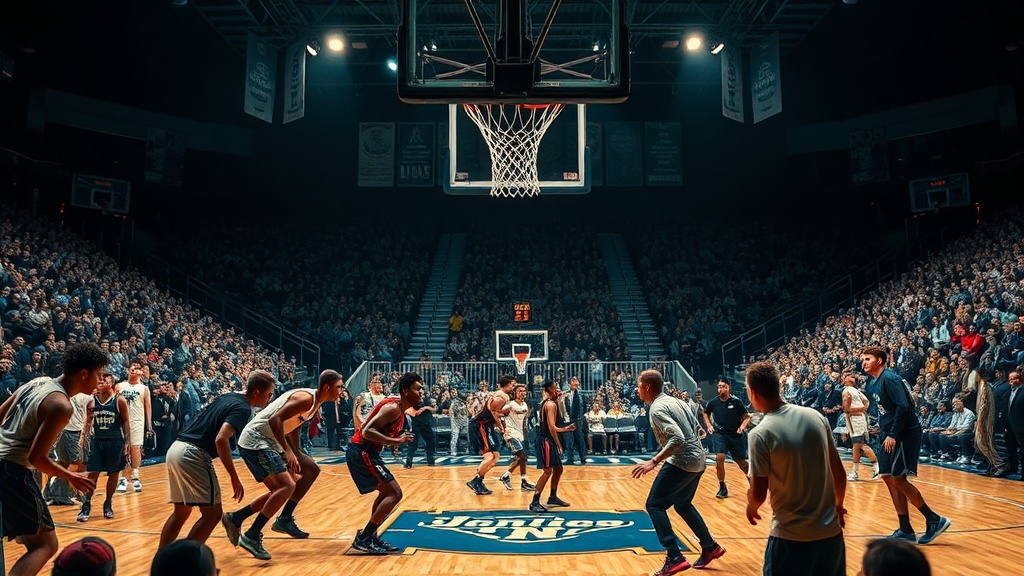
Another crucial factor was the NCAA's evolving relationship with television. While both tournaments initially struggled for broad media exposure, the NCAA's national scope and its ability to represent a wider array of institutions proved more attractive to nascent television networks. Early, regional broadcasts laid the groundwork. By the 1960s, the NCAA tournament began securing national television contracts, albeit limited ones. The watershed moment arrived in 1979 with the iconic championship game between Larry Bird's Indiana State and Magic Johnson's Michigan State. This game, broadcast nationally by NBC, garnered unprecedented viewership and is widely credited with igniting widespread public interest in the NCAA tournament. Its dramatic storyline and star power made it a cultural event, demonstrating the immense commercial potential of college basketball. The NCAA, as a national governing body, was better positioned to negotiate and leverage these national media opportunities compared to the NIT, which remained more rooted in its New York origins.
Furthermore, the expansion of the NCAA tournament field played a significant role. Starting with eight teams, it gradually grew to 16 teams in 1951, 25 in 1953, and 32 in 1975. The monumental expansion to 48 teams in 1980, and then 64 teams in 1985, dramatically increased the number of participants and, consequently, the number of schools and fan bases invested in the tournament. This expansion not only made the tournament more inclusive but also created more opportunities for unexpected upsets and "Cinderella" stories, further fueling public excitement and media narratives. The sheer scale and geographical reach of the expanded NCAA tournament simply dwarfed the NIT, making it the more representative and engaging national championship.
The Echoes of Early History: How the Founders' Vision Shapes Today's March Madness
The early history of the NCAA tournament, from its humble beginnings to its fierce competition with the NIT, continues to cast a long shadow over the modern March Madness phenomenon. The very structure and spirit of the tournament today are deeply rooted in these foundational years.
For instance, the emphasis on regional play in the tournament's early rounds, with teams often playing in geographically proximate locations, is a direct legacy of its origins. This structure, initially designed for logistical ease and to encourage local attendance, now fuels rivalries and creates unique home-court advantages for some higher seeds, adding another layer of strategic depth to the bracket. The "pod" system in the first and second rounds, while optimized for TV, still inherently respects this regional flavor.
Moreover, the "bracket" as a cultural artifact itself finds its roots in the simple single-elimination format adopted from the start. This brutal, unforgiving structure, where one loss means elimination, creates the inherent drama and high stakes that define March Madness. It's what allows for the unexpected, the upsets, and the "David vs. Goliath" narratives that captivate audiences annually. Had the tournament adopted a different format – say, a round-robin or double-elimination – the entire psychology and appeal of March Madness would be fundamentally altered.
The early struggles for legitimacy against the NIT also instilled in the NCAA a drive for continuous improvement and expansion. This competitive spirit is arguably what led to the strategic expansions, the pursuit of better television deals, and the constant refinement of the selection process – efforts that continue today as the NCAA grapples with potential future expansions and changes to the selection committee's criteria. The current financial behemoth that is March Madness, generating over a billion dollars annually, is a testament to the long-term vision and strategic maneuvering of those early NCAA administrators who saw the potential in a national college basketball championship. For fans, this means an ever-evolving, but fundamentally consistent, tournament experience that balances tradition with innovation.
Free Weekly Newsletter
Enjoying this guide?
Get the best articles like this one delivered to your inbox every week. No spam.
The Future of March Madness: Navigating New Eras and Enduring Legacies
Looking ahead, the foundations laid in the early decades of the NCAA tournament will undoubtedly continue to influence its evolution. The specter of further expansion, perhaps to 96 or even 128 teams, is a recurring debate, echoing the historical expansions that propelled the tournament to prominence. Such a move would aim to include more deserving teams and generate even greater revenue, but would also raise questions about diluting the quality of early-round matchups and extending the tournament's duration. The core identity of March Madness – its single-elimination drama and the allure of exclusive participation – would need careful consideration in any significant structural changes.
The role of NIL (Name, Image, and Likeness) deals and the transfer portal, entirely new phenomena unimaginable to the tournament's founders, will also continue to shape the collegiate basketball landscape and, by extension, March Madness. These developments have transformed team rosters, creating greater fluidity and potentially shortening the traditional "four-year player" narrative. While the tournament's appeal lies largely in the collegiate atmosphere, the increasing professionalization of college athletics will force the NCAA to balance its amateur ideals with the realities of modern sports. This might mean adjusting eligibility rules or even reconsidering how teams are selected to account for rapid roster changes.
Ultimately, the mysterious origins of March Madness reveal a foundational resilience and adaptability that have allowed it to thrive for over eight decades. The lessons learned from competing with the NIT, embracing television, and strategically expanding the field are blueprints for navigating future challenges. As we witness another enthralling tournament, the spirit of those early, scrappy champions like the "Tall Firs" and the strategic ingenuity of early NCAA administrators remind us that even the grandest spectacles begin with a vision, a fierce competitive drive, and a willingness to evolve.
Conclusion
From its modest inception in 1939, battling for relevance against the established NIT, to its current status as a national cultural event, the NCAA Men's Basketball Tournament's journey is a testament to vision, strategic growth, and the enduring appeal of competitive sports. The early tournament's struggles, expansions, and pivotal moments with television are not mere historical footnotes; they are the bedrock upon which the entire March Madness phenomenon is built. Understanding these mysterious origins provides a deeper appreciation for the tournament's unique character – its single-elimination drama, its regional flavor, and its unparalleled ability to generate captivating narratives. So, as you fill out your bracket this year, remember the "Tall Firs" and the fierce competition of the early decades. It's a history that continues to shape every buzzer-beater, every upset, and every unforgettable moment of March Madness. Delve deeper into the early champions and their stories; you might discover a new favorite historical narrative to share with fellow fans.
Frequently Asked Questions
The Genesis of Collegiate Hoops: Before the Madness Took Hold
Before the NCAA tournament dominated headlines, college basketball was a regional affair, often overshadowed by football. Yet, the sport's popularity was undeniably growing, particularly in the Midwest and Northeast. The initial impetus for a national championship wasn't a grand NCAA vision, but rather a desire to crown a true "national champion" amidst disparate conferences and independent teams. This desire led to two parallel, and for a time, competing tournaments: the National Invitation Tournament (NIT) and the NCAA Men's Division I Basketball Tournament.
The NIT, founded in 1938 by the Metropolitan Basketball Writers Association in New York City, predated the NCAA tournament by a year. It quickly established itself as the premier post-season college basketball event, leveraging Madison Square Garden's iconic status and New York's media hub. Its early champions, like Temple (1938) and Long Island University (1939), were crowned with significant fanfare. The NIT's format, often featuring top teams regardless of conference affiliation, allowed for intriguing matchups that fans craved.
The NCAA, then a smaller, less powerful organization primarily focused on amateurism and regulating collegiate athletics, responded in 1939 by launching its own championship. This move wasn't driven by an immediate sense of competition, but rather a perceived need to provide an alternative, and perhaps more academically aligned, championship. The very first NCAA tournament featured just eight teams, a stark contrast to today's 68. Oregon, coached by Howard Hobson, famously defeated Ohio State 46-33 in the inaugural championship game held at Patten Gymnasium in Evanston, Illinois, earning the moniker "Tall Firs" for their innovative, fast-break style. This initial tournament operated on a shoestring budget, with little national attention compared to the NIT, which at the time was seen as the more prestigious event. Indeed, until the mid-1970s, many top teams would opt for the NIT if given the choice, believing it offered a better platform and more media exposure. The early NCAA tournament, often played in smaller college gyms and without significant television coverage, was still finding its footing.
Why Did the NCAA Tournament Eventually Overtake the NIT? Key Turning Points and Strategic Moves
The story of how the NCAA tournament ascended to preeminence over the NIT is a compelling case study in organizational strategy, media leverage, and evolving priorities. Several critical factors and strategic decisions propelled the NCAA's championship to become the undisputed national standard.
One major turning point was the NCAA's shift in philosophy regarding tournament participation. Initially, teams could participate in both tournaments. However, by the 1950s, the NCAA began to exert its authority, eventually decreeing that any team invited to its tournament must accept the invitation and could not participate in the NIT. This exclusive participation clause was a significant power play, forcing teams to choose and effectively elevating the NCAA's championship by restricting the talent pool available to the NIT. This move wasn't without controversy, but it cemented the NCAA's control over the top collegiate teams.
Another crucial factor was the NCAA's evolving relationship with television. While both tournaments initially struggled for broad media exposure, the NCAA's national scope and its ability to represent a wider array of institutions proved more attractive to nascent television networks. Early, regional broadcasts laid the groundwork. By the 1960s, the NCAA tournament began securing national television contracts, albeit limited ones. The watershed moment arrived in 1979 with the iconic championship game between Larry Bird's Indiana State and Magic Johnson's Michigan State. This game, broadcast nationally by NBC, garnered unprecedented viewership and is widely credited with igniting widespread public interest in the NCAA tournament. Its dramatic storyline and star power made it a cultural event, demonstrating the immense commercial potential of college basketball. The NCAA, as a national governing body, was better positioned to negotiate and leverage these national media opportunities compared to the NIT, which remained more rooted in its New York origins.
Furthermore, the expansion of the NCAA tournament field played a significant role. Starting with eight teams, it gradually grew to 16 teams in 1951, 25 in 1953, and 32 in 1975. The monumental expansion to 48 teams in 1980, and then 64 teams in 1985, dramatically increased the number of participants and, consequently, the number of schools and fan bases invested in the tournament. This expansion not only made the tournament more inclusive but also created more opportunities for unexpected upsets and "Cinderella" stories, further fueling public excitement and media narratives. The sheer scale and geographical reach of the expanded NCAA tournament simply dwarfed the NIT, making it the more representative and engaging national championship.
The Echoes of Early History: How the Founders' Vision Shapes Today's March Madness
The early history of the NCAA tournament, from its humble beginnings to its fierce competition with the NIT, continues to cast a long shadow over the modern March Madness phenomenon. The very structure and spirit of the tournament today are deeply rooted in these foundational years.
For instance, the emphasis on regional play in the tournament's early rounds, with teams often playing in geographically proximate locations, is a direct legacy of its origins. This structure, initially designed for logistical ease and to encourage local attendance, now fuels rivalries and creates unique home-court advantages for some higher seeds, adding another layer of strategic depth to the bracket. The "pod" system in the first and second rounds, while optimized for TV, still inherently respects this regional flavor.
Moreover, the "bracket" as a cultural artifact itself finds its roots in the simple single-elimination format adopted from the start. This brutal, unforgiving structure, where one loss means elimination, creates the inherent drama and high stakes that define March Madness. It's what allows for the unexpected, the upsets, and the "David vs. Goliath" narratives that captivate audiences annually. Had the tournament adopted a different format – say, a round-robin or double-elimination – the entire psychology and appeal of March Madness would be fundamentally altered.
The early struggles for legitimacy against the NIT also instilled in the NCAA a drive for continuous improvement and expansion. This competitive spirit is arguably what led to the strategic expansions, the pursuit of better television deals, and the constant refinement of the selection process – efforts that continue today as the NCAA grapples with potential future expansions and changes to the selection committee's criteria. The current financial behemoth that is March Madness, generating over a billion dollars annually, is a testament to the long-term vision and strategic maneuvering of those early NCAA administrators who saw the potential in a national college basketball championship. For fans, this means an ever-evolving, but fundamentally consistent, tournament experience that balances tradition with innovation.
The Future of March Madness: Navigating New Eras and Enduring Legacies
Looking ahead, the foundations laid in the early decades of the NCAA tournament will undoubtedly continue to influence its evolution. The specter of further expansion, perhaps to 96 or even 128 teams, is a recurring debate, echoing the historical expansions that propelled the tournament to prominence. Such a move would aim to include more deserving teams and generate even greater revenue, but would also raise questions about diluting the quality of early-round matchups and extending the tournament's duration. The core identity of March Madness – its single-elimination drama and the allure of exclusive participation – would need careful consideration in any significant structural changes.
The role of NIL (Name, Image, and Likeness) deals and the transfer portal, entirely new phenomena unimaginable to the tournament's founders, will also continue to shape the collegiate basketball landscape and, by extension, March Madness. These developments have transformed team rosters, creating greater fluidity and potentially shortening the traditional "four-year player" narrative. While the tournament's appeal lies largely in the collegiate atmosphere, the increasing professionalization of college athletics will force the NCAA to balance its amateur ideals with the realities of modern sports. This might mean adjusting eligibility rules or even reconsidering how teams are selected to account for rapid roster changes.
Ultimately, the mysterious origins of March Madness reveal a foundational resilience and adaptability that have allowed it to thrive for over eight decades. The lessons learned from competing with the NIT, embracing television, and strategically expanding the field are blueprints for navigating future challenges. As we witness another enthralling tournament, the spirit of those early, scrappy champions like the "Tall Firs" and the strategic ingenuity of early NCAA administrators remind us that even the grandest spectacles begin with a vision, a fierce competitive drive, and a willingness to evolve.
Conclusion
From its modest inception in 1939, battling for relevance against the established NIT, to its current status as a national cultural event, the NCAA Men's Basketball Tournament's journey is a testament to vision, strategic growth, and the enduring appeal of competitive sports. The early tournament's struggles, expansions, and pivotal moments with television are not mere historical footnotes; they are the bedrock upon which the entire March Madness phenomenon is built. Understanding these mysterious origins provides a deeper appreciation for the tournament's unique character – its single-elimination drama, its regional flavor, and its unparalleled ability to generate captivating narratives. So, as you fill out your bracket this year, remember the "Tall Firs" and the fierce competition of the early decades. It's a history that continues to shape every buzzer-beater, every upset, and every unforgettable moment of March Madness. Delve deeper into the early champions and their stories; you might discover a new favorite historical narrative to share with fellow fans.
About Zeebrain Editorial
Zeebrain publishes independent analysis of markets, investing, personal finance, and business. We disclose affiliate relationships, never accept payment for coverage, and fact-check all claims against primary sources. Read our editorial policy →
How this article was produced: Zeebrain articles are created with AI assistance from primary sources (including cited videos and market data) and reviewed under our editorial standards before publication. Spot an error? Tell us and we will correct it.
More from History & Mysteries



Related Guides
Keep exploring this topic
Explore More Categories
Keep browsing by topic and build depth around the subjects you care about most.