The Lingering Mystery of Mars: Unraveling Past Life and Ancient Geologies
Quick Summary
Mars. The Red Planet. For millennia, it has captivated humanity, a celestial beacon in our night sky, fueling dreams of other worlds and whispered possibilities of life beyond Earth. Today, that ancie
In This Article
The Lingering Mystery of Mars: Unraveling Past Life and Ancient Geologies
Introduction
Mars. The Red Planet. For millennia, it has captivated humanity, a celestial beacon in our night sky, fueling dreams of other worlds and whispered possibilities of life beyond Earth. Today, that ancient fascination has evolved into a scientific imperative. We are not merely observing Mars; we are exploring it, with rovers like Perseverance meticulously scraping away at its rusty surface, and orbiters like MRO (Mars Reconnaissance Orbiter) mapping its ancient scars. The enduring mystery of Mars isn't just about whether life ever existed there, but how its deep past – a geological saga spanning billions of years – might hold the keys to understanding our own planet's future, the origins of life itself, and our place in the cosmos. For a U.S. audience steeped in innovation and discovery, Mars isn't just a distant planet; it's the next frontier in understanding the grand narrative of life, a cosmic cold case demanding our attention now more than ever.

A Watery Past: The Evidence Mounts
For decades, Mars was largely considered a desiccated, inhospitable desert. While current conditions are indeed harsh – a thin atmosphere, extreme temperatures, and pervasive radiation – the mounting evidence points to a dramatically different ancient past. This isn't speculative fiction; it's a scientific consensus built on a bedrock of geological observations.
The most compelling evidence for ancient water comes from orbital imagery and rover-based analyses. Spirit and Opportunity, NASA's pioneering Mars Exploration Rovers (MERs), provided the first unambiguous proof of past liquid water. Spirit, exploring Gusev Crater, discovered evidence of hydrothermal activity and ancient volcanic rocks altered by water. Opportunity, landing on Meridiani Planum, found widespread layered bedrock rich in sulfates and iron oxides, classic signatures of evaporation from ancient saline seas or acidic lakes. Its famous "blueberries" – tiny spherical hematite concretions – are geological hallmarks often formed in the presence of water.
The Curiosity rover, exploring Gale Crater since 2012, has been a game-changer. Gale Crater itself is believed to be the remnant of a vast ancient lake. Curiosity's instruments, particularly the Mars Hand Lens Imager (MAHLI) and the Chemistry and Camera (ChemCam), have revealed sedimentary rocks – mudstones, sandstones, and conglomerates – strikingly similar to those formed by rivers and lakes on Earth. The presence of clay minerals like smectite and chlorite, which require water for their formation, further solidifies the theory of a persistently wet environment. Furthermore, Curiosity has detected fluctuations in methane levels in Gale Crater's atmosphere, a gas that on Earth is often associated with biological processes (though geological sources cannot be ruled out).
Perseverance, currently exploring Jezero Crater, is building on this legacy. Jezero is an ancient delta, a fan-shaped geological feature formed when a river empties into a larger body of water, depositing sediment. The rover's initial findings, as detailed in recent publications from the AGU (American Geophysical Union) and NASA, confirm the presence of distinct sedimentary layers consistent with a dynamic river-lake system active billions of years ago. Perseverance's SHERLOC (Scanning Habitable Environments with Raman & Luminescence for Organics & Chemicals) instrument is specifically designed to search for organic molecules and biosignatures within these ancient lakebed sediments. The rover has already collected numerous core samples, sealed in titanium tubes, which are slated for return to Earth by the Mars Sample Return mission in the 2030s – arguably the most ambitious robotic space mission ever conceived. These samples, when analyzed in terrestrial labs with instruments far more powerful than anything we can send to Mars, hold the greatest promise for confirming ancient Martian life.
The sheer scale of this ancient water activity is staggering. Estimates suggest that during the Noachian epoch (approximately 4.1 to 3.7 billion years ago), Mars harbored a vast northern ocean, potentially covering a third of its surface and reaching depths of over a mile in places. Features like outflow channels, which carve immense canyons across the Martian landscape, are testament to catastrophic floods that once reshaped the planet. The presence of these extensive, long-lived bodies of water suggests that ancient Mars possessed a much thicker atmosphere and a warmer climate, conditions far more conducive to the emergence and sustenance of life.
The Search for Biosignatures: A Deeper Dive
The tantalizing evidence of ancient water naturally leads to the profound question: did life ever arise on Mars? This is where the term "biosignature" becomes critical. A biosignature is any substance, object, or pattern whose origin requires a biological agent. The search for these markers is a multi-pronged scientific endeavor, demanding meticulous analysis and an understanding of both biological and geological processes.
One key area of focus is the detection of organic molecules. On Earth, organic molecules (carbon-containing compounds) are the building blocks of life. While rovers like Curiosity and Perseverance have detected organics on Mars, their mere presence is not definitive proof of life. Organic molecules can also be formed through abiotic (non-biological) geological processes, such as interactions with hydrothermal vents or meteoritic impacts. The challenge lies in distinguishing biogenic organics from abiogenic ones. For example, specific ratios of carbon isotopes (like carbon-12 and carbon-13) or particular molecular structures (e.g., enantiomeric excess of certain amino acids) are often considered stronger indicators of biological activity. Curiosity's SAM (Sample Analysis at Mars) instrument has detected various organic molecules, including thiophenes, benzene, toluene, and small carbon chains, within ancient mudstones. While exciting, definitive biological origins remain elusive without Earth-based laboratory analysis.
Another promising avenue is the search for microfossils or macroscopic fossilized structures. On Earth, early life forms often leave behind characteristic mineral patterns or shapes. For instance, stromatolites, layered structures formed by colonies of microorganisms, are some of the oldest evidence of life on Earth. Perseverance's instruments are specifically designed to look for such textures and patterns within the Jezero crater deltaic sediments. The PIXL (Planetary Instrument for X-ray Lithochemistry) instrument uses X-ray fluorescence to map the elemental composition of rocks, potentially identifying mineral gradients consistent with microbial activity. Meanwhile, SHERLOC uses Raman spectroscopy and deep-UV fluorescence to detect and map organic molecules and minerals, providing a powerful tool for finding potential biosignatures at a microscopic scale.
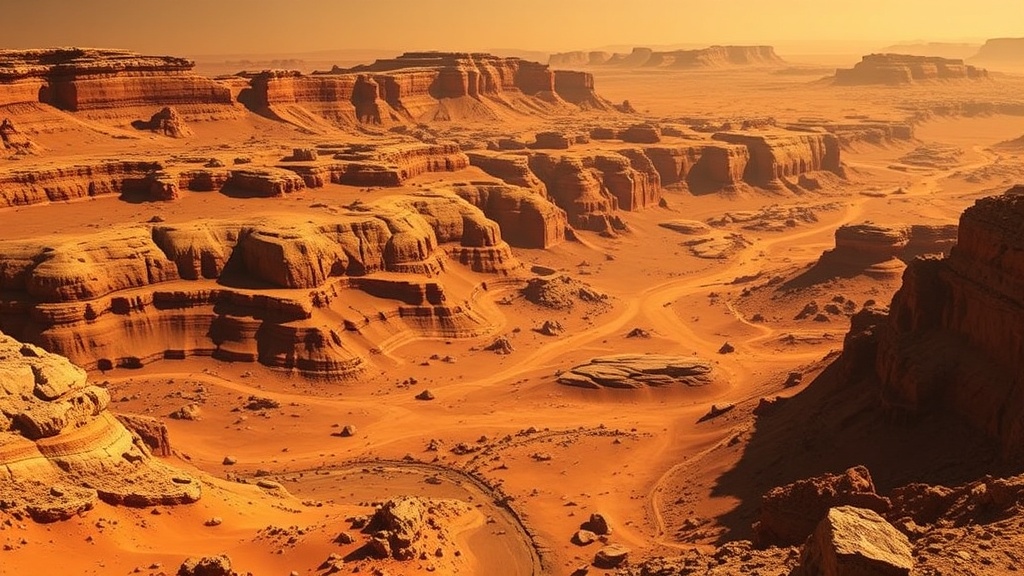
The understanding of ancient Martian volcanism and hydrothermal systems also plays a crucial role. On early Earth, deep-sea hydrothermal vents are believed to have provided the energy and chemical gradients necessary for the emergence of life, shielded from the harsh surface environment. If similar hydrothermal systems existed on ancient Mars, particularly in areas where water was abundant, they could have served as "cradles of life." The discovery of silica-rich deposits in Gusev Crater by the Spirit rover, resembling those formed around hot springs on Earth, further fuels this hypothesis.
However, the Martian environment also poses unique challenges to preserving biosignatures. The planet's current lack of a global magnetic field leaves its surface vulnerable to cosmic radiation, which can degrade organic molecules over geological timescales. This means that any evidence of ancient life would likely be best preserved deep underground or within specific, protected mineral matrices. This understanding underscores the critical importance of the Mars Sample Return mission, which will bring pristine core samples from potentially sheltered environments back to Earth, allowing scientists to look for subtle, unambiguous biosignatures that simply cannot be confirmed by rover-based instruments.
Martian Analogues and the Human Element: Practical Impact
The relentless pursuit of Mars's past is not merely an academic exercise; it has tangible impacts on our understanding of Earth and our future in space. For the U.S. audience, this exploration directly informs the burgeoning space industry, inspires scientific innovation, and even influences our understanding of environmental protection.
One of the most profound practical impacts lies in the study of Martian analogues on Earth. Scientists routinely travel to extreme environments – from the dry valleys of Antarctica to the high-altitude deserts of Chile's Atacama, and even deep-sea hydrothermal vents – to understand how life can survive and leave its mark in conditions that mimic ancient or even present-day Mars. These terrestrial analogues are invaluable for testing instruments, refining search strategies for biosignatures, and developing protocols for planetary protection (preventing Earth microbes from contaminating Mars, and vice versa). For instance, extremophiles discovered in these harsh environments expand our definition of habitability, pushing the boundaries of where life might exist both on Mars and beyond our solar system. Companies like NASA's Jet Propulsion Laboratory and various aerospace contractors are constantly leveraging these terrestrial studies to develop more robust and precise technologies for future Mars missions.
Furthermore, the detailed geological mapping and atmospheric studies of Mars provide a critical comparative planetology perspective. By understanding how Mars lost its magnetic field, its dense atmosphere, and its vast oceans – processes that ultimately rendered it inhospitable – we gain crucial insights into the long-term evolution of planetary climates. This is directly relevant to understanding Earth's own climate change and how planetary environments can shift over geological timescales. The study of Martian dust storms, for example, helps us model global atmospheric circulation and the impact of aerosols, potentially informing climate models for Earth.
The quest for Mars also acts as a powerful catalyst for technological innovation. The development of autonomous rovers, advanced robotic arms, sophisticated spectrometers, and high-fidelity imaging systems pushes the boundaries of engineering, materials science, and artificial intelligence. These innovations often find their way back to Earth, improving everything from medical imaging to autonomous vehicles and environmental monitoring. The U.S. taxpayer investment in Mars exploration yields returns not just in scientific knowledge but also in domestic technological advancement and job creation within the aerospace and high-tech sectors.
Finally, the looming prospect of human missions to Mars makes understanding its ancient geology and potential for past life even more critical. If life once thrived, could it persist in some form today beneath the surface? This question has profound implications for human exploration, requiring stringent planetary protection measures to avoid contaminating a potentially pristine alien ecosystem. Knowing the distribution of ancient water-rich environments helps identify potential sites for future human outposts, where resources like subsurface ice could be harvested for drinking water and rocket fuel. For the average American, the ongoing narrative of Mars exploration isn't just a science story; it's a testament to human ingenuity, a driver of national pride, and a concrete step towards extending humanity's reach beyond Earth.
The Future Outlook: Sample Return and Beyond
The next decade promises to be the most exciting chapter yet in the exploration of Mars, primarily driven by the ambitious Mars Sample Return (MSR) mission. This multi-part mission, a collaboration between NASA and the European Space Agency (ESA), is designed to bring the carefully collected samples from Perseverance's cache in Jezero Crater back to Earth for unparalleled scientific analysis.
Free Weekly Newsletter
Enjoying this guide?
Get the best articles like this one delivered to your inbox every week. No spam.
The MSR architecture involves several key components. After Perseverance deposits its samples at designated depots, a new NASA lander will arrive, carrying a Sample Retrieval Lander equipped with robotic arms to collect the cached tubes. Crucially, this lander will also carry the Mars Ascent Vehicle (MAV), a small rocket that will launch the samples into Mars orbit. Once in orbit, an ESA-provided Earth Return Orbiter (ERO) will rendezvous with the MAV's payload, capture the sample container, and safely transport it back to Earth, likely landing in a secure facility in the early to mid-2030s.
The scientific potential of these returned samples is immense. Terrestrial laboratories possess instrumentation far more sensitive and diverse than anything that can be sent to Mars. Scientists will be able to perform a battery of tests, including:
- High-resolution microscopy: Searching for unambiguous microfossils, cellular structures, or mineral textures that could only be formed by life.
- Isotopic analysis: Precisely measuring the ratios of stable isotopes (carbon, nitrogen, sulfur, hydrogen, oxygen) which can reveal biological processes and metabolic pathways.
- Advanced organic geochemistry: Characterizing the complexity, chirality, and abundance of organic molecules to distinguish between biotic and abiotic origins with much greater certainty.
- Radiometric dating: Precisely dating the formation of the rocks, providing a definitive timeline for habitability and potential life on Mars.
Beyond MSR, future missions will likely focus on even more challenging objectives. Subsurface exploration is high on the priority list. Given Mars's harsh surface radiation, any extant life or well-preserved ancient biosignatures are more likely to be found kilometers beneath the surface, where they would be shielded. Concepts for future missions include deep drills or even ice-penetrating robots to explore potential subterranean aquifers, which could theoretically still harbor microbial life.
The potential discovery of definitive evidence of past Martian life would be a paradigm shift, fundamentally altering humanity's understanding of its place in the universe. It would suggest that life is not unique to Earth and might be a common phenomenon throughout the cosmos. Even if Mars turns out to be sterile, the scientific insights gained from unraveling its ancient geological and climatic history will be invaluable for understanding planetary evolution and the conditions required for life, both within our solar system and in exoplanetary systems. Furthermore, the advancements in technology and operational strategies developed for these missions will directly inform and enable the eventual human missions to Mars, preparing us for humanity's greatest leap yet into the cosmos.
Conclusion
Mars, the lingering mystery, continues to beckon. From the orbital reconnaissance of its ancient riverbeds and lake deltas to the tireless work of rovers like Perseverance meticulously collecting samples of its watery past, the evidence for a once-habitable Mars is overwhelming. The geological record speaks of a planet teeming with liquid water billions of years ago, a compelling backdrop for the emergence of life. While definitive proof of ancient Martian life remains elusive, the ongoing search for biosignatures, from complex organic molecules to potential microfossils, is at a pivotal stage, poised for a transformative breakthrough with the impending Mars Sample Return mission.
For the U.S. audience, this grand endeavor is more than just scientific curiosity. It fuels our technological innovation, inspires future generations, and provides critical insights into our own planet's future. The journey to unravel Mars's past is a journey to understand ourselves, our origins, and our destiny among the stars. As the titanium tubes filled with Martian regolith make their long voyage home, they carry with them not just rocks, but the potential to fundamentally redefine life's place in the universe. It's a cosmic cold case closing in on a verdict. Stay tuned, because the next chapter in the Red Planet's story is about to be written, and it promises to be nothing short of extraordinary. The Red Planet's secrets are waiting, and humanity is ready to listen.
Frequently Asked Questions
Introduction
Mars. The Red Planet. For millennia, it has captivated humanity, a celestial beacon in our night sky, fueling dreams of other worlds and whispered possibilities of life beyond Earth. Today, that ancient fascination has evolved into a scientific imperative. We are not merely observing Mars; we are exploring it, with rovers like Perseverance meticulously scraping away at its rusty surface, and orbiters like MRO (Mars Reconnaissance Orbiter) mapping its ancient scars. The enduring mystery of Mars isn't just about whether life ever existed there, but how its deep past – a geological saga spanning billions of years – might hold the keys to understanding our own planet's future, the origins of life itself, and our place in the cosmos. For a U.S. audience steeped in innovation and discovery, Mars isn't just a distant planet; it's the next frontier in understanding the grand narrative of life, a cosmic cold case demanding our attention now more than ever.
A Watery Past: The Evidence Mounts
For decades, Mars was largely considered a desiccated, inhospitable desert. While current conditions are indeed harsh – a thin atmosphere, extreme temperatures, and pervasive radiation – the mounting evidence points to a dramatically different ancient past. This isn't speculative fiction; it's a scientific consensus built on a bedrock of geological observations.
The most compelling evidence for ancient water comes from orbital imagery and rover-based analyses. Spirit and Opportunity, NASA's pioneering Mars Exploration Rovers (MERs), provided the first unambiguous proof of past liquid water. Spirit, exploring Gusev Crater, discovered evidence of hydrothermal activity and ancient volcanic rocks altered by water. Opportunity, landing on Meridiani Planum, found widespread layered bedrock rich in sulfates and iron oxides, classic signatures of evaporation from ancient saline seas or acidic lakes. Its famous "blueberries" – tiny spherical hematite concretions – are geological hallmarks often formed in the presence of water.
The Curiosity rover, exploring Gale Crater since 2012, has been a game-changer. Gale Crater itself is believed to be the remnant of a vast ancient lake. Curiosity's instruments, particularly the Mars Hand Lens Imager (MAHLI) and the Chemistry and Camera (ChemCam), have revealed sedimentary rocks – mudstones, sandstones, and conglomerates – strikingly similar to those formed by rivers and lakes on Earth. The presence of clay minerals like smectite and chlorite, which require water for their formation, further solidifies the theory of a persistently wet environment. Furthermore, Curiosity has detected fluctuations in methane levels in Gale Crater's atmosphere, a gas that on Earth is often associated with biological processes (though geological sources cannot be ruled out).
Perseverance, currently exploring Jezero Crater, is building on this legacy. Jezero is an ancient delta, a fan-shaped geological feature formed when a river empties into a larger body of water, depositing sediment. The rover's initial findings, as detailed in recent publications from the AGU (American Geophysical Union) and NASA, confirm the presence of distinct sedimentary layers consistent with a dynamic river-lake system active billions of years ago. Perseverance's SHERLOC (Scanning Habitable Environments with Raman & Luminescence for Organics & Chemicals) instrument is specifically designed to search for organic molecules and biosignatures within these ancient lakebed sediments. The rover has already collected numerous core samples, sealed in titanium tubes, which are slated for return to Earth by the Mars Sample Return mission in the 2030s – arguably the most ambitious robotic space mission ever conceived. These samples, when analyzed in terrestrial labs with instruments far more powerful than anything we can send to Mars, hold the greatest promise for confirming ancient Martian life.
The sheer scale of this ancient water activity is staggering. Estimates suggest that during the Noachian epoch (approximately 4.1 to 3.7 billion years ago), Mars harbored a vast northern ocean, potentially covering a third of its surface and reaching depths of over a mile in places. Features like outflow channels, which carve immense canyons across the Martian landscape, are testament to catastrophic floods that once reshaped the planet. The presence of these extensive, long-lived bodies of water suggests that ancient Mars possessed a much thicker atmosphere and a warmer climate, conditions far more conducive to the emergence and sustenance of life.
The Search for Biosignatures: A Deeper Dive
The tantalizing evidence of ancient water naturally leads to the profound question: did life ever arise on Mars? This is where the term "biosignature" becomes critical. A biosignature is any substance, object, or pattern whose origin requires a biological agent. The search for these markers is a multi-pronged scientific endeavor, demanding meticulous analysis and an understanding of both biological and geological processes.
One key area of focus is the detection of organic molecules. On Earth, organic molecules (carbon-containing compounds) are the building blocks of life. While rovers like Curiosity and Perseverance have detected organics on Mars, their mere presence is not definitive proof of life. Organic molecules can also be formed through abiotic (non-biological) geological processes, such as interactions with hydrothermal vents or meteoritic impacts. The challenge lies in distinguishing biogenic organics from abiogenic ones. For example, specific ratios of carbon isotopes (like carbon-12 and carbon-13) or particular molecular structures (e.g., enantiomeric excess of certain amino acids) are often considered stronger indicators of biological activity. Curiosity's SAM (Sample Analysis at Mars) instrument has detected various organic molecules, including thiophenes, benzene, toluene, and small carbon chains, within ancient mudstones. While exciting, definitive biological origins remain elusive without Earth-based laboratory analysis.
Another promising avenue is the search for microfossils or macroscopic fossilized structures. On Earth, early life forms often leave behind characteristic mineral patterns or shapes. For instance, stromatolites, layered structures formed by colonies of microorganisms, are some of the oldest evidence of life on Earth. Perseverance's instruments are specifically designed to look for such textures and patterns within the Jezero crater deltaic sediments. The PIXL (Planetary Instrument for X-ray Lithochemistry) instrument uses X-ray fluorescence to map the elemental composition of rocks, potentially identifying mineral gradients consistent with microbial activity. Meanwhile, SHERLOC uses Raman spectroscopy and deep-UV fluorescence to detect and map organic molecules and minerals, providing a powerful tool for finding potential biosignatures at a microscopic scale.
The understanding of ancient Martian volcanism and hydrothermal systems also plays a crucial role. On early Earth, deep-sea hydrothermal vents are believed to have provided the energy and chemical gradients necessary for the emergence of life, shielded from the harsh surface environment. If similar hydrothermal systems existed on ancient Mars, particularly in areas where water was abundant, they could have served as "cradles of life." The discovery of silica-rich deposits in Gusev Crater by the Spirit rover, resembling those formed around hot springs on Earth, further fuels this hypothesis.
However, the Martian environment also poses unique challenges to preserving biosignatures. The planet's current lack of a global magnetic field leaves its surface vulnerable to cosmic radiation, which can degrade organic molecules over geological timescales. This means that any evidence of ancient life would likely be best preserved deep underground or within specific, protected mineral matrices. This understanding underscores the critical importance of the Mars Sample Return mission, which will bring pristine core samples from potentially sheltered environments back to Earth, allowing scientists to look for subtle, unambiguous biosignatures that simply cannot be confirmed by rover-based instruments.
Martian Analogues and the Human Element: Practical Impact
The relentless pursuit of Mars's past is not merely an academic exercise; it has tangible impacts on our understanding of Earth and our future in space. For the U.S. audience, this exploration directly informs the burgeoning space industry, inspires scientific innovation, and even influences our understanding of environmental protection.
One of the most profound practical impacts lies in the study of Martian analogues on Earth. Scientists routinely travel to extreme environments – from the dry valleys of Antarctica to the high-altitude deserts of Chile's Atacama, and even deep-sea hydrothermal vents – to understand how life can survive and leave its mark in conditions that mimic ancient or even present-day Mars. These terrestrial analogues are invaluable for testing instruments, refining search strategies for biosignatures, and developing protocols for planetary protection (preventing Earth microbes from contaminating Mars, and vice versa). For instance, extremophiles discovered in these harsh environments expand our definition of habitability, pushing the boundaries of where life might exist both on Mars and beyond our solar system. Companies like NASA's Jet Propulsion Laboratory and various aerospace contractors are constantly leveraging these terrestrial studies to develop more robust and precise technologies for future Mars missions.
Furthermore, the detailed geological mapping and atmospheric studies of Mars provide a critical comparative planetology perspective. By understanding how Mars lost its magnetic field, its dense atmosphere, and its vast oceans – processes that ultimately rendered it inhospitable – we gain crucial insights into the long-term evolution of planetary climates. This is directly relevant to understanding Earth's own climate change and how planetary environments can shift over geological timescales. The study of Martian dust storms, for example, helps us model global atmospheric circulation and the impact of aerosols, potentially informing climate models for Earth.
The quest for Mars also acts as a powerful catalyst for technological innovation. The development of autonomous rovers, advanced robotic arms, sophisticated spectrometers, and high-fidelity imaging systems pushes the boundaries of engineering, materials science, and artificial intelligence. These innovations often find their way back to Earth, improving everything from medical imaging to autonomous vehicles and environmental monitoring. The U.S. taxpayer investment in Mars exploration yields returns not just in scientific knowledge but also in domestic technological advancement and job creation within the aerospace and high-tech sectors.
Finally, the looming prospect of human missions to Mars makes understanding its ancient geology and potential for past life even more critical. If life once thrived, could it persist in some form today beneath the surface? This question has profound implications for human exploration, requiring stringent planetary protection measures to avoid contaminating a potentially pristine alien ecosystem. Knowing the distribution of ancient water-rich environments helps identify potential sites for future human outposts, where resources like subsurface ice could be harvested for drinking water and rocket fuel. For the average American, the ongoing narrative of Mars exploration isn't just a science story; it's a testament to human ingenuity, a driver of national pride, and a concrete step towards extending humanity's reach beyond Earth.
The Future Outlook: Sample Return and Beyond
The next decade promises to be the most exciting chapter yet in the exploration of Mars, primarily driven by the ambitious Mars Sample Return (MSR) mission. This multi-part mission, a collaboration between NASA and the European Space Agency (ESA), is designed to bring the carefully collected samples from Perseverance's cache in Jezero Crater back to Earth for unparalleled scientific analysis.
The MSR architecture involves several key components. After Perseverance deposits its samples at designated depots, a new NASA lander will arrive, carrying a Sample Retrieval Lander equipped with robotic arms to collect the cached tubes. Crucially, this lander will also carry the Mars Ascent Vehicle (MAV), a small rocket that will launch the samples into Mars orbit. Once in orbit, an ESA-provided Earth Return Orbiter (ERO) will rendezvous with the MAV's payload, capture the sample container, and safely transport it back to Earth, likely landing in a secure facility in the early to mid-2030s.
The scientific potential of these returned samples is immense. Terrestrial laboratories possess instrumentation far more sensitive and diverse than anything that can be sent to Mars. Scientists will be able to perform a battery of tests, including:
- High-resolution microscopy: Searching for unambiguous microfossils, cellular structures, or mineral textures that could only be formed by life.
- Isotopic analysis: Precisely measuring the ratios of stable isotopes (carbon, nitrogen, sulfur, hydrogen, oxygen) which can reveal biological processes and metabolic pathways.
- Advanced organic geochemistry: Characterizing the complexity, chirality, and abundance of organic molecules to distinguish between biotic and abiotic origins with much greater certainty.
- Radiometric dating: Precisely dating the formation of the rocks, providing a definitive timeline for habitability and potential life on Mars.
Beyond MSR, future missions will likely focus on even more challenging objectives. Subsurface exploration is high on the priority list. Given Mars's harsh surface radiation, any extant life or well-preserved ancient biosignatures are more likely to be found kilometers beneath the surface, where they would be shielded. Concepts for future missions include deep drills or even ice-penetrating robots to explore potential subterranean aquifers, which could theoretically still harbor microbial life.
The potential discovery of definitive evidence of past Martian life would be a paradigm shift, fundamentally altering humanity's understanding of its place in the universe. It would suggest that life is not unique to Earth and might be a common phenomenon throughout the cosmos. Even if Mars turns out to be sterile, the scientific insights gained from unraveling its ancient geological and climatic history will be invaluable for understanding planetary evolution and the conditions required for life, both within our solar system and in exoplanetary systems. Furthermore, the advancements in technology and operational strategies developed for these missions will directly inform and enable the eventual human missions to Mars, preparing us for humanity's greatest leap yet into the cosmos.
Conclusion
Mars, the lingering mystery, continues to beckon. From the orbital reconnaissance of its ancient riverbeds and lake deltas to the tireless work of rovers like Perseverance meticulously collecting samples of its watery past, the evidence for a once-habitable Mars is overwhelming. The geological record speaks of a planet teeming with liquid water billions of years ago, a compelling backdrop for the emergence of life. While definitive proof of ancient Martian life remains elusive, the ongoing search for biosignatures, from complex organic molecules to potential microfossils, is at a pivotal stage, poised for a transformative breakthrough with the impending Mars Sample Return mission.
For the U.S. audience, this grand endeavor is more than just scientific curiosity. It fuels our technological innovation, inspires future generations, and provides critical insights into our own planet's future. The journey to unravel Mars's past is a journey to understand ourselves, our origins, and our destiny among the stars. As the titanium tubes filled with Martian regolith make their long voyage home, they carry with them not just rocks, but the potential to fundamentally redefine life's place in the universe. It's a cosmic cold case closing in on a verdict. Stay tuned, because the next chapter in the Red Planet's story is about to be written, and it promises to be nothing short of extraordinary. The Red Planet's secrets are waiting, and humanity is ready to listen.
About Zeebrain Editorial
Zeebrain publishes independent analysis of markets, investing, personal finance, and business. We disclose affiliate relationships, never accept payment for coverage, and fact-check all claims against primary sources. Read our editorial policy →
How this article was produced: Zeebrain articles are created with AI assistance from primary sources (including cited videos and market data) and reviewed under our editorial standards before publication. Spot an error? Tell us and we will correct it.
More from History & Mysteries




Related Guides
Keep exploring this topic
Explore More Categories
Keep browsing by topic and build depth around the subjects you care about most.