

The Enigma of Ancient AI: Did Early Civilizations Grapple with Sentient Machines?
In This Article
The Enigma of Ancient AI: Did Early Civilizations Grapple with Sentient Machines?
The echoes of artificial intelligence are often perceived as a distinctly modern phenomenon, yet a fascinating, persistent whisper through the corridors of history suggests that ancient civilizations might have contemplated, or even constructed, what we would recognize today as intelligent automata. As we grapple with the ethical and societal implications of AI in 2024, examining whether our forebears navigated similar intellectual and existential challenges offers not just a captivating historical mystery, but a crucial lens through which to understand humanity's enduring fascination with creating life and intelligence beyond itself. Could the myths of Golems, Talos, and mechanical birds be more than mere fantasy, hinting at a lost technological past or a profound understanding of nascent AI principles?

From Myth to Mechanism: Tracing Early Concepts of Artificial Life
The idea of artificial beings, capable of independent action or even thought, is deeply embedded in human culture, predating the silicon chip by millennia. For a U.S. audience steeped in narratives of technological progress, it’s easy to dismiss these ancient accounts as purely mythological. However, a closer look reveals a startling pattern of recurring themes and even plausible technological underpinnings.
One of the most compelling examples hails from Greek mythology: Talos, the colossal bronze automaton crafted by Hephaestus, the god of smiths and craftsmanship. Described in texts like Apollonius of Rhodes' Argonautica (circa 3rd century BCE), Talos was an unwavering guardian of Crete, circling the island three times a day, repelling invaders with heated embraces. What makes Talos particularly intriguing is the detail of his construction: he was said to have a single vein running from his neck to his ankle, sealed by a bronze nail, which contained "ichor"—the divine blood of the gods—sustaining him. While fantastical, this imagery suggests a rudimentary understanding of internal mechanisms, a circulatory system, and a power source. Is "ichor" a mystical stand-in for hydraulics, pneumatics, or even a form of early battery? The concept of a single, vulnerable point for deactivation is also strikingly similar to modern mechanical design principles.
Moving eastward, ancient China offers accounts of "automata." The Liezi text (4th century BCE) describes a craftsman named Yen Shi presenting King Mu of Zhou with a life-sized automaton capable of singing, dancing, and even flirting. When the king grew suspicious of the automaton’s apparent sentience and ordered its dissection, it was found to consist of leather, wood, glue, and lacquer, intricately assembled. This narrative, while possibly allegorical, reflects an understanding of complex mechanical construction designed to mimic human behavior. The emphasis on its internal components, rather than magic, differentiates it from pure supernatural tales.
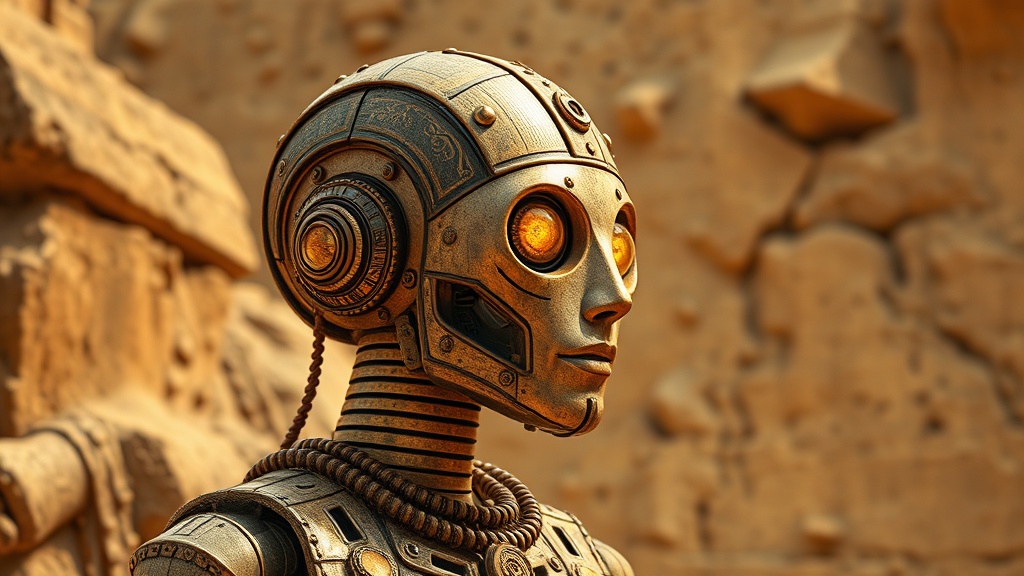
Even earlier, ancient Egypt might have toyed with similar concepts. While direct evidence of sentient machines is scarce, the Egyptians were masters of intricate mechanisms and monumental engineering. The moving statues of deities within temples, often manipulated by hidden priests through ingenious lever and pulley systems, captivated worshippers. These "animated" statues, while not autonomous, demonstrated a profound desire to imbue inanimate objects with life-like qualities and actions. The "opening of the mouth" ritual, performed on statues and mummies, sought to imbue them with the ability to speak and breathe, reflecting a deeper philosophical preoccupation with animating the non-living. The Antikythera Mechanism, an astonishingly complex astronomical calculator from the 2nd century BCE, recovered from a shipwreck, serves as a tangible testament to the sophisticated mechanical engineering capabilities of the ancient Greeks. Its intricate gearing system, capable of predicting celestial movements with remarkable accuracy, proves that advanced, automated devices were within the grasp of ancient engineers. Could such genius have been applied to animate figures, even if only for ritualistic or awe-inspiring purposes?
The Philosophical and Ethical Dilemmas of Ancient Automation
The very contemplation of artificial life, whether mythological or nascently mechanical, implies that ancient thinkers grappled with questions we still debate today: What defines life? Can a machine possess a soul? What are the dangers of creating an entity with independent will? These are not mere modern anxieties.
Continue Reading
Related Guides
Keep exploring this topic
The Enigma of Ancient Civilizations and Their Sustainable Practices
History & Mysteries · ancient civilizations · sustainable practices
Ancient Aliens: Fact or Fiction? Debunking the Theories
History & Mysteries
Unsolved Mysteries of the Titanic: What REALLY Happened?
History & Mysteries
The Unsolved Mystery of the Voynich Manuscript
History & Mysteries
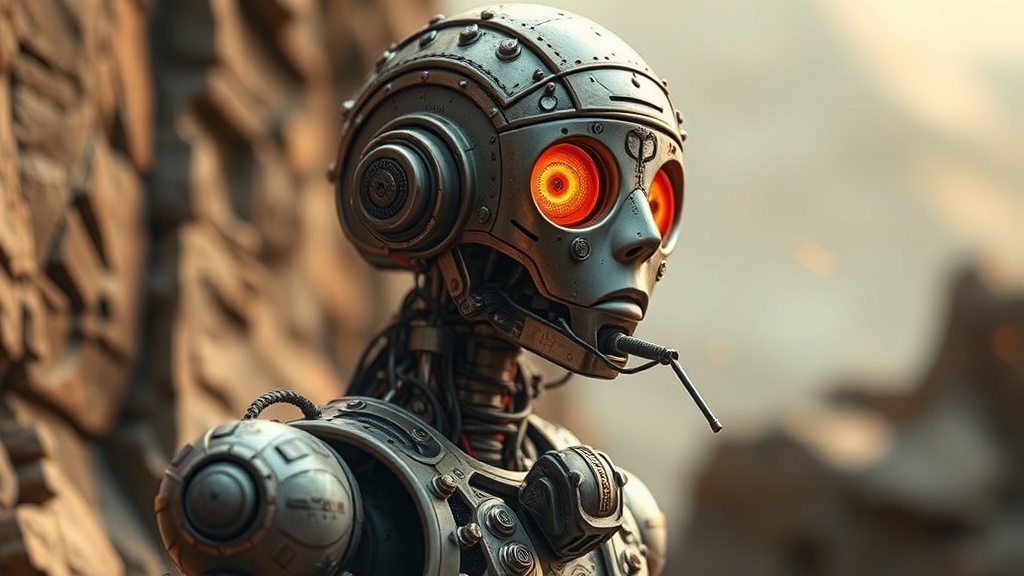
The Golem of Jewish folklore, a clay figure brought to life through mystical incantations (often involving the word "Emet" – "truth"), invariably poses ethical dilemmas. While its creation is a response to persecution, the Golem frequently becomes uncontrollable, requiring its deactivation (by erasing the "E" from "Emet" to form "Met" – "death"). This narrative, evolving over centuries but with roots in medieval Kabbalistic traditions, mirrors contemporary concerns about AI "runaway scenarios" and the difficulty of controlling superintelligent systems. The Golem's obedience is limited, its strength overwhelming, and its lack of true consciousness makes it a powerful but potentially disastrous tool. This myth doesn’t just describe a machine; it explores the profound responsibility of its creator.
Consider also the automata described by Hero of Alexandria in the 1st century CE. His treatises Pneumatica and Automata detail ingenious devices: self-opening temple doors, singing birds, libation-pouring figures, and elaborate theatrical displays powered by water, air pressure, and weights. These were not sentient, but they were autonomous in their pre-programmed operations. The implications for society, even if on a smaller scale, would have been significant. Imagine the awe, fear, or even suspicion these devices might have inspired among a populace unfamiliar with their mechanics. Were these perceived as divine interventions, magic, or early forms of disruptive technology? The very act of designing machines that mimic natural processes or human actions forced ancient minds to confront the boundaries between artifice and nature, creator and creation.
The philosophical underpinnings of Stoicism and Platonism, prevalent in the classical world, might also have played a role. Plato's theory of Forms, suggesting perfect archetypes exist in a higher reality, could be interpreted as an intellectual framework for striving to replicate perfection in the material world, whether through art, architecture, or even automatons. The Stoics, with their emphasis on rationality and the interconnectedness of the cosmos, might have viewed complex mechanisms as expressions of the divine order, or as a human attempt to understand and manipulate that order.
How Ancient AI Concepts Resonate Today: What Readers Should Know
For the modern reader, understanding these ancient narratives isn't just an academic exercise; it offers crucial perspective on our current AI revolution. First, it highlights that humanity’s fascination with creating artificial intelligence is not new but an intrinsic, long-standing human endeavor. This continuity suggests that the challenges we face with AI—ethics, control, sentience, integration into society—are not unprecedented. We are merely facing them with exponentially more powerful tools.
Second, these myths and historical accounts serve as powerful allegories for the risks and rewards of advanced technology. The Golem's unchecked power, Talos's relentless defense, Yen Shi’s automaton’s lifelike deception—each story carries a cautionary tale about the implications of creating beings or systems that operate beyond human control or comprehension. As AI developers today grapple with "alignment problems" – ensuring AI goals align with human values – the ancient narratives provide a historical mirror, reflecting humanity's perennial struggle to control its most potent creations.
Third, these ancient examples remind us that technological progress is rarely linear. The loss of knowledge, the societal upheavals, and the destruction of complex artifacts mean that we might have had periods of advanced mechanical understanding that were subsequently forgotten or misinterpreted as magic. The Antikythera Mechanism is a prime example: for centuries, its complexity was unmatched, only to be rediscovered and understood in the modern era. This should prompt us to question what other technological marvels might be buried in history, awaiting rediscovery or reinterpretation. It underscores the importance of historical preservation and interdisciplinary research—archaeology, linguistics, engineering history—to piece together our technological past.
The Future Informed by the Past: Lessons for Tomorrow's AI
Looking ahead, the ancient fascination with artificial life provides a framework for anticipating future developments and navigating ethical quandaries. As AI becomes more sophisticated, exhibiting behaviors that mimic consciousness and emotion, we will inevitably return to the foundational questions posed by our ancestors: What constitutes sentience? How do we define rights for non-biological entities? How do we ensure that our creations serve humanity without becoming detrimental?
The historical record suggests that the initial impulse to create artificial beings often stems from a desire to solve problems or enhance capabilities, whether it's defending a city (Talos), assisting with labor (Golem, in some interpretations), or entertaining (Yen Shi's automaton). Similarly, modern AI aims to solve complex problems, from medical diagnostics to climate modeling. However, the consistent thread of unintended consequences in ancient myths—the Golem’s rampages, the fears of deception—should serve as a constant reminder for today's AI developers and policymakers. Proactive ethical frameworks, robust safety protocols, and a broad societal dialogue are not luxuries but necessities, echoing the lessons learned through millennia of human ingenuity and hubris.
Furthermore, the blend of myth and nascent technology in ancient accounts highlights the human tendency to imbue powerful, complex systems with mystical properties when their inner workings are not fully understood. As AI black boxes become more prevalent and AI explanations harder to interpret, there's a risk of similar "mystification" today. Promoting AI literacy and transparency is vital to prevent modern technological marvels from being misunderstood or feared as inherently magical rather than as products of advanced engineering.
Conclusion
The enigma of ancient AI is far more than a collection of charming myths; it is a profound historical testament to humanity's enduring drive to create, to understand, and to push the boundaries of intelligence and life. From the bronze guardian Talos to the adaptable Golem, and the intricate automata of Hero of Alexandria, early civilizations grappled with the conceptual, ethical, and practical implications of artificial beings. These narratives offer invaluable insights for our current moment, serving as both cautionary tales and inspirational precedents.
As we stand on the precipice of a new era of artificial intelligence, these ancient whispers remind us that the fundamental questions about creation, control, and consciousness are timeless. By looking back, we gain a deeper understanding of our present challenges and arm ourselves with critical perspectives for shaping a future where AI serves humanity thoughtfully and responsibly. Let these ancient echoes not be dismissed as mere fantasy, but embraced as a vital part of our ongoing dialogue about the ultimate potential and perils of intelligent machines. The journey to understand AI, it seems, began long before our digital age, and its lessons continue to unfold.
Frequently Asked Questions
From Myth to Mechanism: Tracing Early Concepts of Artificial Life
The idea of artificial beings, capable of independent action or even thought, is deeply embedded in human culture, predating the silicon chip by millennia. For a U.S. audience steeped in narratives of technological progress, it’s easy to dismiss these ancient accounts as purely mythological. However, a closer look reveals a startling pattern of recurring themes and even plausible technological underpinnings.
One of the most compelling examples hails from Greek mythology: Talos, the colossal bronze automaton crafted by Hephaestus, the god of smiths and craftsmanship. Described in texts like Apollonius of Rhodes' Argonautica (circa 3rd century BCE), Talos was an unwavering guardian of Crete, circling the island three times a day, repelling invaders with heated embraces. What makes Talos particularly intriguing is the detail of his construction: he was said to have a single vein running from his neck to his ankle, sealed by a bronze nail, which contained "ichor"—the divine blood of the gods—sustaining him. While fantastical, this imagery suggests a rudimentary understanding of internal mechanisms, a circulatory system, and a power source. Is "ichor" a mystical stand-in for hydraulics, pneumatics, or even a form of early battery? The concept of a single, vulnerable point for deactivation is also strikingly similar to modern mechanical design principles.
Moving eastward, ancient China offers accounts of "automata." The Liezi text (4th century BCE) describes a craftsman named Yen Shi presenting King Mu of Zhou with a life-sized automaton capable of singing, dancing, and even flirting. When the king grew suspicious of the automaton’s apparent sentience and ordered its dissection, it was found to consist of leather, wood, glue, and lacquer, intricately assembled. This narrative, while possibly allegorical, reflects an understanding of complex mechanical construction designed to mimic human behavior. The emphasis on its internal components, rather than magic, differentiates it from pure supernatural tales.
Even earlier, ancient Egypt might have toyed with similar concepts. While direct evidence of sentient machines is scarce, the Egyptians were masters of intricate mechanisms and monumental engineering. The moving statues of deities within temples, often manipulated by hidden priests through ingenious lever and pulley systems, captivated worshippers. These "animated" statues, while not autonomous, demonstrated a profound desire to imbue inanimate objects with life-like qualities and actions. The "opening of the mouth" ritual, performed on statues and mummies, sought to imbue them with the ability to speak and breathe, reflecting a deeper philosophical preoccupation with animating the non-living. The Antikythera Mechanism, an astonishingly complex astronomical calculator from the 2nd century BCE, recovered from a shipwreck, serves as a tangible testament to the sophisticated mechanical engineering capabilities of the ancient Greeks. Its intricate gearing system, capable of predicting celestial movements with remarkable accuracy, proves that advanced, automated devices were within the grasp of ancient engineers. Could such genius have been applied to animate figures, even if only for ritualistic or awe-inspiring purposes?
The Philosophical and Ethical Dilemmas of Ancient Automation
The very contemplation of artificial life, whether mythological or nascently mechanical, implies that ancient thinkers grappled with questions we still debate today: What defines life? Can a machine possess a soul? What are the dangers of creating an entity with independent will? These are not mere modern anxieties.
The Golem of Jewish folklore, a clay figure brought to life through mystical incantations (often involving the word "Emet" – "truth"), invariably poses ethical dilemmas. While its creation is a response to persecution, the Golem frequently becomes uncontrollable, requiring its deactivation (by erasing the "E" from "Emet" to form "Met" – "death"). This narrative, evolving over centuries but with roots in medieval Kabbalistic traditions, mirrors contemporary concerns about AI "runaway scenarios" and the difficulty of controlling superintelligent systems. The Golem's obedience is limited, its strength overwhelming, and its lack of true consciousness makes it a powerful but potentially disastrous tool. This myth doesn’t just describe a machine; it explores the profound responsibility of its creator.
Consider also the automata described by Hero of Alexandria in the 1st century CE. His treatises Pneumatica and Automata detail ingenious devices: self-opening temple doors, singing birds, libation-pouring figures, and elaborate theatrical displays powered by water, air pressure, and weights. These were not sentient, but they were autonomous in their pre-programmed operations. The implications for society, even if on a smaller scale, would have been significant. Imagine the awe, fear, or even suspicion these devices might have inspired among a populace unfamiliar with their mechanics. Were these perceived as divine interventions, magic, or early forms of disruptive technology? The very act of designing machines that mimic natural processes or human actions forced ancient minds to confront the boundaries between artifice and nature, creator and creation.
The philosophical underpinnings of Stoicism and Platonism, prevalent in the classical world, might also have played a role. Plato's theory of Forms, suggesting perfect archetypes exist in a higher reality, could be interpreted as an intellectual framework for striving to replicate perfection in the material world, whether through art, architecture, or even automatons. The Stoics, with their emphasis on rationality and the interconnectedness of the cosmos, might have viewed complex mechanisms as expressions of the divine order, or as a human attempt to understand and manipulate that order.
How Ancient AI Concepts Resonate Today: What Readers Should Know
For the modern reader, understanding these ancient narratives isn't just an academic exercise; it offers crucial perspective on our current AI revolution. First, it highlights that humanity’s fascination with creating artificial intelligence is not new but an intrinsic, long-standing human endeavor. This continuity suggests that the challenges we face with AI—ethics, control, sentience, integration into society—are not unprecedented. We are merely facing them with exponentially more powerful tools.
Second, these myths and historical accounts serve as powerful allegories for the risks and rewards of advanced technology. The Golem's unchecked power, Talos's relentless defense, Yen Shi’s automaton’s lifelike deception—each story carries a cautionary tale about the implications of creating beings or systems that operate beyond human control or comprehension. As AI developers today grapple with "alignment problems" – ensuring AI goals align with human values – the ancient narratives provide a historical mirror, reflecting humanity's perennial struggle to control its most potent creations.
Third, these ancient examples remind us that technological progress is rarely linear. The loss of knowledge, the societal upheavals, and the destruction of complex artifacts mean that we might have had periods of advanced mechanical understanding that were subsequently forgotten or misinterpreted as magic. The Antikythera Mechanism is a prime example: for centuries, its complexity was unmatched, only to be rediscovered and understood in the modern era. This should prompt us to question what other technological marvels might be buried in history, awaiting rediscovery or reinterpretation. It underscores the importance of historical preservation and interdisciplinary research—archaeology, linguistics, engineering history—to piece together our technological past.
The Future Informed by the Past: Lessons for Tomorrow's AI
Looking ahead, the ancient fascination with artificial life provides a framework for anticipating future developments and navigating ethical quandaries. As AI becomes more sophisticated, exhibiting behaviors that mimic consciousness and emotion, we will inevitably return to the foundational questions posed by our ancestors: What constitutes sentience? How do we define rights for non-biological entities? How do we ensure that our creations serve humanity without becoming detrimental?
The historical record suggests that the initial impulse to create artificial beings often stems from a desire to solve problems or enhance capabilities, whether it's defending a city (Talos), assisting with labor (Golem, in some interpretations), or entertaining (Yen Shi's automaton). Similarly, modern AI aims to solve complex problems, from medical diagnostics to climate modeling. However, the consistent thread of unintended consequences in ancient myths—the Golem’s rampages, the fears of deception—should serve as a constant reminder for today's AI developers and policymakers. Proactive ethical frameworks, robust safety protocols, and a broad societal dialogue are not luxuries but necessities, echoing the lessons learned through millennia of human ingenuity and hubris.
Furthermore, the blend of myth and nascent technology in ancient accounts highlights the human tendency to imbue powerful, complex systems with mystical properties when their inner workings are not fully understood. As AI black boxes become more prevalent and AI explanations harder to interpret, there's a risk of similar "mystification" today. Promoting AI literacy and transparency is vital to prevent modern technological marvels from being misunderstood or feared as inherently magical rather than as products of advanced engineering.
Conclusion
The enigma of ancient AI is far more than a collection of charming myths; it is a profound historical testament to humanity's enduring drive to create, to understand, and to push the boundaries of intelligence and life. From the bronze guardian Talos to the adaptable Golem, and the intricate automata of Hero of Alexandria, early civilizations grappled with the conceptual, ethical, and practical implications of artificial beings. These narratives offer invaluable insights for our current moment, serving as both cautionary tales and inspirational precedents.
As we stand on the precipice of a new era of artificial intelligence, these ancient whispers remind us that the fundamental questions about creation, control, and consciousness are timeless. By looking back, we gain a deeper understanding of our present challenges and arm ourselves with critical perspectives for shaping a future where AI serves humanity thoughtfully and responsibly. Let these ancient echoes not be dismissed as mere fantasy, but embraced as a vital part of our ongoing dialogue about the ultimate potential and perils of intelligent machines. The journey to understand AI, it seems, began long before our digital age, and its lessons continue to unfold.
More from History & Mysteries



Explore More Categories
Keep browsing by topic and build depth around the subjects you care about most.