SpaceX Mars Mission Updates: What's the Latest on Humanity's Red Planet Dream?
Quick Summary
SpaceX Mars Mission Updates: What's the Latest on Humanity's Red Planet Dream? Elon Musk's ambitious vision of making humanity a multi planetary species, with Mars as our primary...
In This Article
SpaceX Mars Mission Updates: What's the Latest on Humanity's Red Planet Dream?
Elon Musk's ambitious vision of making humanity a multi-planetary species, with Mars as our primary second home, continues to drive groundbreaking developments at SpaceX. Recent advancements, particularly with Starship's integrated flight tests and ongoing infrastructure buildout at Starbase, signal an accelerating pace toward the first crewed mission to Mars. From engine production milestones to regulatory hurdles, understanding the latest from SpaceX is crucial for anyone tracking humanity's audacious journey to the Red Planet.

The Starship Ecosystem: Humanity's Mars Launchpad
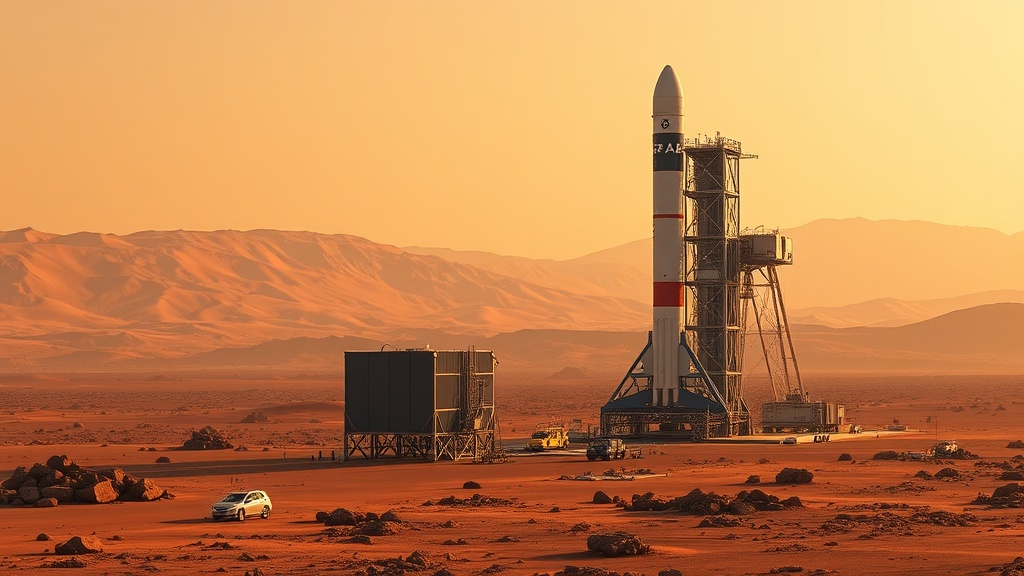
The dream of Mars colonization isn't just about a single rocket; it's about an entire transportation system, and SpaceX's Starship is at its heart. This fully reusable, super heavy-lift launch vehicle is designed to carry over 100 metric tons to orbit and, crucially, to facilitate propellant transfer in Earth orbit—a non-negotiable step for any long-duration mission to Mars. Without orbital refueling, Starship cannot carry enough fuel to land on Mars and then return to Earth, or even bring sufficient cargo for a sustainable settlement.
Recent data underscores the incredible manufacturing tempo at SpaceX's Starbase facility in Boca Chica, Texas. As of early 2024, SpaceX has produced dozens of Starship prototypes and hundreds of Raptor engines, the powerful full-flow staged combustion engines that power both the Starship upper stage and its Super Heavy booster. Raptor 2, the current iteration, boasts an impressive thrust of over 230 tons at sea level, a significant improvement in both power and manufacturability over its predecessors. The rapid iteration and testing cycle, though visually dramatic with occasional test failures, is a deliberate strategy to quickly identify and fix design flaws, accelerating development far beyond traditional aerospace timelines.
The integrated flight test (IFT) program for Starship and Super Heavy is the most visible sign of progress. Following a series of static fire tests and individual component trials, IFT-1 in April 2023 and IFT-2 in November 2023 provided invaluable data, despite both ending in rapid unplanned disassemblies (RUDs). IFT-1, though ending minutes after liftoff, demonstrated critical elements like the coordinated ignition of all 33 Raptor engines on the Super Heavy booster and the hot-staging maneuver—where the Starship engines ignite before separating from the booster—a crucial efficiency gain for orbital missions. IFT-2 achieved even greater success, with Super Heavy performing a successful boost-back burn and controlled splashdown attempt, while Starship reached an altitude of approximately 148 kilometers (92 miles) before breaking up. These tests, while not reaching full orbital velocity, provided unprecedented insights into vehicle dynamics, engine performance in flight, and ground infrastructure robustness.
Beyond the rockets themselves, the ground infrastructure at Starbase is a critical component of the Mars mission architecture. The orbital launch mount and launch tower, standing at over 146 meters (480 feet) tall, are marvels of engineering. Equipped with massive "chopstick" arms, they are designed to not only stack the Super Heavy booster and Starship but also to catch the returning booster, enabling unprecedented reusability. This "catch" mechanism, if successful, would revolutionize rocket operations, eliminating the need for complex landing legs and extensive refurbishment. Continuous upgrades to propellant tanks, cryogenic systems, and data acquisition systems at Starbase are ongoing, reflecting the iterative design philosophy extending even to ground support.
Overcoming Orbital Refueling Challenges and Regulatory Hurdles
While Starship's physical development is paramount, the true linchpin of the Mars mission lies in perfecting orbital refueling. SpaceX plans to launch multiple Starship "tankers" to Earth orbit, each carrying propellant, to rendezvous and transfer fuel to a "depot" Starship bound for Mars. This sophisticated ballet of autonomous rendezvous and docking, followed by cryogenic propellant transfer in zero-gravity, is a technological frontier yet to be fully demonstrated at scale. While NASA and other agencies have experience with non-cryogenic propellant transfer, the sheer volume and cryogenic nature (super-cooled liquid methane and liquid oxygen) of Starship's propellants present unique engineering challenges. Boil-off—the evaporation of cryogenic propellants—is a significant concern, requiring advanced insulation and cryo-cooler technologies to minimize losses during extended stays in orbit.

SpaceX has already begun testing elements of this process. Early Starship prototypes conducted "tank farm" tests, demonstrating the ability to transfer propellants between tanks on the ground. Future integrated flight tests will undoubtedly include progressively more complex orbital maneuvers and, eventually, in-space propellant transfer demonstrations. Success in this area is not just a technical requirement for Mars but also for Starship's role in NASA's Artemis program, where it's contracted as the Human Landing System (HLS) for crewed lunar missions. The lessons learned from lunar missions will directly inform and de-risk the Mars architecture.
Beyond the technical marvels, regulatory hurdles represent another significant, though less visible, challenge. Every Starship integrated flight test requires launch licenses from the Federal Aviation Administration (FAA) and extensive environmental reviews. The initial environmental assessment (EA) for Starbase, completed in 2022, outlined numerous mitigation requirements to protect local wildlife and habitats. Subsequent flight tests have prompted further scrutiny and often involve lengthy review periods. The FAA's investigative process following each IFT, though sometimes frustrating for those eager for rapid launches, is crucial for ensuring public safety and environmental compliance. These regulatory processes are not unique to SpaceX but are inherent to operating complex launch systems in a populated area. Understanding these processes is key to appreciating the multi-faceted nature of pushing humanity's spacefaring capabilities.
Mars as a Business Case: The Economic Impact of Starship Development
The impact of SpaceX's Mars mission ambitions extends far beyond rocket science; it's driving significant economic activity and technological innovation. The sheer scale of Starship production and testing has transformed the Boca Chica region of South Texas. What was once a sleepy coastal community is now a bustling hub of high-tech manufacturing and engineering talent. SpaceX's hiring sprees and the influx of specialized suppliers create jobs and stimulate local economies. This "Spacex effect" mirrors historical patterns of aerospace development catalyzing regional growth, from Cape Canaveral in Florida to Huntsville, Alabama.
For readers, the implications are diverse. For those in STEM fields, particularly aerospace engineering, materials science, and robotics, SpaceX represents a leading edge of innovation and career opportunities. The demand for skilled technicians, welders, and manufacturing specialists is also high, demonstrating that advanced space exploration isn't just about PhDs. Moreover, the technologies developed for Starship—from advanced composite materials to high-efficiency propulsion systems and autonomous rendezvous capabilities—have spillover effects into other industries. Innovations in cryogenic fluid management, for instance, could find applications in energy storage or medical fields.
Furthermore, the "Mars dream" is a powerful motivator for educational initiatives. The visibility of Starship launches and the audacious goals articulated by Elon Musk inspire younger generations to pursue STEM education, cultivating the next generation of scientists, engineers, and explorers. This long-term societal impact, though harder to quantify immediately, is arguably one of the most significant contributions of the private space sector.
The Road Ahead: Phased Mars Colonization and Long-Term Visions
Free Weekly Newsletter
Enjoying this guide?
Get the best articles like this one delivered to your inbox every week. No spam.

Looking forward, the roadmap to Mars is a multi-stage process. The first crewed missions will likely focus on reconnaissance, establishing basic infrastructure, and validating life support systems in the Martian environment. SpaceX envisions sending multiple uncrewed Starships laden with cargo—habitats, power generation equipment, scientific instruments, and potentially even ISRU (In-Situ Resource Utilization) equipment to process Martian water ice into propellant—ahead of human arrivals. This "pre-deployment" strategy is critical for ensuring crew safety and sustainability.
The initial human landings will be followed by sustained missions aimed at building a self-sufficient colony. This involves tackling monumental challenges like radiation shielding, closed-loop life support systems, Martian dust mitigation, and the psychological impacts of long-duration space travel. While SpaceX is building the transportation, the full colonization effort will require collaboration with NASA, international partners, academia, and a host of private companies specializing in everything from hydroponics to advanced robotics.
Elon Musk's long-term vision includes terraforming Mars, making it more Earth-like with a breathable atmosphere and liquid water. While this is a centuries-long endeavor with significant scientific and ethical debates, it underscores the scale of ambition driving SpaceX. Nearer-term goals include establishing a permanent scientific outpost, followed by a larger settlement that could eventually host thousands of people. The first human steps on Mars, whenever they occur, will be less about planting a flag and more about laying the groundwork for a sustained human presence. This is not just a series of missions but the beginning of a new chapter in human history, one where our species expands its reach beyond a single planet.
Conclusion: Igniting the Future of Space Exploration
The journey to Mars is arguably humanity's most ambitious endeavor, and SpaceX, through its relentless pursuit of Starship development, is pushing the boundaries of what's possible. From the iterative testing of Starship at Starbase to the complex dance of orbital refueling and the intricate web of regulatory approvals, every step forward is a testament to engineering prowess and an unwavering vision. While challenges remain, the progress made in recent years is undeniable and exhilarating.
As Starship continues its flight test program and the orbital refueling architecture takes shape, we are witnessing the birth of a transportation system capable of fundamentally altering our species' trajectory. For those tracking this monumental undertaking, staying informed about each Starship test, engine development, and regulatory update provides a window into the future of space exploration. The dream of making humanity a multi-planetary species is no longer confined to science fiction; it is being engineered, piece by painstakingly tested piece, by SpaceX. The Red Planet beckons, and the countdown to humanity's next great leap continues.
Frequently Asked Questions
The Starship Ecosystem: Humanity's Mars Launchpad
The dream of Mars colonization isn't just about a single rocket; it's about an entire transportation system, and SpaceX's Starship is at its heart. This fully reusable, super heavy-lift launch vehicle is designed to carry over 100 metric tons to orbit and, crucially, to facilitate propellant transfer in Earth orbit—a non-negotiable step for any long-duration mission to Mars. Without orbital refueling, Starship cannot carry enough fuel to land on Mars and then return to Earth, or even bring sufficient cargo for a sustainable settlement.
Recent data underscores the incredible manufacturing tempo at SpaceX's Starbase facility in Boca Chica, Texas. As of early 2024, SpaceX has produced dozens of Starship prototypes and hundreds of Raptor engines, the powerful full-flow staged combustion engines that power both the Starship upper stage and its Super Heavy booster. Raptor 2, the current iteration, boasts an impressive thrust of over 230 tons at sea level, a significant improvement in both power and manufacturability over its predecessors. The rapid iteration and testing cycle, though visually dramatic with occasional test failures, is a deliberate strategy to quickly identify and fix design flaws, accelerating development far beyond traditional aerospace timelines.
The integrated flight test (IFT) program for Starship and Super Heavy is the most visible sign of progress. Following a series of static fire tests and individual component trials, IFT-1 in April 2023 and IFT-2 in November 2023 provided invaluable data, despite both ending in rapid unplanned disassemblies (RUDs). IFT-1, though ending minutes after liftoff, demonstrated critical elements like the coordinated ignition of all 33 Raptor engines on the Super Heavy booster and the hot-staging maneuver—where the Starship engines ignite before separating from the booster—a crucial efficiency gain for orbital missions. IFT-2 achieved even greater success, with Super Heavy performing a successful boost-back burn and controlled splashdown attempt, while Starship reached an altitude of approximately 148 kilometers (92 miles) before breaking up. These tests, while not reaching full orbital velocity, provided unprecedented insights into vehicle dynamics, engine performance in flight, and ground infrastructure robustness.
Beyond the rockets themselves, the ground infrastructure at Starbase is a critical component of the Mars mission architecture. The orbital launch mount and launch tower, standing at over 146 meters (480 feet) tall, are marvels of engineering. Equipped with massive "chopstick" arms, they are designed to not only stack the Super Heavy booster and Starship but also to catch the returning booster, enabling unprecedented reusability. This "catch" mechanism, if successful, would revolutionize rocket operations, eliminating the need for complex landing legs and extensive refurbishment. Continuous upgrades to propellant tanks, cryogenic systems, and data acquisition systems at Starbase are ongoing, reflecting the iterative design philosophy extending even to ground support.
Overcoming Orbital Refueling Challenges and Regulatory Hurdles
While Starship's physical development is paramount, the true linchpin of the Mars mission lies in perfecting orbital refueling. SpaceX plans to launch multiple Starship "tankers" to Earth orbit, each carrying propellant, to rendezvous and transfer fuel to a "depot" Starship bound for Mars. This sophisticated ballet of autonomous rendezvous and docking, followed by cryogenic propellant transfer in zero-gravity, is a technological frontier yet to be fully demonstrated at scale. While NASA and other agencies have experience with non-cryogenic propellant transfer, the sheer volume and cryogenic nature (super-cooled liquid methane and liquid oxygen) of Starship's propellants present unique engineering challenges. Boil-off—the evaporation of cryogenic propellants—is a significant concern, requiring advanced insulation and cryo-cooler technologies to minimize losses during extended stays in orbit.
SpaceX has already begun testing elements of this process. Early Starship prototypes conducted "tank farm" tests, demonstrating the ability to transfer propellants between tanks on the ground. Future integrated flight tests will undoubtedly include progressively more complex orbital maneuvers and, eventually, in-space propellant transfer demonstrations. Success in this area is not just a technical requirement for Mars but also for Starship's role in NASA's Artemis program, where it's contracted as the Human Landing System (HLS) for crewed lunar missions. The lessons learned from lunar missions will directly inform and de-risk the Mars architecture.
Beyond the technical marvels, regulatory hurdles represent another significant, though less visible, challenge. Every Starship integrated flight test requires launch licenses from the Federal Aviation Administration (FAA) and extensive environmental reviews. The initial environmental assessment (EA) for Starbase, completed in 2022, outlined numerous mitigation requirements to protect local wildlife and habitats. Subsequent flight tests have prompted further scrutiny and often involve lengthy review periods. The FAA's investigative process following each IFT, though sometimes frustrating for those eager for rapid launches, is crucial for ensuring public safety and environmental compliance. These regulatory processes are not unique to SpaceX but are inherent to operating complex launch systems in a populated area. Understanding these processes is key to appreciating the multi-faceted nature of pushing humanity's spacefaring capabilities.
Mars as a Business Case: The Economic Impact of Starship Development
The impact of SpaceX's Mars mission ambitions extends far beyond rocket science; it's driving significant economic activity and technological innovation. The sheer scale of Starship production and testing has transformed the Boca Chica region of South Texas. What was once a sleepy coastal community is now a bustling hub of high-tech manufacturing and engineering talent. SpaceX's hiring sprees and the influx of specialized suppliers create jobs and stimulate local economies. This "Spacex effect" mirrors historical patterns of aerospace development catalyzing regional growth, from Cape Canaveral in Florida to Huntsville, Alabama.
For readers, the implications are diverse. For those in STEM fields, particularly aerospace engineering, materials science, and robotics, SpaceX represents a leading edge of innovation and career opportunities. The demand for skilled technicians, welders, and manufacturing specialists is also high, demonstrating that advanced space exploration isn't just about PhDs. Moreover, the technologies developed for Starship—from advanced composite materials to high-efficiency propulsion systems and autonomous rendezvous capabilities—have spillover effects into other industries. Innovations in cryogenic fluid management, for instance, could find applications in energy storage or medical fields.
Furthermore, the "Mars dream" is a powerful motivator for educational initiatives. The visibility of Starship launches and the audacious goals articulated by Elon Musk inspire younger generations to pursue STEM education, cultivating the next generation of scientists, engineers, and explorers. This long-term societal impact, though harder to quantify immediately, is arguably one of the most significant contributions of the private space sector.
The Road Ahead: Phased Mars Colonization and Long-Term Visions
Looking forward, the roadmap to Mars is a multi-stage process. The first crewed missions will likely focus on reconnaissance, establishing basic infrastructure, and validating life support systems in the Martian environment. SpaceX envisions sending multiple uncrewed Starships laden with cargo—habitats, power generation equipment, scientific instruments, and potentially even ISRU (In-Situ Resource Utilization) equipment to process Martian water ice into propellant—ahead of human arrivals. This "pre-deployment" strategy is critical for ensuring crew safety and sustainability.
The initial human landings will be followed by sustained missions aimed at building a self-sufficient colony. This involves tackling monumental challenges like radiation shielding, closed-loop life support systems, Martian dust mitigation, and the psychological impacts of long-duration space travel. While SpaceX is building the transportation, the full colonization effort will require collaboration with NASA, international partners, academia, and a host of private companies specializing in everything from hydroponics to advanced robotics.
Elon Musk's long-term vision includes terraforming Mars, making it more Earth-like with a breathable atmosphere and liquid water. While this is a centuries-long endeavor with significant scientific and ethical debates, it underscores the scale of ambition driving SpaceX. Nearer-term goals include establishing a permanent scientific outpost, followed by a larger settlement that could eventually host thousands of people. The first human steps on Mars, whenever they occur, will be less about planting a flag and more about laying the groundwork for a sustained human presence. This is not just a series of missions but the beginning of a new chapter in human history, one where our species expands its reach beyond a single planet.
Conclusion: Igniting the Future of Space Exploration
The journey to Mars is arguably humanity's most ambitious endeavor, and SpaceX, through its relentless pursuit of Starship development, is pushing the boundaries of what's possible. From the iterative testing of Starship at Starbase to the complex dance of orbital refueling and the intricate web of regulatory approvals, every step forward is a testament to engineering prowess and an unwavering vision. While challenges remain, the progress made in recent years is undeniable and exhilarating.
As Starship continues its flight test program and the orbital refueling architecture takes shape, we are witnessing the birth of a transportation system capable of fundamentally altering our species' trajectory. For those tracking this monumental undertaking, staying informed about each Starship test, engine development, and regulatory update provides a window into the future of space exploration. The dream of making humanity a multi-planetary species is no longer confined to science fiction; it is being engineered, piece by painstakingly tested piece, by SpaceX. The Red Planet beckons, and the countdown to humanity's next great leap continues.
About Zeebrain Editorial
Zeebrain publishes independent analysis of markets, investing, personal finance, and business. We disclose affiliate relationships, never accept payment for coverage, and fact-check all claims against primary sources. Read our editorial policy →
How this article was produced: Zeebrain articles are created with AI assistance from primary sources (including cited videos and market data) and reviewed under our editorial standards before publication. Spot an error? Tell us and we will correct it.
More from Science & Tech


Related Guides
Keep exploring this topic
Explore More Categories
Keep browsing by topic and build depth around the subjects you care about most.