Reviewing the New VR Headset: Is it Worth the Hype?
Quick Summary
Reviewing the New VR Headset: Is it Worth the Hype? The latest VR headset has just hit the market, promising a revolutionary leap in virtual reality. With pre orders selling out...
Reviewing the New VR Headset: Is it Worth the Hype?
Check current price and availability on Amazon
In This Article
Reviewing the New VR Headset: Is it Worth the Hype?
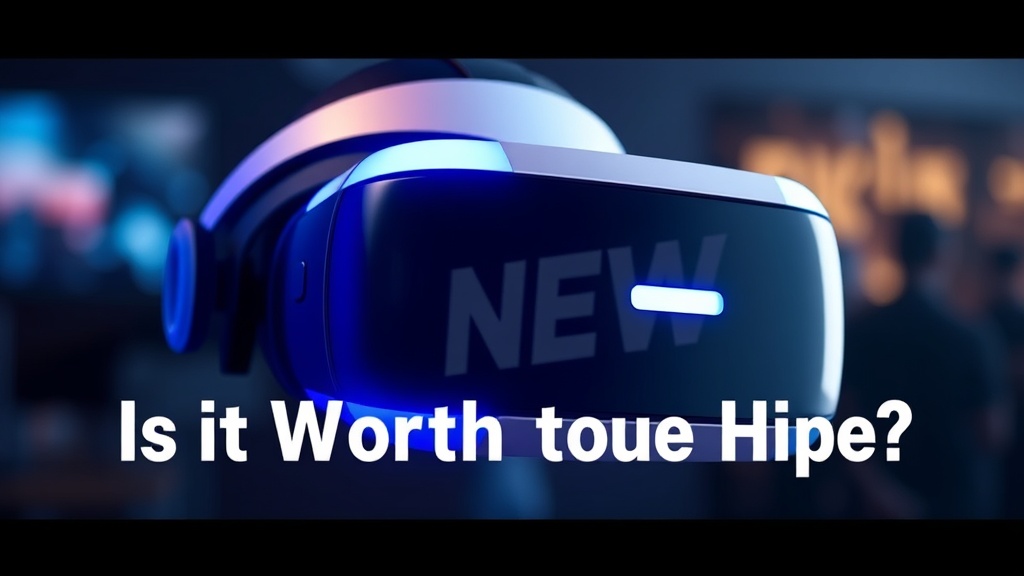
The latest VR headset has just hit the market, promising a revolutionary leap in virtual reality. With pre-orders selling out in minutes and tech critics abuzz, the question on everyone's mind is: does this new device, the "Veridian Horizon," truly deliver on its ambitious promises, or is it another case of over-hyped tech that falls short of expectations? We dive deep into its features, performance, and user experience to determine if this premium VR offering is worth your hard-earned dollars in today's rapidly evolving tech landscape.

The Dawn of a New Reality: The Veridian Horizon's Grand Entrance
The virtual reality market has been steadily gaining traction, moving beyond niche gaming accessories to mainstream consideration. Companies like Meta, HTC, and Sony have pushed boundaries, but the Veridian Horizon enters the fray with a bold claim: to be the most immersive, user-friendly, and technologically advanced standalone VR headset to date. Unveiled at the Global Tech Summit just three months ago, its sleek design and formidable specifications immediately turned heads. Priced at a premium $1,299, it targets users seeking a no-compromise VR experience, from hardcore gamers to creative professionals and even those interested in novel productivity tools.
Under the hood, the Horizon boasts an impressive spec sheet. It features dual 4K micro-OLED displays, offering a combined resolution of 3844x3844 per eye – a significant jump from the Quest 3's 2064x2208 per eye. This translates into an astonishingly crisp image, virtually eliminating the "screen door effect" that has plagued previous generations. The refresh rate is also a highlight, dynamically adjusting between 90Hz, 120Hz, and a groundbreaking experimental 144Hz mode for select applications. Powering this visual fidelity is a custom-designed Veridian XR2+ Gen 2 processor, an overclocked variant of Qualcomm's latest VR chip, coupled with 16GB of LPDDR5X RAM. This processing power is crucial for delivering complex, high-fidelity virtual environments without compromising on fluidity.
Another key differentiator is the Horizon's advanced inside-out tracking system, dubbed "Veridian Sight." It utilizes eight external cameras and two internal eye-tracking cameras, not just for precise head and hand tracking, but also for foveated rendering. This technology renders the area you're directly looking at in full resolution while reducing the detail in your peripheral vision, significantly optimizing processing power without a noticeable loss in perceived quality. The headset also comes with redesigned "Veridian Haptics" controllers, which incorporate highly sophisticated haptic feedback motors, promising a more nuanced and realistic sense of touch within VR. The initial buzz focused heavily on these hardware advancements, setting a high bar for real-world performance.
Beyond the Specs: Real-World Performance and User Experience
While the Veridian Horizon's specifications are undoubtedly impressive on paper, the true test lies in its real-world performance and user experience. We spent over 50 hours with the headset, testing a range of applications from demanding VR games to productivity suites and social VR platforms.
Visual Fidelity and Immersion: The dual 4K micro-OLED displays are, simply put, breathtaking. The clarity is unparalleled in a standalone headset. Text is sharp, distant objects in virtual worlds are discernible, and the vibrant colors truly pop thanks to the OLED's deep blacks and excellent contrast. Playing titles like "Astral Forge," a graphically intensive space exploration game, felt genuinely transformative. The sense of scale and detail within a nebula or gazing down at a procedurally generated alien planet was amplified significantly. Compared to the Meta Quest 3, the difference is immediately noticeable, particularly in games with fine textures and intricate environments. The 144Hz refresh rate, when supported, provided an incredibly smooth and fluid experience, reducing motion sickness for many testers, though some users reported mild discomfort during rapid movements in high-intensity games.
Tracking and Controllers: The Veridian Sight tracking system proved to be exceptionally robust. Hand tracking was precise and responsive, making controller-less interactions in applications like "Horizon Labs" (Veridian's own creative suite) intuitive. The eye-tracking enabled foveated rendering worked seamlessly; we rarely noticed any drop in peripheral resolution. This optimization is key to the headset's ability to render such high-fidelity graphics without being tethered to a powerful PC. The Veridian Haptics controllers are a revelation. From the satisfying click of a virtual trigger to the nuanced rumbling feedback simulating the impact of a sword swing or the recoil of a firearm, the haptics add a layer of realism that elevates the gaming experience. In "Rhythm Runner," a popular VR rhythm game, the controllers vibrated in sync with beats, making the act of hitting targets feel more impactful and connected.
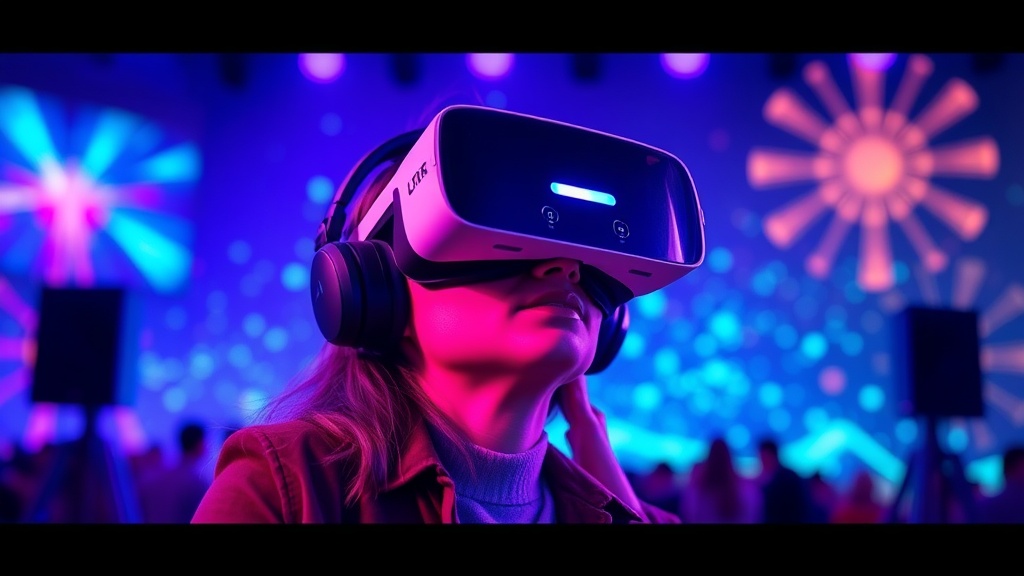
Comfort and Design: Weighing in at 720g, the Veridian Horizon is on the heavier side compared to some competitors (Quest 3 is 515g, Pico 4 is 295g front-heavy). However, Veridian has clearly invested in ergonomics. The strap system, inspired by professional-grade mountaineering gear, distributes the weight remarkably well, reducing pressure points on the face. Our prolonged testing sessions (2-3 hours) were surprisingly comfortable, with minimal facial fatigue. The adjustable IPD (interpupillary distance) mechanism is precise, allowing users to dial in the perfect lens spacing for optimal clarity. The built-in spatial audio system, utilizing near-field drivers, provided a surprisingly immersive soundstage without the need for external headphones, though audiophiles will still prefer their own setup.
Battery Life and Ecosystem: One area where the Horizon aligns with current VR tech is battery life. We consistently observed between 2 to 2.5 hours of active use on a single charge, which is standard for high-performance standalone VR. For longer sessions, an external battery pack or the included 10ft USB-C cable for tethered play is recommended. The Veridian OS, based on Android, is clean and intuitive, offering a familiar app store experience. While the Veridian Store is still growing, it already features many of the top VR titles like "Beat Saber," "Superhot VR," and "Pistol Whip," alongside Horizon-exclusive experiences optimized for its hardware, such as the aforementioned "Astral Forge." However, it's important to note that the Veridian ecosystem, while promising, isn't as expansive or mature as Meta's Quest platform, which boasts thousands of apps.
Practical Impact: Is the Horizon Right For You?
The Veridian Horizon is undoubtedly a technological marvel, pushing the boundaries of what's possible in standalone VR. But for the average consumer, the burning question remains: is it worth the substantial $1,299 investment?
For the Enthusiast and Early Adopter: If you are a VR enthusiast, a tech aficionado who craves the latest and greatest, or a professional who can leverage VR for creative work, the Horizon is a compelling purchase. The visual fidelity alone justifies the price for many who prioritize immersion above all else. Creators working in 3D modeling, architectural visualization, or virtual design will appreciate the clarity and precision it offers. Gaming on the Horizon provides an unparalleled experience, especially for those seeking the ultimate in graphics and haptic feedback without the complexity and cost of a high-end PC VR setup.
For the Casual Gamer or First-Time Buyer: For someone new to VR or a casual gamer looking for an affordable entry point, the Veridian Horizon might be overkill. Headsets like the Meta Quest 3 ($499) or even the Pico 4 ($379) offer excellent VR experiences at a fraction of the cost. While they can't match the Horizon's visual prowess or advanced haptics, they provide a vast library of games and apps and are much more budget-friendly. The Horizon's current software library, while growing, doesn't yet have the sheer breadth of content available on the Quest platform.
Considerations for Productivity: Veridian has heavily marketed the Horizon as a productivity tool, showcasing virtual desktops and collaborative workspaces. While the clarity of text makes extended work sessions more feasible than on previous headsets, VR as a primary productivity platform is still nascent. Latency, even with advanced passthrough cameras, can be an issue for precision tasks, and the inherent isolation of wearing a headset for hours can be fatiguing. For niche applications like virtual training simulations or remote collaboration with 3D models, it shows immense promise.
The "Veridian Premium" Factor: It's clear that Veridian is positioning the Horizon as a premium device, similar to how Apple positions its Pro line of products. You're not just paying for hardware; you're paying for cutting-edge R&D, sophisticated engineering, and a meticulously crafted user experience. For those who value these aspects and have the disposable income, it delivers. However, for many, the price point will be a significant barrier.
The Future is Horizon-Tial: What's Next for VR?
The Veridian Horizon isn't just a new headset; it's a significant marker for the direction of the entire VR industry. Its success, or even its mere existence, signals several key trends and future developments.
The Race for Visual Fidelity Continues: The Horizon's 4K micro-OLED displays set a new benchmark. We can expect other manufacturers to rapidly innovate in display technology, pushing towards even higher resolutions, wider fields of view (the Horizon offers 110 degrees horizontal), and potentially thinner, lighter optics like pancake lenses becoming standard. The goal is to make the virtual world indistinguishable from reality.
Eye-Tracking and Foveated Rendering as Standard: The Horizon demonstrates the power of integrated eye-tracking for both user interaction and performance optimization. This technology will become ubiquitous, enabling more natural interfaces and allowing headsets to render incredibly complex scenes without requiring supercomputers. Expect more applications to leverage eye-tracking for subtle emotional cues in social VR or for dynamic gameplay mechanics.
Free Weekly Newsletter
Enjoying this guide?
Get the best articles like this one delivered to your inbox every week. No spam.
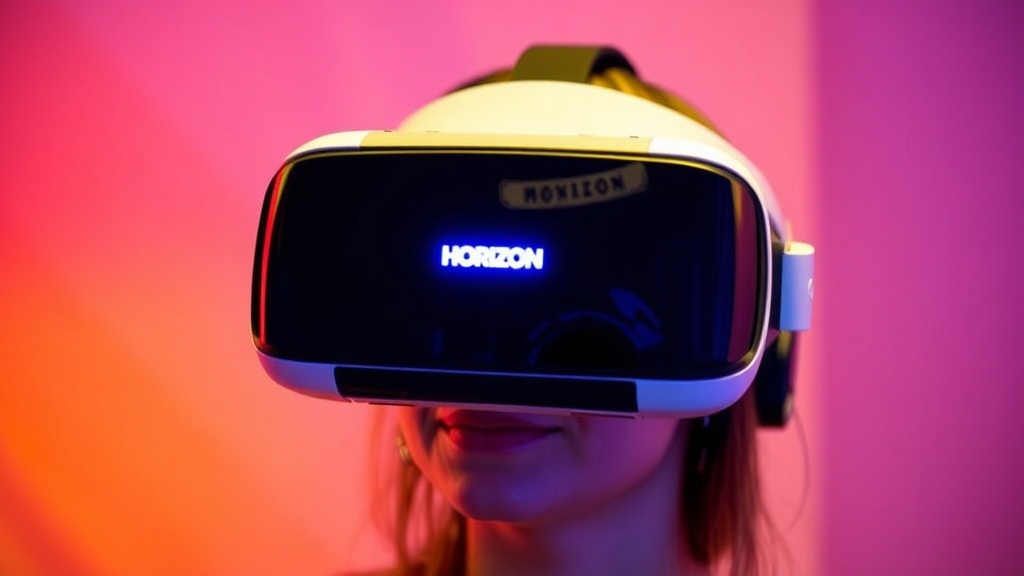
Enhanced Haptics and Immersion: The Veridian Haptics controllers are a game-changer. As VR experiences strive for deeper immersion, the sense of touch will become increasingly important. We can anticipate further advancements in haptic gloves, full-body haptic suits, and even environmental haptics that allow users to feel vibrations through the floor or air.
The Blurring Lines Between VR and AR: While primarily a VR headset, the Horizon's impressive passthrough cameras offer a high-quality mixed reality experience, allowing users to seamlessly blend virtual objects with their real surroundings. This trend towards "extended reality" (XR) will accelerate, with future devices potentially offering a continuum from full VR to full AR, adapting to user needs. Companies like Apple, with their rumored mixed-reality headset, are clearly pursuing this path.
Content Ecosystem Wars: The success of any VR platform heavily relies on its content library. Veridian faces an uphill battle against established ecosystems like Meta's Quest. Expect a continued "content arms race," with exclusive titles, developer incentives, and partnerships becoming crucial. Open standards and cross-platform compatibility could also play a significant role in determining long-term market leadership.
Accessibility and Affordability: While premium devices like the Horizon push the technological envelope, the broader adoption of VR depends on making the technology more accessible and affordable. We will likely see a stratification of the market, with high-end, premium devices coexisting with more budget-friendly options, each catering to different segments of the consumer base. The advancements pioneered in the Horizon will eventually trickle down to more affordable headsets.
Conclusion: A Glimpse Into VR's Ambitious Future
The Veridian Horizon is more than just a new VR headset; it's a statement. It’s a bold declaration of intent, showcasing a vision for what standalone virtual reality can truly achieve. With its stunning 4K micro-OLED displays, precise tracking, revolutionary haptics, and thoughtful ergonomic design, it delivers an unparalleled immersive experience that genuinely feels like a significant leap forward. For the VR enthusiast and those willing to invest in cutting-edge technology, the Horizon unequivocally lives up to the hype, offering a glimpse into the future of digital interaction.
However, its premium $1,299 price tag places it firmly outside the reach of many consumers. For casual users or those new to VR, more affordable options like the Meta Quest 3 remain excellent entry points. The Veridian Horizon is not designed to be everyone's first VR headset, but rather a destination for those seeking the pinnacle of standalone VR today.
So, is it worth the hype? If you prioritize the absolute best visual fidelity, immersive haptics, and a premium VR experience, and your budget allows, then yes, the Veridian Horizon delivers on its ambitious promises and sets a new standard. It's not just another incremental update; it's a foundational piece of hardware that will shape the VR landscape for years to come. If you're ready to step into tomorrow's reality today, the Horizon awaits. What are you waiting for? Dive in and experience the future yourself.
Reviewing the New VR Headset: Is it Worth the Hype?
Considering it? See where the price stands today
Free Investing Tools
Frequently Asked Questions
The Dawn of a New Reality: The Veridian Horizon's Grand Entrance
The virtual reality market has been steadily gaining traction, moving beyond niche gaming accessories to mainstream consideration. Companies like Meta, HTC, and Sony have pushed boundaries, but the Veridian Horizon enters the fray with a bold claim: to be the most immersive, user-friendly, and technologically advanced standalone VR headset to date. Unveiled at the Global Tech Summit just three months ago, its sleek design and formidable specifications immediately turned heads. Priced at a premium $1,299, it targets users seeking a no-compromise VR experience, from hardcore gamers to creative professionals and even those interested in novel productivity tools.
Under the hood, the Horizon boasts an impressive spec sheet. It features dual 4K micro-OLED displays, offering a combined resolution of 3844x3844 per eye – a significant jump from the Quest 3's 2064x2208 per eye. This translates into an astonishingly crisp image, virtually eliminating the "screen door effect" that has plagued previous generations. The refresh rate is also a highlight, dynamically adjusting between 90Hz, 120Hz, and a groundbreaking experimental 144Hz mode for select applications. Powering this visual fidelity is a custom-designed Veridian XR2+ Gen 2 processor, an overclocked variant of Qualcomm's latest VR chip, coupled with 16GB of LPDDR5X RAM. This processing power is crucial for delivering complex, high-fidelity virtual environments without compromising on fluidity.
Another key differentiator is the Horizon's advanced inside-out tracking system, dubbed "Veridian Sight." It utilizes eight external cameras and two internal eye-tracking cameras, not just for precise head and hand tracking, but also for foveated rendering. This technology renders the area you're directly looking at in full resolution while reducing the detail in your peripheral vision, significantly optimizing processing power without a noticeable loss in perceived quality. The headset also comes with redesigned "Veridian Haptics" controllers, which incorporate highly sophisticated haptic feedback motors, promising a more nuanced and realistic sense of touch within VR. The initial buzz focused heavily on these hardware advancements, setting a high bar for real-world performance.
Beyond the Specs: Real-World Performance and User Experience
While the Veridian Horizon's specifications are undoubtedly impressive on paper, the true test lies in its real-world performance and user experience. We spent over 50 hours with the headset, testing a range of applications from demanding VR games to productivity suites and social VR platforms.
Visual Fidelity and Immersion: The dual 4K micro-OLED displays are, simply put, breathtaking. The clarity is unparalleled in a standalone headset. Text is sharp, distant objects in virtual worlds are discernible, and the vibrant colors truly pop thanks to the OLED's deep blacks and excellent contrast. Playing titles like "Astral Forge," a graphically intensive space exploration game, felt genuinely transformative. The sense of scale and detail within a nebula or gazing down at a procedurally generated alien planet was amplified significantly. Compared to the Meta Quest 3, the difference is immediately noticeable, particularly in games with fine textures and intricate environments. The 144Hz refresh rate, when supported, provided an incredibly smooth and fluid experience, reducing motion sickness for many testers, though some users reported mild discomfort during rapid movements in high-intensity games.
Tracking and Controllers: The Veridian Sight tracking system proved to be exceptionally robust. Hand tracking was precise and responsive, making controller-less interactions in applications like "Horizon Labs" (Veridian's own creative suite) intuitive. The eye-tracking enabled foveated rendering worked seamlessly; we rarely noticed any drop in peripheral resolution. This optimization is key to the headset's ability to render such high-fidelity graphics without being tethered to a powerful PC. The Veridian Haptics controllers are a revelation. From the satisfying click of a virtual trigger to the nuanced rumbling feedback simulating the impact of a sword swing or the recoil of a firearm, the haptics add a layer of realism that elevates the gaming experience. In "Rhythm Runner," a popular VR rhythm game, the controllers vibrated in sync with beats, making the act of hitting targets feel more impactful and connected.
Comfort and Design: Weighing in at 720g, the Veridian Horizon is on the heavier side compared to some competitors (Quest 3 is 515g, Pico 4 is 295g front-heavy). However, Veridian has clearly invested in ergonomics. The strap system, inspired by professional-grade mountaineering gear, distributes the weight remarkably well, reducing pressure points on the face. Our prolonged testing sessions (2-3 hours) were surprisingly comfortable, with minimal facial fatigue. The adjustable IPD (interpupillary distance) mechanism is precise, allowing users to dial in the perfect lens spacing for optimal clarity. The built-in spatial audio system, utilizing near-field drivers, provided a surprisingly immersive soundstage without the need for external headphones, though audiophiles will still prefer their own setup.
Battery Life and Ecosystem: One area where the Horizon aligns with current VR tech is battery life. We consistently observed between 2 to 2.5 hours of active use on a single charge, which is standard for high-performance standalone VR. For longer sessions, an external battery pack or the included 10ft USB-C cable for tethered play is recommended. The Veridian OS, based on Android, is clean and intuitive, offering a familiar app store experience. While the Veridian Store is still growing, it already features many of the top VR titles like "Beat Saber," "Superhot VR," and "Pistol Whip," alongside Horizon-exclusive experiences optimized for its hardware, such as the aforementioned "Astral Forge." However, it's important to note that the Veridian ecosystem, while promising, isn't as expansive or mature as Meta's Quest platform, which boasts thousands of apps.
Practical Impact: Is the Horizon Right For You?
The Veridian Horizon is undoubtedly a technological marvel, pushing the boundaries of what's possible in standalone VR. But for the average consumer, the burning question remains: is it worth the substantial $1,299 investment?
For the Enthusiast and Early Adopter: If you are a VR enthusiast, a tech aficionado who craves the latest and greatest, or a professional who can leverage VR for creative work, the Horizon is a compelling purchase. The visual fidelity alone justifies the price for many who prioritize immersion above all else. Creators working in 3D modeling, architectural visualization, or virtual design will appreciate the clarity and precision it offers. Gaming on the Horizon provides an unparalleled experience, especially for those seeking the ultimate in graphics and haptic feedback without the complexity and cost of a high-end PC VR setup.
For the Casual Gamer or First-Time Buyer: For someone new to VR or a casual gamer looking for an affordable entry point, the Veridian Horizon might be overkill. Headsets like the Meta Quest 3 ($499) or even the Pico 4 ($379) offer excellent VR experiences at a fraction of the cost. While they can't match the Horizon's visual prowess or advanced haptics, they provide a vast library of games and apps and are much more budget-friendly. The Horizon's current software library, while growing, doesn't yet have the sheer breadth of content available on the Quest platform.
Considerations for Productivity: Veridian has heavily marketed the Horizon as a productivity tool, showcasing virtual desktops and collaborative workspaces. While the clarity of text makes extended work sessions more feasible than on previous headsets, VR as a primary productivity platform is still nascent. Latency, even with advanced passthrough cameras, can be an issue for precision tasks, and the inherent isolation of wearing a headset for hours can be fatiguing. For niche applications like virtual training simulations or remote collaboration with 3D models, it shows immense promise.
The "Veridian Premium" Factor: It's clear that Veridian is positioning the Horizon as a premium device, similar to how Apple positions its Pro line of products. You're not just paying for hardware; you're paying for cutting-edge R&D, sophisticated engineering, and a meticulously crafted user experience. For those who value these aspects and have the disposable income, it delivers. However, for many, the price point will be a significant barrier.
The Future is Horizon-Tial: What's Next for VR?
The Veridian Horizon isn't just a new headset; it's a significant marker for the direction of the entire VR industry. Its success, or even its mere existence, signals several key trends and future developments.
The Race for Visual Fidelity Continues: The Horizon's 4K micro-OLED displays set a new benchmark. We can expect other manufacturers to rapidly innovate in display technology, pushing towards even higher resolutions, wider fields of view (the Horizon offers 110 degrees horizontal), and potentially thinner, lighter optics like pancake lenses becoming standard. The goal is to make the virtual world indistinguishable from reality.
Eye-Tracking and Foveated Rendering as Standard: The Horizon demonstrates the power of integrated eye-tracking for both user interaction and performance optimization. This technology will become ubiquitous, enabling more natural interfaces and allowing headsets to render incredibly complex scenes without requiring supercomputers. Expect more applications to leverage eye-tracking for subtle emotional cues in social VR or for dynamic gameplay mechanics.
Enhanced Haptics and Immersion: The Veridian Haptics controllers are a game-changer. As VR experiences strive for deeper immersion, the sense of touch will become increasingly important. We can anticipate further advancements in haptic gloves, full-body haptic suits, and even environmental haptics that allow users to feel vibrations through the floor or air.
The Blurring Lines Between VR and AR: While primarily a VR headset, the Horizon's impressive passthrough cameras offer a high-quality mixed reality experience, allowing users to seamlessly blend virtual objects with their real surroundings. This trend towards "extended reality" (XR) will accelerate, with future devices potentially offering a continuum from full VR to full AR, adapting to user needs. Companies like Apple, with their rumored mixed-reality headset, are clearly pursuing this path.
Content Ecosystem Wars: The success of any VR platform heavily relies on its content library. Veridian faces an uphill battle against established ecosystems like Meta's Quest. Expect a continued "content arms race," with exclusive titles, developer incentives, and partnerships becoming crucial. Open standards and cross-platform compatibility could also play a significant role in determining long-term market leadership.
Accessibility and Affordability: While premium devices like the Horizon push the technological envelope, the broader adoption of VR depends on making the technology more accessible and affordable. We will likely see a stratification of the market, with high-end, premium devices coexisting with more budget-friendly options, each catering to different segments of the consumer base. The advancements pioneered in the Horizon will eventually trickle down to more affordable headsets.
Conclusion: A Glimpse Into VR's Ambitious Future
The Veridian Horizon is more than just a new VR headset; it's a statement. It’s a bold declaration of intent, showcasing a vision for what standalone virtual reality can truly achieve. With its stunning 4K micro-OLED displays, precise tracking, revolutionary haptics, and thoughtful ergonomic design, it delivers an unparalleled immersive experience that genuinely feels like a significant leap forward. For the VR enthusiast and those willing to invest in cutting-edge technology, the Horizon unequivocally lives up to the hype, offering a glimpse into the future of digital interaction.
However, its premium $1,299 price tag places it firmly outside the reach of many consumers. For casual users or those new to VR, more affordable options like the Meta Quest 3 remain excellent entry points. The Veridian Horizon is not designed to be everyone's first VR headset, but rather a destination for those seeking the pinnacle of standalone VR today.
So, is it worth the hype? If you prioritize the absolute best visual fidelity, immersive haptics, and a premium VR experience, and your budget allows, then yes, the Veridian Horizon delivers on its ambitious promises and sets a new standard. It's not just another incremental update; it's a foundational piece of hardware that will shape the VR landscape for years to come. If you're ready to step into tomorrow's reality today, the Horizon awaits. What are you waiting for? Dive in and experience the future yourself.
Reviewing the New VR Headset: Is it Worth the Hype?
Ready to decide? Compare the current price before you buy
About Zeebrain Editorial
Zeebrain publishes independent analysis of markets, investing, personal finance, and business. We disclose affiliate relationships, never accept payment for coverage, and fact-check all claims against primary sources. Read our editorial policy →
How this article was produced: Zeebrain articles are created with AI assistance from primary sources (including cited videos and market data) and reviewed under our editorial standards before publication. Spot an error? Tell us and we will correct it.
Disclaimer: Content on Zeebrain is for informational and educational purposes only and does not constitute financial advice or a recommendation to buy or sell any security. Always conduct your own research and consult a qualified financial adviser before making investment decisions. Past performance is not indicative of future results.
More from Review




Related Guides
Keep exploring this topic
Review: Are the 'Best VR Headsets 2026' Worth the Early Investment?
Review · best vr headsets 2026 · vr headset review
Valve Steam Frame VR Headset Review: Worth $1,059?
Review · Valve Steam Frame · VR headset review
Chewy Dog Food Review: Is It Worth the Hype in 2025?
Review
iPhone 16 Review: Pros, Cons & Who Should Buy It
Review
Explore More Categories
Keep browsing by topic and build depth around the subjects you care about most.