Oppo Find X9 Ultra: Have We Hit Peak Smartphone?

Quick Summary
The Oppo Find X9 Ultra packs a 200MP camera, 7,050mAh battery and Snapdragon 8 Elite. But does it prove we've hit peak slab phone? Our honest verdict inside.
Oppo Find X9 Ultra
Check current price and availability on Amazon
In This Article
The Oppo Find X9 Ultra Is the Most Complete Smartphone of 2026 — And That's the Problem
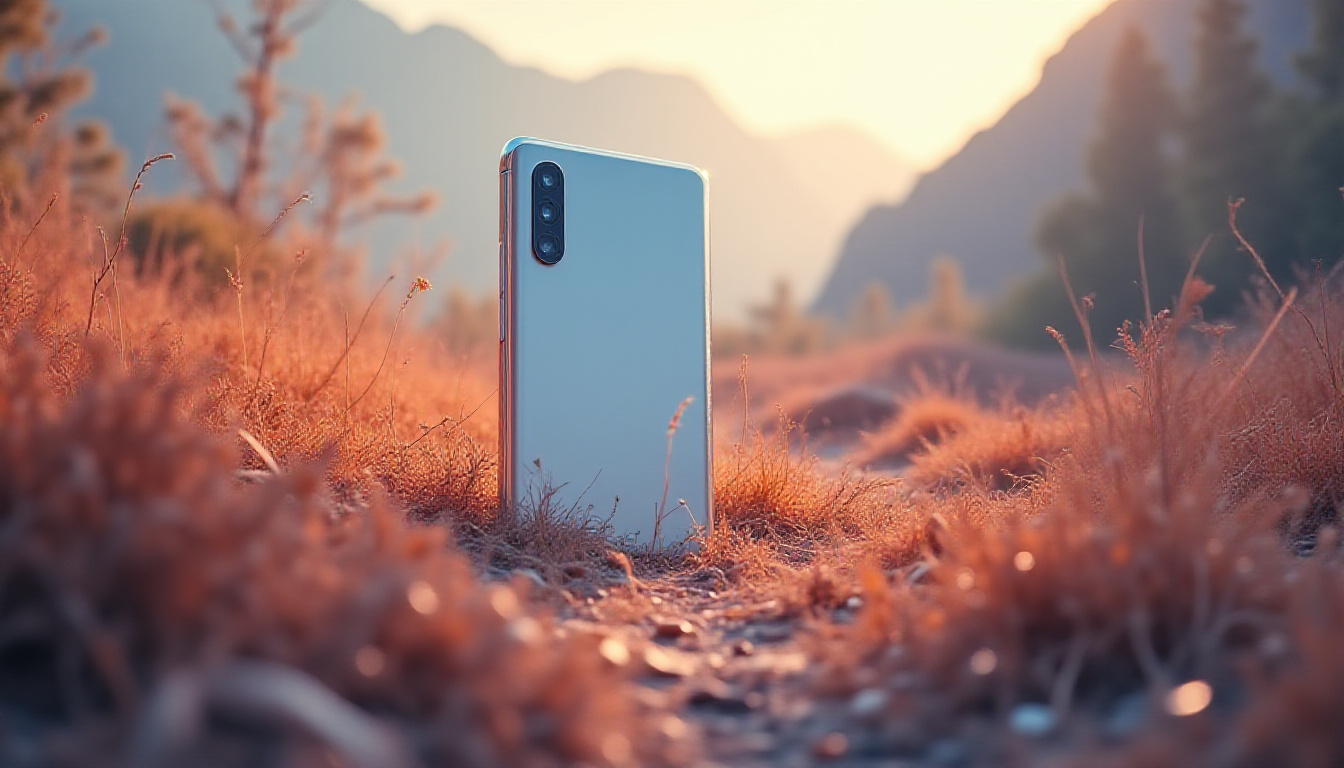
Every year, a phone comes along that forces you to stop and ask: what exactly are we still chasing? The Oppo Find X9 Ultra is that phone in 2026. With a 200-megapixel main camera, a 7,050mAh silicon-carbon battery, Snapdragon 8 Elite Gen 5, and a Hasselblad-branded five-sensor camera array, it does not leave much on the table. And yet, rather than feeling like a triumphant finish line, it feels more like a signpost — one that reads: you are basically there, but "there" keeps moving.
Related Post

If you are shopping at the top end of the Android market right now, the Find X9 Ultra belongs in your shortlist. But the more interesting question it raises is not whether it is the best phone you can buy. It is whether the category itself — the flat, glass-and-metal slab smartphone — has effectively run out of meaningful problems to solve.
Spoiler: mostly yes. Except for one stubbornly persistent one.
Five Pillars, Four Boxes Checked
The most useful framework for evaluating any flagship smartphone is deceptively simple: does it ace the display, battery, performance, build quality, and cameras? These five pillars have driven the industry forward for over a decade. The honest assessment in 2026 is that four of them are, for all practical purposes, solved.
Display: The Find X9 Ultra ships with a 6.8-inch OLED panel that hits extreme peak brightness for outdoor visibility and drops to 1 nit for comfortable night-time reading. High refresh rate, minimal bezels, under-display fingerprint sensor, hole-punch selfie camera. This is the form the high-end smartphone display has settled into, and it works. There is no meaningful unsolved problem here for the average buyer.
Battery: Silicon-carbon battery technology has quietly rewritten the rules in the past 24 months. Where 5,000mAh was considered generous in 2023, the Find X9 Ultra's 7,050mAh cell makes all-day battery life almost laughably easy to achieve. Add 100W wired and 50W wireless charging, and you are looking at a phone that most users will end normal days at 50–60% charge. That is, for all intents and purposes, a solved problem.
Performance: The Snapdragon 8 Elite Gen 5 is class-leading. Animations are smooth, the display is responsive, and the year-over-year gains at this level are now marginal enough that most users will only notice them in graphically intensive gaming or synthetic benchmarks. Performance is a solved pillar.
Build quality: Metal frame, premium glass, IP69 dust and water resistance. The Find X9 Ultra's faux-leather back and orange Hasselblad accents give it a distinctive identity without sacrificing durability. Nothing revolutionary — but nothing left to fix either.
That leaves cameras. And this is where the real conversation begins.
The Camera System Is Impressive. The Hype Around It Is a Little Dishonest.
The Find X9 Ultra's camera hardware is genuinely remarkable on paper: a 200-megapixel primary sensor (the largest of its kind in a smartphone), a 200-megapixel 3x telephoto, a 50-megapixel 10x periscope zoom with sensor-shift stabilisation, a 50-megapixel ultrawide, and a dedicated colour sensor for white balance accuracy. Five sensors. All best-in-class or close to it.
In practice, the results are excellent. Processing is comparatively restrained by computational photography standards — there is real texture and tonal nuance in well-lit shots, and the versatility across focal lengths is unmatched by any phone currently available. Oppo's X9 Pro won multiple camera-of-the-year awards in 2025. This is that phone, upgraded.
But here is the honest part: Oppo's Hasselblad co-branding, the knurled lens ring, the sideways text, the colour-matched accents — it is all designed to make you feel like you are holding a professional camera. You are not. The Hasselblad X2D Mark II, the camera this phone is supposedly inspired by, does not even have a video mode. It is a deliberate, manual, physics-first imaging tool built for professionals who know exactly what they want and are willing to work for it. Comparing the two is a category error.
What a great smartphone camera actually does — and what the Find X9 Ultra does very well — is minimise missed shots. Computational photography is essentially an intelligent safety net. It cannot fully replicate the optical qualities of a large-sensor dedicated camera, but it means you almost never come home with unusable photos. For 95% of real-world photography use cases, that is the right trade-off. Where it falls short is when you want full creative control, unprocessed files with genuine optical character, or the kind of subject isolation that only comes from a physically large aperture and a large sensor working together.
The optional Hasselblad lens attachment accessory — including a battery grip and two-stage shutter button — pushes the envelope further still, enabling 400mm equivalent zoom shots that are technically shot on a smartphone. It is impressive engineering. It is also a bit like bolting a spoiler onto a family saloon: fun, functional, but not quite the real thing.
Where Peak Slab Phone Actually Stands in 2026
The concept of "peak slab phone" is worth taking seriously, because it shapes how you should think about upgrades. If you are coming from a 2022 or 2023 flagship, the Find X9 Ultra will feel like a meaningful step forward — primarily in battery endurance and camera versatility. If you are coming from a 2024 top-tier flagship, the gap is narrower than the spec sheet suggests.
The broader point is this: the high-end Android slab has converged. The Samsung Galaxy S26 Ultra, the Xiaomi 15 Ultra, and the Find X9 Ultra all occupy broadly the same space. They differ in processing philosophy, software experience, and industrial design more than they differ in fundamental capability. That is what plateau looks like in a consumer technology category.
This is not a criticism. Plateaus happen when a product category has genuinely gotten good. The question shifts from how do we make it better? to which version of good suits you best?
The Budget-Conscious Buyer's Reality Check
The Find X9 Ultra is an expensive phone. Depending on your market, you are looking at a price point that puts it firmly in the same bracket as Apple's highest-tier iPhone and Samsung's S-Ultra line. Before you commit, ask yourself a few direct questions.
Do you take a serious volume of photos in varied conditions — low light, high contrast, long distance? Then the camera system here is worth paying for. There is nothing better available on a smartphone today.
Are you a heavy user who has historically killed phones by mid-afternoon? The battery alone justifies serious consideration. The silicon-carbon cell and fast charging combination are genuinely best-in-class.
Are you coming from a 2023 or older flagship primarily for performance reasons? Save your money. The performance difference will not be meaningful in daily use.
Free Weekly Newsletter
Enjoying this guide?
Get the best articles like this one delivered to your inbox every week. No spam.
Do you need it to work with the Google or Samsung ecosystem deeply — Wear OS watches, Pixel-specific features, Samsung DeX? The Find X9 Ultra is Android, but it is Oppo's ColorOS flavour, and ecosystem lock-in is a real consideration that no spec sheet addresses.
The One Problem That Will Never Be Fully Solved
Every pillar of the flagship smartphone is now either solved or within striking distance of solved — except for the camera's fundamental physics limitation. No matter how large smartphone sensors get, the laws of optics apply. A 1/1.3-inch sensor, even a magnificent one, is not a medium-format sensor. Aperture blades and computational bokeh are not the same thing. That gap will narrow every year, but it will not close.
This is not actually bad news for most people. The gap that remains is relevant to professional photographers and serious enthusiasts, not to someone documenting their life, capturing travel moments, or making content for social platforms. For those users, the Find X9 Ultra is more than enough — it is arguably more camera than most people will ever need.
The honest bottom-line verdict: the Oppo Find X9 Ultra is the most complete slab smartphone available in 2026. If you are in the market for a top-tier Android flagship and the price is within reach, there is nothing better to buy. Four out of five pillars are comprehensively solved, the camera system leads the industry, and the battery will outlast almost any day you throw at it. The only caveat — and it applies to every smartphone, not just this one — is that it will never replace a dedicated professional camera at what that camera does. Buy it for what it is: the best possible phone. Not the best possible camera.
Frequently Asked Questions
Is the Oppo Find X9 Ultra worth the price over the Samsung Galaxy S26 Ultra? For camera-focused buyers, the Find X9 Ultra has a genuine edge in hardware versatility and sensor size, particularly in telephoto performance. For users deeply embedded in the Samsung ecosystem — SmartThings, Galaxy Watch, DeX — the S26 Ultra makes more practical sense despite being slightly behind on raw camera specs. If you are neutral on ecosystem, the Find X9 Ultra is the stronger camera phone.
Does the Hasselblad partnership actually improve photo quality on the Find X9 Ultra? The Hasselblad partnership contributes calibrated colour science, lens emulation modes, and a more restrained processing approach than you find on many Chinese flagships. These are real, if incremental, benefits — particularly in colour accuracy and skin tones. What it does not do is give the phone the optical properties of an actual Hasselblad camera. The branding is partly marketing, but the colour tuning benefits are genuine.
How does the Find X9 Ultra battery compare to other 2026 flagships? The 7,050mAh silicon-carbon cell is the largest in any current flagship and sets a new benchmark for endurance. Most users will comfortably reach two days of moderate use. Heavy users — those with four or more hours of screen-on time daily — should expect a full day with charge to spare. Combined with 100W wired and 50W wireless charging, it is the strongest battery package available in a mainstream flagship form factor right now.
Should I wait for the next generation before buying a flagship smartphone? If your current phone is from 2022 or earlier and struggling with battery life or performance, there is no strong reason to wait — the Find X9 Ultra represents a significant real-world upgrade. If you are on a 2024 flagship that is working well, the marginal gains in the next generation are unlikely to justify the cost. The category is at a plateau, which means the risk of buyer's remorse from waiting is lower than it has ever been.
Oppo Find X9 Ultra
Considering it? See where the price stands today
Frequently Asked Questions
The Oppo Find X9 Ultra Is the Most Complete Smartphone of 2026 — And That's the Problem
Every year, a phone comes along that forces you to stop and ask: what exactly are we still chasing? The Oppo Find X9 Ultra is that phone in 2026. With a 200-megapixel main camera, a 7,050mAh silicon-carbon battery, Snapdragon 8 Elite Gen 5, and a Hasselblad-branded five-sensor camera array, it does not leave much on the table. And yet, rather than feeling like a triumphant finish line, it feels more like a signpost — one that reads: you are basically there, but "there" keeps moving.
If you are shopping at the top end of the Android market right now, the Find X9 Ultra belongs in your shortlist. But the more interesting question it raises is not whether it is the best phone you can buy. It is whether the category itself — the flat, glass-and-metal slab smartphone — has effectively run out of meaningful problems to solve.
Spoiler: mostly yes. Except for one stubbornly persistent one.
Five Pillars, Four Boxes Checked
The most useful framework for evaluating any flagship smartphone is deceptively simple: does it ace the display, battery, performance, build quality, and cameras? These five pillars have driven the industry forward for over a decade. The honest assessment in 2026 is that four of them are, for all practical purposes, solved.
Display: The Find X9 Ultra ships with a 6.8-inch OLED panel that hits extreme peak brightness for outdoor visibility and drops to 1 nit for comfortable night-time reading. High refresh rate, minimal bezels, under-display fingerprint sensor, hole-punch selfie camera. This is the form the high-end smartphone display has settled into, and it works. There is no meaningful unsolved problem here for the average buyer.
Battery: Silicon-carbon battery technology has quietly rewritten the rules in the past 24 months. Where 5,000mAh was considered generous in 2023, the Find X9 Ultra's 7,050mAh cell makes all-day battery life almost laughably easy to achieve. Add 100W wired and 50W wireless charging, and you are looking at a phone that most users will end normal days at 50–60% charge. That is, for all intents and purposes, a solved problem.
Performance: The Snapdragon 8 Elite Gen 5 is class-leading. Animations are smooth, the display is responsive, and the year-over-year gains at this level are now marginal enough that most users will only notice them in graphically intensive gaming or synthetic benchmarks. Performance is a solved pillar.
Build quality: Metal frame, premium glass, IP69 dust and water resistance. The Find X9 Ultra's faux-leather back and orange Hasselblad accents give it a distinctive identity without sacrificing durability. Nothing revolutionary — but nothing left to fix either.
That leaves cameras. And this is where the real conversation begins.
The Camera System Is Impressive. The Hype Around It Is a Little Dishonest.
The Find X9 Ultra's camera hardware is genuinely remarkable on paper: a 200-megapixel primary sensor (the largest of its kind in a smartphone), a 200-megapixel 3x telephoto, a 50-megapixel 10x periscope zoom with sensor-shift stabilisation, a 50-megapixel ultrawide, and a dedicated colour sensor for white balance accuracy. Five sensors. All best-in-class or close to it.
In practice, the results are excellent. Processing is comparatively restrained by computational photography standards — there is real texture and tonal nuance in well-lit shots, and the versatility across focal lengths is unmatched by any phone currently available. Oppo's X9 Pro won multiple camera-of-the-year awards in 2025. This is that phone, upgraded.
But here is the honest part: Oppo's Hasselblad co-branding, the knurled lens ring, the sideways text, the colour-matched accents — it is all designed to make you feel like you are holding a professional camera. You are not. The Hasselblad X2D Mark II, the camera this phone is supposedly inspired by, does not even have a video mode. It is a deliberate, manual, physics-first imaging tool built for professionals who know exactly what they want and are willing to work for it. Comparing the two is a category error.
What a great smartphone camera actually does — and what the Find X9 Ultra does very well — is minimise missed shots. Computational photography is essentially an intelligent safety net. It cannot fully replicate the optical qualities of a large-sensor dedicated camera, but it means you almost never come home with unusable photos. For 95% of real-world photography use cases, that is the right trade-off. Where it falls short is when you want full creative control, unprocessed files with genuine optical character, or the kind of subject isolation that only comes from a physically large aperture and a large sensor working together.
The optional Hasselblad lens attachment accessory — including a battery grip and two-stage shutter button — pushes the envelope further still, enabling 400mm equivalent zoom shots that are technically shot on a smartphone. It is impressive engineering. It is also a bit like bolting a spoiler onto a family saloon: fun, functional, but not quite the real thing.
Where Peak Slab Phone Actually Stands in 2026
The concept of "peak slab phone" is worth taking seriously, because it shapes how you should think about upgrades. If you are coming from a 2022 or 2023 flagship, the Find X9 Ultra will feel like a meaningful step forward — primarily in battery endurance and camera versatility. If you are coming from a 2024 top-tier flagship, the gap is narrower than the spec sheet suggests.
The broader point is this: the high-end Android slab has converged. The Samsung Galaxy S26 Ultra, the Xiaomi 15 Ultra, and the Find X9 Ultra all occupy broadly the same space. They differ in processing philosophy, software experience, and industrial design more than they differ in fundamental capability. That is what plateau looks like in a consumer technology category.
This is not a criticism. Plateaus happen when a product category has genuinely gotten good. The question shifts from how do we make it better? to which version of good suits you best?
The Budget-Conscious Buyer's Reality Check
The Find X9 Ultra is an expensive phone. Depending on your market, you are looking at a price point that puts it firmly in the same bracket as Apple's highest-tier iPhone and Samsung's S-Ultra line. Before you commit, ask yourself a few direct questions.
Do you take a serious volume of photos in varied conditions — low light, high contrast, long distance? Then the camera system here is worth paying for. There is nothing better available on a smartphone today.
Are you a heavy user who has historically killed phones by mid-afternoon? The battery alone justifies serious consideration. The silicon-carbon cell and fast charging combination are genuinely best-in-class.
Are you coming from a 2023 or older flagship primarily for performance reasons? Save your money. The performance difference will not be meaningful in daily use.
Do you need it to work with the Google or Samsung ecosystem deeply — Wear OS watches, Pixel-specific features, Samsung DeX? The Find X9 Ultra is Android, but it is Oppo's ColorOS flavour, and ecosystem lock-in is a real consideration that no spec sheet addresses.
The One Problem That Will Never Be Fully Solved
Every pillar of the flagship smartphone is now either solved or within striking distance of solved — except for the camera's fundamental physics limitation. No matter how large smartphone sensors get, the laws of optics apply. A 1/1.3-inch sensor, even a magnificent one, is not a medium-format sensor. Aperture blades and computational bokeh are not the same thing. That gap will narrow every year, but it will not close.
This is not actually bad news for most people. The gap that remains is relevant to professional photographers and serious enthusiasts, not to someone documenting their life, capturing travel moments, or making content for social platforms. For those users, the Find X9 Ultra is more than enough — it is arguably more camera than most people will ever need.
The honest bottom-line verdict: the Oppo Find X9 Ultra is the most complete slab smartphone available in 2026. If you are in the market for a top-tier Android flagship and the price is within reach, there is nothing better to buy. Four out of five pillars are comprehensively solved, the camera system leads the industry, and the battery will outlast almost any day you throw at it. The only caveat — and it applies to every smartphone, not just this one — is that it will never replace a dedicated professional camera at what that camera does. Buy it for what it is: the best possible phone. Not the best possible camera.
Frequently Asked Questions
Is the Oppo Find X9 Ultra worth the price over the Samsung Galaxy S26 Ultra? For camera-focused buyers, the Find X9 Ultra has a genuine edge in hardware versatility and sensor size, particularly in telephoto performance. For users deeply embedded in the Samsung ecosystem — SmartThings, Galaxy Watch, DeX — the S26 Ultra makes more practical sense despite being slightly behind on raw camera specs. If you are neutral on ecosystem, the Find X9 Ultra is the stronger camera phone.
Does the Hasselblad partnership actually improve photo quality on the Find X9 Ultra? The Hasselblad partnership contributes calibrated colour science, lens emulation modes, and a more restrained processing approach than you find on many Chinese flagships. These are real, if incremental, benefits — particularly in colour accuracy and skin tones. What it does not do is give the phone the optical properties of an actual Hasselblad camera. The branding is partly marketing, but the colour tuning benefits are genuine.
How does the Find X9 Ultra battery compare to other 2026 flagships? The 7,050mAh silicon-carbon cell is the largest in any current flagship and sets a new benchmark for endurance. Most users will comfortably reach two days of moderate use. Heavy users — those with four or more hours of screen-on time daily — should expect a full day with charge to spare. Combined with 100W wired and 50W wireless charging, it is the strongest battery package available in a mainstream flagship form factor right now.
Should I wait for the next generation before buying a flagship smartphone? If your current phone is from 2022 or earlier and struggling with battery life or performance, there is no strong reason to wait — the Find X9 Ultra represents a significant real-world upgrade. If you are on a 2024 flagship that is working well, the marginal gains in the next generation are unlikely to justify the cost. The category is at a plateau, which means the risk of buyer's remorse from waiting is lower than it has ever been.
Oppo Find X9 Ultra
Ready to decide? Compare the current price before you buy
About Zeebrain Editorial
Zeebrain publishes independent analysis of markets, investing, personal finance, and business. We disclose affiliate relationships, never accept payment for coverage, and fact-check all claims against primary sources. Read our editorial policy →
How this article was produced: Zeebrain articles are created with AI assistance from primary sources (including cited videos and market data) and reviewed under our editorial standards before publication. Spot an error? Tell us and we will correct it.
Disclaimer: Content on Zeebrain is for informational and educational purposes only and does not constitute financial advice or a recommendation to buy or sell any security. Always conduct your own research and consult a qualified financial adviser before making investment decisions. Past performance is not indicative of future results.
More from Reviews



Related Guides
Keep exploring this topic
Explore More on Zeebrain
Keep browsing by topic, or put the numbers to work with our free tools.