Mars Rover Discoveries: Unveiling the Red Planet's Hidden Secrets
Quick Summary
Mars Rover Discoveries: Unveiling the Red Planet's Hidden Secrets Imagine a world where robotic explorers are not just surveying landscapes, but actively decoding the...
In This Article
Mars Rover Discoveries: Unveiling the Red Planet's Hidden Secrets
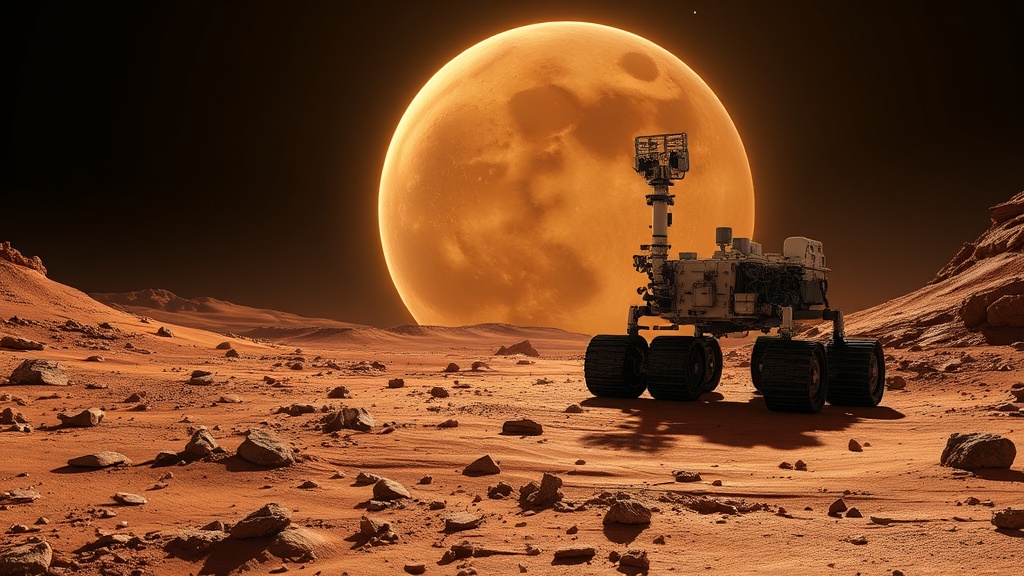
Imagine a world where robotic explorers are not just surveying landscapes, but actively decoding the autobiography of a planet millions of miles away. Mars rovers, humanity's metallic surrogates, are currently doing precisely that, sending back unprecedented data that is revolutionizing our understanding of Earth's closest celestial neighbor. These intrepid machines are not merely collecting pretty pictures; they are unearthing critical geological, atmospheric, and potentially biological clues that could redefine our place in the universe.

The Curiosity and Perseverance Missions: Our Boots on Martian Ground
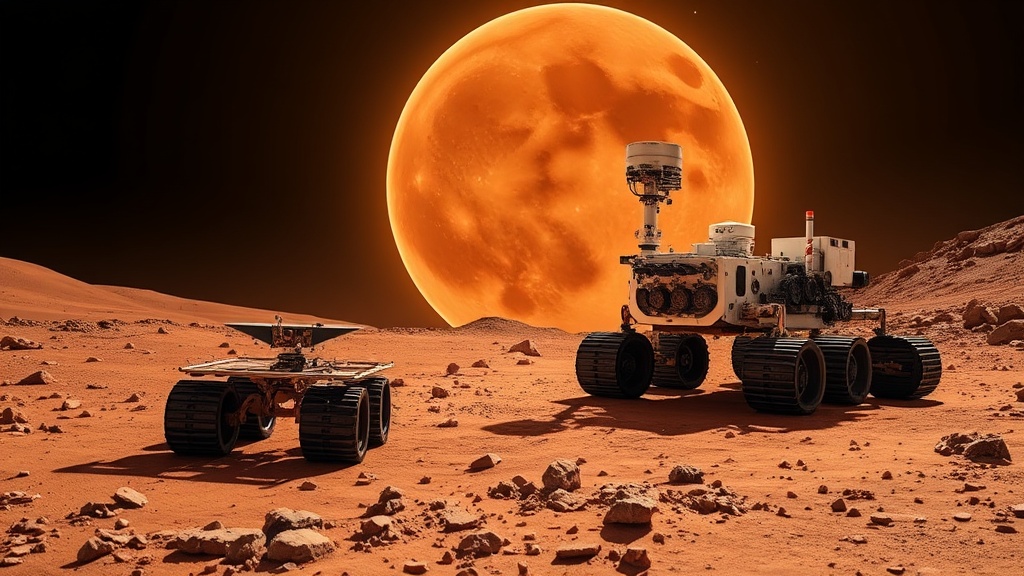
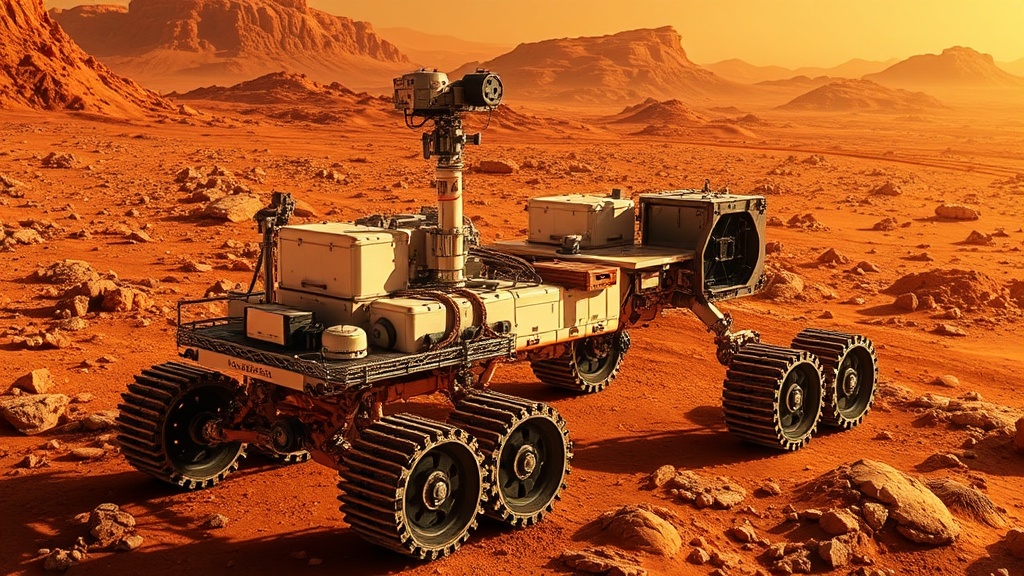
For decades, Mars remained an enigma, a hazy red dot in our telescopes. Today, thanks to the tireless work of NASA's Mars Exploration Program, particularly the Curiosity and Perseverance rovers, we possess an intimate, granular understanding of its surface. These aren't just vehicles; they are mobile scientific laboratories, equipped with an array of sophisticated instruments designed to analyze rocks, soil, and atmosphere with remarkable precision.
The Curiosity rover, which landed in Gale Crater in August 2012, was primarily tasked with assessing Mars' habitability. Its groundbreaking discovery of ancient streambeds and lake deposits provided irrefutable evidence that Mars once possessed liquid water flowing freely on its surface, a critical ingredient for life as we know it. For instance, the analysis of mudstone samples from the "John Klein" drill site revealed clay minerals formed in neutral pH water, a far cry from the acidic conditions previously thought to dominate early Mars. This discovery alone shifted our understanding from a dry, desolate planet to one potentially teeming with microbial life billions of years ago. Curiosity's Sample Analysis at Mars (SAM) instrument also detected organic molecules – the building blocks of life – within drilled rock powder, further fueling the possibility of ancient Martian life. While not definitive proof of life itself, these organic compounds, including thiophenes, benzene, toluene, and small carbon chains, indicate that the necessary ingredients and processes for life were present.
Building upon Curiosity's legacy, the Perseverance rover touched down in Jezero Crater in February 2021. This mission represents a significant leap forward, with its primary goal being astrobiology – specifically, searching for signs of ancient microbial life and collecting carefully selected rock and regolith samples for eventual return to Earth. Jezero Crater was chosen for its compelling geological features, including a well-preserved river delta that flowed into a lake billions of years ago. The rover’s PIXL (Planetary Instrument for X-ray Lithochemistry) and SHERLOC (Scanning Habitable Environments with Raman & Luminescence for Organics & Chemicals) instruments have been meticulously analyzing rock formations, revealing diverse mineralogy that further supports the past presence of a sustained watery environment. Early findings from Perseverance have identified igneous rocks in the crater floor, suggesting volcanic activity and hydrothermal systems that could have provided energy sources for ancient microbial life. The ability of Perseverance to drill core samples and hermetically seal them for future retrieval by the Mars Sample Return mission is a game-changer, promising direct laboratory analysis of Martian material on Earth for the first time.
Beyond Geology: Understanding Martian Climate and Atmospheric Evolution
The rovers' contributions extend far beyond identifying ancient water. They are also providing invaluable data on Mars' atmospheric evolution and current climate dynamics, helping us understand how the planet transitioned from a potentially warm, wet world to the cold, arid desert we see today. Curiosity's Radiation Assessment Detector (RAD) has measured radiation levels on the Martian surface, crucial data for planning future human missions. It confirmed that astronauts would face significant radiation exposure, highlighting the need for advanced shielding or faster transit times.
Perseverance, meanwhile, carries the innovative MOXIE (Mars Oxygen In-Situ Resource Utilization Experiment) instrument, which successfully generated oxygen from the Martian atmosphere's carbon dioxide. This technology is a critical step towards future human exploration, demonstrating the feasibility of "living off the land" by producing breathable air and rocket propellant directly on Mars. In April 2021, MOXIE produced 5 grams of oxygen, enough for an astronaut to breathe for about 10 minutes. This wasn't a one-off experiment; MOXIE has consistently produced oxygen during multiple runs, proving the robustness of the technology. The ability to produce oxygen on Mars would dramatically reduce the mass of supplies needed from Earth, making human missions more feasible and sustainable.
Both rovers have also contributed to our understanding of Mars' dust cycles and weather patterns. Curiosity's regular atmospheric measurements, including pressure and temperature, have provided a detailed look at the seasonal variations and the impact of dust storms on the Martian atmosphere. Perseverance, with its more advanced meteorological sensors, continues to monitor these conditions, offering insights into the complex interactions between the surface and atmosphere that govern Mars' climate. The SuperCam instrument, a camera, laser, and spectrometer all rolled into one, allows Perseverance to analyze the composition of rocks and soil from a distance, but also features a microphone that has captured the sounds of Mars, including the whirring of the rover's motors, the crackle of its laser, and the faint whisper of Martian winds – invaluable data for atmospheric scientists.
Preparing for Human Exploration: Practical Steps and Future Implications
The data flowing back from Curiosity and Perseverance isn't just for academic curiosity; it has profound practical implications for future human missions to Mars. Understanding the planet's past habitability guides the search for suitable landing sites for astronauts, prioritizing areas where resources like subsurface water ice might be accessible. The radiation data from Curiosity directly informs spacecraft design and mission planning to minimize health risks for human crews.
The MOXIE experiment on Perseverance is perhaps the most direct example of practical impact. Its success demonstrates the viability of In-Situ Resource Utilization (ISRU), a cornerstone of sustainable space exploration. Instead of hauling every single resource from Earth, future Martian colonists could produce oxygen for breathing and rocket fuel from the local atmosphere. This significantly reduces launch mass and costs, making multi-year human missions to Mars a more attainable goal. Furthermore, the extensive mapping and geological characterization performed by the rovers provide crucial reconnaissance, identifying potential hazards and resources for future human outposts. Imagine astronauts having precise maps of water-ice deposits or locations with minimal dust accumulation, all thanks to the robotic pioneers that paved the way. The identification of specific rock types and mineral compositions also helps engineers determine the best construction materials for habitats and other infrastructure.
The Road Ahead: Mars Sample Return and Beyond
The current rover missions are building towards one of the most ambitious undertakings in space exploration: the Mars Sample Return (MSR) mission. This multi-agency effort, led by NASA and ESA, aims to bring the pristine rock and regolith samples collected by Perseverance back to Earth for unparalleled scientific analysis. These samples, hermetically sealed in tubes, represent a time capsule from an ancient Martian environment.
The MSR mission involves a series of complex steps: Perseverance will deposit its samples in designated caches on the Martian surface. A future Sample Retrieval Lander will then launch an ascent vehicle to collect these samples from Mars and place them into orbit around Mars. Finally, an Earth Return Orbiter will rendezvous with the sample container in Martian orbit and bring it back to Earth. This mission is expected to deliver the samples to Earth in the early 2030s.
Free Weekly Newsletter
Enjoying this guide?
Get the best articles like this one delivered to your inbox every week. No spam.
Once on Earth, these Martian samples will be analyzed using instruments far more powerful and diverse than anything that can be sent to Mars. Scientists will be able to search for definitive biosignatures, indicators of past life, with a precision currently impossible on the Red Planet. This could include microscopic fossils, complex organic molecules, or isotopic signatures indicative of biological processes. The implications of finding definitive evidence of past life on Mars would be monumental, fundamentally altering our understanding of life's prevalence in the universe. Beyond astrobiology, the samples will provide an unprecedented window into Mars' geological history, atmospheric evolution, and potential resources, refining our models of planetary formation and evolution.
Looking further into the future, the knowledge gained from the rovers and the Mars Sample Return mission will directly inform the planning and execution of human missions to Mars. The insights into radiation, atmospheric conditions, and resource availability will be critical for designing safe and effective habitats, life support systems, and even astronaut training. The goal of a sustained human presence on Mars, once relegated to science fiction, is slowly but surely being transformed into a tangible objective, driven by the relentless curiosity and ingenuity embedded in these robotic explorers. Future missions might involve more specialized rovers for drilling deeper into the Martian crust, exploring lava tubes for potential shelter, or even autonomous drones for aerial reconnaissance, further unraveling the planet's hidden secrets.
Conclusion: Mars Rovers as Our Guides to the Cosmos
The Mars rovers, from the plucky Sojourner to the sophisticated Perseverance, are much more than just machines on a distant world. They are our eyes, ears, and scientific hands on Mars, offering a profound connection to a planet that holds clues to some of humanity's most fundamental questions: Was there ever life beyond Earth? How did our solar system evolve? And are we alone? The discoveries from Curiosity and Perseverance, revealing ancient water, organic molecules, and the practical means to sustain human life, are not merely scientific achievements; they are signposts on humanity's journey of cosmic discovery.
These ongoing missions inspire millions, demonstrating what is possible through perseverance and scientific endeavor. Stay curious, follow the ongoing rover missions, and remember that every new image or data point sent back from Mars brings us one step closer to unveiling the Red Planet's hidden secrets and, perhaps, our own future among the stars. The next big discovery could be just around the corner, waiting for one of these robotic explorers to uncover it.
Frequently Asked Questions
The Curiosity and Perseverance Missions: Our Boots on Martian Ground
For decades, Mars remained an enigma, a hazy red dot in our telescopes. Today, thanks to the tireless work of NASA's Mars Exploration Program, particularly the Curiosity and Perseverance rovers, we possess an intimate, granular understanding of its surface. These aren't just vehicles; they are mobile scientific laboratories, equipped with an array of sophisticated instruments designed to analyze rocks, soil, and atmosphere with remarkable precision.
The Curiosity rover, which landed in Gale Crater in August 2012, was primarily tasked with assessing Mars' habitability. Its groundbreaking discovery of ancient streambeds and lake deposits provided irrefutable evidence that Mars once possessed liquid water flowing freely on its surface, a critical ingredient for life as we know it. For instance, the analysis of mudstone samples from the "John Klein" drill site revealed clay minerals formed in neutral pH water, a far cry from the acidic conditions previously thought to dominate early Mars. This discovery alone shifted our understanding from a dry, desolate planet to one potentially teeming with microbial life billions of years ago. Curiosity's Sample Analysis at Mars (SAM) instrument also detected organic molecules – the building blocks of life – within drilled rock powder, further fueling the possibility of ancient Martian life. While not definitive proof of life itself, these organic compounds, including thiophenes, benzene, toluene, and small carbon chains, indicate that the necessary ingredients and processes for life were present.
Building upon Curiosity's legacy, the Perseverance rover touched down in Jezero Crater in February 2021. This mission represents a significant leap forward, with its primary goal being astrobiology – specifically, searching for signs of ancient microbial life and collecting carefully selected rock and regolith samples for eventual return to Earth. Jezero Crater was chosen for its compelling geological features, including a well-preserved river delta that flowed into a lake billions of years ago. The rover’s PIXL (Planetary Instrument for X-ray Lithochemistry) and SHERLOC (Scanning Habitable Environments with Raman & Luminescence for Organics & Chemicals) instruments have been meticulously analyzing rock formations, revealing diverse mineralogy that further supports the past presence of a sustained watery environment. Early findings from Perseverance have identified igneous rocks in the crater floor, suggesting volcanic activity and hydrothermal systems that could have provided energy sources for ancient microbial life. The ability of Perseverance to drill core samples and hermetically seal them for future retrieval by the Mars Sample Return mission is a game-changer, promising direct laboratory analysis of Martian material on Earth for the first time.
Beyond Geology: Understanding Martian Climate and Atmospheric Evolution
The rovers' contributions extend far beyond identifying ancient water. They are also providing invaluable data on Mars' atmospheric evolution and current climate dynamics, helping us understand how the planet transitioned from a potentially warm, wet world to the cold, arid desert we see today. Curiosity's Radiation Assessment Detector (RAD) has measured radiation levels on the Martian surface, crucial data for planning future human missions. It confirmed that astronauts would face significant radiation exposure, highlighting the need for advanced shielding or faster transit times.
Perseverance, meanwhile, carries the innovative MOXIE (Mars Oxygen In-Situ Resource Utilization Experiment) instrument, which successfully generated oxygen from the Martian atmosphere's carbon dioxide. This technology is a critical step towards future human exploration, demonstrating the feasibility of "living off the land" by producing breathable air and rocket propellant directly on Mars. In April 2021, MOXIE produced 5 grams of oxygen, enough for an astronaut to breathe for about 10 minutes. This wasn't a one-off experiment; MOXIE has consistently produced oxygen during multiple runs, proving the robustness of the technology. The ability to produce oxygen on Mars would dramatically reduce the mass of supplies needed from Earth, making human missions more feasible and sustainable.
Both rovers have also contributed to our understanding of Mars' dust cycles and weather patterns. Curiosity's regular atmospheric measurements, including pressure and temperature, have provided a detailed look at the seasonal variations and the impact of dust storms on the Martian atmosphere. Perseverance, with its more advanced meteorological sensors, continues to monitor these conditions, offering insights into the complex interactions between the surface and atmosphere that govern Mars' climate. The SuperCam instrument, a camera, laser, and spectrometer all rolled into one, allows Perseverance to analyze the composition of rocks and soil from a distance, but also features a microphone that has captured the sounds of Mars, including the whirring of the rover's motors, the crackle of its laser, and the faint whisper of Martian winds – invaluable data for atmospheric scientists.
Preparing for Human Exploration: Practical Steps and Future Implications
The data flowing back from Curiosity and Perseverance isn't just for academic curiosity; it has profound practical implications for future human missions to Mars. Understanding the planet's past habitability guides the search for suitable landing sites for astronauts, prioritizing areas where resources like subsurface water ice might be accessible. The radiation data from Curiosity directly informs spacecraft design and mission planning to minimize health risks for human crews.
The MOXIE experiment on Perseverance is perhaps the most direct example of practical impact. Its success demonstrates the viability of In-Situ Resource Utilization (ISRU), a cornerstone of sustainable space exploration. Instead of hauling every single resource from Earth, future Martian colonists could produce oxygen for breathing and rocket fuel from the local atmosphere. This significantly reduces launch mass and costs, making multi-year human missions to Mars a more attainable goal. Furthermore, the extensive mapping and geological characterization performed by the rovers provide crucial reconnaissance, identifying potential hazards and resources for future human outposts. Imagine astronauts having precise maps of water-ice deposits or locations with minimal dust accumulation, all thanks to the robotic pioneers that paved the way. The identification of specific rock types and mineral compositions also helps engineers determine the best construction materials for habitats and other infrastructure.
The Road Ahead: Mars Sample Return and Beyond
The current rover missions are building towards one of the most ambitious undertakings in space exploration: the Mars Sample Return (MSR) mission. This multi-agency effort, led by NASA and ESA, aims to bring the pristine rock and regolith samples collected by Perseverance back to Earth for unparalleled scientific analysis. These samples, hermetically sealed in tubes, represent a time capsule from an ancient Martian environment.
The MSR mission involves a series of complex steps: Perseverance will deposit its samples in designated caches on the Martian surface. A future Sample Retrieval Lander will then launch an ascent vehicle to collect these samples from Mars and place them into orbit around Mars. Finally, an Earth Return Orbiter will rendezvous with the sample container in Martian orbit and bring it back to Earth. This mission is expected to deliver the samples to Earth in the early 2030s.
Once on Earth, these Martian samples will be analyzed using instruments far more powerful and diverse than anything that can be sent to Mars. Scientists will be able to search for definitive biosignatures, indicators of past life, with a precision currently impossible on the Red Planet. This could include microscopic fossils, complex organic molecules, or isotopic signatures indicative of biological processes. The implications of finding definitive evidence of past life on Mars would be monumental, fundamentally altering our understanding of life's prevalence in the universe. Beyond astrobiology, the samples will provide an unprecedented window into Mars' geological history, atmospheric evolution, and potential resources, refining our models of planetary formation and evolution.
Looking further into the future, the knowledge gained from the rovers and the Mars Sample Return mission will directly inform the planning and execution of human missions to Mars. The insights into radiation, atmospheric conditions, and resource availability will be critical for designing safe and effective habitats, life support systems, and even astronaut training. The goal of a sustained human presence on Mars, once relegated to science fiction, is slowly but surely being transformed into a tangible objective, driven by the relentless curiosity and ingenuity embedded in these robotic explorers. Future missions might involve more specialized rovers for drilling deeper into the Martian crust, exploring lava tubes for potential shelter, or even autonomous drones for aerial reconnaissance, further unraveling the planet's hidden secrets.
Conclusion: Mars Rovers as Our Guides to the Cosmos
The Mars rovers, from the plucky Sojourner to the sophisticated Perseverance, are much more than just machines on a distant world. They are our eyes, ears, and scientific hands on Mars, offering a profound connection to a planet that holds clues to some of humanity's most fundamental questions: Was there ever life beyond Earth? How did our solar system evolve? And are we alone? The discoveries from Curiosity and Perseverance, revealing ancient water, organic molecules, and the practical means to sustain human life, are not merely scientific achievements; they are signposts on humanity's journey of cosmic discovery.
These ongoing missions inspire millions, demonstrating what is possible through perseverance and scientific endeavor. Stay curious, follow the ongoing rover missions, and remember that every new image or data point sent back from Mars brings us one step closer to unveiling the Red Planet's hidden secrets and, perhaps, our own future among the stars. The next big discovery could be just around the corner, waiting for one of these robotic explorers to uncover it.
About Zeebrain Editorial
Zeebrain publishes independent analysis of markets, investing, personal finance, and business. We disclose affiliate relationships, never accept payment for coverage, and fact-check all claims against primary sources. Read our editorial policy →
How this article was produced: Zeebrain articles are created with AI assistance from primary sources (including cited videos and market data) and reviewed under our editorial standards before publication. Spot an error? Tell us and we will correct it.
More from Curiosities




Related Guides
Keep exploring this topic
Explore More Categories
Keep browsing by topic and build depth around the subjects you care about most.