LG Rollable Phone: What We Know So Far
Quick Summary
LG's unreleased rollable smartphone almost changed mobile tech forever. Here's what it does, how it works, and why its cancellation still stings in 2026.
LG Rollable Phone
Check current price and availability on Amazon
In This Article
The Phone That Never Got Its Moment
Some products arrive too early. Some arrive too late. And some never arrive at all — but leave you wondering what the industry might have looked like if they had. LG's unreleased rollable smartphone belongs firmly in that third category. In a world where foldable phones have gone from novelty to mainstream, this device — functional hardware, working software, and all — sits in a peculiar place: a fully engineered product that never saw a shelf, built by a company that no longer exists. Now that working units have surfaced publicly for the first time, it's worth asking a question the industry hasn't fully grappled with yet: was this actually brilliant?
Related Post

The short answer is yes — chaotically, impractically, beautifully brilliant. And understanding why tells us something important about where smartphone innovation has been, where it's going, and what we lost when LG walked out the door.
What LG's Rollable Phone Actually Does
At rest, the LG rollable phone looks almost deliberately ordinary. It presents as a standard 6.7-inch slab — the kind of dimensions you'd find on any flagship Android in 2021. Nothing about it screams "engineering marvel" at first glance, which is arguably part of the point.
Then you swipe three fingers across the display.
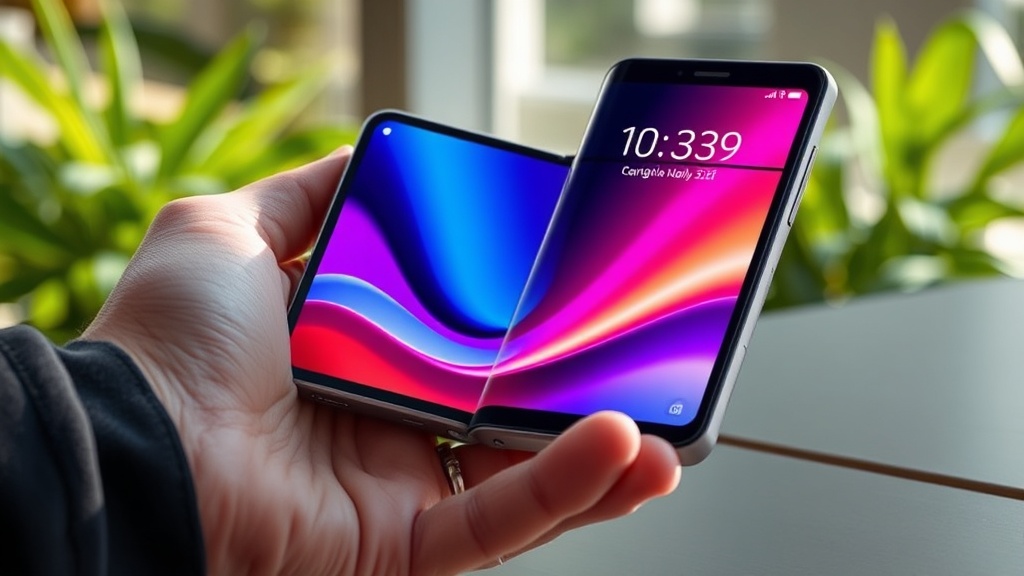
In response, the phone physically expands. The screen rolls out from the right side of the device, pulling from a hidden reservoir of flexible display material curled behind a rail along the back. Within seconds, you're holding a 7.4-inch near-square display — closer in proportion to a small tablet than a phone. Swipe again, and it retracts. The whole sequence plays a designed sound effect through the speakers, timed to mask the audible whir of the internal motors.
This isn't a concept video. This is a physical object that does this, repeatedly, on demand.
The gap between 6.7 and 7.4 inches sounds modest until you consider the aspect ratio shift. Phones are tall and narrow; tablets are wide and square. By expanding horizontally, the LG rollable doesn't just give you more screen real estate — it gives you a fundamentally different screen shape, which changes how you interact with content. That's the genuine innovation here, and it's more meaningful than a simple size upgrade.
The Engineering Behind the Magic
If you want to appreciate how absurd this device is from an engineering standpoint, consider what has to happen every time you swipe those three fingers. Two motors activate simultaneously. Three spring-loaded arms push the chassis laterally while the flexible display unrolls over the edge and around a curved rail. The whole mechanism has to be strong enough to push a five-pound laptop across a table, yet sensitive enough to detect when a user is squeezing the phone too hard — at which point it closes itself and displays a warning.
The motors are not quiet. LG's engineers clearly knew this, which is why the phone ships with multiple selectable sound profiles designed to acoustically mask the mechanical noise. It's a creative solution to an unavoidable problem, and there's something almost endearing about the fact that someone at LG had to sit down and engineer audio camouflage for a phone's motor.
Internally, teardowns reveal the device is packed in a way that defies conventional smartphone layout logic. There's almost no wasted space — because there can't be. The rollable mechanism eats into the real estate that would normally house a larger battery or additional cooling. The result is a 4,500mAh cell and 12GB of RAM, which would have been competitive at launch but tells you the hardware team was constantly negotiating space against the mechanical system.
The flexible display itself curves continuously over the back of the device when closed, and LG made the pragmatic decision to keep that portion active and visible through a clear glass panel. This enabled secondary functions: displaying notifications, showing camera previews, even letting users take selfies with the primary rear cameras by using the exposed back screen as a viewfinder. It's a trick reminiscent of Xiaomi's Mi Mix Alpha concept — another phone that never shipped — and it shows that LG was thinking holistically about what a wrap-around display could actually do for users, not just how it could impress at a trade show.
The Crease Problem — And Why Rollables Might Solve It
One of the most persistent criticisms of foldable smartphones is the crease. Every device that folds a flexible display around a tight radius creates a visible, tactile ridge at the fold point. Manufacturers have spent years minimising it; none have eliminated it. It remains the aesthetic and functional compromise that stops many potential buyers from making the leap.
The rollable form factor addresses this differently. Rather than folding flat, the display curves around a much larger radius as it rolls over the side of the device. The physics are more forgiving. There is still some waviness — the display doesn't lie perfectly flat across its full width when fully extended — but it's categorically less severe than a fold crease. In good lighting with the screen on, it's barely noticeable. With the screen off, you can see a subtle undulation, but it reads more like a characteristic than a flaw.
This matters because it suggests rollable displays might represent a more durable long-term solution than folding ones. Repeatedly bending a material around a tight radius creates fatigue stress at that specific point. Rolling around a gentler curve distributes the mechanical stress more evenly across the display surface. Whether that translates to meaningfully better longevity in real-world use is something we'll never know from this particular device — but the engineering logic is sound.
What LG Got Right, and What Would Have Needed Work
Let's be honest about both sides. LG got a remarkable amount right for a product that never shipped.
The software integration is the most surprising achievement. The lock screen features a blooming flower animation that expands as the phone opens and contracts as it closes — a small detail, but one that signals genuine product thinking rather than a prototype bolted together for a demo. The Settings app smoothly adds and removes a column depending on the current screen width. These are not features you build unless you're genuinely preparing for a product launch. Someone cared.
The decision to make the volume controls pressure-sensitive areas rather than physical buttons — forced by the lack of available side real estate due to the rail mechanism — is another example of constraints producing creative solutions. The rear-mounted fingerprint reader, integrated under the camera module, is unconventional but reportedly functional and accessible.
What would have needed work? Durability is the obvious concern. When the phone is open, the gears of the expansion mechanism are partially visible at the top and bottom edges. There are air gaps. The flexible display is continuously exposed rather than tucked away behind a protective shell when not in use, unlike modern folding phones. An IP rating for water or dust resistance would have been either impossible or extraordinarily difficult to engineer around the rollable mechanism. In daily use — in a bag, in the rain, at a beach — this phone would have faced real challenges that its more conventional competitors don't.
Pricing would also have been a critical question. LG never reached the stage of naming or pricing this device. But given the complexity of the mechanism, the custom flexible display, and the dual-motor system, it's reasonable to assume this would have launched at the top of the premium market — competing with Samsung's Z Fold lineup on price while offering a genuinely different value proposition.
LG's Legacy and the Road Not Taken
LG's mobile division was, in retrospect, a fascinating contradiction. They were arguably the most experimentally ambitious major Android manufacturer in the world, and that ambition is precisely what made them commercially unsustainable.
The G8X with its magnetic dual-screen case. The Wing with its swivelling split display. The rollable that never shipped. Each of these devices represents a genuine attempt to answer a real question: what should a smartphone be? Not just how do we make the same thing incrementally better, but what are the actual possibilities of this form factor?
The tragedy is that answering those questions is expensive. Research, custom components, new manufacturing processes, software engineering for novel interactions — none of it comes cheap, and none of it delivers the kind of reliable, repeatable revenue that keeps a mobile division funded. Samsung could absorb the cost of the Galaxy Z Fold's first-generation struggles because the Galaxy S series printed money. LG had no equivalent safety net.
Free Weekly Newsletter
Enjoying this guide?
Get the best articles like this one delivered to your inbox every week. No spam.
So the rollable phone sits in a small collection of devices that changed how engineers and designers think about smartphones — even if consumers never got to hold one. The ideas don't disappear with the company. Samsung is reportedly working on its own rollable device. TCL has shown rollable concepts. The form factor has a future; it just won't carry an LG logo.
What Comes Next for Rollable Smartphones
The rollable form factor faces a different market than it would have in 2021. Consumers are now broadly familiar with flexible displays — the Galaxy Z Fold 6 and Z Flip 6 have normalised the idea of a phone that physically changes shape. That's actually good news for rollables. The education phase is largely done; what's needed now is a manufacturer willing to make the engineering investment.
Samsung is the most likely candidate. With the manufacturing scale to absorb development costs and the brand recognition to market a genuinely new form factor, a Samsung rollable could do what LG's device never got the chance to: reach millions of users and prove the concept at scale. If and when that happens, it will owe a quiet debt to the engineers at LG who built a working phone, got the software into a near-shippable state, designed the animations, tuned the motor sounds, and then watched the division close before any of it could matter.
That's the thing about LG's unreleased rollable. It wasn't a prototype or a proof of concept. It was a product. It just needed a company that could survive long enough to sell it.
Frequently Asked Questions
What was LG's rollable smartphone?
LG's rollable smartphone was an unreleased device that expanded from a standard 6.7-inch phone into a wider 7.4-inch display by physically rolling additional screen material out from behind a rail on the right side of the device. It featured working hardware, functional software with custom animations, dual internal motors, and a three-finger swipe gesture to trigger the expansion or retraction.
Why did LG shut down its mobile division?
LG shut down its mobile division in 2021 after years of financial losses. While the company was consistently innovative — producing experimental devices like the Wing and the G8X dual-screen system — it never established a reliable, high-volume flagship line comparable to Samsung's Galaxy S series. Without a consistent revenue-generating product to fund ongoing R&D and operations, the division became unsustainable.
How is a rollable phone different from a foldable phone?
A foldable phone hinges in the middle and folds flat, bending its flexible display around a tight radius. A rollable phone stores the additional display material coiled around a curved rail and extends it horizontally when needed. The key practical difference is that rollables avoid the crease created by folding — since the display curves around a larger radius rather than bending sharply — though they introduce their own challenges around durability and mechanism complexity.
Will Samsung or another manufacturer release a rollable smartphone?
As of 2026, Samsung has been reported to be developing a rollable smartphone, though no confirmed release date exists. TCL and other manufacturers have also demonstrated rollable concepts at trade shows. The form factor is considered technically viable but remains commercially unproven at scale, largely because of the engineering complexity and cost involved in producing flexible display mechanisms reliably enough for mass-market use.
How many LG rollable phones exist?
No official figure has been released, but given that the device never reached mass production, working units are extremely rare. The devices that have surfaced publicly in 2025 and 2026 appear to be late-stage engineering samples or near-final prototypes, suggesting that production reached an advanced stage before LG's mobile closure — but the total number of units made is likely in the dozens or low hundreds at most.
LG Rollable Phone
Considering it? See where the price stands today
Frequently Asked Questions
The Phone That Never Got Its Moment
Some products arrive too early. Some arrive too late. And some never arrive at all — but leave you wondering what the industry might have looked like if they had. LG's unreleased rollable smartphone belongs firmly in that third category. In a world where foldable phones have gone from novelty to mainstream, this device — functional hardware, working software, and all — sits in a peculiar place: a fully engineered product that never saw a shelf, built by a company that no longer exists. Now that working units have surfaced publicly for the first time, it's worth asking a question the industry hasn't fully grappled with yet: was this actually brilliant?
The short answer is yes — chaotically, impractically, beautifully brilliant. And understanding why tells us something important about where smartphone innovation has been, where it's going, and what we lost when LG walked out the door.
What LG's Rollable Phone Actually Does
At rest, the LG rollable phone looks almost deliberately ordinary. It presents as a standard 6.7-inch slab — the kind of dimensions you'd find on any flagship Android in 2021. Nothing about it screams "engineering marvel" at first glance, which is arguably part of the point.
Then you swipe three fingers across the display.
In response, the phone physically expands. The screen rolls out from the right side of the device, pulling from a hidden reservoir of flexible display material curled behind a rail along the back. Within seconds, you're holding a 7.4-inch near-square display — closer in proportion to a small tablet than a phone. Swipe again, and it retracts. The whole sequence plays a designed sound effect through the speakers, timed to mask the audible whir of the internal motors.
This isn't a concept video. This is a physical object that does this, repeatedly, on demand.
The gap between 6.7 and 7.4 inches sounds modest until you consider the aspect ratio shift. Phones are tall and narrow; tablets are wide and square. By expanding horizontally, the LG rollable doesn't just give you more screen real estate — it gives you a fundamentally different screen shape, which changes how you interact with content. That's the genuine innovation here, and it's more meaningful than a simple size upgrade.
The Engineering Behind the Magic
If you want to appreciate how absurd this device is from an engineering standpoint, consider what has to happen every time you swipe those three fingers. Two motors activate simultaneously. Three spring-loaded arms push the chassis laterally while the flexible display unrolls over the edge and around a curved rail. The whole mechanism has to be strong enough to push a five-pound laptop across a table, yet sensitive enough to detect when a user is squeezing the phone too hard — at which point it closes itself and displays a warning.
The motors are not quiet. LG's engineers clearly knew this, which is why the phone ships with multiple selectable sound profiles designed to acoustically mask the mechanical noise. It's a creative solution to an unavoidable problem, and there's something almost endearing about the fact that someone at LG had to sit down and engineer audio camouflage for a phone's motor.
Internally, teardowns reveal the device is packed in a way that defies conventional smartphone layout logic. There's almost no wasted space — because there can't be. The rollable mechanism eats into the real estate that would normally house a larger battery or additional cooling. The result is a 4,500mAh cell and 12GB of RAM, which would have been competitive at launch but tells you the hardware team was constantly negotiating space against the mechanical system.
The flexible display itself curves continuously over the back of the device when closed, and LG made the pragmatic decision to keep that portion active and visible through a clear glass panel. This enabled secondary functions: displaying notifications, showing camera previews, even letting users take selfies with the primary rear cameras by using the exposed back screen as a viewfinder. It's a trick reminiscent of Xiaomi's Mi Mix Alpha concept — another phone that never shipped — and it shows that LG was thinking holistically about what a wrap-around display could actually do for users, not just how it could impress at a trade show.
The Crease Problem — And Why Rollables Might Solve It
One of the most persistent criticisms of foldable smartphones is the crease. Every device that folds a flexible display around a tight radius creates a visible, tactile ridge at the fold point. Manufacturers have spent years minimising it; none have eliminated it. It remains the aesthetic and functional compromise that stops many potential buyers from making the leap.
The rollable form factor addresses this differently. Rather than folding flat, the display curves around a much larger radius as it rolls over the side of the device. The physics are more forgiving. There is still some waviness — the display doesn't lie perfectly flat across its full width when fully extended — but it's categorically less severe than a fold crease. In good lighting with the screen on, it's barely noticeable. With the screen off, you can see a subtle undulation, but it reads more like a characteristic than a flaw.
This matters because it suggests rollable displays might represent a more durable long-term solution than folding ones. Repeatedly bending a material around a tight radius creates fatigue stress at that specific point. Rolling around a gentler curve distributes the mechanical stress more evenly across the display surface. Whether that translates to meaningfully better longevity in real-world use is something we'll never know from this particular device — but the engineering logic is sound.
What LG Got Right, and What Would Have Needed Work
Let's be honest about both sides. LG got a remarkable amount right for a product that never shipped.
The software integration is the most surprising achievement. The lock screen features a blooming flower animation that expands as the phone opens and contracts as it closes — a small detail, but one that signals genuine product thinking rather than a prototype bolted together for a demo. The Settings app smoothly adds and removes a column depending on the current screen width. These are not features you build unless you're genuinely preparing for a product launch. Someone cared.
The decision to make the volume controls pressure-sensitive areas rather than physical buttons — forced by the lack of available side real estate due to the rail mechanism — is another example of constraints producing creative solutions. The rear-mounted fingerprint reader, integrated under the camera module, is unconventional but reportedly functional and accessible.
What would have needed work? Durability is the obvious concern. When the phone is open, the gears of the expansion mechanism are partially visible at the top and bottom edges. There are air gaps. The flexible display is continuously exposed rather than tucked away behind a protective shell when not in use, unlike modern folding phones. An IP rating for water or dust resistance would have been either impossible or extraordinarily difficult to engineer around the rollable mechanism. In daily use — in a bag, in the rain, at a beach — this phone would have faced real challenges that its more conventional competitors don't.
Pricing would also have been a critical question. LG never reached the stage of naming or pricing this device. But given the complexity of the mechanism, the custom flexible display, and the dual-motor system, it's reasonable to assume this would have launched at the top of the premium market — competing with Samsung's Z Fold lineup on price while offering a genuinely different value proposition.
LG's Legacy and the Road Not Taken
LG's mobile division was, in retrospect, a fascinating contradiction. They were arguably the most experimentally ambitious major Android manufacturer in the world, and that ambition is precisely what made them commercially unsustainable.
The G8X with its magnetic dual-screen case. The Wing with its swivelling split display. The rollable that never shipped. Each of these devices represents a genuine attempt to answer a real question: what should a smartphone be? Not just how do we make the same thing incrementally better, but what are the actual possibilities of this form factor?
The tragedy is that answering those questions is expensive. Research, custom components, new manufacturing processes, software engineering for novel interactions — none of it comes cheap, and none of it delivers the kind of reliable, repeatable revenue that keeps a mobile division funded. Samsung could absorb the cost of the Galaxy Z Fold's first-generation struggles because the Galaxy S series printed money. LG had no equivalent safety net.
So the rollable phone sits in a small collection of devices that changed how engineers and designers think about smartphones — even if consumers never got to hold one. The ideas don't disappear with the company. Samsung is reportedly working on its own rollable device. TCL has shown rollable concepts. The form factor has a future; it just won't carry an LG logo.
What Comes Next for Rollable Smartphones
The rollable form factor faces a different market than it would have in 2021. Consumers are now broadly familiar with flexible displays — the Galaxy Z Fold 6 and Z Flip 6 have normalised the idea of a phone that physically changes shape. That's actually good news for rollables. The education phase is largely done; what's needed now is a manufacturer willing to make the engineering investment.
Samsung is the most likely candidate. With the manufacturing scale to absorb development costs and the brand recognition to market a genuinely new form factor, a Samsung rollable could do what LG's device never got the chance to: reach millions of users and prove the concept at scale. If and when that happens, it will owe a quiet debt to the engineers at LG who built a working phone, got the software into a near-shippable state, designed the animations, tuned the motor sounds, and then watched the division close before any of it could matter.
That's the thing about LG's unreleased rollable. It wasn't a prototype or a proof of concept. It was a product. It just needed a company that could survive long enough to sell it.
Frequently Asked Questions
What was LG's rollable smartphone?
LG's rollable smartphone was an unreleased device that expanded from a standard 6.7-inch phone into a wider 7.4-inch display by physically rolling additional screen material out from behind a rail on the right side of the device. It featured working hardware, functional software with custom animations, dual internal motors, and a three-finger swipe gesture to trigger the expansion or retraction.
Why did LG shut down its mobile division?
LG shut down its mobile division in 2021 after years of financial losses. While the company was consistently innovative — producing experimental devices like the Wing and the G8X dual-screen system — it never established a reliable, high-volume flagship line comparable to Samsung's Galaxy S series. Without a consistent revenue-generating product to fund ongoing R&D and operations, the division became unsustainable.
How is a rollable phone different from a foldable phone?
A foldable phone hinges in the middle and folds flat, bending its flexible display around a tight radius. A rollable phone stores the additional display material coiled around a curved rail and extends it horizontally when needed. The key practical difference is that rollables avoid the crease created by folding — since the display curves around a larger radius rather than bending sharply — though they introduce their own challenges around durability and mechanism complexity.
Will Samsung or another manufacturer release a rollable smartphone?
As of 2026, Samsung has been reported to be developing a rollable smartphone, though no confirmed release date exists. TCL and other manufacturers have also demonstrated rollable concepts at trade shows. The form factor is considered technically viable but remains commercially unproven at scale, largely because of the engineering complexity and cost involved in producing flexible display mechanisms reliably enough for mass-market use.
How many LG rollable phones exist?
No official figure has been released, but given that the device never reached mass production, working units are extremely rare. The devices that have surfaced publicly in 2025 and 2026 appear to be late-stage engineering samples or near-final prototypes, suggesting that production reached an advanced stage before LG's mobile closure — but the total number of units made is likely in the dozens or low hundreds at most.
LG Rollable Phone
Ready to decide? Compare the current price before you buy
About Zeebrain Editorial
Zeebrain publishes independent analysis of markets, investing, personal finance, and business. We disclose affiliate relationships, never accept payment for coverage, and fact-check all claims against primary sources. Read our editorial policy →
How this article was produced: Zeebrain articles are created with AI assistance from primary sources (including cited videos and market data) and reviewed under our editorial standards before publication. Spot an error? Tell us and we will correct it.
Disclaimer: Content on Zeebrain is for informational and educational purposes only and does not constitute financial advice or a recommendation to buy or sell any security. Always conduct your own research and consult a qualified financial adviser before making investment decisions. Past performance is not indicative of future results.
More from Reviews



Related Guides
Keep exploring this topic
Explore More on Zeebrain
Keep browsing by topic, or put the numbers to work with our free tools.