

Latest AI Chatbot Features
In This Article
Latest AI Chatbot Features: Beyond Simple Conversations
The world of AI chatbots is evolving at warp speed, pushing past basic question-and-answer interactions to deliver sophisticated, multi-modal experiences. From generating stunning visuals to summarizing entire books in seconds and even writing functional code, the latest AI chatbot features are fundamentally transforming how we interact with information, create content, and automate tasks, impacting everyone from casual users to seasoned professionals across the U.S. This article dives deep into the cutting-edge capabilities defining the next generation of AI assistants, offering a timely look at what's available now and what's on the horizon.
Related Post

Chatbots Are Getting Smarter: More Than Just Text
Just a few years ago, interacting with a chatbot meant typing text and getting text back. Today, that paradigm has shattered. The most significant shift in AI chatbot features is their burgeoning ability to handle, process, and generate multiple types of data – a concept known as multimodality. This isn't just a fancy technical term; it means your chatbot can now see, hear, speak, and create in ways that were once the exclusive domain of specialized software.
Take, for instance, OpenAI's ChatGPT-4V (Vision). Launched in late 2023, this update dramatically expanded ChatGPT's utility by allowing users to upload images and ask questions about them. Imagine snapping a photo of a complicated circuit board and asking for an explanation of its components, or uploading a chart and requesting a data analysis. Users have already leveraged this to debug code from a screenshot, identify plant species, and even explain complex medical diagrams. This visual intelligence isn't limited to analysis; tools like Midjourney V6 and DALL-E 3 (integrated into ChatGPT Plus) allow users to generate incredibly detailed, nuanced images directly from text prompts, producing photorealistic scenes, abstract art, and everything in between with unprecedented control and quality. This has revolutionized fields from graphic design and marketing to game development, enabling rapid prototyping and ideation.
Beyond vision, advancements in speech recognition and synthesis have made voice interaction with chatbots far more natural and efficient. Google's Gemini and Amazon's Alexa (now powered by more advanced large language models, or LLMs) offer significantly improved conversational fluency, reducing the need for precise commands. Users can now hold extended, nuanced conversations, ask follow-up questions, and even interrupt without breaking the chatbot's understanding. This has profound implications for accessibility, making technology more inclusive for individuals with visual impairments or mobility challenges, and for hands-free environments like driving or cooking. The ability to "talk" to your AI is becoming indistinguishable from talking to a very knowledgeable human assistant.
Deep Dive: How Advanced AI Chatbots Boost Productivity and Creativity
The enhanced capabilities of modern AI chatbots are not just parlor tricks; they translate into tangible benefits for productivity and creativity across various sectors. The integration of advanced features means these tools are no longer just information retrieval systems but powerful collaborators.
One of the most impactful developments is the rise of AI agents capable of performing multi-step tasks. While still nascent, the concept behind projects like Auto-GPT and BabyAGI (open-source experimental AI agents) is that a chatbot can be given a goal – say, "research the market for sustainable energy solutions and write a report" – and it will autonomously break it down into sub-tasks, execute them using various tools (like web search, text generation, and data analysis), and iterate until the goal is met. While these experimental tools are complex for average users, commercial platforms are rapidly incorporating similar "agentic" behaviors. For example, Perplexity AI functions as an AI-powered research engine, not only answering questions but providing detailed sources and even generating follow-up questions to guide deeper inquiry. Its "Copilot" feature allows for a dynamic, guided research process, vastly improving the quality and depth of information retrieved compared to a standard search engine.
Code generation and debugging is another area where AI chatbots have made monumental strides. Tools like GitHub Copilot (powered by OpenAI's Codex) and the code interpretation features within ChatGPT and Google Gemini can write boilerplate code, suggest functions, refactor existing code, and even identify and propose fixes for bugs in various programming languages. This capability significantly accelerates software development cycles, reduces repetitive coding tasks, and makes programming more accessible to new learners. Developers can describe what they want to achieve in natural language, and the AI will generate the corresponding code, dramatically lowering the barrier to entry for complex tasks. Data from GitHub indicates that developers using Copilot complete tasks 55% faster, highlighting a clear productivity gain.
Continue Reading
Related Guides
Keep exploring this topic

Furthermore, chatbots are becoming indispensable tools for content creation and summarization. Imagine needing to condense a 50-page research paper into a concise executive summary, or wanting to draft marketing copy for a new product line across multiple social media platforms. Latest AI models excel at these tasks. They can adapt writing styles, generate creative prompts, translate languages with higher fidelity, and even craft entire articles from a few bullet points. This frees up human creatives to focus on higher-level strategy and ideation, rather than time-consuming drafting and editing. Publishers, marketers, and academics are leveraging these features to streamline workflows and rapidly produce high-quality content tailored to specific audiences.
Practical Tips for Using Advanced AI Chatbot Features
For the average U.S. consumer or professional, understanding how to effectively harness these new chatbot features can unlock significant benefits. It's no longer just about asking questions; it's about crafting prompts and integrating these tools into your daily workflow.
1. Master the Art of Prompt Engineering: The more specific and detailed your prompt, the better the output. When using multi-modal features, describe the context of the image or the intent behind your voice command. For image generation, specify styles, colors, lighting, and camera angles. For text, define the desired tone, audience, format, and length. Experiment with iterative prompting: ask for an initial output, then provide feedback to refine it. For example, instead of "write a marketing email," try "Write a compelling, concise marketing email to small business owners about our new cloud-based accounting software, highlighting cost savings and ease of use. Include a call to action to visit our landing page for a free trial."
2. Leverage Multimodality for Diverse Tasks: * Image Analysis: Upload photos of household items for repair instructions, diagrams for explanations, or even a picture of your pantry to get meal suggestions. * Voice Interaction: Use voice commands for brainstorming sessions, dictating long-form content, or getting real-time information while multitasking. Most modern chatbots can hold context across turns, making voice conversations far more natural. * Document Processing: Upload PDFs or text files to summarize complex reports, extract key information, or translate content. This is incredibly useful for students, researchers, and business professionals.
3. Explore Integrations and Plugins: Many advanced chatbots, particularly ChatGPT Plus, offer plugin ecosystems that extend their capabilities. These plugins connect the chatbot to external services like Wolfram Alpha for complex calculations, Expedia for travel planning, or Zapier for automating workflows across hundreds of apps. These integrations allow the AI to "act" in the real world beyond just generating text, turning it into a truly versatile digital assistant. Always check if your preferred chatbot offers a plugin store or direct integrations with tools you already use.
4. Verify and Refine AI Outputs: While incredibly powerful, AI chatbots are not infallible. They can "hallucinate" – generate plausible but incorrect information – especially when dealing with very niche topics or current events where their training data might be limited. Always cross-reference critical information, fact-check generated content, and review code for accuracy and security vulnerabilities. Treat AI outputs as a highly effective first draft or a powerful assistant, not a definitive authority.
The Future of AI Chatbots: What to Expect Next
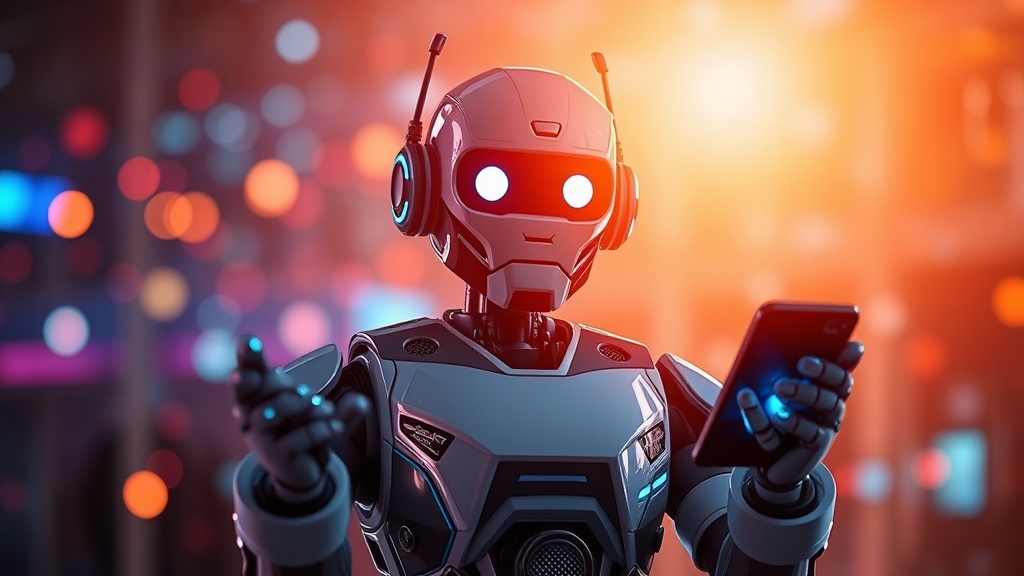
The trajectory of AI chatbot development points toward even more profound changes. We are on the cusp of truly personalized, always-on AI companions that understand us deeply.
1. Enhanced Emotional Intelligence and Personalization: Future chatbots will likely go beyond simply understanding factual questions. They will better discern user sentiment, adapt their tone, and even proactively offer assistance based on a deeper understanding of individual preferences, habits, and emotional states. Imagine an AI that notices your stress levels from your voice or typed queries and suggests a calming exercise or relevant information, or an assistant that knows your dietary restrictions and automatically filters restaurant recommendations.
2. Seamless Integration into Everyday Objects and Environments: AI chatbots won't be confined to screens. They will be embedded into smart homes, vehicles, wearables, and even augmented reality interfaces, offering context-aware assistance. Your car's AI might predict traffic based on your calendar and suggest alternative routes, or your smart glasses could offer real-time translations of signs in a foreign country. The line between our digital and physical worlds will blur further.
3. True Agentic AI and Autonomous Task Completion: The experimental AI agents of today will mature into robust, commercially available systems that can independently achieve complex, long-term goals. We might delegate an AI to manage our personal finances, plan an entire vacation, or even coordinate small business operations with minimal human oversight, going far beyond simple scheduling. These AI agents will learn and adapt over time, becoming increasingly effective at their assigned tasks.
4. Multimodal Generation and Blended Realities: Expect AI to generate not just images and text, but entire videos, interactive 3D models, and even virtual environments directly from text prompts. This will open up new frontiers in entertainment, education, and digital communication, allowing users to create immersive experiences with unprecedented ease. The synthesis of AI-generated content across all modalities will become commonplace.
Conclusion: Embrace the Evolution
The latest AI chatbot features represent a seismic shift in how we interact with technology, moving from passive consumption to active co-creation and intelligent assistance. From visual processing and advanced voice interaction to code generation and multi-step task execution, these tools are redefining productivity, creativity, and accessibility across the U.S. and beyond.
While the rapid evolution can seem daunting, embracing these advancements is key to staying competitive and unlocking new possibilities. By understanding the core capabilities, practicing effective prompt engineering, and maintaining a critical perspective, individuals and businesses can harness the immense power of these intelligent assistants. The future isn't about if you'll use an AI chatbot, but how you'll integrate these sophisticated tools to augment your own intelligence and capabilities. Start experimenting today – the conversation has just begun.
Frequently Asked Questions
Chatbots Are Getting Smarter: More Than Just Text
Just a few years ago, interacting with a chatbot meant typing text and getting text back. Today, that paradigm has shattered. The most significant shift in AI chatbot features is their burgeoning ability to handle, process, and generate multiple types of data – a concept known as multimodality. This isn't just a fancy technical term; it means your chatbot can now see, hear, speak, and create in ways that were once the exclusive domain of specialized software.
Take, for instance, OpenAI's ChatGPT-4V (Vision). Launched in late 2023, this update dramatically expanded ChatGPT's utility by allowing users to upload images and ask questions about them. Imagine snapping a photo of a complicated circuit board and asking for an explanation of its components, or uploading a chart and requesting a data analysis. Users have already leveraged this to debug code from a screenshot, identify plant species, and even explain complex medical diagrams. This visual intelligence isn't limited to analysis; tools like Midjourney V6 and DALL-E 3 (integrated into ChatGPT Plus) allow users to generate incredibly detailed, nuanced images directly from text prompts, producing photorealistic scenes, abstract art, and everything in between with unprecedented control and quality. This has revolutionized fields from graphic design and marketing to game development, enabling rapid prototyping and ideation.
Beyond vision, advancements in speech recognition and synthesis have made voice interaction with chatbots far more natural and efficient. Google's Gemini and Amazon's Alexa (now powered by more advanced large language models, or LLMs) offer significantly improved conversational fluency, reducing the need for precise commands. Users can now hold extended, nuanced conversations, ask follow-up questions, and even interrupt without breaking the chatbot's understanding. This has profound implications for accessibility, making technology more inclusive for individuals with visual impairments or mobility challenges, and for hands-free environments like driving or cooking. The ability to "talk" to your AI is becoming indistinguishable from talking to a very knowledgeable human assistant.
Deep Dive: How Advanced AI Chatbots Boost Productivity and Creativity
The enhanced capabilities of modern AI chatbots are not just parlor tricks; they translate into tangible benefits for productivity and creativity across various sectors. The integration of advanced features means these tools are no longer just information retrieval systems but powerful collaborators.
One of the most impactful developments is the rise of AI agents capable of performing multi-step tasks. While still nascent, the concept behind projects like Auto-GPT and BabyAGI (open-source experimental AI agents) is that a chatbot can be given a goal – say, "research the market for sustainable energy solutions and write a report" – and it will autonomously break it down into sub-tasks, execute them using various tools (like web search, text generation, and data analysis), and iterate until the goal is met. While these experimental tools are complex for average users, commercial platforms are rapidly incorporating similar "agentic" behaviors. For example, Perplexity AI functions as an AI-powered research engine, not only answering questions but providing detailed sources and even generating follow-up questions to guide deeper inquiry. Its "Copilot" feature allows for a dynamic, guided research process, vastly improving the quality and depth of information retrieved compared to a standard search engine.
Code generation and debugging is another area where AI chatbots have made monumental strides. Tools like GitHub Copilot (powered by OpenAI's Codex) and the code interpretation features within ChatGPT and Google Gemini can write boilerplate code, suggest functions, refactor existing code, and even identify and propose fixes for bugs in various programming languages. This capability significantly accelerates software development cycles, reduces repetitive coding tasks, and makes programming more accessible to new learners. Developers can describe what they want to achieve in natural language, and the AI will generate the corresponding code, dramatically lowering the barrier to entry for complex tasks. Data from GitHub indicates that developers using Copilot complete tasks 55% faster, highlighting a clear productivity gain.
Furthermore, chatbots are becoming indispensable tools for content creation and summarization. Imagine needing to condense a 50-page research paper into a concise executive summary, or wanting to draft marketing copy for a new product line across multiple social media platforms. Latest AI models excel at these tasks. They can adapt writing styles, generate creative prompts, translate languages with higher fidelity, and even craft entire articles from a few bullet points. This frees up human creatives to focus on higher-level strategy and ideation, rather than time-consuming drafting and editing. Publishers, marketers, and academics are leveraging these features to streamline workflows and rapidly produce high-quality content tailored to specific audiences.
Practical Tips for Using Advanced AI Chatbot Features
For the average U.S. consumer or professional, understanding how to effectively harness these new chatbot features can unlock significant benefits. It's no longer just about asking questions; it's about crafting prompts and integrating these tools into your daily workflow.
1. Master the Art of Prompt Engineering: The more specific and detailed your prompt, the better the output. When using multi-modal features, describe the context of the image or the intent behind your voice command. For image generation, specify styles, colors, lighting, and camera angles. For text, define the desired tone, audience, format, and length. Experiment with iterative prompting: ask for an initial output, then provide feedback to refine it. For example, instead of "write a marketing email," try "Write a compelling, concise marketing email to small business owners about our new cloud-based accounting software, highlighting cost savings and ease of use. Include a call to action to visit our landing page for a free trial."
2. Leverage Multimodality for Diverse Tasks: * Image Analysis: Upload photos of household items for repair instructions, diagrams for explanations, or even a picture of your pantry to get meal suggestions. * Voice Interaction: Use voice commands for brainstorming sessions, dictating long-form content, or getting real-time information while multitasking. Most modern chatbots can hold context across turns, making voice conversations far more natural. * Document Processing: Upload PDFs or text files to summarize complex reports, extract key information, or translate content. This is incredibly useful for students, researchers, and business professionals.
3. Explore Integrations and Plugins: Many advanced chatbots, particularly ChatGPT Plus, offer plugin ecosystems that extend their capabilities. These plugins connect the chatbot to external services like Wolfram Alpha for complex calculations, Expedia for travel planning, or Zapier for automating workflows across hundreds of apps. These integrations allow the AI to "act" in the real world beyond just generating text, turning it into a truly versatile digital assistant. Always check if your preferred chatbot offers a plugin store or direct integrations with tools you already use.
4. Verify and Refine AI Outputs: While incredibly powerful, AI chatbots are not infallible. They can "hallucinate" – generate plausible but incorrect information – especially when dealing with very niche topics or current events where their training data might be limited. Always cross-reference critical information, fact-check generated content, and review code for accuracy and security vulnerabilities. Treat AI outputs as a highly effective first draft or a powerful assistant, not a definitive authority.
The Future of AI Chatbots: What to Expect Next
The trajectory of AI chatbot development points toward even more profound changes. We are on the cusp of truly personalized, always-on AI companions that understand us deeply.
1. Enhanced Emotional Intelligence and Personalization: Future chatbots will likely go beyond simply understanding factual questions. They will better discern user sentiment, adapt their tone, and even proactively offer assistance based on a deeper understanding of individual preferences, habits, and emotional states. Imagine an AI that notices your stress levels from your voice or typed queries and suggests a calming exercise or relevant information, or an assistant that knows your dietary restrictions and automatically filters restaurant recommendations.
2. Seamless Integration into Everyday Objects and Environments: AI chatbots won't be confined to screens. They will be embedded into smart homes, vehicles, wearables, and even augmented reality interfaces, offering context-aware assistance. Your car's AI might predict traffic based on your calendar and suggest alternative routes, or your smart glasses could offer real-time translations of signs in a foreign country. The line between our digital and physical worlds will blur further.
3. True Agentic AI and Autonomous Task Completion: The experimental AI agents of today will mature into robust, commercially available systems that can independently achieve complex, long-term goals. We might delegate an AI to manage our personal finances, plan an entire vacation, or even coordinate small business operations with minimal human oversight, going far beyond simple scheduling. These AI agents will learn and adapt over time, becoming increasingly effective at their assigned tasks.
4. Multimodal Generation and Blended Realities: Expect AI to generate not just images and text, but entire videos, interactive 3D models, and even virtual environments directly from text prompts. This will open up new frontiers in entertainment, education, and digital communication, allowing users to create immersive experiences with unprecedented ease. The synthesis of AI-generated content across all modalities will become commonplace.
Conclusion: Embrace the Evolution
The latest AI chatbot features represent a seismic shift in how we interact with technology, moving from passive consumption to active co-creation and intelligent assistance. From visual processing and advanced voice interaction to code generation and multi-step task execution, these tools are redefining productivity, creativity, and accessibility across the U.S. and beyond.
While the rapid evolution can seem daunting, embracing these advancements is key to staying competitive and unlocking new possibilities. By understanding the core capabilities, practicing effective prompt engineering, and maintaining a critical perspective, individuals and businesses can harness the immense power of these intelligent assistants. The future isn't about if you'll use an AI chatbot, but how you'll integrate these sophisticated tools to augment your own intelligence and capabilities. Start experimenting today – the conversation has just begun.
More from Science & Tech


Explore More Categories
Keep browsing by topic and build depth around the subjects you care about most.