Interest Rate Forecast Q2 2026: What Businesses and Consumers Need to Know

Quick Summary
Interest Rate Forecast Q2 2026: What Businesses and Consumers Need to Know Are you wondering where interest rates will be in Q2 2026 and how it will impact your mortgage, business...
In This Article
Interest Rate Forecast Q2 2026: What Businesses and Consumers Need to Know
Are you wondering where interest rates will be in Q2 2026 and how it will impact your mortgage, business loans, or savings? This comprehensive forecast provides crucial insights for U.S. businesses and consumers, detailing the macroeconomic forces at play, expert predictions, and actionable strategies to navigate the evolving financial landscape. Understanding these trends now can significantly influence your financial planning and investment decisions over the next two years.
Introduction
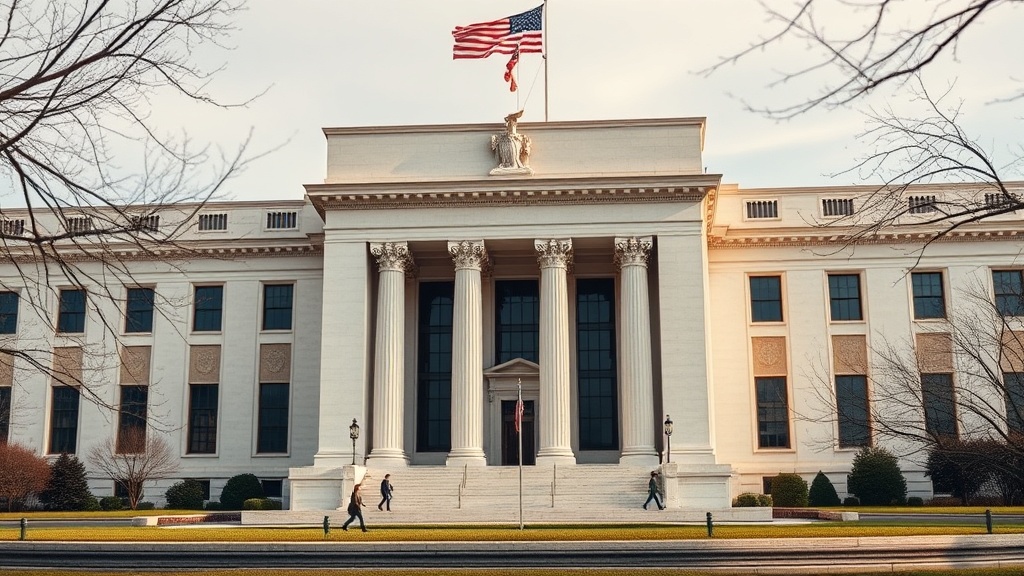
The trajectory of interest rates is a pivotal concern for virtually every American, from the small business owner planning an expansion to the first-time homebuyer, and from the retiree living on fixed income to the consumer managing credit card debt. Q2 2026 might seem distant, but financial markets are forward-looking, and the seeds of future interest rate movements are being sown today. The Federal Reserve's ongoing battle against inflation, coupled with shifts in global economic conditions and domestic policy, paints a complex picture. This article will dissect these factors, offering a well-researched forecast to help you prepare for the financial environment of mid-2026.
The Current Economic Backdrop and the Fed's Stance
To understand Q2 2026, we must first grasp the current economic reality. As of late 2024/early 2025 (our assumed present for this forward-looking article), the U.S. economy is likely navigating the tail end of a disinflationary period, following aggressive rate hikes initiated by the Federal Reserve in 2022-2023. The Federal Funds Rate, which directly influences borrowing costs across the economy, has likely peaked and potentially seen its first few cuts by this point.
The Fed's dual mandate—achieving maximum employment and stable prices (targeting 2% inflation)—remains paramount. Data points like the Consumer Price Index (CPI), Personal Consumption Expenditures (PCE) index, and jobless claims continue to be closely scrutinized. For instance, if core PCE inflation has consistently hovered above 2% but below 3% by early 2025, the Fed would likely be in a "wait and see" mode, cautious about prematurely declaring victory over inflation. Conversely, a sustained drop in inflation coupled with rising unemployment would provide a strong impetus for further rate cuts.
Consider the historical context: during the 2008 financial crisis and the COVID-19 pandemic, the Fed swiftly cut rates to near zero to stimulate the economy. The current cycle, however, is marked by a unique combination of supply-side shocks and robust consumer demand, making the path to normalcy more intricate. According to recent projections from major financial institutions (e.g., Goldman Sachs, JPMorgan Chase, Bloomberg Economics consensus), the federal funds rate is expected to gradually descend from its cycle peak. For instance, many analysts projected the Fed Funds Rate to be in the 4.00-4.50% range by late 2025, suggesting a potential further easing by Q2 2026 if economic conditions warrant.
The Path to Q2 2026: Disinflation, Growth, and Geopolitics
The journey to Q2 2026 will be shaped by several critical factors:
Disinflationary Trend and Labor Market Dynamics:
By Q2 2026, it is highly probable that the U.S. will have achieved a more stable, albeit perhaps not perfectly 2%, inflation rate. The aggressive monetary tightening will have worked its way through the system. However, the exact trajectory will depend on how the labor market holds up. If unemployment creeps up significantly (e.g., reaching 4.5% or 5%), the Fed will have greater room and motivation to cut rates more aggressively. Conversely, a persistently tight labor market, where wage growth outpaces productivity, could slow the pace of rate cuts. For example, if average hourly earnings growth remains above 4% annually, the Fed might keep a higher-for-longer stance for the federal funds rate, even if headline inflation moderates due to energy price declines.
U.S. Economic Growth Trajectory:
The consensus among economists generally points towards a "soft landing" – a slowdown in growth sufficient to tame inflation without triggering a deep recession. However, the definition of "soft landing" is fluid. Stronger-than-expected GDP growth, fueled by consumer spending and business investment, could put upward pressure on long-term rates (like the 10-year Treasury yield) even if the Fed is cutting short-term rates. The interplay between consumer confidence, corporate earnings, and global demand will be crucial. For instance, robust capital expenditure announcements by tech giants or a significant uptick in manufacturing output could signal underlying economic strength that limits the extent of future rate cuts.
Global Economic and Geopolitical Factors:
The U.S. economy does not operate in a vacuum. Global growth, particularly from major trading partners like the Eurozone and China, will influence demand for U.S. goods and services. A slowdown abroad could dampen U.S. inflation and provide the Fed more leeway for cuts. Geopolitical events, such as ongoing conflicts, trade disputes, or energy supply shocks, also carry significant weight. An unexpected surge in oil prices due to a new geopolitical flashpoint, for example, could re-ignite inflationary pressures, forcing the Fed to re-evaluate its easing path. Consider the impact of Russia's invasion of Ukraine on energy prices in 2022 – similar unforeseen events could dramatically alter the forecast.
Fiscal Policy and Government Debt:
The substantial U.S. government debt and ongoing fiscal deficits could also influence interest rates. Increased Treasury issuance to finance these deficits can put upward pressure on long-term bond yields. While the Fed targets the short end of the curve, higher long-term yields translate to more expensive mortgages and corporate bonds. If government spending remains elevated without corresponding revenue increases, the "term premium" (the extra yield investors demand for holding longer-term bonds) could rise, impacting overall borrowing costs by Q2 2026.
Expert Consensus (Hypothetical for Q2 2026): Given these dynamics, a plausible scenario by Q2 2026 suggests the Federal Funds Rate could be in the range of 3.00% to 4.00%. This represents a gradual descent from its peak, reflecting continued disinflation and a modest slowdown in the labor market. The 10-year Treasury yield, a benchmark for mortgages and corporate debt, might settle in the 3.50% to 4.50% range, contingent on inflation expectations and global demand for U.S. bonds. This is a significant decrease from the peaks seen in 2023-2024, but still higher than the near-zero rates of the pre-pandemic era.
Practical Impact for Businesses and Consumers
Understanding this forecast is not merely an academic exercise; it has tangible implications across various financial facets.
For Businesses:
- Borrowing Costs for Expansion & Operations: A lower federal funds rate and subsequently lower prime rate (which tracks the federal funds rate) will translate to reduced interest expenses on variable-rate loans, lines of credit, and new financing for expansion. Businesses considering capital investments, M&A, or inventory financing in Q2 2026 might find more favorable terms compared to 2023-2024. For example, a commercial real estate developer looking to finance a new project could see their construction loan rates drop from 7-8% down to 5-6%, significantly impacting project feasibility and profitability.
- Access to Capital: As borrowing costs decline, banks may become more willing to lend, increasing the overall availability of capital. This could be particularly beneficial for small and medium-sized enterprises (SMEs) that rely on traditional bank financing.
- Cash Management: While lower rates reduce borrowing costs, they also mean lower returns on cash parked in money market accounts or short-term investments. Businesses should review their cash management strategies to balance liquidity needs with maximizing yield, potentially exploring slightly longer-duration instruments if their cash flow allows.
- Debt Refinancing: Companies with outstanding debt (e.g., corporate bonds, term loans) issued at higher rates might find opportunities to refinance at more favorable terms, reducing their interest burden and improving cash flow.
For Consumers:
- Mortgages: This is perhaps the most significant impact. If the 10-year Treasury yield settles in the 3.50-4.50% range, 30-year fixed-rate mortgage rates could be in the 5.0% to 6.5% range by Q2 2026. This would make homeownership more accessible and affordable than in the current high-rate environment. Potential homebuyers who delayed their purchase might find a more amenable market. Homeowners with existing high-interest mortgages (e.g., above 6.5-7%) should closely monitor rates for potential refinancing opportunities. For instance, a homeowner with a $400,000 mortgage at 7.0% could save hundreds of dollars a month by refinancing to 5.5%.
- Credit Cards and Personal Loans: While typically less sensitive to Fed cuts than mortgages, a lower prime rate will eventually trickle down to variable-rate credit cards and personal loans. Consumers carrying credit card debt, often with APRs upwards of 20%, might see a slight reduction, though disciplined debt repayment remains paramount. The cost of a new personal loan for a car or home improvement project could also decrease.
- Savings Accounts & CDs: Lower interest rates are a double-edged sword for savers. High-yield savings accounts and Certificates of Deposit (CDs) that offered attractive returns during the rate hiking cycle will likely see their yields decline. Savers will need to adjust their expectations for passive income from these instruments. For example, a CD yielding 5.0% in 2024 might only offer 3.5-4.0% in Q2 2026. This might encourage some to explore alternative investments with higher (but also riskier) potential returns.
- Auto Loans: New car loan rates, which often follow the prime rate and consumer credit conditions, are also expected to decline, making car purchases slightly more affordable.
Future Outlook: Beyond Q2 2026
Free Weekly Newsletter
Enjoying this guide?
Get the best articles like this one delivered to your inbox every week. No spam.
Looking beyond Q2 2026, the long-term outlook for interest rates remains contingent on a few evolving narratives.
The "New Neutral" Rate:
Economists are debating the "new neutral" federal funds rate – the rate that neither stimulates nor constrains the economy when inflation is stable at 2% and the economy is at full employment. Many now believe the neutral rate is higher than the pre-pandemic estimate of around 2.5%, potentially closer to 3.0-3.5% due to demographic shifts, higher government debt, and potentially higher productivity growth (e.g., from AI). If the neutral rate is indeed higher, it implies that interest rates won't return to the ultra-low levels seen in the 2010s, settling instead at a moderately higher baseline.
Productivity and Innovation:
The pace of technological innovation, particularly in artificial intelligence, could have a profound impact. If AI significantly boosts productivity growth, it could allow for stronger economic growth without stoking inflation, giving the Fed more flexibility to keep rates lower. Conversely, if AI leads to significant job displacement or demand shocks, the economic landscape could shift dramatically, influencing monetary policy.
Demographics and Global Capital Flows:
Aging populations in developed nations could increase the demand for safe assets (like U.S. Treasuries) from pension funds and retirees, potentially putting downward pressure on long-term rates. However, increasing global debt levels could counteract this. The interplay between these massive forces will dictate the long-term supply and demand for capital, and thus, its price.
In essence, Q2 2026 represents a potential midpoint in the return to a more normalized interest rate environment, moving away from the extremes of aggressive tightening. The journey beyond will likely involve navigating persistent, albeit lower, inflation, an evolving labor market, and structural shifts in the global economy.
Conclusion
The Q2 2026 interest rate forecast points towards a more accommodating financial environment than the present, with a probable gradual easing of monetary policy from its recent highs. The Federal Funds Rate is likely to be in the 3.00% to 4.00% range, with 30-year fixed mortgage rates potentially settling between 5.0% and 6.5%. This shift will present both opportunities and challenges for U.S. businesses and consumers.
Key Takeaways:
- Disinflation continues, but the path is uneven. The Fed will remain data-dependent.
- Lower borrowing costs are on the horizon. Businesses can plan for cheaper expansion, and consumers might find more affordable mortgages and auto loans.
- Savers need to adjust expectations. Returns on traditional savings will likely decrease.
- Long-term rates may not return to pre-pandemic lows. A "higher neutral rate" is a growing consensus.
Call to Action: For Businesses: Re-evaluate your debt structure, plan for potential capital expenditures, and optimize your cash management strategies. Consult with financial advisors to stress-test your business plans against various rate scenarios. For Consumers: Monitor mortgage rates for refinancing opportunities, budget for potential lower savings returns, and consider consolidating high-interest debt while rates remain elevated, preparing for future easing. Now is the time to develop a proactive financial strategy to capitalize on the evolving interest rate landscape and ensure your financial well-being in Q2 2026 and beyond.
Frequently Asked Questions
Introduction
The trajectory of interest rates is a pivotal concern for virtually every American, from the small business owner planning an expansion to the first-time homebuyer, and from the retiree living on fixed income to the consumer managing credit card debt. Q2 2026 might seem distant, but financial markets are forward-looking, and the seeds of future interest rate movements are being sown today. The Federal Reserve's ongoing battle against inflation, coupled with shifts in global economic conditions and domestic policy, paints a complex picture. This article will dissect these factors, offering a well-researched forecast to help you prepare for the financial environment of mid-2026.
The Current Economic Backdrop and the Fed's Stance
To understand Q2 2026, we must first grasp the current economic reality. As of late 2024/early 2025 (our assumed present for this forward-looking article), the U.S. economy is likely navigating the tail end of a disinflationary period, following aggressive rate hikes initiated by the Federal Reserve in 2022-2023. The Federal Funds Rate, which directly influences borrowing costs across the economy, has likely peaked and potentially seen its first few cuts by this point.
The Fed's dual mandate—achieving maximum employment and stable prices (targeting 2% inflation)—remains paramount. Data points like the Consumer Price Index (CPI), Personal Consumption Expenditures (PCE) index, and jobless claims continue to be closely scrutinized. For instance, if core PCE inflation has consistently hovered above 2% but below 3% by early 2025, the Fed would likely be in a "wait and see" mode, cautious about prematurely declaring victory over inflation. Conversely, a sustained drop in inflation coupled with rising unemployment would provide a strong impetus for further rate cuts.
Consider the historical context: during the 2008 financial crisis and the COVID-19 pandemic, the Fed swiftly cut rates to near zero to stimulate the economy. The current cycle, however, is marked by a unique combination of supply-side shocks and robust consumer demand, making the path to normalcy more intricate. According to recent projections from major financial institutions (e.g., Goldman Sachs, JPMorgan Chase, Bloomberg Economics consensus), the federal funds rate is expected to gradually descend from its cycle peak. For instance, many analysts projected the Fed Funds Rate to be in the 4.00-4.50% range by late 2025, suggesting a potential further easing by Q2 2026 if economic conditions warrant.
The Path to Q2 2026: Disinflation, Growth, and Geopolitics
The journey to Q2 2026 will be shaped by several critical factors:
Disinflationary Trend and Labor Market Dynamics:
By Q2 2026, it is highly probable that the U.S. will have achieved a more stable, albeit perhaps not perfectly 2%, inflation rate. The aggressive monetary tightening will have worked its way through the system. However, the exact trajectory will depend on how the labor market holds up. If unemployment creeps up significantly (e.g., reaching 4.5% or 5%), the Fed will have greater room and motivation to cut rates more aggressively. Conversely, a persistently tight labor market, where wage growth outpaces productivity, could slow the pace of rate cuts. For example, if average hourly earnings growth remains above 4% annually, the Fed might keep a higher-for-longer stance for the federal funds rate, even if headline inflation moderates due to energy price declines.
U.S. Economic Growth Trajectory:
The consensus among economists generally points towards a "soft landing" – a slowdown in growth sufficient to tame inflation without triggering a deep recession. However, the definition of "soft landing" is fluid. Stronger-than-expected GDP growth, fueled by consumer spending and business investment, could put upward pressure on long-term rates (like the 10-year Treasury yield) even if the Fed is cutting short-term rates. The interplay between consumer confidence, corporate earnings, and global demand will be crucial. For instance, robust capital expenditure announcements by tech giants or a significant uptick in manufacturing output could signal underlying economic strength that limits the extent of future rate cuts.
Global Economic and Geopolitical Factors:
The U.S. economy does not operate in a vacuum. Global growth, particularly from major trading partners like the Eurozone and China, will influence demand for U.S. goods and services. A slowdown abroad could dampen U.S. inflation and provide the Fed more leeway for cuts. Geopolitical events, such as ongoing conflicts, trade disputes, or energy supply shocks, also carry significant weight. An unexpected surge in oil prices due to a new geopolitical flashpoint, for example, could re-ignite inflationary pressures, forcing the Fed to re-evaluate its easing path. Consider the impact of Russia's invasion of Ukraine on energy prices in 2022 – similar unforeseen events could dramatically alter the forecast.
Fiscal Policy and Government Debt:
The substantial U.S. government debt and ongoing fiscal deficits could also influence interest rates. Increased Treasury issuance to finance these deficits can put upward pressure on long-term bond yields. While the Fed targets the short end of the curve, higher long-term yields translate to more expensive mortgages and corporate bonds. If government spending remains elevated without corresponding revenue increases, the "term premium" (the extra yield investors demand for holding longer-term bonds) could rise, impacting overall borrowing costs by Q2 2026.
Expert Consensus (Hypothetical for Q2 2026): Given these dynamics, a plausible scenario by Q2 2026 suggests the Federal Funds Rate could be in the range of 3.00% to 4.00%. This represents a gradual descent from its peak, reflecting continued disinflation and a modest slowdown in the labor market. The 10-year Treasury yield, a benchmark for mortgages and corporate debt, might settle in the 3.50% to 4.50% range, contingent on inflation expectations and global demand for U.S. bonds. This is a significant decrease from the peaks seen in 2023-2024, but still higher than the near-zero rates of the pre-pandemic era.
Practical Impact for Businesses and Consumers
Understanding this forecast is not merely an academic exercise; it has tangible implications across various financial facets.
For Businesses:
- Borrowing Costs for Expansion & Operations: A lower federal funds rate and subsequently lower prime rate (which tracks the federal funds rate) will translate to reduced interest expenses on variable-rate loans, lines of credit, and new financing for expansion. Businesses considering capital investments, M&A, or inventory financing in Q2 2026 might find more favorable terms compared to 2023-2024. For example, a commercial real estate developer looking to finance a new project could see their construction loan rates drop from 7-8% down to 5-6%, significantly impacting project feasibility and profitability.
- Access to Capital: As borrowing costs decline, banks may become more willing to lend, increasing the overall availability of capital. This could be particularly beneficial for small and medium-sized enterprises (SMEs) that rely on traditional bank financing.
- Cash Management: While lower rates reduce borrowing costs, they also mean lower returns on cash parked in money market accounts or short-term investments. Businesses should review their cash management strategies to balance liquidity needs with maximizing yield, potentially exploring slightly longer-duration instruments if their cash flow allows.
- Debt Refinancing: Companies with outstanding debt (e.g., corporate bonds, term loans) issued at higher rates might find opportunities to refinance at more favorable terms, reducing their interest burden and improving cash flow.
For Consumers:
- Mortgages: This is perhaps the most significant impact. If the 10-year Treasury yield settles in the 3.50-4.50% range, 30-year fixed-rate mortgage rates could be in the 5.0% to 6.5% range by Q2 2026. This would make homeownership more accessible and affordable than in the current high-rate environment. Potential homebuyers who delayed their purchase might find a more amenable market. Homeowners with existing high-interest mortgages (e.g., above 6.5-7%) should closely monitor rates for potential refinancing opportunities. For instance, a homeowner with a $400,000 mortgage at 7.0% could save hundreds of dollars a month by refinancing to 5.5%.
- Credit Cards and Personal Loans: While typically less sensitive to Fed cuts than mortgages, a lower prime rate will eventually trickle down to variable-rate credit cards and personal loans. Consumers carrying credit card debt, often with APRs upwards of 20%, might see a slight reduction, though disciplined debt repayment remains paramount. The cost of a new personal loan for a car or home improvement project could also decrease.
- Savings Accounts & CDs: Lower interest rates are a double-edged sword for savers. High-yield savings accounts and Certificates of Deposit (CDs) that offered attractive returns during the rate hiking cycle will likely see their yields decline. Savers will need to adjust their expectations for passive income from these instruments. For example, a CD yielding 5.0% in 2024 might only offer 3.5-4.0% in Q2 2026. This might encourage some to explore alternative investments with higher (but also riskier) potential returns.
- Auto Loans: New car loan rates, which often follow the prime rate and consumer credit conditions, are also expected to decline, making car purchases slightly more affordable.
Future Outlook: Beyond Q2 2026
Looking beyond Q2 2026, the long-term outlook for interest rates remains contingent on a few evolving narratives.
The "New Neutral" Rate:
Economists are debating the "new neutral" federal funds rate – the rate that neither stimulates nor constrains the economy when inflation is stable at 2% and the economy is at full employment. Many now believe the neutral rate is higher than the pre-pandemic estimate of around 2.5%, potentially closer to 3.0-3.5% due to demographic shifts, higher government debt, and potentially higher productivity growth (e.g., from AI). If the neutral rate is indeed higher, it implies that interest rates won't return to the ultra-low levels seen in the 2010s, settling instead at a moderately higher baseline.
Productivity and Innovation:
The pace of technological innovation, particularly in artificial intelligence, could have a profound impact. If AI significantly boosts productivity growth, it could allow for stronger economic growth without stoking inflation, giving the Fed more flexibility to keep rates lower. Conversely, if AI leads to significant job displacement or demand shocks, the economic landscape could shift dramatically, influencing monetary policy.
Demographics and Global Capital Flows:
Aging populations in developed nations could increase the demand for safe assets (like U.S. Treasuries) from pension funds and retirees, potentially putting downward pressure on long-term rates. However, increasing global debt levels could counteract this. The interplay between these massive forces will dictate the long-term supply and demand for capital, and thus, its price.
In essence, Q2 2026 represents a potential midpoint in the return to a more normalized interest rate environment, moving away from the extremes of aggressive tightening. The journey beyond will likely involve navigating persistent, albeit lower, inflation, an evolving labor market, and structural shifts in the global economy.
Conclusion
The Q2 2026 interest rate forecast points towards a more accommodating financial environment than the present, with a probable gradual easing of monetary policy from its recent highs. The Federal Funds Rate is likely to be in the 3.00% to 4.00% range, with 30-year fixed mortgage rates potentially settling between 5.0% and 6.5%. This shift will present both opportunities and challenges for U.S. businesses and consumers.
Key Takeaways:
- Disinflation continues, but the path is uneven. The Fed will remain data-dependent.
- Lower borrowing costs are on the horizon. Businesses can plan for cheaper expansion, and consumers might find more affordable mortgages and auto loans.
- Savers need to adjust expectations. Returns on traditional savings will likely decrease.
- Long-term rates may not return to pre-pandemic lows. A "higher neutral rate" is a growing consensus.
Call to Action: For Businesses: Re-evaluate your debt structure, plan for potential capital expenditures, and optimize your cash management strategies. Consult with financial advisors to stress-test your business plans against various rate scenarios. For Consumers: Monitor mortgage rates for refinancing opportunities, budget for potential lower savings returns, and consider consolidating high-interest debt while rates remain elevated, preparing for future easing. Now is the time to develop a proactive financial strategy to capitalize on the evolving interest rate landscape and ensure your financial well-being in Q2 2026 and beyond.
About Zeebrain Editorial
Our editorial team is dedicated to providing clear, well-researched, and high-utility content for the modern digital landscape. We focus on accuracy, practicality, and insights that matter.
More from Business & Money



Related Guides
Keep exploring this topic
Federal Reserve interest rates: Impact on businesses and investments
Business & Money
The Fascinating History of Money: From Barter to Bitcoin
Business & Money
The Rise of Tiny Empires: Microbusiness Booms
Business & Money
The History of Money: From Barter to Bitcoin (Fiat & Crypto Explained 2025)
Business & Money
Explore More Categories
Keep browsing by topic and build depth around the subjects you care about most.