Cold War's Sunken Nuclear Subs: The Race to Recover Them
Quick Summary
Eight nuclear submarines lie on the ocean floor. Here's why they're a growing environmental threat — and the audacious efforts to bring them back up.
In This Article
Cold War's Sunken Nuclear Subs: The Race to Recover Them
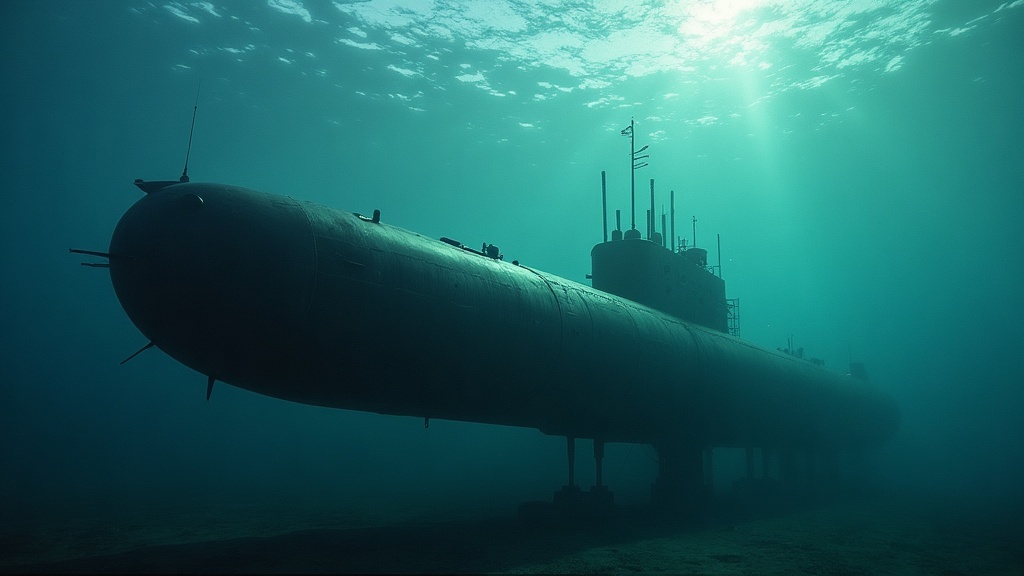
Somewhere beneath the Arctic Ocean, a Soviet submarine sits on the seafloor with its reactor packed in tar. That tar was always meant to be a temporary fix. It expires in 2032. The clock is ticking — and right now, Russia is building a specialised vessel to deal with the problem before it becomes something far worse.

This is not a hypothetical scenario from a thriller novel. It is an active engineering and environmental challenge playing out in real time. There are eight known nuclear submarine wrecks distributed across the world's oceans, each carrying varying quantities of radioactive fuel, spent nuclear waste, and in some cases, nuclear weapons. Most have been sitting there since the Cold War. And while the immediate danger from each wreck is currently assessed as low, "currently" is doing a lot of heavy lifting in that sentence.
The question of what to do with sunken nuclear submarines sits at the intersection of geopolitics, marine engineering, environmental science, and Cold War history. It is messier, more complicated, and more urgent than most people realise.
What Is Actually Down There — and Why It Matters
To understand the scale of the problem, it helps to understand what a nuclear submarine actually contains. The reactor at the heart of each vessel is a compact but potent version of the kind used in civilian power plants. It generates heat through nuclear fission, which boils water into steam, which drives turbines, which power the propellers and onboard systems. That reactor contains enriched uranium fuel rods arranged in a precise configuration — a configuration that must be maintained carefully, because if the rods shift significantly, the reaction can accelerate beyond control.
Beyond the reactor itself, many submarines also carry spent nuclear fuel — the waste left over after fuel rods are used up — and potentially nuclear-armed torpedoes or missiles. In normal operating conditions, all of this is sealed behind layers of shielding and engineering safeguards. At the bottom of the ocean, corroding slowly in saltwater for decades, those safeguards are not what they once were.
Of the eight known wrecks, the US has two: USS Thresher and USS Scorpion, both lost in the 1960s. The former Soviet Union accounts for four, and the Russian Navy two more. Each represents a unique combination of risk factors depending on how it sank, what it was carrying, how deep it lies, and how long it has been submerged.
The Slow Creep of Radioactive Contamination
Monitoring data collected through the 2010s suggests that most of these wrecks are not, at present, causing catastrophic contamination. Samples of seawater and sediment taken around the wrecks show elevated but not immediately alarming radionuclide levels in a handful of cases. Norway has been particularly active in monitoring Soviet-era wrecks in the Barents and Kara Seas, given their proximity to Norwegian fishing waters and coastline.
But the key word in all of this is "yet." Saltwater corrosion is relentless. Metal hulls that were already weakened by whatever sank the vessel continue to degrade. A 2017 scientific paper modelling a significant leak from the Soviet submarine K-27 found that, while the total volume of radioactive material released into open water might be relatively small, the biological effects could be disproportionately large — due to two compounding phenomena: bioaccumulation and biomagnification.
Bioaccumulation is what happens when small organisms — plankton, small fish — absorb radionuclides and store them in tissue rather than expelling them. Biomagnification is what happens next: predators eat those organisms in large quantities, concentrating the radioactivity further up the food chain. By the time you reach the fish that humans catch and eat, the dose can be significantly higher than the ambient water levels would suggest. The communities most at risk are those dependent on subsistence fishing — already often marginalised populations living in Arctic and sub-Arctic regions.
And there is an economic dimension that goes beyond direct health risk. After the Fukushima disaster in 2011, Japan suspended fishing across wide areas of its coastline even where contamination levels were disputed. China later banned Japanese seafood imports outright when treated wastewater discharge began. Perception of radioactive contamination, even when the science is nuanced, can devastate fishing industries overnight. A significant leak from a sunken Cold War submarine would trigger the same dynamic.
The CIA's Audacious Claw Machine — Project Azorian
The most operationally dramatic attempt to recover a sunken nuclear submarine was not driven by environmental concern. It was driven by Cold War espionage. When the Soviet submarine K-129 sank in the Northern Pacific in 1968, the CIA saw an opportunity it could not pass up: recover the vessel, and potentially gain access to Soviet nuclear warheads, cryptographic equipment, and military intelligence.
What followed was Project Azorian — a covert six-year operation that involved constructing a purpose-built salvage ship, the Hughes Glomar Explorer, under the cover story that it was a deep-sea mining vessel funded by eccentric billionaire Howard Hughes. (Hughes agreed to lend his name to the operation, which, historically speaking, is one of the more remarkable footnotes in intelligence history.)
The engineering solution was, essentially, a giant mechanical claw lowered thousands of metres to grip the sunken submarine and winch it to the surface. It was ambitious. It was extraordinarily expensive. And it partially worked — the claw grabbed the submarine but the hull fractured under the stress of being lifted, and most of the wreck, including the reactor section, fell back to the seafloor. The CIA recovered a portion of the vessel, reportedly including two nuclear torpedoes, and classified the operation a success. The reactor, and whatever intelligence it might have offered, remains at the bottom of the Pacific.
Project Azorian illustrates both the ingenuity and the limits of deep-sea submarine recovery. The ocean floor is not a forgiving environment for precision engineering. Pressure, distance, and the degraded state of the target all conspire against clean retrieval.
More Recent Recoveries — Lessons Learned the Hard Way
The 2001 recovery of the Kursk represents the most technically sophisticated large-scale submarine retrieval to date. The Kursk sank in August 2000 following a catastrophic explosion during a Russian Navy exercise, killing all 118 crew members. Unlike the CIA's Cold War operation, this was not a covert intelligence mission — it was an internationally watched salvage operation with significant political and humanitarian dimensions.
The recovery team addressed the claw problem directly: rather than trying to grip the exterior of the hull, they drilled holes through it and inserted specialised mechanical grippers from the inside. This created a more secure hold and reduced the risk of the vessel breaking apart mid-lift. The forward section of the submarine, which contained the torpedo compartment where the initial explosion occurred and which was structurally compromised, was deliberately left behind. Bringing it up posed too great a risk of destabilising the rest of the lift. It was a pragmatic call — and the right one.
A more unusual case is the USS Guitarro, which sank during construction in a shipyard in 1971. In an episode that led to congressional investigations and considerable embarrassment for the US Navy, the partially completed submarine was accidentally flooded by two separate work crews who failed to communicate with each other. Because it sank in shallow water — shallow enough that part of the hull remained above the surface — recovery was straightforward: build a temporary dam, pump out the water, fix the flooding, and refloat the vessel. The Guitarro was eventually commissioned and served in the Navy. It is, in the context of nuclear submarine disasters, about as best-case-scenario as things get.
Russia's Next Move: Recovering K-27 and K-159
The two Soviet wrecks that currently represent the most active concern are K-27 and K-159, both located in seas bordering Russia's Arctic coastline.
K-27 had a reactor coolant leak while in service in 1968 that killed nine crew members from acute radiation poisoning. Rather than attempting to deal with the reactor properly, Soviet authorities flooded the compartment with bitumen — tar — to stabilise it, and then deliberately scuttled the submarine in the Kara Sea in 1981. The Kara Sea had already been used as a dumping ground for Soviet nuclear waste, which gives some sense of the environmental stewardship standards of the era. The tar fix was engineered to remain stable for approximately fifty years, putting the expiry date squarely in the early 2030s.
K-159 has a different and grimly farcical history. Decommissioned in 1989, it sat in port for over a decade awaiting disposal. By the time the Russian Navy attempted to tow it to a dismantling facility in 2003, the hull had corroded so severely that it broke apart during the tow. It sank in the Barents Sea, taking nine of the ten crew members on board with it, along with approximately 800 kilograms of nuclear fuel.
Free Weekly Newsletter
Enjoying this guide?
Get the best articles like this one delivered to your inbox every week. No spam.
Because K-159's hull is too fragile to grip directly, and because its condition makes pumping in pressurised air or internal flotation balloons impractical, the planned recovery approach involves lowering curved cradle-like grippers from barges — grippers designed to embrace the entire hull simultaneously rather than applying localised stress — and then sliding a submersible support platform underneath before attempting the lift. Whether this plan will work as intended depends heavily on the actual condition of the hull when the operation begins, which may not be precisely known until equipment is already in the water.
Why This Problem Will Only Get Harder to Ignore
The eight known Cold War-era wrecks are, in a sense, the easy cases. They are located, they are mapped, and their approximate contents are known. The harder scenario involves future losses. Nuclear submarines continue to operate — roughly 150 are active today across multiple nations — and accidents, while rare, are not impossible. A future sinking in a contested area, or in waters where recovery access is politically complicated, could create a situation far more difficult to manage than anything currently on the table.
There is also the broader issue of precedent and international framework. The recovery of nuclear submarines from international waters raises sovereignty questions, liability questions, and questions about who bears the cost of clean-up when the vessel belongs to a state that may no longer exist — as is the case with several Soviet-era wrecks. The Soviet Union dissolved in 1991; the submarines it sank before that date exist in a complicated legal and political limbo.
What is clear is that leaving these wrecks indefinitely is not a viable long-term strategy. The ocean is patient. Corrosion is not. And the communities, ecosystems, and fishing industries nearest to these sites deserve better than a monitoring programme and a wait-and-see approach.
The engineering challenges are real and significant. But humans have retrieved submarines from extreme depths before — imperfectly, expensively, and sometimes with dramatic failure along the way. Getting better at it is not optional. It is, increasingly, urgent.
Frequently Asked Questions
How many nuclear submarines have sunk?
There are eight known nuclear submarine wrecks worldwide. The United States has lost two — USS Thresher and USS Scorpion. The Soviet Union lost four, and the Russian Navy has lost two more. All eight remain partially or fully submerged on the ocean floor.
Are sunken nuclear submarines currently dangerous to humans?
Based on available monitoring data, the radioactive leakage from most wrecks is currently at low or negligible levels. However, ongoing corrosion could increase leakage over time. Scientific modelling suggests a significant leak could contaminate local fish populations through bioaccumulation and biomagnification, with the greatest impact on communities that depend on subsistence fishing.
What was Project Azorian and did it succeed?
Project Azorian was a covert CIA operation in the early 1970s designed to recover the sunken Soviet submarine K-129 from the Northern Pacific. The operation used a purpose-built ship with a giant mechanical claw to attempt the retrieval. The submarine broke apart during the lift, and most of it — including the reactor — fell back to the seafloor. The CIA recovered a portion of the vessel, reportedly including nuclear torpedoes, and classified the mission a partial success.
What is Russia doing about its sunken nuclear submarines?
Russia is currently developing a specialised recovery vessel to retrieve two sunken submarines: K-27 from the Kara Sea and K-159 from the Barents Sea. K-27 was deliberately scuttled with its reactor sealed in tar, a temporary fix set to expire around 2032. K-159 sank accidentally in 2003 after its corroded hull failed during a tow operation. Both recoveries present significant engineering challenges due to the fragile condition of the hulls.
Could a sunken nuclear submarine cause a meltdown?
It is theoretically possible but considered unlikely. A nuclear reactor depends on its fuel rods being arranged in a precise configuration. If a submarine hull were to collapse and dramatically shift the fuel rods, the reaction could accelerate beyond control. However, the probability of this occurring spontaneously is low. The more credible near-term risk is gradual radioactive leakage from corrosion rather than a sudden meltdown event.
Frequently Asked Questions
What Is Actually Down There — and Why It Matters
To understand the scale of the problem, it helps to understand what a nuclear submarine actually contains. The reactor at the heart of each vessel is a compact but potent version of the kind used in civilian power plants. It generates heat through nuclear fission, which boils water into steam, which drives turbines, which power the propellers and onboard systems. That reactor contains enriched uranium fuel rods arranged in a precise configuration — a configuration that must be maintained carefully, because if the rods shift significantly, the reaction can accelerate beyond control.
Beyond the reactor itself, many submarines also carry spent nuclear fuel — the waste left over after fuel rods are used up — and potentially nuclear-armed torpedoes or missiles. In normal operating conditions, all of this is sealed behind layers of shielding and engineering safeguards. At the bottom of the ocean, corroding slowly in saltwater for decades, those safeguards are not what they once were.
Of the eight known wrecks, the US has two: USS Thresher and USS Scorpion, both lost in the 1960s. The former Soviet Union accounts for four, and the Russian Navy two more. Each represents a unique combination of risk factors depending on how it sank, what it was carrying, how deep it lies, and how long it has been submerged.
The Slow Creep of Radioactive Contamination
Monitoring data collected through the 2010s suggests that most of these wrecks are not, at present, causing catastrophic contamination. Samples of seawater and sediment taken around the wrecks show elevated but not immediately alarming radionuclide levels in a handful of cases. Norway has been particularly active in monitoring Soviet-era wrecks in the Barents and Kara Seas, given their proximity to Norwegian fishing waters and coastline.
But the key word in all of this is "yet." Saltwater corrosion is relentless. Metal hulls that were already weakened by whatever sank the vessel continue to degrade. A 2017 scientific paper modelling a significant leak from the Soviet submarine K-27 found that, while the total volume of radioactive material released into open water might be relatively small, the biological effects could be disproportionately large — due to two compounding phenomena: bioaccumulation and biomagnification.
Bioaccumulation is what happens when small organisms — plankton, small fish — absorb radionuclides and store them in tissue rather than expelling them. Biomagnification is what happens next: predators eat those organisms in large quantities, concentrating the radioactivity further up the food chain. By the time you reach the fish that humans catch and eat, the dose can be significantly higher than the ambient water levels would suggest. The communities most at risk are those dependent on subsistence fishing — already often marginalised populations living in Arctic and sub-Arctic regions.
And there is an economic dimension that goes beyond direct health risk. After the Fukushima disaster in 2011, Japan suspended fishing across wide areas of its coastline even where contamination levels were disputed. China later banned Japanese seafood imports outright when treated wastewater discharge began. Perception of radioactive contamination, even when the science is nuanced, can devastate fishing industries overnight. A significant leak from a sunken Cold War submarine would trigger the same dynamic.
The CIA's Audacious Claw Machine — Project Azorian
The most operationally dramatic attempt to recover a sunken nuclear submarine was not driven by environmental concern. It was driven by Cold War espionage. When the Soviet submarine K-129 sank in the Northern Pacific in 1968, the CIA saw an opportunity it could not pass up: recover the vessel, and potentially gain access to Soviet nuclear warheads, cryptographic equipment, and military intelligence.
What followed was Project Azorian — a covert six-year operation that involved constructing a purpose-built salvage ship, the Hughes Glomar Explorer, under the cover story that it was a deep-sea mining vessel funded by eccentric billionaire Howard Hughes. (Hughes agreed to lend his name to the operation, which, historically speaking, is one of the more remarkable footnotes in intelligence history.)
The engineering solution was, essentially, a giant mechanical claw lowered thousands of metres to grip the sunken submarine and winch it to the surface. It was ambitious. It was extraordinarily expensive. And it partially worked — the claw grabbed the submarine but the hull fractured under the stress of being lifted, and most of the wreck, including the reactor section, fell back to the seafloor. The CIA recovered a portion of the vessel, reportedly including two nuclear torpedoes, and classified the operation a success. The reactor, and whatever intelligence it might have offered, remains at the bottom of the Pacific.
Project Azorian illustrates both the ingenuity and the limits of deep-sea submarine recovery. The ocean floor is not a forgiving environment for precision engineering. Pressure, distance, and the degraded state of the target all conspire against clean retrieval.
More Recent Recoveries — Lessons Learned the Hard Way
The 2001 recovery of the Kursk represents the most technically sophisticated large-scale submarine retrieval to date. The Kursk sank in August 2000 following a catastrophic explosion during a Russian Navy exercise, killing all 118 crew members. Unlike the CIA's Cold War operation, this was not a covert intelligence mission — it was an internationally watched salvage operation with significant political and humanitarian dimensions.
The recovery team addressed the claw problem directly: rather than trying to grip the exterior of the hull, they drilled holes through it and inserted specialised mechanical grippers from the inside. This created a more secure hold and reduced the risk of the vessel breaking apart mid-lift. The forward section of the submarine, which contained the torpedo compartment where the initial explosion occurred and which was structurally compromised, was deliberately left behind. Bringing it up posed too great a risk of destabilising the rest of the lift. It was a pragmatic call — and the right one.
A more unusual case is the USS Guitarro, which sank during construction in a shipyard in 1971. In an episode that led to congressional investigations and considerable embarrassment for the US Navy, the partially completed submarine was accidentally flooded by two separate work crews who failed to communicate with each other. Because it sank in shallow water — shallow enough that part of the hull remained above the surface — recovery was straightforward: build a temporary dam, pump out the water, fix the flooding, and refloat the vessel. The Guitarro was eventually commissioned and served in the Navy. It is, in the context of nuclear submarine disasters, about as best-case-scenario as things get.
Russia's Next Move: Recovering K-27 and K-159
The two Soviet wrecks that currently represent the most active concern are K-27 and K-159, both located in seas bordering Russia's Arctic coastline.
K-27 had a reactor coolant leak while in service in 1968 that killed nine crew members from acute radiation poisoning. Rather than attempting to deal with the reactor properly, Soviet authorities flooded the compartment with bitumen — tar — to stabilise it, and then deliberately scuttled the submarine in the Kara Sea in 1981. The Kara Sea had already been used as a dumping ground for Soviet nuclear waste, which gives some sense of the environmental stewardship standards of the era. The tar fix was engineered to remain stable for approximately fifty years, putting the expiry date squarely in the early 2030s.
K-159 has a different and grimly farcical history. Decommissioned in 1989, it sat in port for over a decade awaiting disposal. By the time the Russian Navy attempted to tow it to a dismantling facility in 2003, the hull had corroded so severely that it broke apart during the tow. It sank in the Barents Sea, taking nine of the ten crew members on board with it, along with approximately 800 kilograms of nuclear fuel.
Because K-159's hull is too fragile to grip directly, and because its condition makes pumping in pressurised air or internal flotation balloons impractical, the planned recovery approach involves lowering curved cradle-like grippers from barges — grippers designed to embrace the entire hull simultaneously rather than applying localised stress — and then sliding a submersible support platform underneath before attempting the lift. Whether this plan will work as intended depends heavily on the actual condition of the hull when the operation begins, which may not be precisely known until equipment is already in the water.
Why This Problem Will Only Get Harder to Ignore
The eight known Cold War-era wrecks are, in a sense, the easy cases. They are located, they are mapped, and their approximate contents are known. The harder scenario involves future losses. Nuclear submarines continue to operate — roughly 150 are active today across multiple nations — and accidents, while rare, are not impossible. A future sinking in a contested area, or in waters where recovery access is politically complicated, could create a situation far more difficult to manage than anything currently on the table.
There is also the broader issue of precedent and international framework. The recovery of nuclear submarines from international waters raises sovereignty questions, liability questions, and questions about who bears the cost of clean-up when the vessel belongs to a state that may no longer exist — as is the case with several Soviet-era wrecks. The Soviet Union dissolved in 1991; the submarines it sank before that date exist in a complicated legal and political limbo.
What is clear is that leaving these wrecks indefinitely is not a viable long-term strategy. The ocean is patient. Corrosion is not. And the communities, ecosystems, and fishing industries nearest to these sites deserve better than a monitoring programme and a wait-and-see approach.
The engineering challenges are real and significant. But humans have retrieved submarines from extreme depths before — imperfectly, expensively, and sometimes with dramatic failure along the way. Getting better at it is not optional. It is, increasingly, urgent.
Frequently Asked Questions
How many nuclear submarines have sunk?
There are eight known nuclear submarine wrecks worldwide. The United States has lost two — USS Thresher and USS Scorpion. The Soviet Union lost four, and the Russian Navy has lost two more. All eight remain partially or fully submerged on the ocean floor.
Are sunken nuclear submarines currently dangerous to humans?
Based on available monitoring data, the radioactive leakage from most wrecks is currently at low or negligible levels. However, ongoing corrosion could increase leakage over time. Scientific modelling suggests a significant leak could contaminate local fish populations through bioaccumulation and biomagnification, with the greatest impact on communities that depend on subsistence fishing.
What was Project Azorian and did it succeed?
Project Azorian was a covert CIA operation in the early 1970s designed to recover the sunken Soviet submarine K-129 from the Northern Pacific. The operation used a purpose-built ship with a giant mechanical claw to attempt the retrieval. The submarine broke apart during the lift, and most of it — including the reactor — fell back to the seafloor. The CIA recovered a portion of the vessel, reportedly including nuclear torpedoes, and classified the mission a partial success.
What is Russia doing about its sunken nuclear submarines?
Russia is currently developing a specialised recovery vessel to retrieve two sunken submarines: K-27 from the Kara Sea and K-159 from the Barents Sea. K-27 was deliberately scuttled with its reactor sealed in tar, a temporary fix set to expire around 2032. K-159 sank accidentally in 2003 after its corroded hull failed during a tow operation. Both recoveries present significant engineering challenges due to the fragile condition of the hulls.
Could a sunken nuclear submarine cause a meltdown?
It is theoretically possible but considered unlikely. A nuclear reactor depends on its fuel rods being arranged in a precise configuration. If a submarine hull were to collapse and dramatically shift the fuel rods, the reaction could accelerate beyond control. However, the probability of this occurring spontaneously is low. The more credible near-term risk is gradual radioactive leakage from corrosion rather than a sudden meltdown event.
About Zeebrain Editorial
Zeebrain publishes independent analysis of markets, investing, personal finance, and business. We disclose affiliate relationships, never accept payment for coverage, and fact-check all claims against primary sources. Read our editorial policy →
How this article was produced: Zeebrain articles are created with AI assistance from primary sources (including cited videos and market data) and reviewed under our editorial standards before publication. Spot an error? Tell us and we will correct it.
More from Curiosities



Related Guides
Keep exploring this topic
Neutron Bombs: Do They Really Kill People, Spare Cities?
Curiosities · neutron bomb · nuclear weapons
Who Is Pope Francis? Life, Legacy, and His Impact on the Modern Church
Curiosities
How Was William Wallace Captured? The Real Story
Curiosities
Daylight Saving Time Debate: The Curious Case of Our Clocks
Curiosities
Explore More Categories
Keep browsing by topic and build depth around the subjects you care about most.