Is a Christmas Market River Cruise Worth It? A Danube Diary
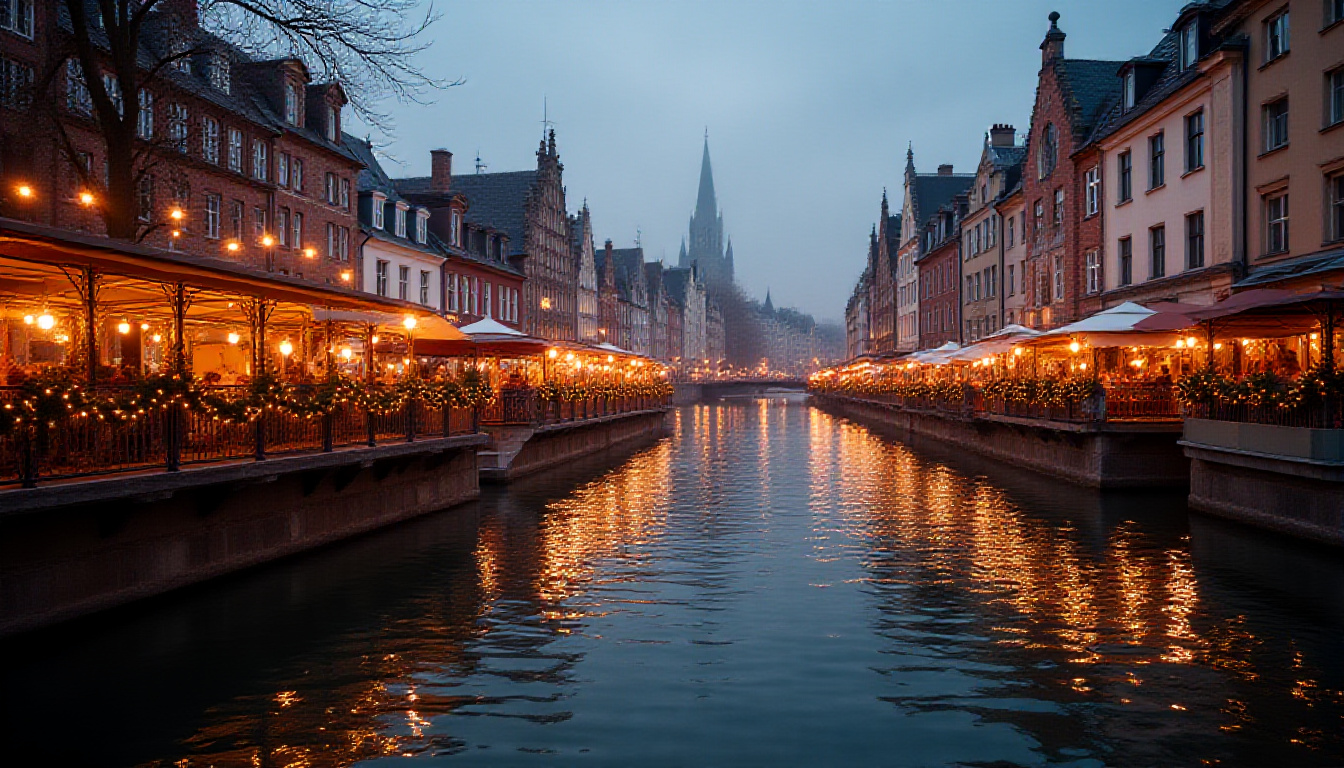
Quick Summary
Thinking about a Christmas market cruise on the Danube? Here's an honest, first-person guide covering food, ports, ship life, and whether it's truly worth it.
In This Article
The Moment I Stopped Overthinking and Booked the Cruise
Last Christmas, I dragged myself — and my mum — across five European countries by train in twelve days. We ate magnificently, laughed constantly, and arrived home completely shattered. The magic was real, but so was the exhaustion. So when the idea of a Christmas market river cruise down the Danube came up, I didn't need much convincing. Unpack once. Wake up somewhere new. Let someone else worry about the logistics. After eight days aboard Viking's Gulvig, visiting three countries and five destinations entirely wrapped in fairy lights and the scent of mulled wine, I can tell you: this is the best way to experience European Christmas markets — and I say that as someone who swore she was not a cruise person.
This is what those eight days actually looked like, what surprised me, what I'd do differently, and everything you need to know before you book.
What Life Aboard a Christmas Market Cruise Actually Feels Like
The Viking Gulvig is a 443-foot longship designed for 190 guests — intimate enough that you recognise faces at breakfast, spacious enough that you never feel crowded. We booked a veranda stateroom: a proper double bed, a private bathroom, generous wardrobe storage, and a small private balcony overlooking the Danube. In December, the balcony was mostly decorative — it was hovering around freezing for most of the trip — but on a warmer season cruise, it would be the first place I'd take my morning coffee.
What struck me immediately was how seamlessly everything flowed. Breakfast, lunch, and dinner are all included in the fare and served in a warm, unhurried dining room. The food rotates daily with regional specialties — steak tartare set in a savoury jelly one evening (very European, very acquired taste), followed by the most tender lamb shoulder in red wine reduction I've eaten in years. The kitchen clearly does its homework on local cuisine, and that matters on a trip defined by food culture.
The lounge bar becomes the social heartbeat of the ship by evening. We opted for the silver drinks package, which covered everything — and given how enthusiastically we were sampling every glühwein variant at the markets, it paid for itself swiftly. There's live entertainment most nights. There are quiet corners with books. There is always someone at the bar who has a fascinating story about why they're here.
The practical genius of the river cruise format is this: you sleep while the ship moves. You go to bed in Regensburg and wake up in Passau. No packing, no train stations, no dragging luggage across cobblestones in the rain.
Regensburg: Bavaria's Best-Kept Medieval Secret
Regensburg was our first port, and it set the bar almost unfairly high. This is one of Germany's most remarkably preserved medieval cities — a UNESCO World Heritage Site where Roman gates still stand and 12th-century stone bridges still carry foot traffic. During World War II, while much of Germany's historic architecture was lost to bombing, Regensburg was largely spared. Walking its cobblestone streets feels genuinely time-warped in a way that reconstructed old towns simply cannot replicate.
Viking's guided walking tour was excellent — not the kind where a guide reads facts at you, but the kind where you learn that the old stone bridge, hand-built in just eleven years during the 1100s, was so strategically vital it essentially made Regensburg Bavaria's capital before Munich ever entered the picture. That kind of storytelling makes history stick.
The Christmas markets here are plural — six of them, scattered across the city. Some are craft-focused; others are almost entirely food. If you're visiting on a weekend, go to the markets in the daytime. We made the mistake of arriving on a Saturday evening during a downpour and were immediately overwhelmed. The following morning, in softer light with thinner crowds, was a completely different experience.
What to eat in Regensburg:
- Bratwurst — specifically wild boar bratwurst, served in a golden bun with a spoonful of sharp horseradish. The flavour is deeper and richer than standard pork.
- Reibekuchen — shredded potato fritters fried until crisp, served with cold applesauce. Simple, perfect, warming.
- Apple fritter — essentially a donut filled with apple and dusted in cinnamon sugar. Eat it immediately.
- The original bratwurst — stop at the restaurant near the old stone bridge that has been serving the same white sausage recipe since the bridge workers were building the Roman crossing in the 11th century. It's cash only, it's historic, and it's magnificent with sweet Regensburg mustard and sauerkraut.
A critical note for Germany overall: bring cash. Many restaurants, market stalls, and smaller establishments don't accept cards. Small bills and coins will serve you far better than tapping your phone.
Passau: The Venetian City Bavaria Forgot to Tell You About
If Regensburg is Bavaria's medieval showstopper, Passau is its romantic surprise. Positioned at the confluence of three rivers — the Danube, the Inn, and the Ilz — Passau has earned the nickname Venice of Bavaria, and from the right vantage point on a clear day, you can see all three rivers merging in distinct ribbons of colour.
After a catastrophic fire in 1662, the city was rebuilt by Italian architects, which explains why its streets feel unexpectedly Mediterranean — ornate baroque facades, dramatic church towers, arched doorways in warm ochre and terracotta. Walking through Passau in December, with Christmas lights strung between the Italian-style buildings and a light mist off the river, is one of the most genuinely cinematic experiences I've had travelling in Europe.
The Viking guided tour included a gingerbread class with a local master confectioner, who walked us through the evolution of the cookie from ancient honey-based recipes to the sugar-forward versions we recognise today. It sounds like a tourist gimmick; it was genuinely fascinating. The tour concluded inside St. Stephen's Cathedral, a baroque church built over 450 years ago with frescoes stretching across every inch of the ceiling — the kind of interior that makes you stop talking mid-sentence.
The Passau Christmas market is smaller than Regensburg's but arguably more charming for it. It wasn't overcrowded, the food vendors were doing things we hadn't seen elsewhere, and the whole atmosphere felt like a genuinely local celebration rather than a tourist attraction.
What to eat in Passau:
- Hamro — a folded bread pocket filled with cheese and ham (called Schinken), topped with sour cream and chives. Think: the hot pocket's sophisticated Austrian cousin.
- Bread bowl stew — a thick vegetable and pork stew served inside a hollowed sourdough loaf, topped with caramelised onions and sour cream. You eat the bowl.
- Schupfnudeln — hand-rolled potato noodles tossed with sauerkraut, ham, and paprika. Tangy, filling, and exactly what you want after walking in the cold.
- Rum punch — the local Christmas market drink, a warm blend of rum, fruit juice, and spice. It's lighter than glühwein but just as effective at keeping the chill out.
The Danube Cruise Corridor and Why Fog Isn't the Disaster It Sounds Like
Between ports, the ship sails through the Wachau Valley — a UNESCO-protected stretch of the Danube flanked by medieval monasteries, ruined castles, and hillside vineyards. On a clear day, it's reportedly one of the most beautiful river landscapes in Europe. On our trip, a thick fog settled over the corridor, reducing the view to moody grey silhouettes and the occasional outline of a castle emerging from the mist.
I'll be honest: it was still beautiful. Cinematic in a completely different way. And the upside of a foggy sailing day is that you get to do exactly what you probably needed: stay in bed, drink coffee, watch the world drift past from your stateroom window, and feel completely guilt-free about it.
The ship docked near Dürnstein, giving us access to Göttweig Abbey — a Benedictine monastery first established in 1083, rebuilt in full baroque splendour after a fire in 1711. The imperial staircase alone, crowned by a ceiling fresco depicting Emperor Charles VI as Apollo, is worth the detour. We upgraded to a food experience at the abbey, learning to make Marillenknödel — Austria's beloved apricot dumplings, which the monastery produces using apricots from its own orchards. The abbey largely funds itself through agriculture, producing wine, spirits, and preserves. It is, in the most literal sense, a working monastery that has fed its community for a thousand years.
Practical Tips for a Christmas Market Cruise on the Danube
After eight days, a few things crystallised into genuine advice:
Book the drinks package early. If you're someone who enjoys wine at dinner and a warm drink at every market stall (and you will be, I promise), the silver package pays for itself within two days.
Include gratuity in your booking. Some cruise lines add service charges daily; Viking allows you to bundle gratuitities upfront. It removes a small but constant mental calculation and means you can simply enjoy the crew rather than quietly calculating percentages.
Visit Christmas markets in the morning or early afternoon. Evenings on weekends are overwhelming — beautiful, but shoulder-to-shoulder crowded. Daytime visits are calmer, vendors are more relaxed, and you can actually examine the handcrafted goods rather than grabbing at them.
Bring cash in small denominations. Germany in particular operates heavily on cash. Coins are useful for markets; larger bills can be hard to break at small stalls.
Learn some basic phrases. Small Bavarian and Austrian towns often have limited English, particularly at market stalls. Even a few words of German — Danke, Bitte, Wie viel kostet das? — changes interactions entirely. I used Rosetta Stone in the months before the trip specifically to practise ordering and handling money, and it made a tangible difference.
Free Weekly Newsletter
Enjoying this guide?
Get the best articles like this one delivered to your inbox every week. No spam.
Don't rush the glühwein. It arrives piping hot. Wait. Burn your tongue once and you'll understand why this tip exists.
Collect the mugs strategically. Every market stall serves glühwein in a unique souvenir mug. You pay a small deposit and can return it for your money back, or keep it as a memento. By the end of the trip, you'll want criteria for which ones make the cut. My favourite was a tiny red Santa hat mug from Regensburg. Zero regrets.
Is a Christmas Market River Cruise Actually Worth It?
Here's my honest answer: yes — and specifically because of what it removes.
A self-planned Christmas market trip across multiple European countries is exhilarating but exhausting. You carry luggage between trains, navigate foreign transit apps, lose half a day to transportation between cities, and arrive at each destination already tired. The magic is real, but so is the friction.
A Christmas market river cruise eliminates the friction almost entirely. You unpack once. Your accommodation moves with you. Every port is curated and walkable. The guided tours are optional but consistently excellent — the kind of local knowledge that genuinely enriches a visit rather than just filling time. The food on board is good and abundant. The evenings are warm and social. And on the days when the weather turns grey and cold, you are already home.
For solo travellers, couples, and multi-generational groups alike, the river cruise format transforms a potentially stressful itinerary into something that feels — at every stage — like an actual holiday.
I boarded the Gulvig nervous and a little sceptical. I disembarked a convert.
Frequently Asked Questions
What is a Christmas market river cruise and how does it work?
A Christmas market river cruise is a guided river cruise — typically along the Danube or Rhine — that stops at multiple European cities known for their traditional Christmas markets. You board the ship at your starting port, and the vessel sails overnight between destinations while you sleep. Each day you dock at a new city, spend the day exploring markets and historic sites, then return to the ship for dinner and the journey to the next port. Meals and most activities are included in the fare.
Which river cruise line is best for European Christmas markets?
Viking River Cruises is widely considered one of the best options for Christmas market itineraries, particularly on the Danube. Their longships are purpose-built for European rivers, accommodating around 190 guests for a more intimate experience. They offer comprehensive guided tours at each port, regional dining on board, and well-planned itineraries that balance exploration time with relaxation. Other reputable lines include Avalon Waterways, AmaWaterways, and Scenic.
When is the best time to go on a Danube Christmas market cruise?
Most Christmas market cruises operate from mid-November through late December, with markets typically running from late November until Christmas Eve. Early December tends to offer a good balance — markets are open and festive, crowds are manageable, and the atmosphere is fully established. Avoid peak weekends if possible, as popular markets like Regensburg can become overwhelmingly crowded on Saturday and Sunday evenings.
What should I pack for a winter river cruise on the Danube?
Layer strategically. Temperatures in the Danube corridor in December typically range from -2°C to 8°C (28–46°F), with rain and fog common. Essential items include a waterproof outer layer, thermal base layers, waterproof walking boots with grip for cobblestones, warm gloves, and a hat. Smart-casual clothing works well for evenings on the ship — Viking doesn't enforce a formal dress code, but passengers tend to dress up slightly for dinner. Also bring a small cross-body bag for cash, market purchases, and your souvenir mug collection.
Frequently Asked Questions
The Moment I Stopped Overthinking and Booked the Cruise
Last Christmas, I dragged myself — and my mum — across five European countries by train in twelve days. We ate magnificently, laughed constantly, and arrived home completely shattered. The magic was real, but so was the exhaustion. So when the idea of a Christmas market river cruise down the Danube came up, I didn't need much convincing. Unpack once. Wake up somewhere new. Let someone else worry about the logistics. After eight days aboard Viking's Gulvig, visiting three countries and five destinations entirely wrapped in fairy lights and the scent of mulled wine, I can tell you: this is the best way to experience European Christmas markets — and I say that as someone who swore she was not a cruise person.
This is what those eight days actually looked like, what surprised me, what I'd do differently, and everything you need to know before you book.
What Life Aboard a Christmas Market Cruise Actually Feels Like
The Viking Gulvig is a 443-foot longship designed for 190 guests — intimate enough that you recognise faces at breakfast, spacious enough that you never feel crowded. We booked a veranda stateroom: a proper double bed, a private bathroom, generous wardrobe storage, and a small private balcony overlooking the Danube. In December, the balcony was mostly decorative — it was hovering around freezing for most of the trip — but on a warmer season cruise, it would be the first place I'd take my morning coffee.
What struck me immediately was how seamlessly everything flowed. Breakfast, lunch, and dinner are all included in the fare and served in a warm, unhurried dining room. The food rotates daily with regional specialties — steak tartare set in a savoury jelly one evening (very European, very acquired taste), followed by the most tender lamb shoulder in red wine reduction I've eaten in years. The kitchen clearly does its homework on local cuisine, and that matters on a trip defined by food culture.
The lounge bar becomes the social heartbeat of the ship by evening. We opted for the silver drinks package, which covered everything — and given how enthusiastically we were sampling every glühwein variant at the markets, it paid for itself swiftly. There's live entertainment most nights. There are quiet corners with books. There is always someone at the bar who has a fascinating story about why they're here.
The practical genius of the river cruise format is this: you sleep while the ship moves. You go to bed in Regensburg and wake up in Passau. No packing, no train stations, no dragging luggage across cobblestones in the rain.
Regensburg: Bavaria's Best-Kept Medieval Secret
Regensburg was our first port, and it set the bar almost unfairly high. This is one of Germany's most remarkably preserved medieval cities — a UNESCO World Heritage Site where Roman gates still stand and 12th-century stone bridges still carry foot traffic. During World War II, while much of Germany's historic architecture was lost to bombing, Regensburg was largely spared. Walking its cobblestone streets feels genuinely time-warped in a way that reconstructed old towns simply cannot replicate.
Viking's guided walking tour was excellent — not the kind where a guide reads facts at you, but the kind where you learn that the old stone bridge, hand-built in just eleven years during the 1100s, was so strategically vital it essentially made Regensburg Bavaria's capital before Munich ever entered the picture. That kind of storytelling makes history stick.
The Christmas markets here are plural — six of them, scattered across the city. Some are craft-focused; others are almost entirely food. If you're visiting on a weekend, go to the markets in the daytime. We made the mistake of arriving on a Saturday evening during a downpour and were immediately overwhelmed. The following morning, in softer light with thinner crowds, was a completely different experience.
What to eat in Regensburg:
- Bratwurst — specifically wild boar bratwurst, served in a golden bun with a spoonful of sharp horseradish. The flavour is deeper and richer than standard pork.
- Reibekuchen — shredded potato fritters fried until crisp, served with cold applesauce. Simple, perfect, warming.
- Apple fritter — essentially a donut filled with apple and dusted in cinnamon sugar. Eat it immediately.
- The original bratwurst — stop at the restaurant near the old stone bridge that has been serving the same white sausage recipe since the bridge workers were building the Roman crossing in the 11th century. It's cash only, it's historic, and it's magnificent with sweet Regensburg mustard and sauerkraut.
A critical note for Germany overall: bring cash. Many restaurants, market stalls, and smaller establishments don't accept cards. Small bills and coins will serve you far better than tapping your phone.
Passau: The Venetian City Bavaria Forgot to Tell You About
If Regensburg is Bavaria's medieval showstopper, Passau is its romantic surprise. Positioned at the confluence of three rivers — the Danube, the Inn, and the Ilz — Passau has earned the nickname Venice of Bavaria, and from the right vantage point on a clear day, you can see all three rivers merging in distinct ribbons of colour.
After a catastrophic fire in 1662, the city was rebuilt by Italian architects, which explains why its streets feel unexpectedly Mediterranean — ornate baroque facades, dramatic church towers, arched doorways in warm ochre and terracotta. Walking through Passau in December, with Christmas lights strung between the Italian-style buildings and a light mist off the river, is one of the most genuinely cinematic experiences I've had travelling in Europe.
The Viking guided tour included a gingerbread class with a local master confectioner, who walked us through the evolution of the cookie from ancient honey-based recipes to the sugar-forward versions we recognise today. It sounds like a tourist gimmick; it was genuinely fascinating. The tour concluded inside St. Stephen's Cathedral, a baroque church built over 450 years ago with frescoes stretching across every inch of the ceiling — the kind of interior that makes you stop talking mid-sentence.
The Passau Christmas market is smaller than Regensburg's but arguably more charming for it. It wasn't overcrowded, the food vendors were doing things we hadn't seen elsewhere, and the whole atmosphere felt like a genuinely local celebration rather than a tourist attraction.
What to eat in Passau:
- Hamro — a folded bread pocket filled with cheese and ham (called Schinken), topped with sour cream and chives. Think: the hot pocket's sophisticated Austrian cousin.
- Bread bowl stew — a thick vegetable and pork stew served inside a hollowed sourdough loaf, topped with caramelised onions and sour cream. You eat the bowl.
- Schupfnudeln — hand-rolled potato noodles tossed with sauerkraut, ham, and paprika. Tangy, filling, and exactly what you want after walking in the cold.
- Rum punch — the local Christmas market drink, a warm blend of rum, fruit juice, and spice. It's lighter than glühwein but just as effective at keeping the chill out.
The Danube Cruise Corridor and Why Fog Isn't the Disaster It Sounds Like
Between ports, the ship sails through the Wachau Valley — a UNESCO-protected stretch of the Danube flanked by medieval monasteries, ruined castles, and hillside vineyards. On a clear day, it's reportedly one of the most beautiful river landscapes in Europe. On our trip, a thick fog settled over the corridor, reducing the view to moody grey silhouettes and the occasional outline of a castle emerging from the mist.
I'll be honest: it was still beautiful. Cinematic in a completely different way. And the upside of a foggy sailing day is that you get to do exactly what you probably needed: stay in bed, drink coffee, watch the world drift past from your stateroom window, and feel completely guilt-free about it.
The ship docked near Dürnstein, giving us access to Göttweig Abbey — a Benedictine monastery first established in 1083, rebuilt in full baroque splendour after a fire in 1711. The imperial staircase alone, crowned by a ceiling fresco depicting Emperor Charles VI as Apollo, is worth the detour. We upgraded to a food experience at the abbey, learning to make Marillenknödel — Austria's beloved apricot dumplings, which the monastery produces using apricots from its own orchards. The abbey largely funds itself through agriculture, producing wine, spirits, and preserves. It is, in the most literal sense, a working monastery that has fed its community for a thousand years.
Practical Tips for a Christmas Market Cruise on the Danube
After eight days, a few things crystallised into genuine advice:
Book the drinks package early. If you're someone who enjoys wine at dinner and a warm drink at every market stall (and you will be, I promise), the silver package pays for itself within two days.
Include gratuity in your booking. Some cruise lines add service charges daily; Viking allows you to bundle gratuitities upfront. It removes a small but constant mental calculation and means you can simply enjoy the crew rather than quietly calculating percentages.
Visit Christmas markets in the morning or early afternoon. Evenings on weekends are overwhelming — beautiful, but shoulder-to-shoulder crowded. Daytime visits are calmer, vendors are more relaxed, and you can actually examine the handcrafted goods rather than grabbing at them.
Bring cash in small denominations. Germany in particular operates heavily on cash. Coins are useful for markets; larger bills can be hard to break at small stalls.
Learn some basic phrases. Small Bavarian and Austrian towns often have limited English, particularly at market stalls. Even a few words of German — Danke, Bitte, Wie viel kostet das? — changes interactions entirely. I used Rosetta Stone in the months before the trip specifically to practise ordering and handling money, and it made a tangible difference.
Don't rush the glühwein. It arrives piping hot. Wait. Burn your tongue once and you'll understand why this tip exists.
Collect the mugs strategically. Every market stall serves glühwein in a unique souvenir mug. You pay a small deposit and can return it for your money back, or keep it as a memento. By the end of the trip, you'll want criteria for which ones make the cut. My favourite was a tiny red Santa hat mug from Regensburg. Zero regrets.
Is a Christmas Market River Cruise Actually Worth It?
Here's my honest answer: yes — and specifically because of what it removes.
A self-planned Christmas market trip across multiple European countries is exhilarating but exhausting. You carry luggage between trains, navigate foreign transit apps, lose half a day to transportation between cities, and arrive at each destination already tired. The magic is real, but so is the friction.
A Christmas market river cruise eliminates the friction almost entirely. You unpack once. Your accommodation moves with you. Every port is curated and walkable. The guided tours are optional but consistently excellent — the kind of local knowledge that genuinely enriches a visit rather than just filling time. The food on board is good and abundant. The evenings are warm and social. And on the days when the weather turns grey and cold, you are already home.
For solo travellers, couples, and multi-generational groups alike, the river cruise format transforms a potentially stressful itinerary into something that feels — at every stage — like an actual holiday.
I boarded the Gulvig nervous and a little sceptical. I disembarked a convert.
Frequently Asked Questions
What is a Christmas market river cruise and how does it work?
A Christmas market river cruise is a guided river cruise — typically along the Danube or Rhine — that stops at multiple European cities known for their traditional Christmas markets. You board the ship at your starting port, and the vessel sails overnight between destinations while you sleep. Each day you dock at a new city, spend the day exploring markets and historic sites, then return to the ship for dinner and the journey to the next port. Meals and most activities are included in the fare.
Which river cruise line is best for European Christmas markets?
Viking River Cruises is widely considered one of the best options for Christmas market itineraries, particularly on the Danube. Their longships are purpose-built for European rivers, accommodating around 190 guests for a more intimate experience. They offer comprehensive guided tours at each port, regional dining on board, and well-planned itineraries that balance exploration time with relaxation. Other reputable lines include Avalon Waterways, AmaWaterways, and Scenic.
When is the best time to go on a Danube Christmas market cruise?
Most Christmas market cruises operate from mid-November through late December, with markets typically running from late November until Christmas Eve. Early December tends to offer a good balance — markets are open and festive, crowds are manageable, and the atmosphere is fully established. Avoid peak weekends if possible, as popular markets like Regensburg can become overwhelmingly crowded on Saturday and Sunday evenings.
What should I pack for a winter river cruise on the Danube?
Layer strategically. Temperatures in the Danube corridor in December typically range from -2°C to 8°C (28–46°F), with rain and fog common. Essential items include a waterproof outer layer, thermal base layers, waterproof walking boots with grip for cobblestones, warm gloves, and a hat. Smart-casual clothing works well for evenings on the ship — Viking doesn't enforce a formal dress code, but passengers tend to dress up slightly for dinner. Also bring a small cross-body bag for cash, market purchases, and your souvenir mug collection.
About Zeebrain Editorial
Zeebrain publishes independent analysis of markets, investing, personal finance, and business. We disclose affiliate relationships, never accept payment for coverage, and fact-check all claims against primary sources. Read our editorial policy →
How this article was produced: Zeebrain articles are created with AI assistance from primary sources (including cited videos and market data) and reviewed under our editorial standards before publication. Spot an error? Tell us and we will correct it.
More from Travel & Places



Related Guides
Keep exploring this topic
3 Days in Nassau: What Most Visitors Miss in the Bahamas
Travel & Places
2 Days in Budapest in Winter: The Ultimate Travel Guide
Travel & Places
Foodie Travel: 9 Culinary Capitals Every Gourmet Should Visit
Travel & Places
Leave No Trace, Take Only Memories: A Guide to Sustainable Travel Practices for U.S. Travelers
Travel & Places
Explore More Categories
Keep browsing by topic and build depth around the subjects you care about most.