US Dollar Dominance Under Pressure: What It Means for Your Money
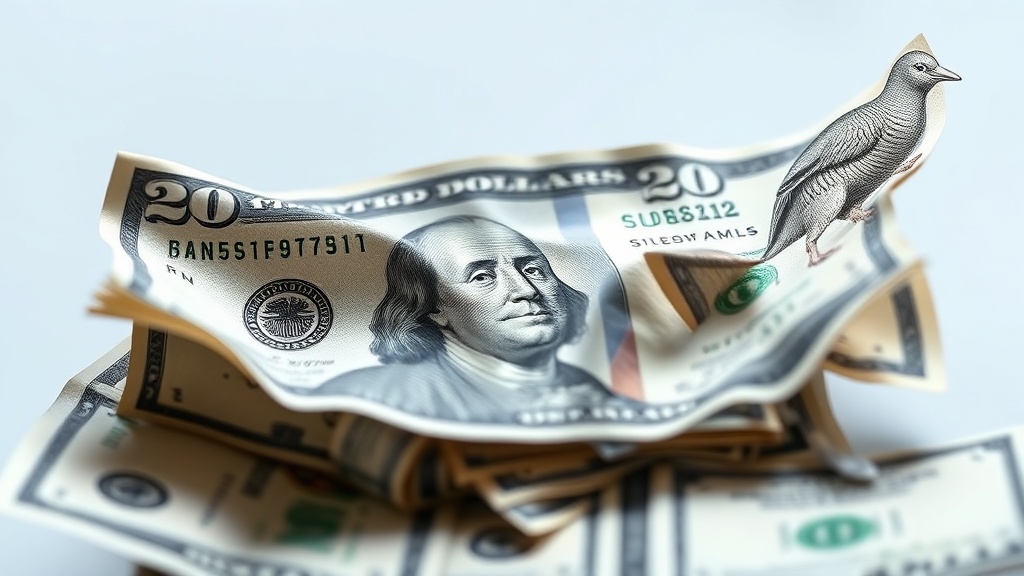
Quick Summary
How shifts in US dollar dominance affect your finances. Explore the structural changes reshaping global currencies and smart investment strategies for uncertain times.
In This Article
US Dollar Dominance Under Pressure: What It Means for Your Money
The US dollar's role as the world's reserve currency has been a cornerstone of American economic power and prosperity for decades. But that position is facing unprecedented challenges. Understanding what's happening—and why—is critical for protecting your savings, managing your investments, and planning your financial future.
Related Post

In 2000, 71% of global foreign exchange reserves were held in US dollars. By mid-2024, that figure had declined to approximately 59%, according to International Monetary Fund data. That 12-percentage-point drop over two decades signals a meaningful shift in how the world manages its money. While reserve currency transitions typically unfold over decades rather than years, the direction of travel matters enormously for anyone earning, saving, or investing.
The Dollar Is Losing Ground — And Your Wallet Will Feel It
The decline of dollar dominance isn't gradual background noise. It's a measurable, accelerating shift with real consequences for purchasing power and investment returns.
Several structural forces are driving this change:
Changing trade patterns: Global trade relationships are diversifying. As emerging markets grow and develop independent trade corridors, they're reducing reliance on US financial infrastructure. The BRICS nations (Brazil, Russia, India, China, and South Africa, plus newer members) are explicitly working to create alternatives to dollar-dependent systems.
Energy market shifts: Energy is the foundation of global trade. As production and consumption patterns change, particularly with China's growing influence in Asian markets, the mechanisms for energy settlement are evolving. These discussions happen gradually and operate outside major news cycles, but they matter significantly for currency demand.
Fiscal pressures on the US: The federal government faces structural budget challenges. As of 2024, total US national debt exceeded $36 trillion. When a nation runs persistent deficits and finances them through monetary expansion, the value of its currency can face pressure over time.
These factors alone wouldn't destabilize the dollar. Together, they create the conditions for a multi-decade transition—the kind that reshapes investment returns and wealth preservation strategies.
How the Dollar Became the World's Reserve Currency — And Why That Status Is Worth Defending
The US dollar's dominance didn't happen by accident. It was deliberately engineered through the Bretton Woods agreement of 1944, when representatives from 44 nations agreed that the US dollar would become the world's primary reserve currency. The logic was straightforward: the US held the largest gold reserves, had emerged from World War II with an intact economy, and was positioned as the most stable major power.
Reserve currency status carries tangible economic advantages:
- Global energy trades are denominated in dollars, requiring all importing nations to hold dollar reserves
- International trade contracts are overwhelmingly priced in USD, creating constant global demand for the currency
- Foreign governments hold dollar-denominated assets as their primary reserves
- US borrowing costs stay lower because global demand for dollar assets keeps yields compressed
These advantages translate directly into benefits for Americans. Access to cheaper borrowing, the ability to export inflation internationally, and the premium value placed on dollar-denominated assets all contributed to elevated living standards. For most Americans, these benefits went unnoticed because they were built into the baseline economic system.
But as demand changes, so do these advantages. This is why understanding the structural shift matters for your financial planning.
The 1971 Turning Point and Its Long-Term Implications
In 1971, President Nixon suspended the dollar's convertibility into gold, effectively ending the Bretton Woods system. The dollar became a fiat currency—backed not by physical gold reserves but by institutional trust and the US government's economic and geopolitical power.
This fundamental change created both flexibility and vulnerability:
The flexibility side: Without commodity constraints, the Federal Reserve could expand the money supply as economic conditions required. This enabled rapid responses to crises and recessions.
The vulnerability side: Without a binding physical constraint, policymakers could expand monetary supply without corresponding fiscal discipline. Over decades, this created structural inflation.
The evidence is visible in multiple metrics:
- Total US national debt has grown from approximately $5 trillion in 2000 to over $36 trillion in 2024
- Federal government spending consistently exceeds tax revenue
- Each dollar of deficit spending that is monetized adds to the total money supply, diluting the purchasing power of all existing dollars
This is the mechanical definition of inflation. When your grocery bill rises faster than your salary, or when your savings account yields less than the inflation rate, this is the underlying engine driving the erosion.
For more than 50 years, what prevented this dynamic from destabilizing the dollar was simple: global demand for dollars remained strong. That demand is now being actively challenged through multiple channels.
The BRICS Framework and Challenges to Dollar Dominance
China and its partners aren't passively watching the dollar weaken. They're actively building alternative financial infrastructure. The BRICS bloc represents a coordinated effort to reduce global dependence on the US-centered financial system.
The specific mechanisms being developed include:
Alternative payment systems: BRICS nations are developing cross-border payment infrastructure designed to reduce reliance on SWIFT, the US-backed payment system that has long served as a critical tool for managing international transactions.
Currency swap arrangements: Major nations are establishing agreements to trade in local currencies rather than dollars, reducing the need to hold dollar reserves for bilateral commerce.
Energy market developments: Oil and natural gas pricing mechanisms are diversifying. Historically, energy was almost exclusively priced in dollars (the "petrodollar" system). As trading patterns evolve, particularly in Asia, alternative pricing mechanisms are being explored.
Development institutions: BRICS nations have created the New Development Bank, explicitly designed to finance development projects in member countries outside the US-dominated IMF and World Bank framework.
None of these developments collapses dollar dominance overnight. Fiat currency transitions unfold over decades—the British pound's decline from global dominance to its current status took roughly 50 years. But they compound over time. Each reduction in dollar demand is a brick removed from the foundation.
Geopolitical Competition and Economic Strategy
The US approach to managing China's rise involves multiple levers:
Trade policy adjustments: Tariffs on Chinese goods and technology exports are designed to raise costs for both Chinese producers and their global customers, slowing Chinese growth and fiscal revenues.
Supply chain pressure: Restrictions on advanced technology exports create constraints on certain Chinese industries and reduce the attractiveness of Chinese manufacturing for some applications.
Geopolitical pressure in key regions: The US maintains significant military and diplomatic presence in areas critical to China's trade routes and energy supplies.
Debt diplomacy: The US maintains structural advantages in international finance, sovereign debt markets, and credit availability that developing nations rely on.
This represents genuine competition between different visions of global economic organization. It's not a conspiracy or speculation—it's openly acknowledged strategy by policymakers on both sides.
For investors and professionals, the key implication is this: geopolitical competition directly affects currency stability, which directly affects purchasing power and investment returns.
What This Means for Your Money — And Where the Opportunity Is
The dollar won't become worthless next year, or even in the next decade. But the long-term trajectory matters for strategic financial planning.
Here's a framework for thinking about financial positioning in this environment:
Free Weekly Newsletter
Enjoying this guide?
Get the best articles like this one delivered to your inbox every week. No spam.
Diversify across asset classes: Don't concentrate wealth entirely in cash or dollar-denominated bonds. Consider allocating to:
- Real assets: Real estate, productive farmland, and infrastructure tend to preserve value during inflationary periods
- Commodities: Oil, metals, and agricultural inputs typically rise in dollar terms as currency weakens
- International equities: Foreign companies gain value in dollar terms when the dollar weakens
- Gold and precious metals: Historically preserve purchasing power during currency transitions
Understand real vs. nominal returns: A 2% return on a savings account sounds reasonable until you realize inflation is 3%. Your real return is negative. Focus on investments that deliver returns above the inflation rate.
Monitor key indicators: The Dollar Index (DXY) tracks dollar strength against a basket of major currencies. Sustained DXY decline signals accelerating dollar weakness and typically precedes commodity and gold price appreciation.
Think in terms of decades: If you're planning for a 30-year retirement, the dollar's value in year 30 will likely be different from today. Build your strategy around that reality, not around assumptions of currency stability.
Frequently Asked Questions
Q: Is the US dollar actually going to lose its reserve currency status?
A: The dollar's share of global reserves has declined measurably—from 71% in 2000 to approximately 59% in 2024. However, this doesn't mean a sudden collapse. Reserve currency transitions unfold over decades. The British pound, for example, gradually declined from dominance over roughly 50 years. The question isn't whether the dollar will remain dominant next year, but whether your financial strategy accounts for continued gradual erosion of its relative value. For long-term planning, this distinction matters significantly.
Q: How does a weaker dollar directly affect my paycheck and savings?
A: A weaker dollar means your purchasing power declines. If your salary increases 3% annually but the dollar's purchasing power declines 4% annually due to inflation, you're effectively taking a 1% real pay cut. For savings, holding money in cash or low-yielding savings accounts becomes increasingly problematic. If inflation runs at 3% and your savings account yields 0.5%, you're losing 2.5% of purchasing power annually. This is why diversification into assets that preserve value during inflation becomes increasingly important.
Q: What exactly is dedollarisation and how does it affect me?
A: Dedollarisation refers to the global trend of reducing reliance on the US dollar for trade settlement and reserves. Instead of all international transactions occurring in dollars, countries are increasingly settling trade in their own currencies or through alternative mechanisms. This reduces global demand for dollars, which can pressure the currency's value over time. For individuals, it means the advantages Americans have traditionally enjoyed from dollar dominance—cheaper borrowing, lower import prices—may gradually erode.
Q: What are practical investment strategies for this environment?
A: Consider these approaches: (1) Hold some purchasing power in real assets like real estate or productive farmland that typically appreciate with inflation. (2) Maintain some allocation to commodities or commodity-linked investments. (3) Don't keep all savings in low-yield dollar cash accounts. (4) Consider international equity exposure to benefit when the dollar weakens. (5) Monitor your portfolio's real returns (return above inflation), not just nominal returns. (6) Maintain diversification across asset classes and geographies rather than concentrating wealth in a single currency or asset type.
Q: Is this article suggesting I should panic about my money?
A: No. Panic is a poor financial decision. The point is to understand structural economic shifts and position yourself accordingly. These transitions unfold over years and decades, not weeks. The investors who protect wealth through currency transitions are those who see the shifts coming and adjust gradually—not those who react emotionally to headlines. Thoughtful diversification and attention to real returns will serve you far better than panic.
The Bottom Line: Build Your Strategy on Reality
Most people collect paychecks, save what they can, and assume the dollar will work roughly as hard tomorrow as it does today. But that assumption is being challenged by measurable structural changes: declining share of global reserves, persistent fiscal deficits, and deliberate efforts by other nations to build alternatives to dollar-dependent systems.
You don't need to be a macroeconomist to protect yourself. You need to understand one principle: currency value is determined by demand, and global demand for dollars is gradually shifting. Build your financial strategy around that reality rather than hoping it won't unfold.
This isn't speculation or conspiracy. It's documented economic data and explicitly stated policy by major governments. The smart move is to acknowledge it and adjust your financial positioning accordingly—not by panicking, but by diversifying strategically and focusing on real returns above inflation.
Free Investing Tools
Frequently Asked Questions
The Dollar Is Losing Ground — And Your Wallet Will Feel It
The decline of dollar dominance isn't gradual background noise. It's a measurable, accelerating shift with real consequences for purchasing power and investment returns.
Several structural forces are driving this change:
Changing trade patterns: Global trade relationships are diversifying. As emerging markets grow and develop independent trade corridors, they're reducing reliance on US financial infrastructure. The BRICS nations (Brazil, Russia, India, China, and South Africa, plus newer members) are explicitly working to create alternatives to dollar-dependent systems.
Energy market shifts: Energy is the foundation of global trade. As production and consumption patterns change, particularly with China's growing influence in Asian markets, the mechanisms for energy settlement are evolving. These discussions happen gradually and operate outside major news cycles, but they matter significantly for currency demand.
Fiscal pressures on the US: The federal government faces structural budget challenges. As of 2024, total US national debt exceeded $36 trillion. When a nation runs persistent deficits and finances them through monetary expansion, the value of its currency can face pressure over time.
These factors alone wouldn't destabilize the dollar. Together, they create the conditions for a multi-decade transition—the kind that reshapes investment returns and wealth preservation strategies.
How the Dollar Became the World's Reserve Currency — And Why That Status Is Worth Defending
The US dollar's dominance didn't happen by accident. It was deliberately engineered through the Bretton Woods agreement of 1944, when representatives from 44 nations agreed that the US dollar would become the world's primary reserve currency. The logic was straightforward: the US held the largest gold reserves, had emerged from World War II with an intact economy, and was positioned as the most stable major power.
Reserve currency status carries tangible economic advantages:
- Global energy trades are denominated in dollars, requiring all importing nations to hold dollar reserves
- International trade contracts are overwhelmingly priced in USD, creating constant global demand for the currency
- Foreign governments hold dollar-denominated assets as their primary reserves
- US borrowing costs stay lower because global demand for dollar assets keeps yields compressed
These advantages translate directly into benefits for Americans. Access to cheaper borrowing, the ability to export inflation internationally, and the premium value placed on dollar-denominated assets all contributed to elevated living standards. For most Americans, these benefits went unnoticed because they were built into the baseline economic system.
But as demand changes, so do these advantages. This is why understanding the structural shift matters for your financial planning.
The 1971 Turning Point and Its Long-Term Implications
In 1971, President Nixon suspended the dollar's convertibility into gold, effectively ending the Bretton Woods system. The dollar became a fiat currency—backed not by physical gold reserves but by institutional trust and the US government's economic and geopolitical power.
This fundamental change created both flexibility and vulnerability:
The flexibility side: Without commodity constraints, the Federal Reserve could expand the money supply as economic conditions required. This enabled rapid responses to crises and recessions.
The vulnerability side: Without a binding physical constraint, policymakers could expand monetary supply without corresponding fiscal discipline. Over decades, this created structural inflation.
The evidence is visible in multiple metrics:
- Total US national debt has grown from approximately $5 trillion in 2000 to over $36 trillion in 2024
- Federal government spending consistently exceeds tax revenue
- Each dollar of deficit spending that is monetized adds to the total money supply, diluting the purchasing power of all existing dollars
This is the mechanical definition of inflation. When your grocery bill rises faster than your salary, or when your savings account yields less than the inflation rate, this is the underlying engine driving the erosion.
For more than 50 years, what prevented this dynamic from destabilizing the dollar was simple: global demand for dollars remained strong. That demand is now being actively challenged through multiple channels.
The BRICS Framework and Challenges to Dollar Dominance
China and its partners aren't passively watching the dollar weaken. They're actively building alternative financial infrastructure. The BRICS bloc represents a coordinated effort to reduce global dependence on the US-centered financial system.
The specific mechanisms being developed include:
Alternative payment systems: BRICS nations are developing cross-border payment infrastructure designed to reduce reliance on SWIFT, the US-backed payment system that has long served as a critical tool for managing international transactions.
Currency swap arrangements: Major nations are establishing agreements to trade in local currencies rather than dollars, reducing the need to hold dollar reserves for bilateral commerce.
Energy market developments: Oil and natural gas pricing mechanisms are diversifying. Historically, energy was almost exclusively priced in dollars (the "petrodollar" system). As trading patterns evolve, particularly in Asia, alternative pricing mechanisms are being explored.
Development institutions: BRICS nations have created the New Development Bank, explicitly designed to finance development projects in member countries outside the US-dominated IMF and World Bank framework.
None of these developments collapses dollar dominance overnight. Fiat currency transitions unfold over decades—the British pound's decline from global dominance to its current status took roughly 50 years. But they compound over time. Each reduction in dollar demand is a brick removed from the foundation.
Geopolitical Competition and Economic Strategy
The US approach to managing China's rise involves multiple levers:
Trade policy adjustments: Tariffs on Chinese goods and technology exports are designed to raise costs for both Chinese producers and their global customers, slowing Chinese growth and fiscal revenues.
Supply chain pressure: Restrictions on advanced technology exports create constraints on certain Chinese industries and reduce the attractiveness of Chinese manufacturing for some applications.
Geopolitical pressure in key regions: The US maintains significant military and diplomatic presence in areas critical to China's trade routes and energy supplies.
Debt diplomacy: The US maintains structural advantages in international finance, sovereign debt markets, and credit availability that developing nations rely on.
This represents genuine competition between different visions of global economic organization. It's not a conspiracy or speculation—it's openly acknowledged strategy by policymakers on both sides.
For investors and professionals, the key implication is this: geopolitical competition directly affects currency stability, which directly affects purchasing power and investment returns.
What This Means for Your Money — And Where the Opportunity Is
The dollar won't become worthless next year, or even in the next decade. But the long-term trajectory matters for strategic financial planning.
Here's a framework for thinking about financial positioning in this environment:
Diversify across asset classes: Don't concentrate wealth entirely in cash or dollar-denominated bonds. Consider allocating to:
- Real assets: Real estate, productive farmland, and infrastructure tend to preserve value during inflationary periods
- Commodities: Oil, metals, and agricultural inputs typically rise in dollar terms as currency weakens
- International equities: Foreign companies gain value in dollar terms when the dollar weakens
- Gold and precious metals: Historically preserve purchasing power during currency transitions
Understand real vs. nominal returns: A 2% return on a savings account sounds reasonable until you realize inflation is 3%. Your real return is negative. Focus on investments that deliver returns above the inflation rate.
Monitor key indicators: The Dollar Index (DXY) tracks dollar strength against a basket of major currencies. Sustained DXY decline signals accelerating dollar weakness and typically precedes commodity and gold price appreciation.
Think in terms of decades: If you're planning for a 30-year retirement, the dollar's value in year 30 will likely be different from today. Build your strategy around that reality, not around assumptions of currency stability.
Frequently Asked Questions
Q: Is the US dollar actually going to lose its reserve currency status?
A: The dollar's share of global reserves has declined measurably—from 71% in 2000 to approximately 59% in 2024. However, this doesn't mean a sudden collapse. Reserve currency transitions unfold over decades. The British pound, for example, gradually declined from dominance over roughly 50 years. The question isn't whether the dollar will remain dominant next year, but whether your financial strategy accounts for continued gradual erosion of its relative value. For long-term planning, this distinction matters significantly.
Q: How does a weaker dollar directly affect my paycheck and savings?
A: A weaker dollar means your purchasing power declines. If your salary increases 3% annually but the dollar's purchasing power declines 4% annually due to inflation, you're effectively taking a 1% real pay cut. For savings, holding money in cash or low-yielding savings accounts becomes increasingly problematic. If inflation runs at 3% and your savings account yields 0.5%, you're losing 2.5% of purchasing power annually. This is why diversification into assets that preserve value during inflation becomes increasingly important.
Q: What exactly is dedollarisation and how does it affect me?
A: Dedollarisation refers to the global trend of reducing reliance on the US dollar for trade settlement and reserves. Instead of all international transactions occurring in dollars, countries are increasingly settling trade in their own currencies or through alternative mechanisms. This reduces global demand for dollars, which can pressure the currency's value over time. For individuals, it means the advantages Americans have traditionally enjoyed from dollar dominance—cheaper borrowing, lower import prices—may gradually erode.
Q: What are practical investment strategies for this environment?
A: Consider these approaches: (1) Hold some purchasing power in real assets like real estate or productive farmland that typically appreciate with inflation. (2) Maintain some allocation to commodities or commodity-linked investments. (3) Don't keep all savings in low-yield dollar cash accounts. (4) Consider international equity exposure to benefit when the dollar weakens. (5) Monitor your portfolio's real returns (return above inflation), not just nominal returns. (6) Maintain diversification across asset classes and geographies rather than concentrating wealth in a single currency or asset type.
Q: Is this article suggesting I should panic about my money?
A: No. Panic is a poor financial decision. The point is to understand structural economic shifts and position yourself accordingly. These transitions unfold over years and decades, not weeks. The investors who protect wealth through currency transitions are those who see the shifts coming and adjust gradually—not those who react emotionally to headlines. Thoughtful diversification and attention to real returns will serve you far better than panic.
The Bottom Line: Build Your Strategy on Reality
Most people collect paychecks, save what they can, and assume the dollar will work roughly as hard tomorrow as it does today. But that assumption is being challenged by measurable structural changes: declining share of global reserves, persistent fiscal deficits, and deliberate efforts by other nations to build alternatives to dollar-dependent systems.
You don't need to be a macroeconomist to protect yourself. You need to understand one principle: currency value is determined by demand, and global demand for dollars is gradually shifting. Build your financial strategy around that reality rather than hoping it won't unfold.
This isn't speculation or conspiracy. It's documented economic data and explicitly stated policy by major governments. The smart move is to acknowledge it and adjust your financial positioning accordingly—not by panicking, but by diversifying strategically and focusing on real returns above inflation.
About Zeebrain Editorial
Zeebrain publishes independent analysis of markets, investing, personal finance, and business. We disclose affiliate relationships, never accept payment for coverage, and fact-check all claims against primary sources. Read our editorial policy →
How this article was produced: Zeebrain articles are created with AI assistance from primary sources (including cited videos and market data) and reviewed under our editorial standards before publication. Spot an error? Tell us and we will correct it.
Disclaimer: Content on Zeebrain is for informational and educational purposes only and does not constitute financial advice or a recommendation to buy or sell any security. Always conduct your own research and consult a qualified financial adviser before making investment decisions. Past performance is not indicative of future results.
More from Business & Money


Related Guides
Keep exploring this topic
China Is Dumping the US Dollar: What It Means for You
Business & Money · US dollar · dedollarisation
Understanding US Dollar Policy: Financial Repression Explained
Business & Money · US dollar · financial repression
The New Economy: What Investors Must Know Now
Business & Money · US economy · dedollarisation
How to Say No to a 1% AUM Fee Advisor
Business & Money
Explore More Categories
Keep browsing by topic and build depth around the subjects you care about most.