Beyond the Headlines: The Unexpected Quirks of Royal Life
Quick Summary
Beyond the Headlines: The Unexpected Quirks of Royal Life From glittering tiaras to grand palaces, the lives of royals seem perpetually bathed in a glow of pomp and circumstance....
In This Article
Beyond the Headlines: The Unexpected Quirks of Royal Life
From glittering tiaras to grand palaces, the lives of royals seem perpetually bathed in a glow of pomp and circumstance. But beneath the polished veneer of official engagements and carefully curated public images, a fascinating world of unexpected quirks and deeply ingrained traditions thrives. For Americans, often captivated by the' fairy tale' aspects of monarchy, delving into these lesser-known facets reveals a human side that is both relatable and utterly unique, offering a timely reminder that even those born to the crown navigate a labyrinth of unconventional protocols and personal oddities that shape their daily existence in surprising ways.

The Peculiar Palate: Royal Food Rules and Whims
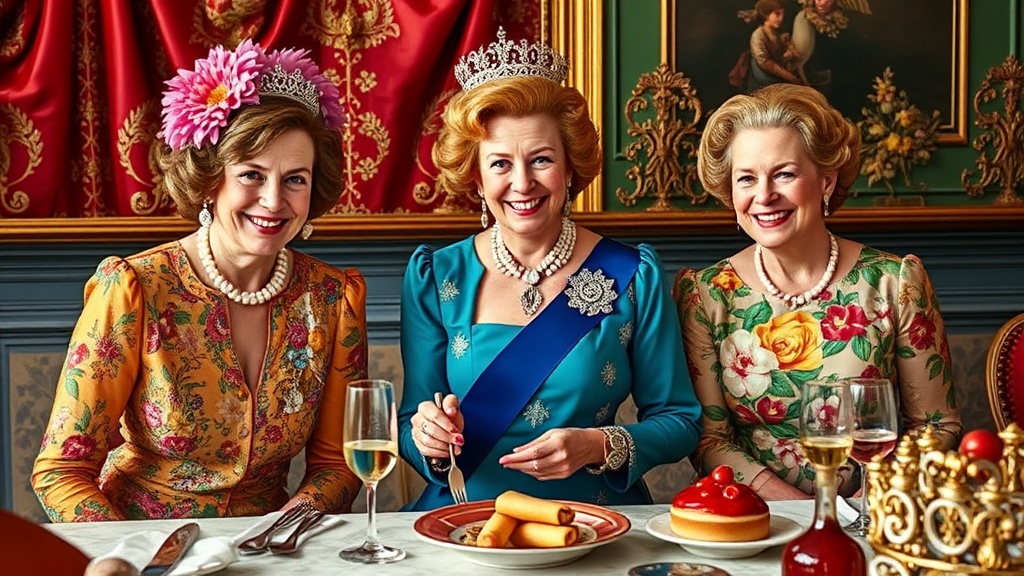
Imagine a life where certain foods are entirely off-limits, not due to allergies, but by unspoken decree. This is a common reality for many royals, a set of dietary quirks that extends far beyond personal preference into the realm of tradition and security. For instance, shellfish has long been discouraged, if not outright banned, for senior royals due to the high risk of food poisoning. This isn't merely an antiquated rule; it's a practical measure for individuals whose sudden illness could disrupt state affairs or international visits. The late Queen Elizabeth II, for example, famously avoided shellfish, a habit reportedly continued by King Charles III and Queen Camilla.
Garlic, another culinary staple for much of the world, is conspicuously absent from royal menus, particularly during official events. Camilla, during an appearance on Australian MasterChef, openly admitted, "You can't have garlic bread or anything like that," referring to royal dinners. The reasoning is delightfully straightforward: bad breath is deemed unacceptable for those constantly engaging with dignitaries and the public at close quarters. Similar logic applies to overly pungent cheeses or any food that might be difficult or messy to eat gracefully in public – imagine trying to delicately manage a plate of spaghetti with tomato sauce while wearing a couture gown.
Beyond these prohibitions, there are also unexpected royal preferences. Queen Elizabeth II was known for her simple, almost spartan, breakfast of cornflakes in a Tupperware container, sometimes accompanied by fruit. Her love for chocolate biscuit cake was legendary, so much so that a specific recipe was often packed and traveled with her on official engagements to ensure she had her favorite treat. King Charles III, on the other hand, is a known advocate for organic farming and sustainability, often bringing his own organic produce and sometimes even a packed lunch to engagements. His particular tea preference, a delicate Darjeeling with milk and honey, is also well-documented, highlighting a personal touch amidst the grandiosity. These detailed culinary habits underscore how deeply personal quirks are woven into the fabric of royal life, dictating everything from state banquets to private meals.
The Unspoken Script: Etiquette, Dress Codes, and Secret Language
Royal life is a performance, albeit one steeped in centuries of tradition, and adherence to an unspoken script is paramount. This extends far beyond simply curtsying or bowing; it encompasses intricate dress codes, subtle communication signals, and a lexicon of etiquette that most outsiders would never comprehend. The meticulous attention to attire, for example, is not merely about fashion; it's a form of non-verbal communication. Senior royals, especially women, are expected to wear specific designers, colors, or styles depending on the event, the host country, or even the weather. Take hats: a cornerstone of royal female attire for formal daytime events. This tradition dates back to the early 20th century, a symbol of modesty and status. Kate Middleton, the Princess of Wales, often uses her hat choices to reflect national symbols or to complement the formality of an occasion. The Queen, famously, dressed in bright colors to ensure she was easily visible to crowds, a practical consideration for a figurehead.
Beyond clothing, there are numerous subtle protocols. For instance, the placement of a royal handbag can be a secret signal. It was widely reported that Queen Elizabeth II would shift her handbag from her left arm to her right as a subtle cue to her ladies-in-waiting that she wished to conclude a conversation. Placing it on the floor meant she wanted to be rescued from a situation immediately. These aren't documented rules but rather evolved practical methods for communication within a highly scrutinized environment.
Then there's the language. Royals often use a particular lexicon, avoiding certain common words. For instance, they don't say "toilet" but rather "loo." They don't say "perfume" but "scent." "Pardon" is preferred over "excuse me." These linguistic quirks, while seemingly trivial, serve to reinforce their unique social standing and differentiate them from the general populace. Even a simple handshake is choreographed; the royal always extends their hand first, and the grip should be firm but not overbearing. These seemingly minor details underscore the constant awareness royals must maintain, transforming everyday interactions into carefully managed performances.
Decoding the Royal Aura: Why We're Still Fascinated
For a U.S. audience, ostensibly allergic to monarchical systems, the enduring fascination with British royals might seem paradoxical. However, this captivation is deeply rooted in several psychological and cultural factors. Firstly, royals offer a tangible link to history and tradition in a rapidly changing world. In America, with its relatively short national history, the sheer weight of centuries of royal lineage provides a sense of continuity and spectacle that is otherwise absent. The pageantry – coronations, weddings, jubilees – offers a theatrical escape from the mundane, fulfilling a human desire for ritual and grand narratives. Data from Statista indicates that viewership for major royal events, such as the Platinum Jubilee and King Charles III's Coronation, consistently attracts millions of viewers in the US, sometimes surpassing domestic sporting events.
Secondly, the royals represent a unique blend of celebrity and mystique. They are public figures whose lives are intensely scrutinized, yet they remain largely inaccessible, creating an alluring paradox. Their curated image, often appearing flawless and composed under pressure, contrasts sharply with the often chaotic and vulnerable nature of Hollywood celebrity. This sense of aspiration and unobtainability fuels their appeal. Moreover, the royal family often mirrors universal human dramas – love, loss, duty, rebellion – played out on a global stage. The familial tensions, romantic entanglements, and personal struggles of figures like Prince Harry and Meghan Markle resonate because they tap into archetypal stories that transcend cultural boundaries.
Finally, the royals provide a window into a different way of life, one governed by rules and expectations that are utterly alien to the average American. The sheer "otherness" of their existence – the lack of privacy, the inherited destiny, the constant public duty – sparks curiosity. It's an anthropological interest in observing a peculiar, yet powerful, social structure in action. We are drawn to understanding how individuals navigate such extraordinary circumstances, finding both commonality and stark differences that enrich our understanding of human experience.
Free Weekly Newsletter
Enjoying this guide?
Get the best articles like this one delivered to your inbox every week. No spam.
Navigating Modern Monarchy: What to Expect Next
The future of royal quirks and traditions is undoubtedly shaped by the ongoing push for modernization, particularly under King Charles III's reign. We can anticipate a continued, perhaps accelerated, streamlining of royal engagements and a greater emphasis on relevance and sustainability. Charles, a known proponent of a "slimmed-down" monarchy, may well prune some of the more archaic protocols and lesser-used titles, aiming for efficiency and cost-effectiveness. This means some of the more elaborate rituals might be simplified or even phased out, potentially making royal life appear less eccentric from the outside.
However, certain deeply ingrained quirks will likely persist due to their symbolic weight or sheer practicality. The avoidance of certain foods, for instance, is unlikely to disappear entirely, given its roots in health and decorum. The subtle language and dress codes, while perhaps adapting to contemporary styles, will continue to function as markers of royal identity and communication. We might see an evolution in how these traditions are presented to the public; for example, leveraging social media more effectively to explain the reasoning behind certain customs, thereby making them more accessible and less perplexing to an international audience.
The younger generation of royals, particularly Prince William and Princess Catherine, are also poised to influence these dynamics. They are seen as more approachable and relatable, often engaging with the public in ways their predecessors did not. While they adhere to core royal duties, their personal styles and family interactions are often perceived as more modern. This balance between tradition and contemporary relevance will be key. They might selectively preserve quirks that resonate positively with the public while subtly reinterpreting others. Ultimately, the monarchy's enduring power lies in its ability to adapt without losing its essential character, meaning the quirks that define it will continue to evolve, offering new layers of fascination for generations to come.
Conclusion
The allure of royal life, for Americans and indeed the world, extends far beyond the pomp and circumstance. It's the unexpected quirks – from the peculiar culinary rules to the silent signals of a handbag – that truly humanize these figures and reveal the intricate tapestry of their existence. These deeply ingrained habits and traditions are not mere eccentricities; they are the threads that weave history, duty, and personal preference into a unique way of life, one that continues to captivate and mystify. Understanding these lesser-known facets offers a richer appreciation of a system that, despite its apparent rigidity, constantly adapts. So, the next time you see a royal in the headlines, remember that beneath the tiara and the protocol, a fascinating world of unspoken rules and delightful oddities is always at play, reminding us that even in the most elevated positions, human quirks find a way to thrive. Dive deeper into royal histories and memoirs to uncover even more delightful anomalies – you might be surprised by what you find!
Frequently Asked Questions
The Peculiar Palate: Royal Food Rules and Whims
Imagine a life where certain foods are entirely off-limits, not due to allergies, but by unspoken decree. This is a common reality for many royals, a set of dietary quirks that extends far beyond personal preference into the realm of tradition and security. For instance, shellfish has long been discouraged, if not outright banned, for senior royals due to the high risk of food poisoning. This isn't merely an antiquated rule; it's a practical measure for individuals whose sudden illness could disrupt state affairs or international visits. The late Queen Elizabeth II, for example, famously avoided shellfish, a habit reportedly continued by King Charles III and Queen Camilla.
Garlic, another culinary staple for much of the world, is conspicuously absent from royal menus, particularly during official events. Camilla, during an appearance on Australian MasterChef, openly admitted, "You can't have garlic bread or anything like that," referring to royal dinners. The reasoning is delightfully straightforward: bad breath is deemed unacceptable for those constantly engaging with dignitaries and the public at close quarters. Similar logic applies to overly pungent cheeses or any food that might be difficult or messy to eat gracefully in public – imagine trying to delicately manage a plate of spaghetti with tomato sauce while wearing a couture gown.
Beyond these prohibitions, there are also unexpected royal preferences. Queen Elizabeth II was known for her simple, almost spartan, breakfast of cornflakes in a Tupperware container, sometimes accompanied by fruit. Her love for chocolate biscuit cake was legendary, so much so that a specific recipe was often packed and traveled with her on official engagements to ensure she had her favorite treat. King Charles III, on the other hand, is a known advocate for organic farming and sustainability, often bringing his own organic produce and sometimes even a packed lunch to engagements. His particular tea preference, a delicate Darjeeling with milk and honey, is also well-documented, highlighting a personal touch amidst the grandiosity. These detailed culinary habits underscore how deeply personal quirks are woven into the fabric of royal life, dictating everything from state banquets to private meals.
The Unspoken Script: Etiquette, Dress Codes, and Secret Language
Royal life is a performance, albeit one steeped in centuries of tradition, and adherence to an unspoken script is paramount. This extends far beyond simply curtsying or bowing; it encompasses intricate dress codes, subtle communication signals, and a lexicon of etiquette that most outsiders would never comprehend. The meticulous attention to attire, for example, is not merely about fashion; it's a form of non-verbal communication. Senior royals, especially women, are expected to wear specific designers, colors, or styles depending on the event, the host country, or even the weather. Take hats: a cornerstone of royal female attire for formal daytime events. This tradition dates back to the early 20th century, a symbol of modesty and status. Kate Middleton, the Princess of Wales, often uses her hat choices to reflect national symbols or to complement the formality of an occasion. The Queen, famously, dressed in bright colors to ensure she was easily visible to crowds, a practical consideration for a figurehead.
Beyond clothing, there are numerous subtle protocols. For instance, the placement of a royal handbag can be a secret signal. It was widely reported that Queen Elizabeth II would shift her handbag from her left arm to her right as a subtle cue to her ladies-in-waiting that she wished to conclude a conversation. Placing it on the floor meant she wanted to be rescued from a situation immediately. These aren't documented rules but rather evolved practical methods for communication within a highly scrutinized environment.
Then there's the language. Royals often use a particular lexicon, avoiding certain common words. For instance, they don't say "toilet" but rather "loo." They don't say "perfume" but "scent." "Pardon" is preferred over "excuse me." These linguistic quirks, while seemingly trivial, serve to reinforce their unique social standing and differentiate them from the general populace. Even a simple handshake is choreographed; the royal always extends their hand first, and the grip should be firm but not overbearing. These seemingly minor details underscore the constant awareness royals must maintain, transforming everyday interactions into carefully managed performances.
Decoding the Royal Aura: Why We're Still Fascinated
For a U.S. audience, ostensibly allergic to monarchical systems, the enduring fascination with British royals might seem paradoxical. However, this captivation is deeply rooted in several psychological and cultural factors. Firstly, royals offer a tangible link to history and tradition in a rapidly changing world. In America, with its relatively short national history, the sheer weight of centuries of royal lineage provides a sense of continuity and spectacle that is otherwise absent. The pageantry – coronations, weddings, jubilees – offers a theatrical escape from the mundane, fulfilling a human desire for ritual and grand narratives. Data from Statista indicates that viewership for major royal events, such as the Platinum Jubilee and King Charles III's Coronation, consistently attracts millions of viewers in the US, sometimes surpassing domestic sporting events.
Secondly, the royals represent a unique blend of celebrity and mystique. They are public figures whose lives are intensely scrutinized, yet they remain largely inaccessible, creating an alluring paradox. Their curated image, often appearing flawless and composed under pressure, contrasts sharply with the often chaotic and vulnerable nature of Hollywood celebrity. This sense of aspiration and unobtainability fuels their appeal. Moreover, the royal family often mirrors universal human dramas – love, loss, duty, rebellion – played out on a global stage. The familial tensions, romantic entanglements, and personal struggles of figures like Prince Harry and Meghan Markle resonate because they tap into archetypal stories that transcend cultural boundaries.
Finally, the royals provide a window into a different way of life, one governed by rules and expectations that are utterly alien to the average American. The sheer "otherness" of their existence – the lack of privacy, the inherited destiny, the constant public duty – sparks curiosity. It's an anthropological interest in observing a peculiar, yet powerful, social structure in action. We are drawn to understanding how individuals navigate such extraordinary circumstances, finding both commonality and stark differences that enrich our understanding of human experience.
Navigating Modern Monarchy: What to Expect Next
The future of royal quirks and traditions is undoubtedly shaped by the ongoing push for modernization, particularly under King Charles III's reign. We can anticipate a continued, perhaps accelerated, streamlining of royal engagements and a greater emphasis on relevance and sustainability. Charles, a known proponent of a "slimmed-down" monarchy, may well prune some of the more archaic protocols and lesser-used titles, aiming for efficiency and cost-effectiveness. This means some of the more elaborate rituals might be simplified or even phased out, potentially making royal life appear less eccentric from the outside.
However, certain deeply ingrained quirks will likely persist due to their symbolic weight or sheer practicality. The avoidance of certain foods, for instance, is unlikely to disappear entirely, given its roots in health and decorum. The subtle language and dress codes, while perhaps adapting to contemporary styles, will continue to function as markers of royal identity and communication. We might see an evolution in how these traditions are presented to the public; for example, leveraging social media more effectively to explain the reasoning behind certain customs, thereby making them more accessible and less perplexing to an international audience.
The younger generation of royals, particularly Prince William and Princess Catherine, are also poised to influence these dynamics. They are seen as more approachable and relatable, often engaging with the public in ways their predecessors did not. While they adhere to core royal duties, their personal styles and family interactions are often perceived as more modern. This balance between tradition and contemporary relevance will be key. They might selectively preserve quirks that resonate positively with the public while subtly reinterpreting others. Ultimately, the monarchy's enduring power lies in its ability to adapt without losing its essential character, meaning the quirks that define it will continue to evolve, offering new layers of fascination for generations to come.
Conclusion
The allure of royal life, for Americans and indeed the world, extends far beyond the pomp and circumstance. It's the unexpected quirks – from the peculiar culinary rules to the silent signals of a handbag – that truly humanize these figures and reveal the intricate tapestry of their existence. These deeply ingrained habits and traditions are not mere eccentricities; they are the threads that weave history, duty, and personal preference into a unique way of life, one that continues to captivate and mystify. Understanding these lesser-known facets offers a richer appreciation of a system that, despite its apparent rigidity, constantly adapts. So, the next time you see a royal in the headlines, remember that beneath the tiara and the protocol, a fascinating world of unspoken rules and delightful oddities is always at play, reminding us that even in the most elevated positions, human quirks find a way to thrive. Dive deeper into royal histories and memoirs to uncover even more delightful anomalies – you might be surprised by what you find!
About Zeebrain Editorial
Zeebrain publishes independent analysis of markets, investing, personal finance, and business. We disclose affiliate relationships, never accept payment for coverage, and fact-check all claims against primary sources. Read our editorial policy →
How this article was produced: Zeebrain articles are created with AI assistance from primary sources (including cited videos and market data) and reviewed under our editorial standards before publication. Spot an error? Tell us and we will correct it.
More from Curiosities



Related Guides
Keep exploring this topic
Explore More Categories
Keep browsing by topic and build depth around the subjects you care about most.