Asbestos: The Deadly Miracle Rock That Poisoned the World
Quick Summary
Asbestos saved millions from fire — then quietly killed millions more. Here's the full science, history, and ongoing crisis behind the world's most dangerous mineral.
In This Article
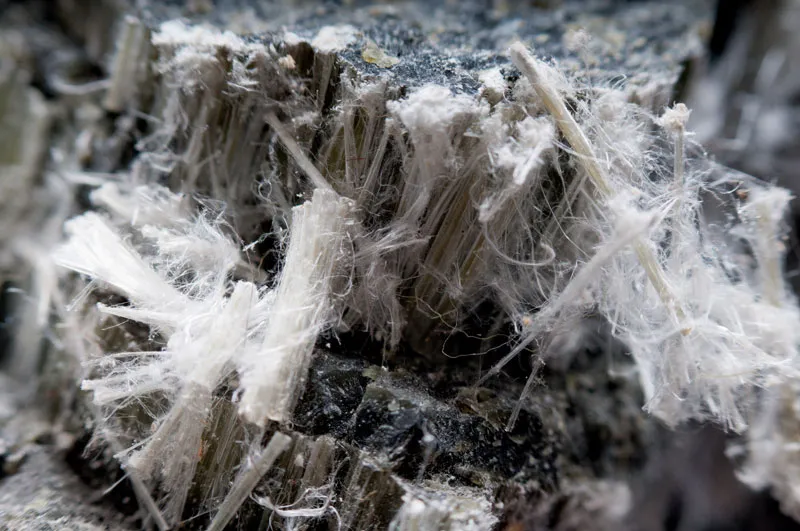
It looks like cotton. It feels like you could stuff a pillow with it. Pull it apart and you get silky, flexible fibers that can be twisted, woven, and shaped. Then you hold a lighter to it — and nothing happens. Because this is a rock.
Asbestos is one of the most paradoxical materials in human history. For nearly a century, it was celebrated as a miracle of modern engineering — fireproofing cities, insulating warships, protecting buildings from catastrophic collapse. And all the while, it was silently destroying the lungs of the people who worked with it, lived near it, and breathed the invisible dust it shed. By 2035, estimates suggest nearly 2.8 million people will have died from asbestos-related disease. That number is still climbing, in large part because we haven't stopped using it.

So how did we get here? And why does a mineral we've known to be lethal for over a century still find its way into homes, schools, and construction sites worldwide?
What Makes Asbestos a Rock That Behaves Like Fabric
To understand why asbestos became so commercially valuable — and why it's so dangerous — you have to start with the chemistry.
The foundation of asbestos is the silica tetrahedron: one silicon atom bonded to four oxygen atoms in a tight, pyramid-shaped unit. Silicon wants eight electrons in its outer shell but only has four, so it shares electrons with oxygen. The catch is that oxygen is more electronegative than silicon — it pulls those shared electrons closer to itself. This creates a slight negative charge on the oxygen side and a slight positive charge on the silicon side, generating a powerful electrostatic attraction. The result is an extraordinarily stable bond that resists heat, chemical reactions, and mechanical stress.
On its own, that chemistry describes most of Earth's crust. More than 90% of all minerals are silicate-based, from quartz to clay. What makes asbestos unique is what happens next.
In chrysotile — the white, most commonly mined form — silica tetrahedra form flat sheets that bond to a second layer made of magnesium atoms and hydroxyl groups. The atomic spacings of these two layers don't quite match, so the mismatch creates internal tension that causes the entire structure to curl into tiny scrolls. Those scrolls are the fibers. They're thermally stable up to around 600°C, mechanically flexible, and remarkably strong. You can literally weave them into fabric.
Other asbestos varieties — like amosite (brown asbestos) and crocidolite (blue asbestos) — belong to a different mineral family called amphiboles, where the tetrahedra form rigid, ladder-like chains instead of sheets. These produce long, needle-like fibers with tensile strengths comparable to high-grade steel wire. They're stiffer, sharper, and in many ways, even more dangerous to inhale.
How Asbestos Became the Backbone of Modern Construction
The story of asbestos as an industrial material begins not in a laboratory but in the aftermath of urban catastrophe.
In 19th-century cities, rapid urbanisation meant wooden buildings packed tightly together, open flames used for cooking and lighting, and almost no fireproofing of any kind. When fires broke out, they didn't stop at a single building — they consumed entire neighbourhoods. The Great Fire of New York in 1835 destroyed nearly 700 buildings in two days. Similar disasters swept through Chicago, Hamburg, London, and Tokyo.
In 1858, a 21-year-old entrepreneur named Henry Ward Johns decided to fix this. He knew asbestos was already being spun into fireproof fabric, but only the long fibers were useful for thread. The shorter offcuts were discarded as industrial waste. Johns realised those scraps were exactly what he needed — cheap, fireproof, and plentiful. Working out of his basement with a tea kettle full of tar and his wife's clothes ringer, he developed a fireproof roofing felt that went on to generate what would be more than $800 million in annual sales in today's money.
From there, asbestos proliferated fast. By 1900, US consumption stood at around 20,400 tons per year. By 1973, it had hit 803,000 tons. Asbestos insulated pipes and boilers, strengthened cement panels, lined brake pads and furnaces, and reinforced the structural components of almost every major building in the country. Fire-related deaths dropped roughly 80% during this period — a statistic that reflects improved building codes and heating systems too, but one in which asbestos almost certainly played a significant role.
The material even turned up in unexpected places: toothpaste, beer filters, surgical dressings, Christmas snow in department store windows, and most infamously, the filters of Kent cigarettes in the 1950s, which contained crocidolite — the most aggressive form of asbestos — pressed directly into the tip smokers put in their mouths.
What Asbestos Actually Does Inside the Human Body
Nelly Kershaw was 33 years old when she died in 1924 after years of working in an asbestos spinning factory. When pathologist Dr. William Cook examined her lungs, they were grey, scarred, and so stiff that his scalpel rasped against them like sandpaper. The tissue was riddled with mineral grit. His published case description gave the condition its name: asbestosis.
The mechanism is straightforward and brutal. When asbestos fibers are inhaled, the finest ones — especially the long, thin amphibole needles — bypass the respiratory system's defences and lodge deep in the alveolar tissue. The body recognises them as foreign and dispatches macrophages, cells designed to engulf and neutralise pathogens and debris. But asbestos fibers are too long and rigid to be swallowed whole. The macrophages keep attacking and failing, releasing inflammatory chemicals in the process. That chronic inflammation causes progressive scarring — fibrosis — that slowly reduces the lungs' capacity to exchange oxygen.
The more insidious outcome is mesothelioma, a cancer of the pleural lining surrounding the lungs. Asbestos fibers can work their way out of lung tissue entirely and penetrate into the pleural cavity, where they cause persistent irritation that eventually triggers malignant changes. Mesothelioma has a latency period of 20 to 50 years, meaning workers exposed in the 1950s and 60s were still dying from it into the 2000s and beyond. It is almost always fatal within 12 to 18 months of diagnosis.
For workers with more than 20 years of asbestos exposure, studies found that nearly 80% showed signs of lung disease. Lung cancer rates among heavily exposed workers ran approximately seven times higher than expected in the general population, with a threefold increase in gastrointestinal cancers as well.
The Suppressed Science and the Fight to Make It Public
The health risks of asbestos were not discovered overnight — and they were not acknowledged without a fight.
By 1931, the British government had already classified asbestos dust as a workplace hazard, making it one of the first industrial materials to be formally regulated. But the regulations only covered factories where asbestos was manufactured, not the shipbuilders, construction workers, and miners who encountered it downstream.
In the United States, the only federal guidance was a non-binding recommendation that allowed workers to inhale up to 5 million asbestos particles per cubic foot of air — a threshold that meant breathing over 300 million particles per hour was technically within official safety limits. Shipyard workers during World War II spent entire days cutting and fitting asbestos insulation in dense clouds of fiber, all while meeting the government's definition of safe working conditions.
The pivotal figure in exposing the scale of the crisis was Dr. Irving Selikoff, a New Jersey physician who began seeing asbestos workers in the early 1960s with alarming patterns of lung scarring and mesothelioma. When factory owners refused to share employee medical records, Selikoff turned to FBI wartime personnel files to track down Navy shipyard workers who had been exposed to asbestos insulation. What he found reframed the entire risk calculus: 14 out of every 1,000 shipyard workers eventually died from asbestos-related cancers — a rate higher than the 8.6 per 1,000 servicemen killed in combat.
In 1964, Selikoff presented his findings at the New York Academy of Sciences conference, putting the evidence on the public record for the first time. The asbestos industry's response was to fund counter-research, label Selikoff an alarmist, and spread the rumour — factually wrong — that he wasn't a qualified physician because he had trained in Scotland. The PR campaign continued for decades, a pattern now well-documented in internal industry memos and legal discovery.
When the World Trade Center towers collapsed in September 2001, thousands of tonnes of asbestos-containing materials were pulverised into microscopic particles that remained airborne over Lower Manhattan for days. Despite official statements downplaying the risk, the dust has since been linked to a broad range of respiratory diseases and cancers. As of the most recent tallies, the diseases caused by that dust have killed more than twice as many people as the attacks themselves.
Why Asbestos Is Still a Global Crisis in 2024
The European Union banned asbestos in 2005. Australia completed its ban in 2003. The UK banned it in 1999. And yet asbestos is not a solved problem — not even close.
Russia remains the world's largest producer, mining hundreds of thousands of tons annually and exporting heavily to developing nations across Asia, Africa, and Latin America. Countries including India, China, and Brazil continue to import and use chrysotile asbestos in construction and manufacturing at scale, in many cases with the active lobbying support of the global asbestos industry and its trade bodies.
Free Weekly Newsletter
Enjoying this guide?
Get the best articles like this one delivered to your inbox every week. No spam.
The World Health Organisation's position is unambiguous: all forms of asbestos are carcinogenic, chrysotile included. But industry-aligned groups have spent decades arguing that chrysotile — being a serpentine mineral that breaks down more readily in lung tissue than the needle-like amphiboles — is fundamentally different and manageable with proper controls. The scientific consensus firmly disputes this, but the argument has been effective enough to delay bans in dozens of jurisdictions.
At home in countries that have banned it, the problem is legacy exposure. Asbestos-containing materials were used so extensively in 20th-century construction that an estimated 1.5 million buildings in the UK alone still contain asbestos, and renovation and demolition work continues to disturb it. Off-road driving in areas where crocidolite was historically mined can stir up asbestos-containing soil. Studies have detected asbestos particles in the dust around schools and homes. It has even turned up in children's crayons and cosmetic products containing talc — because talc and asbestos minerals form in the same geological conditions and are frequently found together.
What We Should Take From This
Asbestos is a story about the gap between what science knows and what policy does. The lung damage was documented in the 1920s. The cancer link was confirmed in the 1960s. And yet the material continued to be mined, used, and sold in quantities measured in millions of tons for decades after the evidence was settled.
Part of the reason is that asbestos genuinely was useful. It fireproofed cities at a time when urban fires were an existential threat. It insulated the ships and buildings of a post-war industrial boom. The material did real work in the world, and the economic interests that built up around it were enormous and politically powerful.
But the deeper lesson is about what happens when industries are allowed to set the terms of the scientific debate about their own products. The asbestos industry's playbook — fund counter-research, discredit independent scientists, lobby regulators, draw distinctions between different product types — has since been used by industries facing scrutiny for lead, tobacco, per- and polyfluoroalkyl substances (PFAS), and a range of other materials. Recognising that pattern is one of the most practically useful things a technically literate person can carry into the present.
Asbestos didn't poison the planet by accident. It did so because, at every stage where intervention was possible, economic interests outweighed public health ones. And in many parts of the world, that calculation hasn't changed yet.
Frequently Asked Questions
Is asbestos banned worldwide?
No. Despite bans in more than 60 countries — including all EU member states, the UK, Australia, and Japan — asbestos is still legally mined and used in a significant number of countries. Russia, Kazakhstan, and Zimbabwe continue to produce it commercially. Major consumers including India, China, and several Southeast Asian nations still import hundreds of thousands of tons per year, primarily for use in construction materials and industrial applications.
What is the difference between chrysotile and crocidolite asbestos, and does it matter for health risk?
Chrysotile (white asbestos) belongs to the serpentine mineral family and forms curly, scroll-like fibers. Crocidolite (blue asbestos) and amosite (brown asbestos) are amphibole minerals and form straight, needle-like fibers. Amphibole fibers are generally considered more biopersistent — they stay in lung tissue longer — and are associated with higher rates of mesothelioma. However, the WHO classifies all forms of asbestos as Group 1 carcinogens, meaning there is no established safe level of exposure to any type.
How long after exposure does asbestos-related disease develop?
Asbestos-related diseases have an unusually long latency period. Asbestosis — the scarring lung condition — typically develops after years of heavy exposure. Mesothelioma, the cancer associated with asbestos, generally appears 20 to 50 years after initial exposure. This long lag is a key reason why the disease burden from mid-20th-century industrial use is still being counted today, and why current exposure in developing countries will continue to produce casualties well into the second half of this century.
What should I do if I think my home contains asbestos?
In countries where asbestos-containing building materials were widely used before the 1980s, it is relatively common to find asbestos in roof tiles, floor tiles, insulation boards, textured wall coatings, and pipe lagging. If materials are undisturbed and in good condition, the general guidance from health authorities is to leave them in place and monitor them — disturbing intact asbestos can release fibers. If you are planning renovation, demolition, or if you suspect materials are damaged, contact a licensed asbestos surveyor before starting any work. Do not attempt to remove asbestos-containing materials yourself.
Free Investing Tools
Frequently Asked Questions
What Makes Asbestos a Rock That Behaves Like Fabric
To understand why asbestos became so commercially valuable — and why it's so dangerous — you have to start with the chemistry.
The foundation of asbestos is the silica tetrahedron: one silicon atom bonded to four oxygen atoms in a tight, pyramid-shaped unit. Silicon wants eight electrons in its outer shell but only has four, so it shares electrons with oxygen. The catch is that oxygen is more electronegative than silicon — it pulls those shared electrons closer to itself. This creates a slight negative charge on the oxygen side and a slight positive charge on the silicon side, generating a powerful electrostatic attraction. The result is an extraordinarily stable bond that resists heat, chemical reactions, and mechanical stress.
On its own, that chemistry describes most of Earth's crust. More than 90% of all minerals are silicate-based, from quartz to clay. What makes asbestos unique is what happens next.
In chrysotile — the white, most commonly mined form — silica tetrahedra form flat sheets that bond to a second layer made of magnesium atoms and hydroxyl groups. The atomic spacings of these two layers don't quite match, so the mismatch creates internal tension that causes the entire structure to curl into tiny scrolls. Those scrolls are the fibers. They're thermally stable up to around 600°C, mechanically flexible, and remarkably strong. You can literally weave them into fabric.
Other asbestos varieties — like amosite (brown asbestos) and crocidolite (blue asbestos) — belong to a different mineral family called amphiboles, where the tetrahedra form rigid, ladder-like chains instead of sheets. These produce long, needle-like fibers with tensile strengths comparable to high-grade steel wire. They're stiffer, sharper, and in many ways, even more dangerous to inhale.
How Asbestos Became the Backbone of Modern Construction
The story of asbestos as an industrial material begins not in a laboratory but in the aftermath of urban catastrophe.
In 19th-century cities, rapid urbanisation meant wooden buildings packed tightly together, open flames used for cooking and lighting, and almost no fireproofing of any kind. When fires broke out, they didn't stop at a single building — they consumed entire neighbourhoods. The Great Fire of New York in 1835 destroyed nearly 700 buildings in two days. Similar disasters swept through Chicago, Hamburg, London, and Tokyo.
In 1858, a 21-year-old entrepreneur named Henry Ward Johns decided to fix this. He knew asbestos was already being spun into fireproof fabric, but only the long fibers were useful for thread. The shorter offcuts were discarded as industrial waste. Johns realised those scraps were exactly what he needed — cheap, fireproof, and plentiful. Working out of his basement with a tea kettle full of tar and his wife's clothes ringer, he developed a fireproof roofing felt that went on to generate what would be more than $800 million in annual sales in today's money.
From there, asbestos proliferated fast. By 1900, US consumption stood at around 20,400 tons per year. By 1973, it had hit 803,000 tons. Asbestos insulated pipes and boilers, strengthened cement panels, lined brake pads and furnaces, and reinforced the structural components of almost every major building in the country. Fire-related deaths dropped roughly 80% during this period — a statistic that reflects improved building codes and heating systems too, but one in which asbestos almost certainly played a significant role.
The material even turned up in unexpected places: toothpaste, beer filters, surgical dressings, Christmas snow in department store windows, and most infamously, the filters of Kent cigarettes in the 1950s, which contained crocidolite — the most aggressive form of asbestos — pressed directly into the tip smokers put in their mouths.
What Asbestos Actually Does Inside the Human Body
Nelly Kershaw was 33 years old when she died in 1924 after years of working in an asbestos spinning factory. When pathologist Dr. William Cook examined her lungs, they were grey, scarred, and so stiff that his scalpel rasped against them like sandpaper. The tissue was riddled with mineral grit. His published case description gave the condition its name: asbestosis.
The mechanism is straightforward and brutal. When asbestos fibers are inhaled, the finest ones — especially the long, thin amphibole needles — bypass the respiratory system's defences and lodge deep in the alveolar tissue. The body recognises them as foreign and dispatches macrophages, cells designed to engulf and neutralise pathogens and debris. But asbestos fibers are too long and rigid to be swallowed whole. The macrophages keep attacking and failing, releasing inflammatory chemicals in the process. That chronic inflammation causes progressive scarring — fibrosis — that slowly reduces the lungs' capacity to exchange oxygen.
The more insidious outcome is mesothelioma, a cancer of the pleural lining surrounding the lungs. Asbestos fibers can work their way out of lung tissue entirely and penetrate into the pleural cavity, where they cause persistent irritation that eventually triggers malignant changes. Mesothelioma has a latency period of 20 to 50 years, meaning workers exposed in the 1950s and 60s were still dying from it into the 2000s and beyond. It is almost always fatal within 12 to 18 months of diagnosis.
For workers with more than 20 years of asbestos exposure, studies found that nearly 80% showed signs of lung disease. Lung cancer rates among heavily exposed workers ran approximately seven times higher than expected in the general population, with a threefold increase in gastrointestinal cancers as well.
The Suppressed Science and the Fight to Make It Public
The health risks of asbestos were not discovered overnight — and they were not acknowledged without a fight.
By 1931, the British government had already classified asbestos dust as a workplace hazard, making it one of the first industrial materials to be formally regulated. But the regulations only covered factories where asbestos was manufactured, not the shipbuilders, construction workers, and miners who encountered it downstream.
In the United States, the only federal guidance was a non-binding recommendation that allowed workers to inhale up to 5 million asbestos particles per cubic foot of air — a threshold that meant breathing over 300 million particles per hour was technically within official safety limits. Shipyard workers during World War II spent entire days cutting and fitting asbestos insulation in dense clouds of fiber, all while meeting the government's definition of safe working conditions.
The pivotal figure in exposing the scale of the crisis was Dr. Irving Selikoff, a New Jersey physician who began seeing asbestos workers in the early 1960s with alarming patterns of lung scarring and mesothelioma. When factory owners refused to share employee medical records, Selikoff turned to FBI wartime personnel files to track down Navy shipyard workers who had been exposed to asbestos insulation. What he found reframed the entire risk calculus: 14 out of every 1,000 shipyard workers eventually died from asbestos-related cancers — a rate higher than the 8.6 per 1,000 servicemen killed in combat.
In 1964, Selikoff presented his findings at the New York Academy of Sciences conference, putting the evidence on the public record for the first time. The asbestos industry's response was to fund counter-research, label Selikoff an alarmist, and spread the rumour — factually wrong — that he wasn't a qualified physician because he had trained in Scotland. The PR campaign continued for decades, a pattern now well-documented in internal industry memos and legal discovery.
When the World Trade Center towers collapsed in September 2001, thousands of tonnes of asbestos-containing materials were pulverised into microscopic particles that remained airborne over Lower Manhattan for days. Despite official statements downplaying the risk, the dust has since been linked to a broad range of respiratory diseases and cancers. As of the most recent tallies, the diseases caused by that dust have killed more than twice as many people as the attacks themselves.
Why Asbestos Is Still a Global Crisis in 2024
The European Union banned asbestos in 2005. Australia completed its ban in 2003. The UK banned it in 1999. And yet asbestos is not a solved problem — not even close.
Russia remains the world's largest producer, mining hundreds of thousands of tons annually and exporting heavily to developing nations across Asia, Africa, and Latin America. Countries including India, China, and Brazil continue to import and use chrysotile asbestos in construction and manufacturing at scale, in many cases with the active lobbying support of the global asbestos industry and its trade bodies.
The World Health Organisation's position is unambiguous: all forms of asbestos are carcinogenic, chrysotile included. But industry-aligned groups have spent decades arguing that chrysotile — being a serpentine mineral that breaks down more readily in lung tissue than the needle-like amphiboles — is fundamentally different and manageable with proper controls. The scientific consensus firmly disputes this, but the argument has been effective enough to delay bans in dozens of jurisdictions.
At home in countries that have banned it, the problem is legacy exposure. Asbestos-containing materials were used so extensively in 20th-century construction that an estimated 1.5 million buildings in the UK alone still contain asbestos, and renovation and demolition work continues to disturb it. Off-road driving in areas where crocidolite was historically mined can stir up asbestos-containing soil. Studies have detected asbestos particles in the dust around schools and homes. It has even turned up in children's crayons and cosmetic products containing talc — because talc and asbestos minerals form in the same geological conditions and are frequently found together.
What We Should Take From This
Asbestos is a story about the gap between what science knows and what policy does. The lung damage was documented in the 1920s. The cancer link was confirmed in the 1960s. And yet the material continued to be mined, used, and sold in quantities measured in millions of tons for decades after the evidence was settled.
Part of the reason is that asbestos genuinely was useful. It fireproofed cities at a time when urban fires were an existential threat. It insulated the ships and buildings of a post-war industrial boom. The material did real work in the world, and the economic interests that built up around it were enormous and politically powerful.
But the deeper lesson is about what happens when industries are allowed to set the terms of the scientific debate about their own products. The asbestos industry's playbook — fund counter-research, discredit independent scientists, lobby regulators, draw distinctions between different product types — has since been used by industries facing scrutiny for lead, tobacco, per- and polyfluoroalkyl substances (PFAS), and a range of other materials. Recognising that pattern is one of the most practically useful things a technically literate person can carry into the present.
Asbestos didn't poison the planet by accident. It did so because, at every stage where intervention was possible, economic interests outweighed public health ones. And in many parts of the world, that calculation hasn't changed yet.
Frequently Asked Questions
Is asbestos banned worldwide?
No. Despite bans in more than 60 countries — including all EU member states, the UK, Australia, and Japan — asbestos is still legally mined and used in a significant number of countries. Russia, Kazakhstan, and Zimbabwe continue to produce it commercially. Major consumers including India, China, and several Southeast Asian nations still import hundreds of thousands of tons per year, primarily for use in construction materials and industrial applications.
What is the difference between chrysotile and crocidolite asbestos, and does it matter for health risk?
Chrysotile (white asbestos) belongs to the serpentine mineral family and forms curly, scroll-like fibers. Crocidolite (blue asbestos) and amosite (brown asbestos) are amphibole minerals and form straight, needle-like fibers. Amphibole fibers are generally considered more biopersistent — they stay in lung tissue longer — and are associated with higher rates of mesothelioma. However, the WHO classifies all forms of asbestos as Group 1 carcinogens, meaning there is no established safe level of exposure to any type.
How long after exposure does asbestos-related disease develop?
Asbestos-related diseases have an unusually long latency period. Asbestosis — the scarring lung condition — typically develops after years of heavy exposure. Mesothelioma, the cancer associated with asbestos, generally appears 20 to 50 years after initial exposure. This long lag is a key reason why the disease burden from mid-20th-century industrial use is still being counted today, and why current exposure in developing countries will continue to produce casualties well into the second half of this century.
What should I do if I think my home contains asbestos?
In countries where asbestos-containing building materials were widely used before the 1980s, it is relatively common to find asbestos in roof tiles, floor tiles, insulation boards, textured wall coatings, and pipe lagging. If materials are undisturbed and in good condition, the general guidance from health authorities is to leave them in place and monitor them — disturbing intact asbestos can release fibers. If you are planning renovation, demolition, or if you suspect materials are damaged, contact a licensed asbestos surveyor before starting any work. Do not attempt to remove asbestos-containing materials yourself.
About Zeebrain Editorial
Zeebrain publishes independent analysis of markets, investing, personal finance, and business. We disclose affiliate relationships, never accept payment for coverage, and fact-check all claims against primary sources. Read our editorial policy →
How this article was produced: Zeebrain articles are created with AI assistance from primary sources (including cited videos and market data) and reviewed under our editorial standards before publication. Spot an error? Tell us and we will correct it.
More from Science & Tech



Related Guides
Keep exploring this topic
The Plague Is Still With Us — And Could Return
Curiosities · bubonic plague · infectious disease
ChatGPT Tips and Tricks: Mastering the Art of Conversational AI
Science & Tech
Microsoft Copilot Meets DeepSeek: The Multimodel AI Shift
Science & Tech
Is This The Future of Energy? (Fusion Explained)
Science & Tech
Explore More Categories
Keep browsing by topic and build depth around the subjects you care about most.