Airsoft Battle Royale: What Dude Perfect Got Right
Quick Summary
Dude Perfect's airsoft battle royale with wives reveals smart tactics, gear tips, and team dynamics every airsoft fan should know. Here's the full breakdown.
In This Article
When Airsoft Meets Chaos: Why the Dude Perfect Format Works
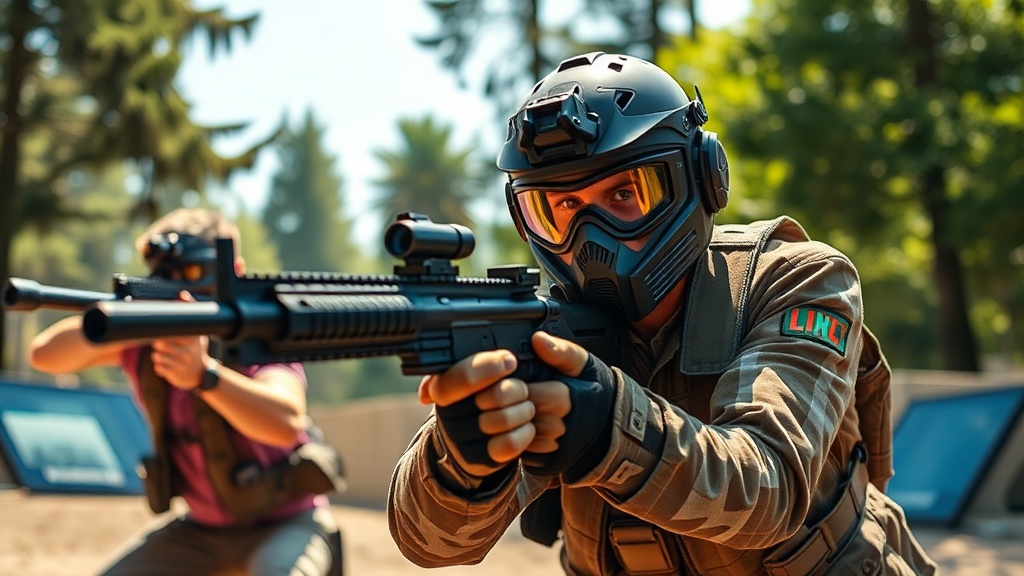
Airsoft battle royale is one of those formats that sounds simple on paper — loot weapons, pop enemy balloons, last team standing wins — but becomes wildly unpredictable the moment real people with zero shared military experience, genuine emotional bonds, and wildly mismatched skill levels enter the arena. Dude Perfect's Airsoft Battle Royale (feat. Wives) leans hard into that unpredictability, and in doing so accidentally reveals some genuinely useful truths about airsoft strategy, team dynamics, and what makes competitive shooting games so compelling for beginners and veterans alike.

This isn't just a fun YouTube video. It's a surprisingly instructive case study in how airsoft battle royale mechanics translate to mixed-skill groups — and why the format keeps pulling in millions of viewers who've never held an airsoft gun in their lives.
What Is an Airsoft Battle Royale and How Does It Actually Work?
The classic battle royale format — made famous by games like PUBG and Fortnite — strips competition down to a brutal simplicity: scavenge, survive, eliminate. Real-world airsoft adaptations follow the same skeleton. Players or teams start unarmed, loot the map for weapons and gear, and fight until only one team remains.
In the Dude Perfect version, the twist is balloon markers. Rather than tracking hits on players directly — which can be disputed and requires full protective gear protocols — each team carries balloons that serve as lives. Pop an opponent's balloon, and you've scored an elimination. It's a smart modification for entertainment purposes because it's instantly visual, unambiguous, and adds a layer of physical vulnerability that pure shooting doesn't. You can hear a balloon pop. The camera can see it. The audience knows immediately who's losing.
This balloon-based system is actually worth borrowing if you're organising a casual airsoft event for mixed groups. It removes the 'I wasn't hit' argument that plagues informal airsoft matches, and it scales well — give stronger players fewer balloons and weaker players more, and you've got a built-in handicap system.
Map looting is the other critical mechanic. Starting unarmed forces players to make risk-reward decisions immediately: do you sprint for the best crate and risk early contact, or move cautiously and potentially get outgunned? In the video, teams make fascinatingly different choices. Some grab the nearest available weapon and move; others load up on body armour and take stock. Neither approach is wrong, but the early looting phase almost always determines how the mid-game plays out.
Airsoft Gear for Beginners: What the Video Teaches Without Meaning To
One of the most entertaining — and genuinely educational — threads running through the Dude Perfect battle royale is watching people encounter airsoft gear for the first time. When one participant asks why her gun is bigger than her partner's, or expresses surprise that a shotgun requires a different handling technique than a pistol, it's funny. It's also a reminder that airsoft has a real learning curve that experienced players take for granted.
Here's what the video inadvertently highlights about beginner airsoft gear selection:
Shotguns are close-range weapons. This sounds obvious, but new players consistently try to use spread-shot weapons at distances where they're simply ineffective. If you're handed a shotgun in an airsoft scenario, your entire strategy needs to be built around getting close — using cover, flanking, and patience.
Pistols are more manageable than they look. Several participants in the video gravitated toward pistols once given the choice, and there's a reason. They're lighter, easier to manoeuvre in tight spaces, and more intuitive to aim at short range. For beginners in casual airsoft battle royale formats, a reliable pistol is often a better starting point than a full-sized rifle.
Weight matters more than firepower in long scenarios. As the battle wore on, gun weight became a genuine tactical liability. A participant explicitly noted that her weapon was too heavy to use effectively. In a real airsoft game lasting more than 20 minutes, carrying a heavy primary weapon affects your mobility, your fatigue level, and your ability to react quickly.
Body armour is psychological as much as physical. In the video, body armour is treated as a comfort item — something that makes players feel more secure even if it doesn't change the balloon-based elimination rules. In real airsoft, proper protective gear absolutely matters for safety, but the psychological confidence it provides is an underrated factor in how aggressively players are willing to move.
Team Dynamics in Airsoft: The Mixed-Skill Problem
The couples format creates one of the most interesting strategic problems in any team-based game: what do you do when your teammate is significantly less experienced than you, and you genuinely care about their wellbeing?
Professional or serious airsoft teams solve this by separating roles clearly. One player takes point — leads the movement, makes engagement decisions — while the other provides cover or secures the rear. The Dude Perfect couples stumble toward this division naturally, with more experienced players often defaulting to the lead role and partners holding back.
But the emotional dimension complicates things in ways that pure tactics don't account for. When one participant refuses to shoot at a friend on the opposing team because of genuine personal affection, that's not a strategic failure — it's a human one. And it happens in casual airsoft constantly. Group games among friends are always going to be subject to social hesitation that strangers wouldn't feel.
The tactical lesson here is real: in casual airsoft battle royale formats with mixed groups, design your team pairings intentionally. Separating close friends onto opposing teams creates hesitation. Pairing people of wildly different skill levels without a clear role structure creates frustration. Neither makes for a better game.
The most successful team in the video's late stages — the impromptu all-female alliance formed when the male players were eliminated — succeeded specifically because they abandoned emotional hesitation and made a cold strategic calculation: combine resources, share information, hunt together. It worked.
The Camping Strategy: Underrated or Overused?
One player explicitly declares himself 'a pretty big camper' early in the game, explaining that he plans to lay low, let other teams deplete each other, and then fight with fresh resources at the end. This is, in airsoft battle royale terms, a completely legitimate strategy — and one that the video's outcome partially validates.
Camping gets a bad reputation in gaming culture because it's associated with passivity and unsportsmanlike play. In competitive video games, it can ruin other players' experience. But in a genuine battle royale format where survival is the objective, positional patience is simply good tactics.
The key variables are:
- Map awareness. Camping only works if you know where other players are. Sitting in a barn with no intelligence on opponent positions means you can be flanked from any direction.
- Ammo management. A camper who burns through ammunition while waiting achieves nothing. Resource conservation is the whole point of the late-game patience strategy.
- Adaptability. The best campers know when to break from position. Static players who refuse to move when circumstances change get surrounded and eliminated.
In the video's barn sequence, a lone player turns a defensive position into a genuine tactical stronghold — picking off a much more mobile opponent by controlling a single entry point. That's textbook positional play, and it nearly won the whole encounter.
Why Airsoft Battle Royale Is the Perfect Format for Group Events
Free Weekly Newsletter
Enjoying this guide?
Get the best articles like this one delivered to your inbox every week. No spam.
What the Dude Perfect video captures better than almost any instructional airsoft content is the social energy of a well-designed airsoft battle royale. People who have never touched an airsoft gun are laughing, screaming, hiding behind their partners, and making split-second decisions they'd never normally make. That's the format working exactly as intended.
For anyone considering organising an airsoft battle royale — whether for a corporate team day, a birthday event, a stag or hen party, or simply a group of friends — the format's strengths are clear:
- It's self-explanatory. Loot weapons, pop balloons, survive. New players grasp it in under two minutes.
- It creates natural drama. The looting phase, the mid-game skirmishes, and the final showdown follow a story arc that keeps everyone invested even after they're eliminated.
- It scales with group size. Four teams of two works. Eight teams of three works. The balloon system adjusts naturally.
- Mixed skill levels are fine. The format doesn't punish beginners the way a straight elimination shooter might. A lucky flank or a well-timed ambush can eliminate the best player on the field.
The one thing to get right is the map. Too small, and the looting phase collapses into immediate combat with no build-up. Too large, and teams spend the whole game searching without contact. A mix of open ground, enclosed structures, and vehicle routes — much like the Dude Perfect setup — gives every play style somewhere to operate.
Conclusion: More Than a YouTube Stunt
On the surface, Dude Perfect's airsoft battle royale with wives is exactly what it appears to be: a hugely entertaining group of people running around with guns, screaming at each other, and making great content. But look a little closer and you'll find a genuine primer on airsoft battle royale mechanics, beginner gear decisions, team strategy under emotional pressure, and the design principles that make the format so consistently engaging.
Whether you're planning your first airsoft event, looking to introduce new players to the sport, or just want to understand why balloon-based elimination systems are smarter than they sound — the chaos on screen is teaching you something. You just have to pay attention between the screaming.
Frequently Asked Questions
What is an airsoft battle royale?
An airsoft battle royale is a real-world adaptation of the battle royale video game format. Players or teams start without weapons, loot the map for firearms and equipment, and compete to be the last team standing. Eliminations are tracked through hit markers, balloon systems, or referee calls depending on the event format.
Is airsoft safe for beginners?
Yes, when proper safety protocols are followed. Beginners should always wear appropriate eye and face protection, use guns within the recommended FPS limits for the game type, and receive a safety briefing before play. Casual formats using balloon markers or padded arenas can make the experience even more accessible for first-timers.
What airsoft gun is best for a beginner in a battle royale format?
For beginners, a lightweight mid-range AEG (automatic electric gun) or a reliable pistol is usually the best starting point. Shotguns require close-range positioning that beginners often can't execute safely, and heavy sniper rifles demand patience and map knowledge that takes time to develop. A pistol or compact rifle gives new players the best balance of control and versatility.
How do you organise an airsoft battle royale for a mixed-skill group?
Start with a clear, simple ruleset — the balloon elimination system works particularly well. Design or select a map with varied terrain including cover, enclosed spaces, and open ground. Pair experienced players with beginners in mixed teams rather than separating by skill level. Brief all players on safety rules and equipment before the game begins, and consider giving less experienced players extra balloons or starting resources to level the playing field.
Can you play airsoft battle royale indoors?
Yes, indoor airsoft arenas are well-suited to battle royale formats, though the looting mechanic typically needs to be simplified due to space constraints. Indoor games tend to move faster and require lower-power guns to comply with close-range safety limits. Balloon elimination systems work indoors, though visibility in confined spaces can make balloon-popping easier — which often shortens game time significantly.
Free Investing Tools
Frequently Asked Questions
When Airsoft Meets Chaos: Why the Dude Perfect Format Works
Airsoft battle royale is one of those formats that sounds simple on paper — loot weapons, pop enemy balloons, last team standing wins — but becomes wildly unpredictable the moment real people with zero shared military experience, genuine emotional bonds, and wildly mismatched skill levels enter the arena. Dude Perfect's Airsoft Battle Royale (feat. Wives) leans hard into that unpredictability, and in doing so accidentally reveals some genuinely useful truths about airsoft strategy, team dynamics, and what makes competitive shooting games so compelling for beginners and veterans alike.
This isn't just a fun YouTube video. It's a surprisingly instructive case study in how airsoft battle royale mechanics translate to mixed-skill groups — and why the format keeps pulling in millions of viewers who've never held an airsoft gun in their lives.
What Is an Airsoft Battle Royale and How Does It Actually Work?
The classic battle royale format — made famous by games like PUBG and Fortnite — strips competition down to a brutal simplicity: scavenge, survive, eliminate. Real-world airsoft adaptations follow the same skeleton. Players or teams start unarmed, loot the map for weapons and gear, and fight until only one team remains.
In the Dude Perfect version, the twist is balloon markers. Rather than tracking hits on players directly — which can be disputed and requires full protective gear protocols — each team carries balloons that serve as lives. Pop an opponent's balloon, and you've scored an elimination. It's a smart modification for entertainment purposes because it's instantly visual, unambiguous, and adds a layer of physical vulnerability that pure shooting doesn't. You can hear a balloon pop. The camera can see it. The audience knows immediately who's losing.
This balloon-based system is actually worth borrowing if you're organising a casual airsoft event for mixed groups. It removes the 'I wasn't hit' argument that plagues informal airsoft matches, and it scales well — give stronger players fewer balloons and weaker players more, and you've got a built-in handicap system.
Map looting is the other critical mechanic. Starting unarmed forces players to make risk-reward decisions immediately: do you sprint for the best crate and risk early contact, or move cautiously and potentially get outgunned? In the video, teams make fascinatingly different choices. Some grab the nearest available weapon and move; others load up on body armour and take stock. Neither approach is wrong, but the early looting phase almost always determines how the mid-game plays out.
Airsoft Gear for Beginners: What the Video Teaches Without Meaning To
One of the most entertaining — and genuinely educational — threads running through the Dude Perfect battle royale is watching people encounter airsoft gear for the first time. When one participant asks why her gun is bigger than her partner's, or expresses surprise that a shotgun requires a different handling technique than a pistol, it's funny. It's also a reminder that airsoft has a real learning curve that experienced players take for granted.
Here's what the video inadvertently highlights about beginner airsoft gear selection:
Shotguns are close-range weapons. This sounds obvious, but new players consistently try to use spread-shot weapons at distances where they're simply ineffective. If you're handed a shotgun in an airsoft scenario, your entire strategy needs to be built around getting close — using cover, flanking, and patience.
Pistols are more manageable than they look. Several participants in the video gravitated toward pistols once given the choice, and there's a reason. They're lighter, easier to manoeuvre in tight spaces, and more intuitive to aim at short range. For beginners in casual airsoft battle royale formats, a reliable pistol is often a better starting point than a full-sized rifle.
Weight matters more than firepower in long scenarios. As the battle wore on, gun weight became a genuine tactical liability. A participant explicitly noted that her weapon was too heavy to use effectively. In a real airsoft game lasting more than 20 minutes, carrying a heavy primary weapon affects your mobility, your fatigue level, and your ability to react quickly.
Body armour is psychological as much as physical. In the video, body armour is treated as a comfort item — something that makes players feel more secure even if it doesn't change the balloon-based elimination rules. In real airsoft, proper protective gear absolutely matters for safety, but the psychological confidence it provides is an underrated factor in how aggressively players are willing to move.
Team Dynamics in Airsoft: The Mixed-Skill Problem
The couples format creates one of the most interesting strategic problems in any team-based game: what do you do when your teammate is significantly less experienced than you, and you genuinely care about their wellbeing?
Professional or serious airsoft teams solve this by separating roles clearly. One player takes point — leads the movement, makes engagement decisions — while the other provides cover or secures the rear. The Dude Perfect couples stumble toward this division naturally, with more experienced players often defaulting to the lead role and partners holding back.
But the emotional dimension complicates things in ways that pure tactics don't account for. When one participant refuses to shoot at a friend on the opposing team because of genuine personal affection, that's not a strategic failure — it's a human one. And it happens in casual airsoft constantly. Group games among friends are always going to be subject to social hesitation that strangers wouldn't feel.
The tactical lesson here is real: in casual airsoft battle royale formats with mixed groups, design your team pairings intentionally. Separating close friends onto opposing teams creates hesitation. Pairing people of wildly different skill levels without a clear role structure creates frustration. Neither makes for a better game.
The most successful team in the video's late stages — the impromptu all-female alliance formed when the male players were eliminated — succeeded specifically because they abandoned emotional hesitation and made a cold strategic calculation: combine resources, share information, hunt together. It worked.
The Camping Strategy: Underrated or Overused?
One player explicitly declares himself 'a pretty big camper' early in the game, explaining that he plans to lay low, let other teams deplete each other, and then fight with fresh resources at the end. This is, in airsoft battle royale terms, a completely legitimate strategy — and one that the video's outcome partially validates.
Camping gets a bad reputation in gaming culture because it's associated with passivity and unsportsmanlike play. In competitive video games, it can ruin other players' experience. But in a genuine battle royale format where survival is the objective, positional patience is simply good tactics.
The key variables are:
- Map awareness. Camping only works if you know where other players are. Sitting in a barn with no intelligence on opponent positions means you can be flanked from any direction.
- Ammo management. A camper who burns through ammunition while waiting achieves nothing. Resource conservation is the whole point of the late-game patience strategy.
- Adaptability. The best campers know when to break from position. Static players who refuse to move when circumstances change get surrounded and eliminated.
In the video's barn sequence, a lone player turns a defensive position into a genuine tactical stronghold — picking off a much more mobile opponent by controlling a single entry point. That's textbook positional play, and it nearly won the whole encounter.
Why Airsoft Battle Royale Is the Perfect Format for Group Events
What the Dude Perfect video captures better than almost any instructional airsoft content is the social energy of a well-designed airsoft battle royale. People who have never touched an airsoft gun are laughing, screaming, hiding behind their partners, and making split-second decisions they'd never normally make. That's the format working exactly as intended.
For anyone considering organising an airsoft battle royale — whether for a corporate team day, a birthday event, a stag or hen party, or simply a group of friends — the format's strengths are clear:
- It's self-explanatory. Loot weapons, pop balloons, survive. New players grasp it in under two minutes.
- It creates natural drama. The looting phase, the mid-game skirmishes, and the final showdown follow a story arc that keeps everyone invested even after they're eliminated.
- It scales with group size. Four teams of two works. Eight teams of three works. The balloon system adjusts naturally.
- Mixed skill levels are fine. The format doesn't punish beginners the way a straight elimination shooter might. A lucky flank or a well-timed ambush can eliminate the best player on the field.
The one thing to get right is the map. Too small, and the looting phase collapses into immediate combat with no build-up. Too large, and teams spend the whole game searching without contact. A mix of open ground, enclosed structures, and vehicle routes — much like the Dude Perfect setup — gives every play style somewhere to operate.
Conclusion: More Than a YouTube Stunt
On the surface, Dude Perfect's airsoft battle royale with wives is exactly what it appears to be: a hugely entertaining group of people running around with guns, screaming at each other, and making great content. But look a little closer and you'll find a genuine primer on airsoft battle royale mechanics, beginner gear decisions, team strategy under emotional pressure, and the design principles that make the format so consistently engaging.
Whether you're planning your first airsoft event, looking to introduce new players to the sport, or just want to understand why balloon-based elimination systems are smarter than they sound — the chaos on screen is teaching you something. You just have to pay attention between the screaming.
Frequently Asked Questions
What is an airsoft battle royale?
An airsoft battle royale is a real-world adaptation of the battle royale video game format. Players or teams start without weapons, loot the map for firearms and equipment, and compete to be the last team standing. Eliminations are tracked through hit markers, balloon systems, or referee calls depending on the event format.
Is airsoft safe for beginners?
Yes, when proper safety protocols are followed. Beginners should always wear appropriate eye and face protection, use guns within the recommended FPS limits for the game type, and receive a safety briefing before play. Casual formats using balloon markers or padded arenas can make the experience even more accessible for first-timers.
What airsoft gun is best for a beginner in a battle royale format?
For beginners, a lightweight mid-range AEG (automatic electric gun) or a reliable pistol is usually the best starting point. Shotguns require close-range positioning that beginners often can't execute safely, and heavy sniper rifles demand patience and map knowledge that takes time to develop. A pistol or compact rifle gives new players the best balance of control and versatility.
How do you organise an airsoft battle royale for a mixed-skill group?
Start with a clear, simple ruleset — the balloon elimination system works particularly well. Design or select a map with varied terrain including cover, enclosed spaces, and open ground. Pair experienced players with beginners in mixed teams rather than separating by skill level. Brief all players on safety rules and equipment before the game begins, and consider giving less experienced players extra balloons or starting resources to level the playing field.
Can you play airsoft battle royale indoors?
Yes, indoor airsoft arenas are well-suited to battle royale formats, though the looting mechanic typically needs to be simplified due to space constraints. Indoor games tend to move faster and require lower-power guns to comply with close-range safety limits. Balloon elimination systems work indoors, though visibility in confined spaces can make balloon-popping easier — which often shortens game time significantly.
About Zeebrain Editorial
Zeebrain publishes independent analysis of markets, investing, personal finance, and business. We disclose affiliate relationships, never accept payment for coverage, and fact-check all claims against primary sources. Read our editorial policy →
How this article was produced: Zeebrain articles are created with AI assistance from primary sources (including cited videos and market data) and reviewed under our editorial standards before publication. Spot an error? Tell us and we will correct it.
More from Entertainment




Related Guides
Keep exploring this topic
Dude Perfect Overtime 50: Everything That Happened
Entertainment · Dude Perfect · Overtime 50
Dude Perfect Trick Shot World Championship: Format & Appeal
Entertainment · Dude Perfect · Trick Shots
The Rise of the Machines… and Entertainers: AI-Generated Content Reshapes the Entertainment Landscap...
Entertainment
The Math Behind Why Movie Franchises Keep Failing
Entertainment
Explore More Categories
Keep browsing by topic and build depth around the subjects you care about most.