4 Days in Oaxaca City: The Ultimate Travel Guide
Quick Summary
Plan the perfect trip to Oaxaca City with this in-depth travel guide covering food, mezcal, history, day trips, and hidden neighbourhoods worth exploring.
In This Article
4 Days in Oaxaca City: The Ultimate Travel Guide
There's a moment, somewhere between your first sip of mezcal and your third plate of food you can't quite name but absolutely cannot stop eating, when Oaxaca City stops feeling like a destination and starts feeling like somewhere you belong. I've experienced that shift twice now, and I'm convinced it's not a coincidence. Oaxaca does something to you. Mexican nationals consistently rank it among the very best places to visit in their own country — and when locals say that about somewhere, you listen.

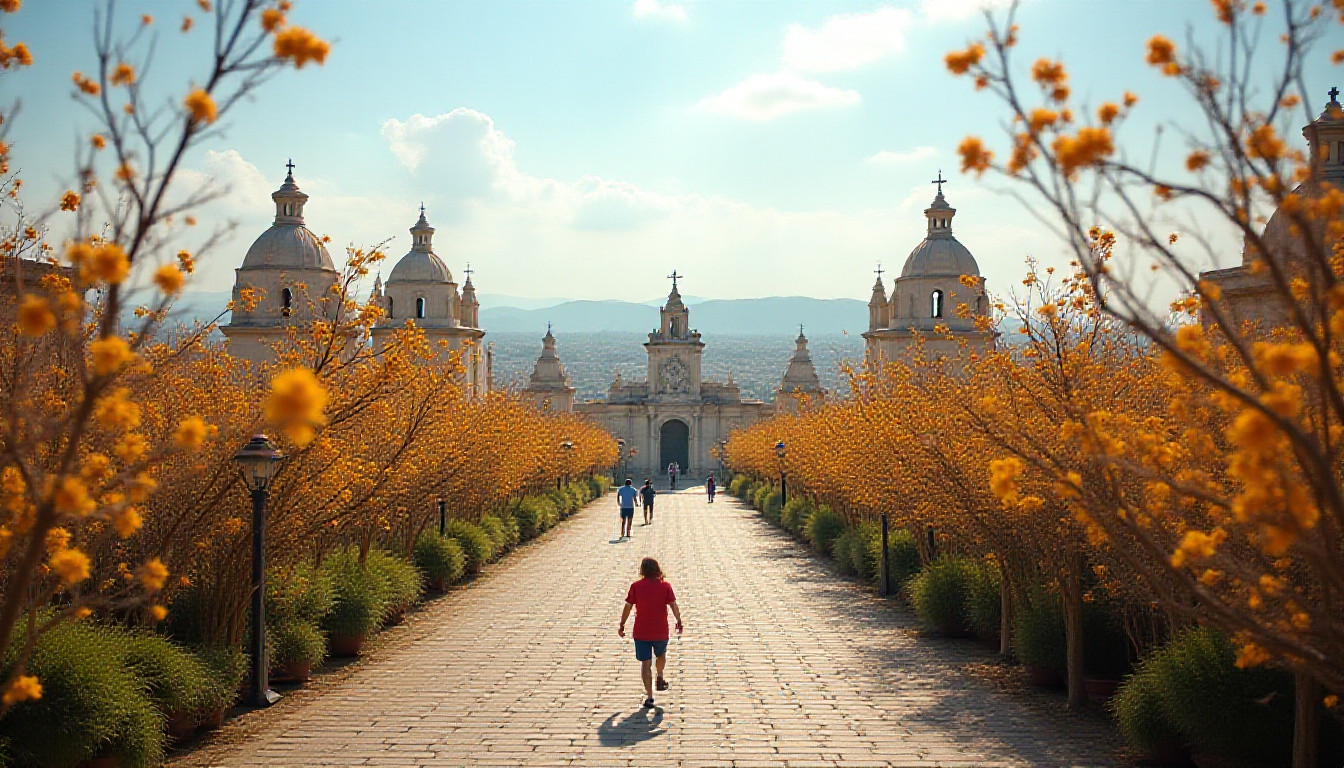
Oaxaca de Juárez, the capital of Oaxaca state, sits in a highland valley roughly 1,500 metres above sea level, ringed by mountains and steeped in a cultural depth that most cities can only gesture toward. It is a colonial city with a Baroque heart, an indigenous soul, and a food scene that has earned genuine international recognition. Whether you have four days or fourteen, here is how to experience it with intention.
Where to Stay and How to Get Around Oaxaca City
Flying in is straightforward. The international airport sits about 30 minutes from the city centre and handles direct flights from Mexico City, as well as connections from the United States. One thing to know before you land: ride-sharing apps like Uber are banned across the state of Oaxaca. Local taxi drivers have successfully lobbied to keep it that way, so you'll be taking a private cab, a shared taxi, or a colectivo from the airport. Private cabs are easy to arrange at the terminal and cost around 200–250 pesos at the time of writing. Colectivos are significantly cheaper and perfectly comfortable if you're travelling light.
Once you're in the city, the single best decision you can make is to stay in the historic centre — the Centro Histórico. Almost every major landmark, restaurant, gallery, and market is within a 15 to 25-minute walk. The streets are uneven cobblestone, the topes (speed bumps) are aggressive, and the whole place is better experienced on foot anyway. Boutique hotels and guesthouses here tend to book up quickly, especially around Día de los Muertos in late October and early November, so plan ahead.
What to Eat: Oaxaca's Food Scene Is the Real Reason to Come
Oaxacans will tell you, with complete sincerity, that their food is the best in Mexico. Having eaten my way through a significant portion of the country, I'm not going to argue. The cuisine here draws on ingredients, techniques, and flavour combinations that predate the Spanish conquest by centuries, and the best restaurants honour that without making it feel like a history lesson.
For breakfast, skip the hotel buffet and head to Bodega, a Nordic-inspired Mexican panadería opened in 2023 by Chef Rafael Villalobos. The pastries are made with locally grown grains from the Mixteca region and change with the seasons. On a recent visit, a passion fruit and pineapple-filled pastry with cream on top tasted like a tropical fruit explosion in the best possible way. The coffee rotates monthly, spotlighting different local producers. Expect a short queue — usually around 15 minutes — but it is absolutely worth it. For a more traditional start to the day, Matate on the northern edge of Centro serves quesadillas, memelas, and empanadas straight off the comal at prices that make you want to order everything.
For a truly revelatory evening, book a table at Levadura de Olla, Chef Thalia Barrios Garcia's one-Michelin-star restaurant. Her tasting menu reads like a love letter to Oaxacan biodiversity. Endemic tomatoes you've never seen before — some of which taste inexplicably like papaya — arrive on a bed of pureed beets with a fruit vinaigrette. A requesón cheese tamale comes with mole negro and mole coloradito, the latter rich with roasted dark chillies rather than leaning too heavily on chocolate. A white fish course features flowers from the maguey plant — the same agave used to make mezcal — sautéed simply so their flavour can speak. Make reservations well in advance. This restaurant fills up fast, and rushing through a meal like this would be a crime.
Oaxaca also has 23 restaurants listed in the Michelin Guide overall, ranging from Bib Gourmand street-level spots to starred fine dining. The city punches well above its weight, and even a casual lunch from a market stall can produce flavours you'll be thinking about for weeks.
History You Can Walk Through: Churches, Museums, and Monte Albán
The Zócalo — Oaxaca's main plaza — is your orienting point. On Sunday evenings in particular, it becomes a living demonstration of what community actually looks like: families spread across the benches, vendors threading through the crowd, the ornate façade of the Catedral de Oaxaca glowing in the late afternoon light. It is not a tourist performance. It is just what Sundays look like here.
About ten minutes north on foot, Templo de Santo Domingo de Guzmán is the city's most iconic church, its Baroque interior decorated with extraordinary three-dimensional gold leaf reliefs. Built in the 1500s, it has served as a convent, a military warehouse, and now houses the Cultural Museum of Oaxaca and a beautiful botanical garden. The museum traces Oaxacan history from its pre-Hispanic origins through Spanish colonisation and beyond, with one of the most significant collections of Zapotec artefacts anywhere in the country. The library alone, with works dating back to the 15th and 16th centuries, is worth the admission price.
The Zapotecs — known as the sky people — built what is now considered one of the earliest cities in the Americas. Monte Albán, about 25 minutes from the city centre, was their capital, home to as many as 20,000 people at its peak between 500 and 800 BCE. They developed complex astronomical calendars, one of Mesoamerica's earliest writing systems using pictographs and logograms, and left behind extraordinary collections of pottery, jewellery, and weaponry. If it's your first time in Oaxaca, a full day here is non-negotiable. The scale of the site and the views across the valley are genuinely humbling.
Hierve el Agua: The Day Trip Everyone Should Do
About 90 minutes outside the city, deep in the Sierra mountains, Hierve el Agua is one of the most unusual natural phenomena in the world — and one of only a handful of places where you can see petrified waterfalls. The name translates to 'boiling water,' which confuses most first-time visitors. The pools aren't warm. The water is cold, pushed to the surface through limestone by a build-up of minerals including calcium carbonate, magnesium, and sulphur. As it spills over the cliff's edge, it slowly calcifies, creating waterfalls that are frozen permanently in stone.
Most visitors come for the pools and the photos — and the infinity pool views out over the mountain landscape are genuinely spectacular. But if you book a guided tour, you also get an hour-and-a-half hike through the surrounding terrain, with different vantage points of the falls and a guide who can explain the local ecology. We learned about the copal tree, whose wood is used to carve alebrijes (Oaxaca's famous painted spirit animals) and whose sap is burned as incense during Day of the Dead ceremonies. Bring your swimming gear if you visit between April and October — the pools are 20°C year-round, and on a hot day, they are exactly what you need.
Getting here independently is possible but involves a colectivo connection, two separate entrance fees, and navigation that can be confusing if you don't speak Spanish. Booking a guided tour with transport included is genuinely easier and worth the extra cost. Platforms like GetYourGuide list several reliable options with flexible cancellation policies.
Mezcal: Understand It Before You Drink It
You can order mezcal anywhere in Oaxaca — every restaurant, every bar, every corner store seems to stock it. But understanding what you're drinking changes the experience entirely. Mezcal is made from the agave plant, and unlike tequila, which is produced exclusively from blue agave, mezcal can be made from dozens of different agave varieties, each with a distinct flavour profile and a dramatically different timeline from planting to harvest.
Espadín is the most common variety because it can be farmed and harvested in as little as eight years. Wild varieties — Tobalá, Cuixe, Arroqueño, Tepeztate, Coyote — can take 10 to 25 years to reach maturity and must be wild-harvested. That's not a marketing story. That's why a bottle of wild-varietal mezcal costs what it costs, and why drinking it feels like it means something.
Visiting an artisanal palenque (mezcal distillery) outside the city gives you a ground-level understanding of the process: the agave fields stretching to the horizon, the traditional roasting pits, the hand-carved stone mills, the fermentation vats. The best tours take you to multiple distilleries so you can taste the difference between varietals and production styles. This is one of the most memorable things you can do in Oaxaca — and it makes every glass of mezcal you drink afterwards taste better.
Beyond the Centre: Exploring Xochimilco and Oaxaca's Art Scene
Most tourists confine themselves to the historic centre, which is understandable — there's enough there to fill a week. But the Xochimilco neighbourhood, a 20 to 25-minute walk north, offers something different: street murals on almost every surface, independent cafés, boutique shops, and a creative energy that feels slightly removed from the more polished tourist circuit.
Oaxaca's art scene runs deep. Weaving and textiles have been central to the region's identity for millennia, used historically to communicate cultural ties and regional identity. Indigenous communities across the state still produce extraordinary handwoven rugs, blankets, and clothing — some on traditional backstrap looms, some on larger floor looms — and the quality and intricacy of the work is breathtaking. The Museum of Textiles near the centre offers a compact but genuinely informative introduction to the regional variations in weaving traditions across Oaxaca's 16 distinct indigenous groups. Entry is free.
Free Weekly Newsletter
Enjoying this guide?
Get the best articles like this one delivered to your inbox every week. No spam.
On Saturdays and Sundays, artisans from surrounding communities come into the city for Día de Plaza, a market tradition where local tribes sell their goods in and around the historic centre. This is the best time to buy textiles, ceramics, alebrijes, and other handmade crafts directly from the people who made them.
How to Make the Most of Your Time in Oaxaca City
Four days in Oaxaca City is enough to hit the highlights — the Zócalo, Santo Domingo, a mezcal palenque, Hierve el Agua, a serious dinner or two — but not quite enough to feel like you've understood the place. If you can stretch to a week, you'll start to feel the rhythm of it. The city rewards slowness. The best experiences here aren't checked off a list; they accumulate gradually, like the sediment in a petrified waterfall.
Book restaurant reservations before you arrive, especially for Levadura de Olla and any other Michelin-recommended spots. Arrange your day trips — Monte Albán, Hierve el Agua, the mezcal palenques — for the middle of your stay so you have your first day to get your bearings and your last day to revisit whatever got under your skin. Bring comfortable shoes for cobblestones. Bring cash, because many of the best places — market stalls, food vendors at Hierve el Agua, small mezcalerías — don't take cards.
And when someone offers you a sip of mezcal in a small clay cup in the middle of a maguey field, sip it slowly. Some experiences deserve to be tasted properly.
Frequently Asked Questions
Is Oaxaca City safe for tourists?
Oaxaca City is generally considered one of the safer cities in Mexico for tourists. The historic centre is well-trafficked, well-lit, and has a visible police presence. As with any destination, common-sense precautions apply — don't flash expensive cameras or jewellery in unfamiliar areas, take registered taxis at night, and stay aware of your surroundings. The city has a strong tourism infrastructure and welcoming local culture.
What is the best time of year to visit Oaxaca City?
Oaxaca City is a year-round destination, but the most popular time is late October through early November for Día de los Muertos, when the city's indigenous traditions around death and remembrance are on full display. The weather is best between October and May, with the dry season offering clear skies and manageable temperatures. June through September brings the rainy season, which means afternoon showers but lush landscapes and fewer crowds.
How many days do you need in Oaxaca City?
Four days is a reasonable minimum to cover the main highlights: the historic centre, a day trip to Hierve el Agua or Monte Albán, a mezcal experience, and several solid meals. A week allows you to explore more neighbourhoods, visit both major archaeological sites, and discover the city at a more comfortable pace. Many travellers find themselves wishing they had stayed longer.
What should I know about eating in Oaxaca City?
Oaxacan cuisine is distinct from the Mexican food most international visitors are familiar with. Expect dishes built around indigenous ingredients like chepiche (a local herb), chapulines (toasted grasshoppers), tlayudas (large tortillas with black bean paste and toppings), mole negro, and a remarkable variety of endemic fruits and vegetables. Many of the best food experiences are affordable — market breakfasts and street tacos cost very little — while fine dining at Michelin-recommended restaurants can reach 1,500–3,000 pesos or more per person for a tasting menu. Oaxacan chocolate and hot chocolate are also exceptional and available everywhere.
Free Investing Tools
Frequently Asked Questions
Where to Stay and How to Get Around Oaxaca City
Flying in is straightforward. The international airport sits about 30 minutes from the city centre and handles direct flights from Mexico City, as well as connections from the United States. One thing to know before you land: ride-sharing apps like Uber are banned across the state of Oaxaca. Local taxi drivers have successfully lobbied to keep it that way, so you'll be taking a private cab, a shared taxi, or a colectivo from the airport. Private cabs are easy to arrange at the terminal and cost around 200–250 pesos at the time of writing. Colectivos are significantly cheaper and perfectly comfortable if you're travelling light.
Once you're in the city, the single best decision you can make is to stay in the historic centre — the Centro Histórico. Almost every major landmark, restaurant, gallery, and market is within a 15 to 25-minute walk. The streets are uneven cobblestone, the topes (speed bumps) are aggressive, and the whole place is better experienced on foot anyway. Boutique hotels and guesthouses here tend to book up quickly, especially around Día de los Muertos in late October and early November, so plan ahead.
What to Eat: Oaxaca's Food Scene Is the Real Reason to Come
Oaxacans will tell you, with complete sincerity, that their food is the best in Mexico. Having eaten my way through a significant portion of the country, I'm not going to argue. The cuisine here draws on ingredients, techniques, and flavour combinations that predate the Spanish conquest by centuries, and the best restaurants honour that without making it feel like a history lesson.
For breakfast, skip the hotel buffet and head to Bodega, a Nordic-inspired Mexican panadería opened in 2023 by Chef Rafael Villalobos. The pastries are made with locally grown grains from the Mixteca region and change with the seasons. On a recent visit, a passion fruit and pineapple-filled pastry with cream on top tasted like a tropical fruit explosion in the best possible way. The coffee rotates monthly, spotlighting different local producers. Expect a short queue — usually around 15 minutes — but it is absolutely worth it. For a more traditional start to the day, Matate on the northern edge of Centro serves quesadillas, memelas, and empanadas straight off the comal at prices that make you want to order everything.
For a truly revelatory evening, book a table at Levadura de Olla, Chef Thalia Barrios Garcia's one-Michelin-star restaurant. Her tasting menu reads like a love letter to Oaxacan biodiversity. Endemic tomatoes you've never seen before — some of which taste inexplicably like papaya — arrive on a bed of pureed beets with a fruit vinaigrette. A requesón cheese tamale comes with mole negro and mole coloradito, the latter rich with roasted dark chillies rather than leaning too heavily on chocolate. A white fish course features flowers from the maguey plant — the same agave used to make mezcal — sautéed simply so their flavour can speak. Make reservations well in advance. This restaurant fills up fast, and rushing through a meal like this would be a crime.
Oaxaca also has 23 restaurants listed in the Michelin Guide overall, ranging from Bib Gourmand street-level spots to starred fine dining. The city punches well above its weight, and even a casual lunch from a market stall can produce flavours you'll be thinking about for weeks.
History You Can Walk Through: Churches, Museums, and Monte Albán
The Zócalo — Oaxaca's main plaza — is your orienting point. On Sunday evenings in particular, it becomes a living demonstration of what community actually looks like: families spread across the benches, vendors threading through the crowd, the ornate façade of the Catedral de Oaxaca glowing in the late afternoon light. It is not a tourist performance. It is just what Sundays look like here.
About ten minutes north on foot, Templo de Santo Domingo de Guzmán is the city's most iconic church, its Baroque interior decorated with extraordinary three-dimensional gold leaf reliefs. Built in the 1500s, it has served as a convent, a military warehouse, and now houses the Cultural Museum of Oaxaca and a beautiful botanical garden. The museum traces Oaxacan history from its pre-Hispanic origins through Spanish colonisation and beyond, with one of the most significant collections of Zapotec artefacts anywhere in the country. The library alone, with works dating back to the 15th and 16th centuries, is worth the admission price.
The Zapotecs — known as the sky people — built what is now considered one of the earliest cities in the Americas. Monte Albán, about 25 minutes from the city centre, was their capital, home to as many as 20,000 people at its peak between 500 and 800 BCE. They developed complex astronomical calendars, one of Mesoamerica's earliest writing systems using pictographs and logograms, and left behind extraordinary collections of pottery, jewellery, and weaponry. If it's your first time in Oaxaca, a full day here is non-negotiable. The scale of the site and the views across the valley are genuinely humbling.
Hierve el Agua: The Day Trip Everyone Should Do
About 90 minutes outside the city, deep in the Sierra mountains, Hierve el Agua is one of the most unusual natural phenomena in the world — and one of only a handful of places where you can see petrified waterfalls. The name translates to 'boiling water,' which confuses most first-time visitors. The pools aren't warm. The water is cold, pushed to the surface through limestone by a build-up of minerals including calcium carbonate, magnesium, and sulphur. As it spills over the cliff's edge, it slowly calcifies, creating waterfalls that are frozen permanently in stone.
Most visitors come for the pools and the photos — and the infinity pool views out over the mountain landscape are genuinely spectacular. But if you book a guided tour, you also get an hour-and-a-half hike through the surrounding terrain, with different vantage points of the falls and a guide who can explain the local ecology. We learned about the copal tree, whose wood is used to carve alebrijes (Oaxaca's famous painted spirit animals) and whose sap is burned as incense during Day of the Dead ceremonies. Bring your swimming gear if you visit between April and October — the pools are 20°C year-round, and on a hot day, they are exactly what you need.
Getting here independently is possible but involves a colectivo connection, two separate entrance fees, and navigation that can be confusing if you don't speak Spanish. Booking a guided tour with transport included is genuinely easier and worth the extra cost. Platforms like GetYourGuide list several reliable options with flexible cancellation policies.
Mezcal: Understand It Before You Drink It
You can order mezcal anywhere in Oaxaca — every restaurant, every bar, every corner store seems to stock it. But understanding what you're drinking changes the experience entirely. Mezcal is made from the agave plant, and unlike tequila, which is produced exclusively from blue agave, mezcal can be made from dozens of different agave varieties, each with a distinct flavour profile and a dramatically different timeline from planting to harvest.
Espadín is the most common variety because it can be farmed and harvested in as little as eight years. Wild varieties — Tobalá, Cuixe, Arroqueño, Tepeztate, Coyote — can take 10 to 25 years to reach maturity and must be wild-harvested. That's not a marketing story. That's why a bottle of wild-varietal mezcal costs what it costs, and why drinking it feels like it means something.
Visiting an artisanal palenque (mezcal distillery) outside the city gives you a ground-level understanding of the process: the agave fields stretching to the horizon, the traditional roasting pits, the hand-carved stone mills, the fermentation vats. The best tours take you to multiple distilleries so you can taste the difference between varietals and production styles. This is one of the most memorable things you can do in Oaxaca — and it makes every glass of mezcal you drink afterwards taste better.
Beyond the Centre: Exploring Xochimilco and Oaxaca's Art Scene
Most tourists confine themselves to the historic centre, which is understandable — there's enough there to fill a week. But the Xochimilco neighbourhood, a 20 to 25-minute walk north, offers something different: street murals on almost every surface, independent cafés, boutique shops, and a creative energy that feels slightly removed from the more polished tourist circuit.
Oaxaca's art scene runs deep. Weaving and textiles have been central to the region's identity for millennia, used historically to communicate cultural ties and regional identity. Indigenous communities across the state still produce extraordinary handwoven rugs, blankets, and clothing — some on traditional backstrap looms, some on larger floor looms — and the quality and intricacy of the work is breathtaking. The Museum of Textiles near the centre offers a compact but genuinely informative introduction to the regional variations in weaving traditions across Oaxaca's 16 distinct indigenous groups. Entry is free.
On Saturdays and Sundays, artisans from surrounding communities come into the city for Día de Plaza, a market tradition where local tribes sell their goods in and around the historic centre. This is the best time to buy textiles, ceramics, alebrijes, and other handmade crafts directly from the people who made them.
How to Make the Most of Your Time in Oaxaca City
Four days in Oaxaca City is enough to hit the highlights — the Zócalo, Santo Domingo, a mezcal palenque, Hierve el Agua, a serious dinner or two — but not quite enough to feel like you've understood the place. If you can stretch to a week, you'll start to feel the rhythm of it. The city rewards slowness. The best experiences here aren't checked off a list; they accumulate gradually, like the sediment in a petrified waterfall.
Book restaurant reservations before you arrive, especially for Levadura de Olla and any other Michelin-recommended spots. Arrange your day trips — Monte Albán, Hierve el Agua, the mezcal palenques — for the middle of your stay so you have your first day to get your bearings and your last day to revisit whatever got under your skin. Bring comfortable shoes for cobblestones. Bring cash, because many of the best places — market stalls, food vendors at Hierve el Agua, small mezcalerías — don't take cards.
And when someone offers you a sip of mezcal in a small clay cup in the middle of a maguey field, sip it slowly. Some experiences deserve to be tasted properly.
Frequently Asked Questions
Is Oaxaca City safe for tourists?
Oaxaca City is generally considered one of the safer cities in Mexico for tourists. The historic centre is well-trafficked, well-lit, and has a visible police presence. As with any destination, common-sense precautions apply — don't flash expensive cameras or jewellery in unfamiliar areas, take registered taxis at night, and stay aware of your surroundings. The city has a strong tourism infrastructure and welcoming local culture.
What is the best time of year to visit Oaxaca City?
Oaxaca City is a year-round destination, but the most popular time is late October through early November for Día de los Muertos, when the city's indigenous traditions around death and remembrance are on full display. The weather is best between October and May, with the dry season offering clear skies and manageable temperatures. June through September brings the rainy season, which means afternoon showers but lush landscapes and fewer crowds.
How many days do you need in Oaxaca City?
Four days is a reasonable minimum to cover the main highlights: the historic centre, a day trip to Hierve el Agua or Monte Albán, a mezcal experience, and several solid meals. A week allows you to explore more neighbourhoods, visit both major archaeological sites, and discover the city at a more comfortable pace. Many travellers find themselves wishing they had stayed longer.
What should I know about eating in Oaxaca City?
Oaxacan cuisine is distinct from the Mexican food most international visitors are familiar with. Expect dishes built around indigenous ingredients like chepiche (a local herb), chapulines (toasted grasshoppers), tlayudas (large tortillas with black bean paste and toppings), mole negro, and a remarkable variety of endemic fruits and vegetables. Many of the best food experiences are affordable — market breakfasts and street tacos cost very little — while fine dining at Michelin-recommended restaurants can reach 1,500–3,000 pesos or more per person for a tasting menu. Oaxacan chocolate and hot chocolate are also exceptional and available everywhere.
About Zeebrain Editorial
Zeebrain publishes independent analysis of markets, investing, personal finance, and business. We disclose affiliate relationships, never accept payment for coverage, and fact-check all claims against primary sources. Read our editorial policy →
How this article was produced: Zeebrain articles are created with AI assistance from primary sources (including cited videos and market data) and reviewed under our editorial standards before publication. Spot an error? Tell us and we will correct it.
More from Travel & Places




Related Guides
Keep exploring this topic
3 Days in Nassau: What Most Visitors Miss in the Bahamas
Travel & Places
2 Days in Budapest in Winter: The Ultimate Travel Guide
Travel & Places
Foodie Travel: 9 Culinary Capitals Every Gourmet Should Visit
Travel & Places
Leave No Trace, Take Only Memories: A Guide to Sustainable Travel Practices for U.S. Travelers
Travel & Places
Explore More Categories
Keep browsing by topic and build depth around the subjects you care about most.