2 Days in Budapest in Winter: The Ultimate Travel Guide
Quick Summary
Discover how to spend 2 days in Budapest in winter — from thermal baths and ruin bars to goulash and snow-dusted castle walks. Your complete cold-weather guide.
In This Article
2 Days in Budapest in Winter: The Ultimate Travel Guide
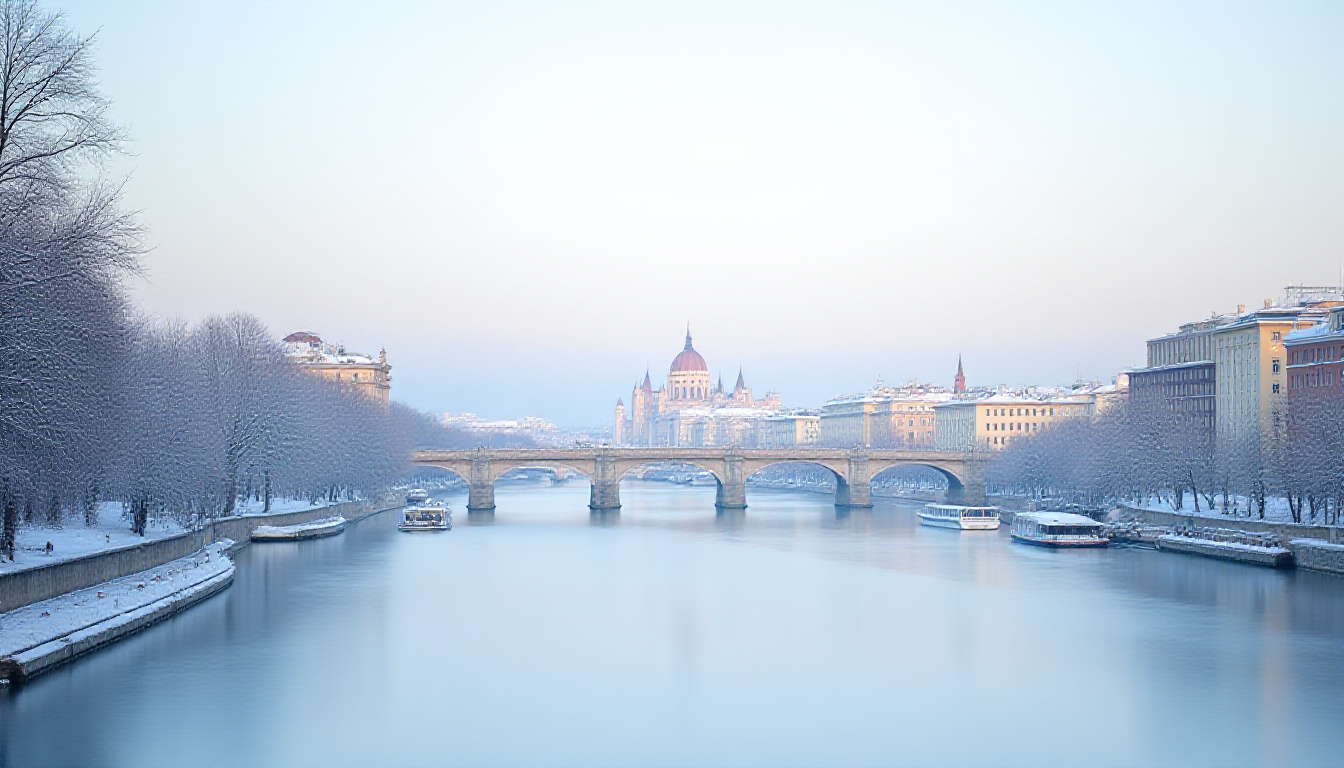
Everybody told me Budapest was a summer city. Golden light bouncing off the Danube, rooftop bars humming until dawn, tourists packed three-deep at every viewpoint. And honestly, that version sounds wonderful. But the Budapest I walked into — grey skies pressing low over the city, frost crusting the iron shoes on the riverbank, steam rising from outdoor thermal pools like something out of a fever dream — that city got under my skin in ways I didn't expect. Two days in Budapest in winter turned out to be one of the most layered, surprising, and genuinely moving travel experiences I've had in Europe.

If you've been on the fence about visiting Budapest in the colder months, let me make the case for you. Yes, it gets properly cold — near freezing, with a 4:00 p.m. sunset that will rearrange your entire itinerary. But that same cold pushes you into the city's warmth: its ornate cafes, its steaming baths, its cosy wine-soaked restaurants, and its achingly beautiful history. Here's exactly how to make the most of a two-day Budapest winter itinerary.
Start the Way Budapest Deserves: The New York Café
There are breakfast spots, and then there is the New York Café. Opened in 1894 and painstakingly restored to its original Italian Renaissance splendour in 2006, this is not just a place to eat — it is a full architectural event. Gilded columns, frescoed ceilings, chandeliers dripping with light. Walking in feels less like ordering coffee and more like accidentally stumbling into a Habsburg-era palace that happens to serve eggs benedict.
Don't let the glamour fool you into playing it safe on the menu. Skip the international options and go straight for the traditional Hungarian breakfast — a hearty, satisfying mix of sausage, tomatoes, eggs, onion, and cabbage that will keep you fuelled for hours of winter sightseeing. The eggs benedict exists, but Hungary didn't get famous for hollandaise. When in doubt, order whatever sounds most local.
A practical note: the café opens early but fills fast. Arrive within the first hour of opening and expect a short wait while they open additional rooms. Dinner reservations are accepted and worth making if you want to return for an evening meal without queuing in the cold. This is one of those places you'll describe to people back home for weeks.
Why Budapest's Thermal Baths Are Even Better in Winter
Hungary sits directly atop a tectonic fault line that pushes nearly 18 million gallons of mineral-rich thermal water to the surface every single day, feeding more than 1,300 springs across the country. Budapest alone has 120 thermal springs and nine public bathhouses. The Romans knew it, the Ottomans built on it, and today the city has turned this geological gift into one of its defining cultural institutions.
In winter, the thermal baths become something almost magical. The Széchenyi Thermal Bath in City Park — built in the early 1900s and still one of the largest bath complexes in Europe — is the place most visitors head first, and for good reason. Marble columns, outdoor pools billowing with steam against a grey winter sky, and the surreal sight of elderly Hungarian men playing chess on boards built directly into the warm water. You cannot make this up, and you absolutely cannot skip it.
A few things I wish I'd known before going: buy your tickets online in advance, specifically the fast-track pass that allows entry before 11:00 a.m. or after 3:00 p.m. Avoid weekends entirely if crowds bother you — even a Monday morning at 9:30 was busier than expected. And once you're in, stay as long as you want. There's no time limit, and the experience rewards patience. Other notable options include the Rudas Baths, which offer a dramatically different, more intimate Ottoman-era atmosphere — though the historic Király Baths are currently under renovation until 2028, so check availability before building your itinerary around them.
The History You Can't Look Away From
Budapest is a city that wears its history in public, sometimes quietly and sometimes with a force that stops you mid-step. Nowhere is this more true than at the Shoes on the Danube Bank memorial.
Sixty pairs of cast iron shoes — men's shoes, women's shoes, children's shoes — line the edge of the river. They mark the site where approximately 20,000 Jewish people were ordered to remove their footwear before being shot and thrown into the Danube by the Arrow Cross, Hungary's fascist party, during the winter of 1944. Standing there in the cold, looking at those shoes, something shifts in your chest and doesn't entirely shift back.
District 7, the historic Jewish Quarter nearby, holds another layer of this story. Before the war, it was home to a thriving Jewish community of around 200,000 people. For six weeks in that same brutal winter, it became a sealed ghetto — barely a tenth of a mile wide — where more than 70,000 people were imprisoned and roughly 7,000 died before the Soviet army arrived in January 1945. The Great Synagogue on Dohány Street, the largest in Europe, still stands here. Walking through the neighbourhood today, with its buzzing restaurants and repurposed courtyards, feels like witnessing an act of collective resilience played out in real time.
This neighbourhood is also where you'll find Budapest's famous ruin bars — and understanding their origin makes the experience richer. After the war, Jewish-owned apartment buildings sat abandoned for decades. In the early 2000s, locals began reclaiming them, most famously with Szimpla Kert, transforming crumbling courtyards into eclectic, multi-room social spaces. Rather than demolish or sanitise the past, they folded it into something living. Today the ruin bars draw tourists and locals alike, and they're genuinely one of the most interesting nightlife concepts in Europe.
If you want to enjoy them without the nightclub energy, arrive early — by 5:00 p.m. on weekends you'll find the atmosphere relaxed and the rooms easy to explore. By midnight on a Friday, the line outside can stretch to a hundred people.
Eating Your Way Through a Budapest Winter
Hungarian cuisine is one of Europe's great undercelebrated traditions, and winter is arguably the best time to experience it. The food here is built for cold: slow-braised meats, dense potato dumplings, paprika-laden stews, warming spirits, and pastries that require no justification whatsoever.
Start with goulash. At its best — as served at Michelin-recommended Stán 25 on the Buda side of the river — it's a deep, complex beef and vegetable soup saturated with paprika and garlic, with a gentle heat that builds slowly and radiates outward. It is, without question, the right thing to eat after an hour on a cold stone hillside. Stán 25 also serves an exceptional duck breast with burnt apple cream and a pork tenderloin with garlic and bacon that borders on revelatory. Make a reservation; they book up, especially among locals who know what tourists tend to miss.
Elsewhere, look out for chicken paprikás (a creamy, paprika-laced classic that earns every bit of its reputation), pork cheek from the native Mangalica pig braised in red wine with potato dumplings, and cottage cheese dumplings with sour cream foam and apricot for dessert — stranger-sounding than it tastes, and something you'll still be thinking about three countries later.
For street food, lángos is unavoidable and entirely worth it: deep-fried dough topped with sour cream and cheese, eaten standing up in the cold like a person who has fully committed to the experience. Traditional is the way to go — skip the novelty toppings.
And then there is strudel. Budapest's rétes is extraordinary: paper-thin stretched dough wrapped around apple, sour cherry, or poppy seed fillings. Pair it with pálinka, Hungary's traditional fruit brandy, if you're feeling brave. It is intensely alcoholic and should be approached with respect. Mulled wine is the gentler, arguably wiser choice.
The Central Market Hall is worth visiting for atmosphere, paprika shopping, and food stalls — but check the day first. Sundays in Budapest, as across much of Europe, see many vendors closed. A weekday visit is a very different, and much more rewarding, experience.
Crossing to Buda: The Castle, the Hill, and the View
Budapest's dual identity — Buda on the hilly western bank, Pest sprawling flat to the east — is one of the things that makes it so visually distinctive. The Chain Bridge, which opened in 1849 and effectively united the two cities before their official merger in 1873, remains one of the most satisfying walks in the city even on a cold afternoon.
The Buda Castle complex sits high on Castle Hill, originally built as a medieval fortress and later expanded into a royal palace that survived Ottomans, Turks, Habsburgs, World War II bombings, and Soviet-era neglect — though each left their marks. Today it houses the Hungarian National Gallery, the Budapest History Museum, and the National Library. Walking the grounds is free, which makes it one of the best-value experiences in the city.
Get up there via the historic funicular — expensive for what it is, but genuinely charming and a mercy for cold legs that have already covered significant ground. From the top, the view across the Danube to Pest is one of those panoramas that earns its place in travel photography for a reason.
Hero Square and the surrounding City Park area, a UNESCO World Heritage Site, complete the picture. In winter, the Millennium Monument stands against a pale sky and the City Park ice rink turns the whole space into something that feels lifted from a storybook. If you're visiting in December, the Christmas markets scattered across the city — six in total, including one in City Park — add a final, festive layer to the experience.
Practical Tips for Visiting Budapest in Winter
Free Weekly Newsletter
Enjoying this guide?
Get the best articles like this one delivered to your inbox every week. No spam.
Budapest in winter is genuinely manageable, but it rewards preparation. Here's what actually matters:
Daylight is scarce. The sun sets around 3:50–4:00 p.m. and it gets dark fast. Plan outdoor activities, walking tours, and viewpoints for the morning and early afternoon. Save museums, restaurants, and baths for the late afternoon and evening.
Dress properly. This is not a city where looking stylish should take priority over staying warm. Thermal layers, waterproof boots, and a serious coat are non-negotiable. The cold isn't just uncomfortable — it actively limits how long you can stay outside, which limits what you can do.
Use public transport. Budapest has an excellent metro (the oldest on mainland Europe), trams, and buses. Tram Line 2 along the Danube is particularly scenic and connects major landmarks efficiently. Buy tickets at metro kiosks or via the Budapest Go app. If you're walking between neighbourhoods, most of Pest is surprisingly manageable on foot.
Book ahead where it counts. Thermal bath fast-track tickets, New York Café dinner reservations, and tables at popular restaurants like Stán 25 should all be sorted before you arrive. In a city drawing record tourism numbers — 2025 was reportedly a record-breaking year — turning up without a plan can cost you the experience.
Pick a SIM or eSIM solution early. Navigating tram routes, translating Hungarian menus, and cross-referencing opening hours without reliable mobile data is an exercise in unnecessary frustration. Sort your connectivity before you land.
Conclusion
Winter Budapest is not the easy version of the city. The light leaves early, the cold bites hard, and you will spend more time than you'd planned in restaurants and bathhouses simply because going back outside takes real motivation. But that forced intimacy with the city's interior life — its food, its history, its architecture, its warmth in every sense — is precisely what makes it worth the trade-off.
Two days is enough to feel the city's texture, but barely enough to scratch its surface. Budapest rewards return visits, and I already know I'll be back. Probably in summer. But honestly? Maybe winter again.
Frequently Asked Questions
Is Budapest worth visiting in winter? Absolutely. While cold temperatures and early sunsets require some adjustment to your itinerary, winter in Budapest offers real advantages: shorter queues at thermal baths and major attractions, atmospheric Christmas markets throughout December, fewer crowds at popular sites, and a more authentic experience of local life. The city's indoor offerings — cafes, baths, restaurants, museums, ruin bars — are world-class and fully accessible year-round.
What is the best thermal bath to visit in Budapest? The Széchenyi Thermal Bath in City Park is the most popular and well-suited for first-time visitors, offering both indoor and outdoor pools, grand architecture, and plenty of space. The Rudas Baths provide a more intimate, atmospheric Ottoman-era experience. The Király Baths are historically significant but currently closed for renovation until 2028. Book tickets online in advance and arrive early on weekdays for the best experience.
What traditional Hungarian foods should I try in Budapest? Goulash (beef and vegetable soup with paprika) is the essential starting point. Beyond that, try chicken paprikás, Mangalica pork dishes, lángos (fried dough with sour cream and cheese), rétes (thin-pastry strudel with apple or sour cherry fillings), and cottage cheese dumplings. Paprika appears in almost everything and is used with genuine skill. Pálinka, the local fruit brandy, is a cultural experience in itself — approach with caution.
How many days do you need in Budapest? Two days gives you a solid introduction to the city's highlights across both Buda and Pest, including thermal baths, major landmarks, ruin bars, and the best restaurants. However, three to four days would allow for more museum visits, day trips to areas like the Buda Hills, and a less rushed exploration of the Jewish Quarter and Castle District. Given the short winter daylight hours, budget more time than you think you need if visiting between November and February.
Frequently Asked Questions
Start the Way Budapest Deserves: The New York Café
There are breakfast spots, and then there is the New York Café. Opened in 1894 and painstakingly restored to its original Italian Renaissance splendour in 2006, this is not just a place to eat — it is a full architectural event. Gilded columns, frescoed ceilings, chandeliers dripping with light. Walking in feels less like ordering coffee and more like accidentally stumbling into a Habsburg-era palace that happens to serve eggs benedict.
Don't let the glamour fool you into playing it safe on the menu. Skip the international options and go straight for the traditional Hungarian breakfast — a hearty, satisfying mix of sausage, tomatoes, eggs, onion, and cabbage that will keep you fuelled for hours of winter sightseeing. The eggs benedict exists, but Hungary didn't get famous for hollandaise. When in doubt, order whatever sounds most local.
A practical note: the café opens early but fills fast. Arrive within the first hour of opening and expect a short wait while they open additional rooms. Dinner reservations are accepted and worth making if you want to return for an evening meal without queuing in the cold. This is one of those places you'll describe to people back home for weeks.
Why Budapest's Thermal Baths Are Even Better in Winter
Hungary sits directly atop a tectonic fault line that pushes nearly 18 million gallons of mineral-rich thermal water to the surface every single day, feeding more than 1,300 springs across the country. Budapest alone has 120 thermal springs and nine public bathhouses. The Romans knew it, the Ottomans built on it, and today the city has turned this geological gift into one of its defining cultural institutions.
In winter, the thermal baths become something almost magical. The Széchenyi Thermal Bath in City Park — built in the early 1900s and still one of the largest bath complexes in Europe — is the place most visitors head first, and for good reason. Marble columns, outdoor pools billowing with steam against a grey winter sky, and the surreal sight of elderly Hungarian men playing chess on boards built directly into the warm water. You cannot make this up, and you absolutely cannot skip it.
A few things I wish I'd known before going: buy your tickets online in advance, specifically the fast-track pass that allows entry before 11:00 a.m. or after 3:00 p.m. Avoid weekends entirely if crowds bother you — even a Monday morning at 9:30 was busier than expected. And once you're in, stay as long as you want. There's no time limit, and the experience rewards patience. Other notable options include the Rudas Baths, which offer a dramatically different, more intimate Ottoman-era atmosphere — though the historic Király Baths are currently under renovation until 2028, so check availability before building your itinerary around them.
The History You Can't Look Away From
Budapest is a city that wears its history in public, sometimes quietly and sometimes with a force that stops you mid-step. Nowhere is this more true than at the Shoes on the Danube Bank memorial.
Sixty pairs of cast iron shoes — men's shoes, women's shoes, children's shoes — line the edge of the river. They mark the site where approximately 20,000 Jewish people were ordered to remove their footwear before being shot and thrown into the Danube by the Arrow Cross, Hungary's fascist party, during the winter of 1944. Standing there in the cold, looking at those shoes, something shifts in your chest and doesn't entirely shift back.
District 7, the historic Jewish Quarter nearby, holds another layer of this story. Before the war, it was home to a thriving Jewish community of around 200,000 people. For six weeks in that same brutal winter, it became a sealed ghetto — barely a tenth of a mile wide — where more than 70,000 people were imprisoned and roughly 7,000 died before the Soviet army arrived in January 1945. The Great Synagogue on Dohány Street, the largest in Europe, still stands here. Walking through the neighbourhood today, with its buzzing restaurants and repurposed courtyards, feels like witnessing an act of collective resilience played out in real time.
This neighbourhood is also where you'll find Budapest's famous ruin bars — and understanding their origin makes the experience richer. After the war, Jewish-owned apartment buildings sat abandoned for decades. In the early 2000s, locals began reclaiming them, most famously with Szimpla Kert, transforming crumbling courtyards into eclectic, multi-room social spaces. Rather than demolish or sanitise the past, they folded it into something living. Today the ruin bars draw tourists and locals alike, and they're genuinely one of the most interesting nightlife concepts in Europe.
If you want to enjoy them without the nightclub energy, arrive early — by 5:00 p.m. on weekends you'll find the atmosphere relaxed and the rooms easy to explore. By midnight on a Friday, the line outside can stretch to a hundred people.
Eating Your Way Through a Budapest Winter
Hungarian cuisine is one of Europe's great undercelebrated traditions, and winter is arguably the best time to experience it. The food here is built for cold: slow-braised meats, dense potato dumplings, paprika-laden stews, warming spirits, and pastries that require no justification whatsoever.
Start with goulash. At its best — as served at Michelin-recommended Stán 25 on the Buda side of the river — it's a deep, complex beef and vegetable soup saturated with paprika and garlic, with a gentle heat that builds slowly and radiates outward. It is, without question, the right thing to eat after an hour on a cold stone hillside. Stán 25 also serves an exceptional duck breast with burnt apple cream and a pork tenderloin with garlic and bacon that borders on revelatory. Make a reservation; they book up, especially among locals who know what tourists tend to miss.
Elsewhere, look out for chicken paprikás (a creamy, paprika-laced classic that earns every bit of its reputation), pork cheek from the native Mangalica pig braised in red wine with potato dumplings, and cottage cheese dumplings with sour cream foam and apricot for dessert — stranger-sounding than it tastes, and something you'll still be thinking about three countries later.
For street food, lángos is unavoidable and entirely worth it: deep-fried dough topped with sour cream and cheese, eaten standing up in the cold like a person who has fully committed to the experience. Traditional is the way to go — skip the novelty toppings.
And then there is strudel. Budapest's rétes is extraordinary: paper-thin stretched dough wrapped around apple, sour cherry, or poppy seed fillings. Pair it with pálinka, Hungary's traditional fruit brandy, if you're feeling brave. It is intensely alcoholic and should be approached with respect. Mulled wine is the gentler, arguably wiser choice.
The Central Market Hall is worth visiting for atmosphere, paprika shopping, and food stalls — but check the day first. Sundays in Budapest, as across much of Europe, see many vendors closed. A weekday visit is a very different, and much more rewarding, experience.
Crossing to Buda: The Castle, the Hill, and the View
Budapest's dual identity — Buda on the hilly western bank, Pest sprawling flat to the east — is one of the things that makes it so visually distinctive. The Chain Bridge, which opened in 1849 and effectively united the two cities before their official merger in 1873, remains one of the most satisfying walks in the city even on a cold afternoon.
The Buda Castle complex sits high on Castle Hill, originally built as a medieval fortress and later expanded into a royal palace that survived Ottomans, Turks, Habsburgs, World War II bombings, and Soviet-era neglect — though each left their marks. Today it houses the Hungarian National Gallery, the Budapest History Museum, and the National Library. Walking the grounds is free, which makes it one of the best-value experiences in the city.
Get up there via the historic funicular — expensive for what it is, but genuinely charming and a mercy for cold legs that have already covered significant ground. From the top, the view across the Danube to Pest is one of those panoramas that earns its place in travel photography for a reason.
Hero Square and the surrounding City Park area, a UNESCO World Heritage Site, complete the picture. In winter, the Millennium Monument stands against a pale sky and the City Park ice rink turns the whole space into something that feels lifted from a storybook. If you're visiting in December, the Christmas markets scattered across the city — six in total, including one in City Park — add a final, festive layer to the experience.
Practical Tips for Visiting Budapest in Winter
Budapest in winter is genuinely manageable, but it rewards preparation. Here's what actually matters:
Daylight is scarce. The sun sets around 3:50–4:00 p.m. and it gets dark fast. Plan outdoor activities, walking tours, and viewpoints for the morning and early afternoon. Save museums, restaurants, and baths for the late afternoon and evening.
Dress properly. This is not a city where looking stylish should take priority over staying warm. Thermal layers, waterproof boots, and a serious coat are non-negotiable. The cold isn't just uncomfortable — it actively limits how long you can stay outside, which limits what you can do.
Use public transport. Budapest has an excellent metro (the oldest on mainland Europe), trams, and buses. Tram Line 2 along the Danube is particularly scenic and connects major landmarks efficiently. Buy tickets at metro kiosks or via the Budapest Go app. If you're walking between neighbourhoods, most of Pest is surprisingly manageable on foot.
Book ahead where it counts. Thermal bath fast-track tickets, New York Café dinner reservations, and tables at popular restaurants like Stán 25 should all be sorted before you arrive. In a city drawing record tourism numbers — 2025 was reportedly a record-breaking year — turning up without a plan can cost you the experience.
Pick a SIM or eSIM solution early. Navigating tram routes, translating Hungarian menus, and cross-referencing opening hours without reliable mobile data is an exercise in unnecessary frustration. Sort your connectivity before you land.
Conclusion
Winter Budapest is not the easy version of the city. The light leaves early, the cold bites hard, and you will spend more time than you'd planned in restaurants and bathhouses simply because going back outside takes real motivation. But that forced intimacy with the city's interior life — its food, its history, its architecture, its warmth in every sense — is precisely what makes it worth the trade-off.
Two days is enough to feel the city's texture, but barely enough to scratch its surface. Budapest rewards return visits, and I already know I'll be back. Probably in summer. But honestly? Maybe winter again.
Frequently Asked Questions
Is Budapest worth visiting in winter? Absolutely. While cold temperatures and early sunsets require some adjustment to your itinerary, winter in Budapest offers real advantages: shorter queues at thermal baths and major attractions, atmospheric Christmas markets throughout December, fewer crowds at popular sites, and a more authentic experience of local life. The city's indoor offerings — cafes, baths, restaurants, museums, ruin bars — are world-class and fully accessible year-round.
What is the best thermal bath to visit in Budapest? The Széchenyi Thermal Bath in City Park is the most popular and well-suited for first-time visitors, offering both indoor and outdoor pools, grand architecture, and plenty of space. The Rudas Baths provide a more intimate, atmospheric Ottoman-era experience. The Király Baths are historically significant but currently closed for renovation until 2028. Book tickets online in advance and arrive early on weekdays for the best experience.
What traditional Hungarian foods should I try in Budapest? Goulash (beef and vegetable soup with paprika) is the essential starting point. Beyond that, try chicken paprikás, Mangalica pork dishes, lángos (fried dough with sour cream and cheese), rétes (thin-pastry strudel with apple or sour cherry fillings), and cottage cheese dumplings. Paprika appears in almost everything and is used with genuine skill. Pálinka, the local fruit brandy, is a cultural experience in itself — approach with caution.
How many days do you need in Budapest? Two days gives you a solid introduction to the city's highlights across both Buda and Pest, including thermal baths, major landmarks, ruin bars, and the best restaurants. However, three to four days would allow for more museum visits, day trips to areas like the Buda Hills, and a less rushed exploration of the Jewish Quarter and Castle District. Given the short winter daylight hours, budget more time than you think you need if visiting between November and February.
About Zeebrain Editorial
Zeebrain publishes independent analysis of markets, investing, personal finance, and business. We disclose affiliate relationships, never accept payment for coverage, and fact-check all claims against primary sources. Read our editorial policy →
How this article was produced: Zeebrain articles are created with AI assistance from primary sources (including cited videos and market data) and reviewed under our editorial standards before publication. Spot an error? Tell us and we will correct it.
More from Travel & Places




Related Guides
Keep exploring this topic
3 Days in Nassau: What Most Visitors Miss in the Bahamas
Travel & Places
Foodie Travel: 9 Culinary Capitals Every Gourmet Should Visit
Travel & Places
Leave No Trace, Take Only Memories: A Guide to Sustainable Travel Practices for U.S. Travelers
Travel & Places
How to Travel Around the World Without Flying
Travel & Places
Explore More Categories
Keep browsing by topic and build depth around the subjects you care about most.